
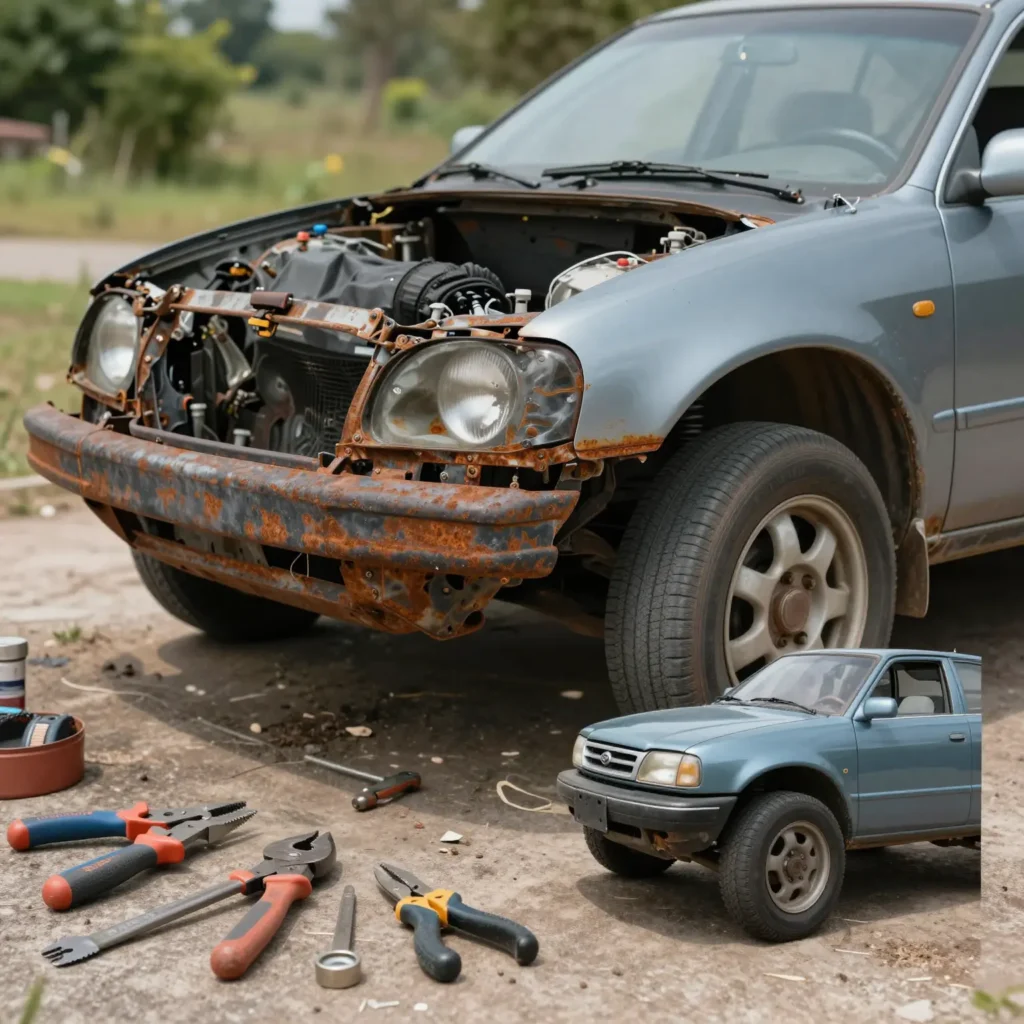
Introduction to Auto Body Rust
Auto body rust is more than just an unsightly blemish on your vehicle; it’s a sign of a deeper issue that could compromise the integrity and longevity of your automobile or motorcycle. Rust typically forms when metal is exposed to moisture and air, leading to oxidation. Left untreated, it can quickly spread and cause severe damage, affecting not just the aesthetics but also the functionality of your vehicle.
As a responsible vehicle owner, timely repair of auto body rust should be a priority. Not only does prompt action prevent further deterioration, but it also enhances the safety and value of your vehicle. An exterior in poor condition can lower resale value and turn potential buyers away, while a well-maintained finish can reflect your care for your vehicle and commitment to safety.
Investing time and effort into maintaining your vehicle’s exterior will not only keep it looking new but will also safeguard against potential rust damage. Regular inspections and repairs can save you money in the long run and ensure that your ride remains a reliable companion on the road. If you’d like to learn more about key maintenance skills that every driver should know, check out our guide on mastering your engine.
Common Causes of Auto Body Rust
Rust can be a motorist’s worst enemy, leading to costly repairs and affecting the vehicle’s structural integrity. Understanding the common causes of rust can help you take proactive measures to protect your vehicle. Here are some typical factors that contribute to auto body rust:
-
Environmental Factors:
-
Humidity: Moisture in the air can accelerate rust formation.
-
Rain and Snow: Wet weather can contribute to rust if water accumulates on the vehicle’s surface.
-
Road Salts: In colder regions, road salts used to melt ice can lead to significant corrosion.
-
Lack of Maintenance:
-
Not regularly washing your vehicle can lead to the accumulation of dirt and salt, promoting rust.
-
Failing to apply protective coatings or sealants can leave the metal exposed.
-
Chips and Scratches:
-
Damage to the paint allows moisture to reach the metal underneath and initiate the rusting process.
-
Poor Drainage:
-
Blocked drain holes or faulty seals can lead to water accumulation in specific areas, accelerating rust development.
By addressing these common causes of rust, you can avoid extensive damage and keep your vehicle in excellent condition. For more tips on vehicle maintenance, learn about common engine maintenance mistakes and how routine maintenance packages can save you money.

Identifying Rust on Your Vehicle
Rust can be a sneaky enemy that slowly eats away at your vehicle. Recognizing its early signs can save you from costly repairs down the road. Here’s how to perform a thorough inspection and what key areas to focus on:
Key Areas to Check
- Wheel Wells: This is the area around your tires, where debris and moisture tend to gather. Look for any discoloration or bubbling paint.
- Undercarriage: The underside of your vehicle, especially near the chassis, is highly susceptible to rust due to exposure to road salt and water.
- Door Sills and Edges: Open your doors and inspect the edges and sills of your doors, where water can accumulate.
- Hood and Trunk Lips: These areas may harbor rust due to moisture build-up, especially if the seals are not functioning properly.
- Bumpers and Grilles: Inspect the areas around your bumpers and grilles, as they can collect moisture and cause rust.
Signs of Rust to Look For
- Surface Rust: Look for flaky, red spots on the paint surfaces. Surface rust can be treated relatively easily.
- Bubbling Paint: If you notice bubbles forming in your vehicle’s paint, this is often a sign of rust forming underneath.
- Discoloration: Brown or reddish areas on the metal surfaces are indicators of rust. Don’t ignore these spots!
Regular inspections can help you catch rust early. For more detailed information on rust treatment, check out this article.
Step-by-Step Guide to Repairing Minor Rust Damage
Repairing minor rust damage on your vehicle is essential for maintaining its appearance and preventing more severe corrosion. Here’s a friendly, yet authoritative guide to help you tackle this task with confidence.
Tools and Materials Required
Before you start, make sure you have the following tools and materials on hand:
-
Tools:
-
Sandpaper (various grits: 80, 120, 320)
-
Wire brush or power sander
-
Masking tape
-
Paintbrush or spray gun
-
Safety goggles and gloves
-
Clean cloths
-
Materials:
-
Rust converter (to neutralize rust)
-
Primer (rust-inhibiting)
-
Automotive touch-up paint or spray paint (for color matching)
-
Clear coat (optional, for added protection)
Step-by-Step Instructions
-
Identify the Rust Areas:
Inspect your vehicle to locate minor rust spots. Focus on areas where moisture may accumulate, such as wheel wells and undercarriage. -
Clean the Area:
Using a clean cloth, remove dirt and debris around the rust spots. This ensures that any treatment you apply adheres properly. -
Sand the Rust:
Employ sandpaper (start with coarse grit, around 80) to sand away the rust. Ensure you wear gloves and safety goggles. For deeper rust, utilize a wire brush or power sander to remove all affected areas until you see bare metal. -
Apply Rust Converter:
Once the area is sanded down, apply a rust converter to neutralize any remaining rust. Follow the manufacturer’s instructions for application and drying times.
-
Prime the Area:
After the rust converter has dried, apply a rust-inhibiting primer to the exposed metal. This helps prevent future rust and provides a good base for the paint. Allow it to dry completely. -
Paint the Area:
Apply the automotive touch-up paint to match your vehicle’s color using a paintbrush or spray gun. Allow the first coat to dry and apply additional coats as needed until you achieve a seamless blend with the surrounding paint.
-
Finish with Clear Coat (Optional):
For enhanced durability, you can apply a clear coat over the paint to protect it from UV rays and give it a glossy finish. Let it dry as per the instructions. -
Inspect Your Work:
Once everything is dry, inspect your repair. Ensure that no rust is visible and that the paint is smooth and consistent.
Conclusion
Repairing minor rust damage is a straightforward process that can save you money and prolong the life of your vehicle. Following these steps will not only help you maintain your car’s appearance but also protect it against deeper rust formation. Regular inspections and maintenance can prevent rust from returning in the future!
| Product Name | Features | Price | Customer Ratings |
|---|---|---|---|
| Corroseal Rust Converter | Water-based, converts rust to paintable surface | $29.99 (1 quart) | 4.5/5 (Amazon) |
| Rust-Oleum Rust Reformer | Stops rust, easy to apply, can be used as a primer | $11.99 (12 oz) | 4.0/5 (Home Depot) |
| POR-15 Rust Preventive Coating | Oil-based, provides a tough barrier against moisture | $39.99 (1 quart) | 4.7/5 (Amazon) |
| Rust Kutter Rust Converter | Sprayer included, leaves a primed surface ready for paint | $19.99 (16 oz) | 4.2/5 (eBay) |
| Evapo-Rust Rust Remover | Non-toxic, safe for all metals, reusable | $24.99 (1 gallon) | 4.8/5 (Walmart) |
Sources
- Amazon – Corroseal Rust Converter
- Home Depot – Rust-Oleum Rust Reformer
- Amazon – POR-15 Rust Preventive Coating
- eBay – Rust Kutter Rust Converter
- Walmart – Evapo-Rust Rust Remover
When to Seek Professional Help for Extensive Rust Damage
While DIY repairs can be effective for minor rust spots, there are specific scenarios where the extent of rust damage is severe enough to warrant professional assistance. Understanding when to consult an expert can save you time, money, and ensure safety. Here are key indicators that indicate you should seek professional help:
- Structural Damage: If rust has penetrated the structural components of your vehicle, such as frame or suspension parts, it can compromise your safety. Professionals have the tools and expertise to assess the integrity of these crucial components and make necessary repairs.
- Extensive Surface Rust: When rust covers large panels or has created holes through metal, proper repair often requires advanced techniques that may be beyond the scope of DIY methods. A professional can recognize and properly treat deep rust with the right materials and methods timely, ensuring the longevity of the repair.
- Complicated Repairs: If the rust damage is extensive enough that it requires panel replacement or specialized welding, this is typically beyond what most DIY enthusiasts can handle. These repairs can also be quite costly, potentially exceeding $2,000 to $5,000, as suggested by experts in the industry.
- Time Constraints: If you’re unsure about your abilities or do not have the time required to familiarize yourself with rust repair techniques, seeking a professional can be a more efficient solution. Not only does this prevent further damage, but it ensures the repairs are done correctly the first time.
In summary, while small rust repairs can often be a rewarding DIY project, situations involving extensive damage should be left to professionals who have the experience and tools necessary to do the job right. To learn more about rust repairs, check out our guide on how to repair auto rust.

Understanding Rust Repair Costs
When it comes to tackling rust issues, one must weigh the options between professional repair service and DIY methods. As illustrated in the chart above:
| Repair Method | Average Cost Range |
|---|---|
| Professional Rust Repair | $500 – $1,500 |
| DIY Rust Repair | $50 – $100 |
Insights:
- Professional Rust Repair: For significant rust problems, the costs can reach as high as $1,500 depending on the extent of the damage.
- DIY Rust Repair: Basic repairs for minor rust can be accomplished for as little as $50 to $100 using sandpaper, rust converters, and paint.
For motorcycle and auto owners, this information can help you decide which route to take based on your budget and the severity of the rust damage. If you are looking to sharpen your repair skills, consider checking out our DIY basics or explore essential car maintenance tips for more information!
“Timely rust repair is essential to prevent further deterioration and maintain the vehicle’s value.”
- Miracle Body and Paint
When it comes to auto body rust repair, addressing the issue promptly and professionally is crucial. Not only does rust compromise the integrity of your vehicle, but it can also significantly diminish its resale value. Delaying repairs might lead to more extensive damage and higher costs in the long run. For more tips on car maintenance, don’t forget to check out our article on avoiding common car maintenance mistakes!
Conclusion and Call to Action
In conclusion, repairing auto body rust is not just about aesthetics; it is crucial for maintaining your vehicle’s safety, performance, and longevity. Rust, if left untreated, can undermine the structural integrity of your vehicle, leading to costly repairs and safety risks. As we discussed, routine rust inspections and prompt repairs can extend the life of your vehicle, improve its resale value, and ensure a smooth driving experience. The importance of rust repair cannot be overstated-by acting quickly, you can prevent small issues from escalating into significant problems.
At Summit Fairings, we understand the intricacies of rust repair and the peace of mind that comes with knowing your vehicle is in good hands. Our team of skilled professionals leverages the latest techniques and technologies to assess and repair rust damage accurately and efficiently.
Don’t wait until it’s too late! Contact Summit Fairings today for a comprehensive rust evaluation. Let us help you restore your vehicle’s integrity and appearance, ensuring that it serves you well for years to come!