
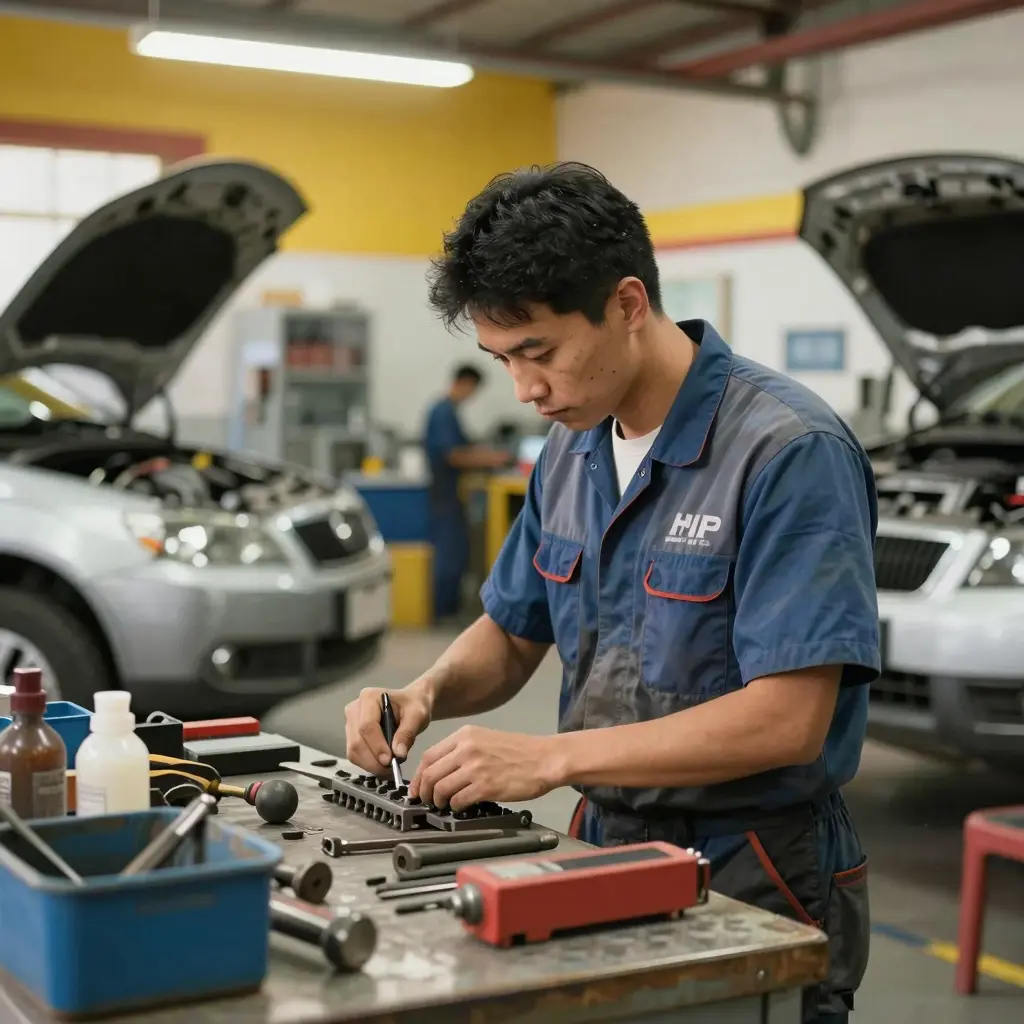
Introducing the Booming Auto Repair Industry
The auto repair industry is more than just a functional sector; it’s an ever-expanding opportunity landscape just waiting to be tapped into! As vehicle ownership continues to rise, so does the demand for reliable and skilled auto repair services. From routine maintenance like oil changes to complex engine repairs, the automotive sector is thriving and brimming with potential for new entrepreneurs.
Have you ever thought about turning your passion for cars into a business? Starting your own auto repair business can be a rewarding venture, especially if you possess a keen interest in automotive mechanics and a drive to help others maintain their vehicles. It’s an endeavor that not only promises profitability but also allows you to build community relationships and engage with fellow car enthusiasts.
In this article, we will explore everything you need to know to successfully start your own auto repair business. We will cover the essential planning stages, including market research, legal considerations, and the necessary skills and tools you’ll need to get your business off the ground. Additionally, we’ll highlight the importance of being passionate about what you do; because a love for vehicles and genuine care for your customers are what will set you apart from the competition.
Remember, thorough planning and unwavering passion are key ingredients for success in this competitive industry. With the right preparation and mindset, your auto repair shop can become a go-to destination for motorcycle owners, auto enthusiasts, and everyday drivers alike. So let’s get started on this exciting journey to creating your own automotive business! To dive deeper into car maintenance, check out our guide on common engine maintenance mistakes and how to unlock savings with DIY oil changes in your new business setup!
Essential Items for Starting an Auto Repair Business
Starting an auto repair business can be an exciting venture, especially for automotive enthusiasts. Whether you are focusing on cars or motorcycles, having the right tools and equipment is key to delivering reliable services. Here’s a thorough list of essential items you’ll need to consider:
Basic Tools and Equipment
- Hand Tools: This includes wrenches, sockets, pliers, screwdrivers, and hammers. A quality set is crucial for any auto repair work.
- Power Tools: Invest in power drills, impact wrenches, and air compressors to make your tasks easier and more efficient.
- Lifts: A hydraulic car lift is vital for working underneath vehicles. Ensure it can accommodate the weight and size of the vehicles you’ll be servicing.
- Diagnostic Equipment: An OBD-II scanner helps diagnose issues within the vehicle’s computer system.
- Tire Equipment: Tire changers and balancers are essential for performing tire repairs and replacements.
Specialized Tools for Motorcycle Repair
If you plan to service motorcycles as well, consider acquiring:
- Motorcycle Lift: A specialized lift for motorcycles can make repairs more comfortable and accessible.
- Torque Wrench: Important for ensuring that bolts are tightened to manufacturer specifications, especially in engine work.
- Motorcycle Repair Manual: Having repair manuals for various motorcycle models aids in proper servicing and understanding of the units.
- Chain Tools: Essential for adjusting and replacing motorcycle chains.
Workshop Tools
- Workbenches: Durable workbenches provide a solid surface for repairs and organization.
- Storage Solutions: Toolboxes, mounted racks, and shelving units help keep tools organized and easily accessible.
Parts Inventory
- Basic Replacement Parts: Always maintain a stock of common parts such as filters, brake pads, and belts to quickly address customer needs.
- Fluids and Lubricants: Ensure you have a variety of oils, coolants, and other fluids necessary for maintenance work.
Safety Equipment
- Safety Gear: Don’t forget safety glasses, gloves, and shop coats to protect you while working.
- Fire Extinguisher: A fire extinguisher is essential in any shop environment for safety.
Starting an auto repair business requires careful planning and investment in the right tools and equipment, ensuring you can meet the diverse needs of your clients. For a deeper understanding of car maintenance, check out our articles on common engine maintenance mistakes and DIY oil changes.
With these essentials in hand, you’ll be well-equipped to begin your automotive repair journey!
The Importance of Business Planning for an Auto Repair Shop
Creating a detailed business plan is a foundational step for anyone looking to start an auto repair shop. A structured business plan not only helps you clarify your strategy and goals but also enhances the likelihood of long-term success. Here’s why business planning is so crucial:
1. Market Analysis
Before opening your doors, you must conduct a thorough market analysis. Understanding the competitive landscape, assessing the demand for auto repair services, and identifying existing gaps in the market are essential aspects. By analyzing trends within the industry, such as the rise in electric vehicle ownership and the increasing complexity of automotive technology, you can tailor your services to meet evolving consumer demands. Explore common engine maintenance mistakes to better inform your offerings.
2. Identifying the Target Audience
Recognizing your ideal customers enables you to create focused marketing strategies. Whether your audience comprises motorcycle owners, auto owners, parts distributors, or other repair shops, understanding their needs and preferences helps position your shop effectively. From offering specialized services to providing customer loyalty programs, a well-defined target audience allows you to cater to their needs more effectively, ultimately driving repeat business and referrals.
3. Financial Planning
Financial planning is one of the most critical components of a business plan. It includes budgeting for equipment, staffing, rent, and marketing costs. Additionally, projecting your revenues and understanding your profit margins is vital. For instance, in 2023, revenues in the auto repair sector reached approximately $71.6 billion in the U.S., with profit margins averaging between 8% and 10%. This highlights the importance of effective financial management in capitalizing on industry growth opportunities. The graph below illustrates the growth of revenue in the auto repair industry over recent years.

4. Operational Strategy
An operational strategy detailed in your business plan outlines how you’ll run your shop day-to-day. This includes everything from inventory management-keeping necessary spare parts on hand-to staffing policies, customer service protocols, and repair processes. By having a clear operational strategy, you ensure that your shop runs smoothly and is prepared to adapt to challenges as they arise. Understanding how to avoid car maintenance mistakes with routine maintenance packages can be a cornerstone of your service strategy. Learn about the benefits of routine maintenance.
Conclusion
In summary, a detailed business plan for your auto repair shop serves multiple strategic purposes, from providing a roadmap for operations to solidifying your understanding of the market and your finances. These elements, when executed properly, pave the way for a successful venture in a competitive industry. By planning thoroughly, you position your shop not just to survive, but to thrive in the evolving automotive landscape.
Comparison of Estimated Start-Up Costs for Auto Repair Business Models
Starting an auto repair business can vary greatly depending on the model you choose. Below is a chart that visually compares the estimated start-up costs for two popular auto repair business types: a full-service garage and a specialized motorcycle repair shop.
Estimated Start-Up Costs Breakdown
Here’s a brief overview of the estimated costs:
| Business Model | Estimated Startup Costs | Rent | Equipment Range | Staffing Costs |
|---|---|---|---|---|
| Full-Service Garage | $150,000 – $500,000 | Varies by location | $50,000 – $150,000 | $35,000 – $70,000 per tech |
| Specialized Motorcycle Repair Shop | $75,000 – $250,000 | Varies by location | $5,000 – $15,000 (tools) | $35,000 – $70,000 per tech |
Chart of Cost Comparison
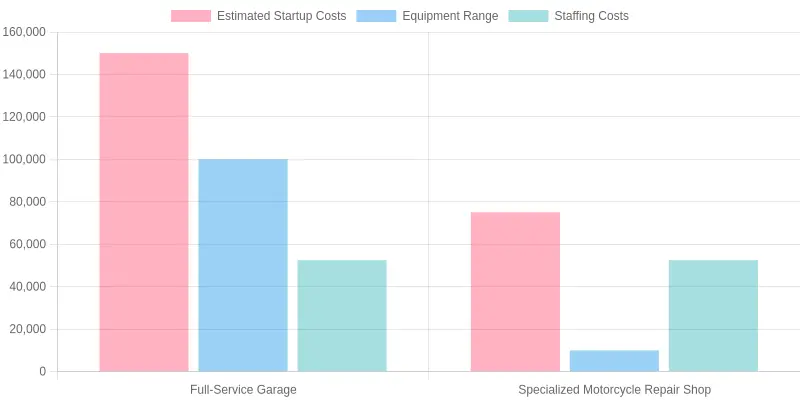
This visual aids in understanding where the primary costs lie and how they differ between the business models. As shown, full-service garages generally have higher startup costs, particularly in terms of equipment and staffing, while specialized motorcycle repair shops are significantly lower in those areas.
For more tips on starting your auto repair business, consider reading about common engine maintenance mistakes to ensure you’re well-prepared for the technical aspects of your venture.

Legal Requirements and Permits Needed to Open an Auto Repair Business
Starting an auto repair business comes with an essential set of legal requirements and permits you must secure to operate legally, avoid fines, and build trust with customers. Here’s a clear outline of the key licenses, permits, and regulations you need to navigate:
1. Business License
Almost all jurisdictions require a basic business license to legally operate. This is your primary authorization, issued by the city or county, allowing you to conduct business activities. The application process typically involves submitting your business information and paying a fee.
2. Auto Repair Shop License
Many states require a specific auto repair shop license or registration. This license verifies that your shop meets industry standards and complies with consumer protection laws. Check with your state’s motor vehicle department or consumer affairs office for exact requirements.
3. Federal Employer Identification Number (EIN)
Obtained from the IRS, the EIN is crucial if you plan to hire employees, pay taxes, or open business bank accounts.
4. Zoning Permits and Land Use Regulations
Your shop location must comply with local zoning laws, which regulate where commercial auto repair businesses can operate. Zoning permits ensure your chosen location is approved for automotive services and not restricted to residential or other uses.
5. Environmental Permits and Regulations
Auto repair shops handle hazardous materials like oils, solvents, and batteries. Environmental regulations govern how you store, dispose of, and manage waste to protect the environment. You may need permits from your state or local environmental protection agency regarding:
- Hazardous waste disposal
- Stormwater discharge permits
- Air quality management
6. Sales Tax Permit
If you sell parts or products directly to customers, you’ll likely need a sales tax permit to collect and remit sales tax.
7. Workers’ Compensation Insurance and Other Insurance Requirements
Many states require businesses with employees to carry workers’ compensation insurance covering workplace injuries. Additionally, liability insurance and garage keepers insurance protect your business from various risks.
8. Special Permits
Depending on services offered, you might need additional permits, such as a refrigerant handling license for air conditioning repairs.
Tips for Compliance
- Consult your city or county government websites for detailed local requirements.
- Contact your state Department of Motor Vehicles (DMV) or equivalent agency for industry-specific licensing.
- Maintain records of all permits and renew them on time.
By understanding and securing the necessary legal permits and licenses, you ensure your business operates smoothly and builds credibility with your clients from day one. For more tips on maintaining and upgrading your auto repair skills, check out our A to Z auto repair guide.
Starting an auto repair business requires more than just technical know-how; it demands a foundation built on trust and integrity. As echoed by experienced shop owners, “Honesty is the best policy in auto repair,” highlighting that maintaining transparency with customers leads to repeat business and a stellar reputation.
Here are some essential keys to success in the auto repair industry:
- Customer Service: Focus on building long-term relationships through open communication. Every customer should feel valued and understood.
- Quality Workmanship: Ensure that all repairs are performed to the highest standards, treating every vehicle as if it were your own. This approach fosters trust and satisfaction.
- Continuous Learning: Staying updated with the latest automotive technologies and best practices ensures that your shop remains competitive. Annual training sessions for yourself and your staff can significantly enhance service quality.
- Use of Technology: Investing in modern diagnostic tools not only boosts efficiency but also develops customer confidence in your capabilities.
“In the auto repair business, treating customers with honesty and integrity leads to long-term success.”
By focusing on these crucial elements, you’ll not only establish a successful auto repair shop but also a loyal customer base. For more insights on common pitfalls and best practices, check out our article on 10 Common Engine Maintenance Mistakes or explore ways to Master Your Engine Core Car Maintenance Skills which can further enhance your business acumen.
Pricing Strategies for Auto Repair Services
When setting up an auto repair business, one of the most crucial aspects to consider is your pricing strategy. Proper pricing not only affects your profitability but also determines how competitive you will be in the market. Below, we’ll explore various pricing strategies relevant to auto repair services, including the factors influencing hourly rates and the typical markups applied to parts.
Hourly Rates
Typically, auto repair shops charge customers based on hourly rates for labor. As of 2023, hourly labor rates in the United States range from $75 to $150 per hour, depending on several factors:
- Geographical Location: Urban shops tend to charge more due to the higher costs of living and doing business. For example, rates in metropolitan areas like New York or Los Angeles may exceed $200 per hour at luxury dealerships.
- Type of Service: More complex services, such as engine rebuilds or transmission repairs, generally warrant higher labor costs compared to basic maintenance like oil changes or tire rotations.
- Technician Expertise: Technicians with specialized certifications or significant experience may justify higher rates due to their advanced skill set.
Transparency is key. Providing upfront estimates and itemized bills will build trust and encourage customer loyalty.
Markup on Parts
In addition to labor, repair shops typically make a profit on the parts they sell. The standard markup on parts often ranges from 20% to 40% over the wholesale price. Here’s how to consider this markup:
- Justification for Markup: This markup helps cover the costs associated with sourcing, stocking, and the labor required for installation. Customers appreciate knowing that they are paying for quality service along with the parts.
- Competitive Pricing: Customers today have access to online pricing for parts, often making it easier for them to compare prices. Consequently, shops need to remain competitive even when applying a markup. It’s advisable to monitor competitors’ pricing on parts and adjust accordingly.
Staying Competitive While Ensuring Profitability
To remain competitive while ensuring sufficient profit margins, consider the following strategies:
- Value Added Services: Beyond just repairs, consider offering value-added services like preventive maintenance plans or complimentary inspections. These can enhance customer loyalty and increase overall revenue.
- Transparent Communication: Explain to your customers why certain services or parts are priced as they are. Many consumers prefer transparency and are willing to pay for the expertise and trustworthiness of a reputable shop.
- Promotional Offers: Special promotions (like discounts on specific services or free evaluations) can draw in customers without drastically undercutting your prices.
By implementing the right pricing strategies focusing on hourly rates and appropriate markup on parts, you can effectively establish a profitable and competitive auto repair business. For more insights on running an efficient auto repair service, check out our guide on common engine maintenance mistakes and master your car maintenance skills.
Customer Expectations in the Auto Repair Industry
Starting an auto repair business requires a deep understanding of customer expectations. In this industry, customers generally look for high-quality service, effective communication, and a reasonable turnaround time for repairs. This blog will explore these expectations in detail and provide insights into how you can meet them to ensure customer satisfaction.
Service Quality
Customers expect top-notch service when they bring their vehicles to auto repair shops. According to industry surveys, more than 80% of customers believe that thorough repairs are crucial. They want technicians who not only fix the problem but also explain the issues clearly and offer preventive advice to avoid future problems. Quality service leads to customer loyalty and repeat business, which is essential for the long-term success of your repair shop.
Communication
Effective communication is a critical expectation. Customers appreciate being kept in the loop regarding the status of their vehicle repairs. Most customers want to know the estimated costs upfront and receive updates throughout the repair process. Surveys indicate that approximately 75% of customers prefer to be contacted via text or a mobile app for updates rather than traditional methods like phone calls. This modern approach caters to tech-savvy clients and enhances satisfaction.
Turnaround Time
Time is of the essence in the auto repair world. A study revealed that nearly 70% of customers prefer their vehicle repairs to be completed within a day. Delays can lead to frustration and dissatisfaction, potentially harming the shop’s reputation. Offering options for expedited service or providing estimated completion times can enhance the customer experience and build trust.
Supporting Statistics
While specific statistics vary, reviews have shown that:
- Service Quality: About 80% of customers find thorough repairs vital.
- Communication: 75% prefer flexible communication modes like texts.
- Turnaround Time: Around 70% expect repairs to be done within a day.
Fulfilling these expectations not only improves customer satisfaction but also invites positive word-of-mouth referrals. For auto repair shops looking to enhance their service offerings, focusing on these key areas can lead to robust growth.
By understanding these customer expectations, you can better position your new business for success in the competitive auto repair market. Learn about avoiding common maintenance mistakes to keep your customers happy and returning for more.
If you’d like to understand routine maintenance better to serve your customers, explore essential car maintenance skills.
With clear attention to service, communication, and timing, you can significantly impact your auto repair business’s reputation and success.
Conclusion: Take the Leap and Start Your Auto Repair Business Today
Starting an auto repair business can be incredibly rewarding, offering you the chance to turn your passion for vehicles into a thriving enterprise. As we’ve outlined, the key steps to success begin with thorough market research and a solid business plan tailored to your target customers-whether they be motorcycle owners, auto enthusiasts, parts distributors, or local garages. From securing the right permits and licenses to choosing a strategic location and investing in quality tools and skilled staff, laying down a strong foundation is essential.
Marketing your business effectively and providing excellent customer service will help you build a loyal clientele, while continuous learning and adapting to industry trends will ensure ongoing growth. Remember, managing your costs wisely and selecting reliable suppliers can significantly impact your profitability.
One way to make your venture even smoother is partnering with trusted industry leaders like Summit Fairings. They specialize in high-quality fairings and related products that cater directly to the needs of motorcycle and auto repair businesses. By integrating Summit Fairings’ top-tier offerings into your inventory, you can enhance your service quality and attract discerning customers who value both performance and aesthetics.
Taking the first step may seem daunting, but with a clear roadmap and strong partners, the path becomes exciting and attainable. Ready to dive deeper and get inspired on maintaining vehicles yourself? Check out our comprehensive guide on mastering engine core car maintenance skills to hone your expertise.
Your journey to building a successful auto repair business starts now. Embrace the challenge, equip yourself with the right knowledge and tools, and leverage trusted partners like Summit Fairings to stand out in the competitive auto repair market. Don’t wait-turn your automotive passion into a flourishing business today!