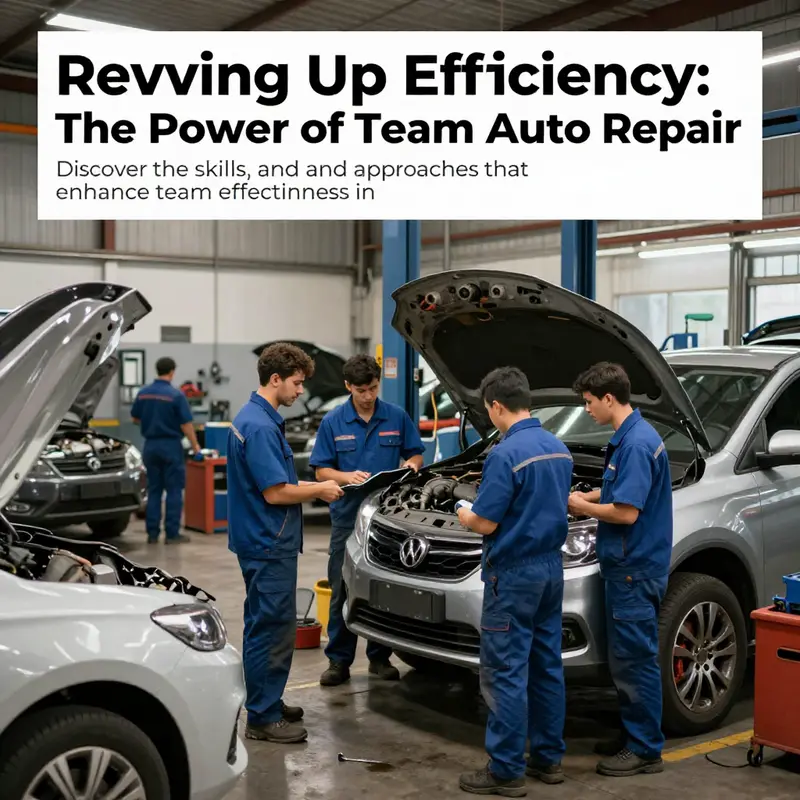
Auto repair isn’t just a one-man job anymore; it’s a collaborative effort designed to maximize efficiency and quality. As vehicles become increasingly complex and technology-driven, the concept of a team auto repair stands at the forefront of the industry. This article explores the essential skills required for an effective auto repair team, the tools and software that support their work, real-world success stories, the importance of customer-centric practices, and the crucial need for safety and compliance protocols. Whether you’re a motorcycle enthusiast, an auto owner, or a parts distributor, understanding these components enhances your interaction with auto repair teams and elevates the overall service experience.
The Skill Mosaic That Drives a Team Auto Repair: From Diagnosis to Zero Rework
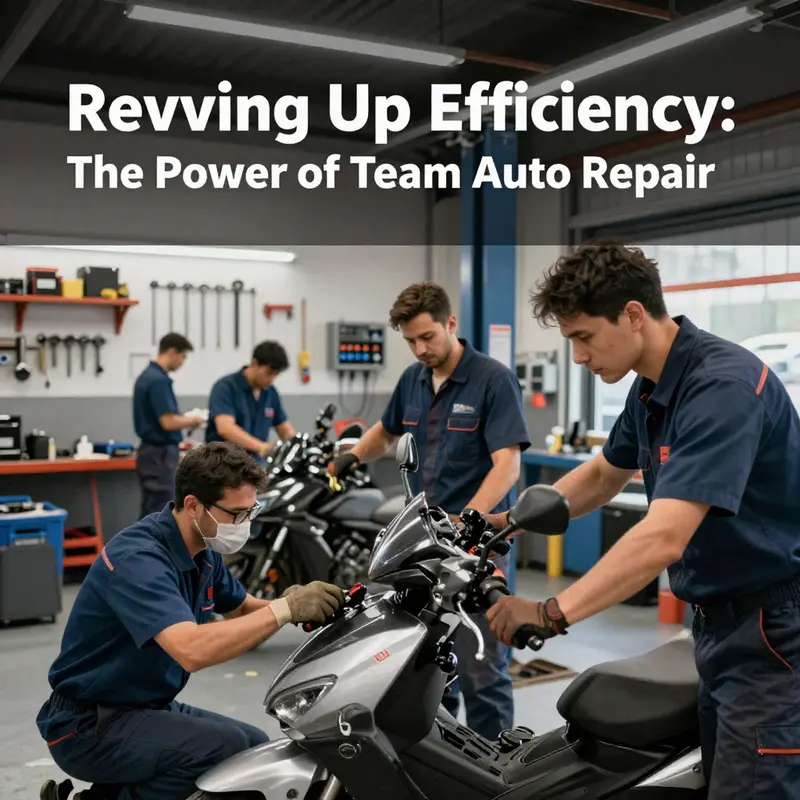
A team auto repair is more than a lineup of skilled hands; it is a carefully composed system where knowledge, tools, and human temperament blend to produce dependable results. In a shop that handles everything from routine maintenance to complex collision recovery and the delicate work of high-voltage systems, the true value lies in a cohesive skill mosaic. The individuals may come from different backgrounds, but their shared competence forms an invisible thread that holds the entire operation together. When a vehicle arrives with symptoms that could be electrical, mechanical, or a mesh of both, the team does not stumble into a sequence of isolated fixes. They move as a unit, guided by a common framework of skills and a culture that prizes precision, safety, and transparent communication with the owner. The result is not only a repaired car but a trusted service experience that the owner can rely on, time after time.
Foundational knowledge is the bedrock of this mosaic. Technicians must understand the core mechanics of engines, transmissions, drivetrains, suspensions, steering, braking, and increasingly complex electrical/electronic networks. This knowledge spans traditional internal combustion technology and emerging electric and hybrid systems. Even the most routine misfire or a stale fuel trim issue becomes solvable when the team can map symptoms to a sound hypothesis about air, fuel, ignition, and timing, while also recognizing when a fault lies in the harness or a control module. The ability to interpret data from vehicle networks, such as CAN bus signals, is not a luxury but a necessity in diagnosing modern faults efficiently. In practice, this foundational wisdom allows a technician to scale the repair to a vehicle’s architecture, whether it is a common sedan or a specialized commercial unit, and to anticipate how a fix will interact with other subsystems in the long run.
Alongside this deep knowledge, proficiency with tools and equipment marks the second axis of the mosaic. A team that operates with confidence uses a broad spectrum of instruments, from basic hand tools to advanced diagnostic hardware and software. The importance is not merely having these tools but knowing how to use them precisely and maintaining them in peak condition. A torque wrench set to the correct specification, for example, prevents the subtle but dangerous failures that arise from over- or under-torque. Diagnostic software, multimeters, and specialized testing devices enable teams to gather meaningful data rather than decode random symptoms. The team’s effectiveness grows when each member understands not only how to apply a tool but how to care for it—calibration, cleaning, and proper storage all contribute to longer tool life and more reliable readings. In this way, tool literacy is as much about reliability as it is about capability.
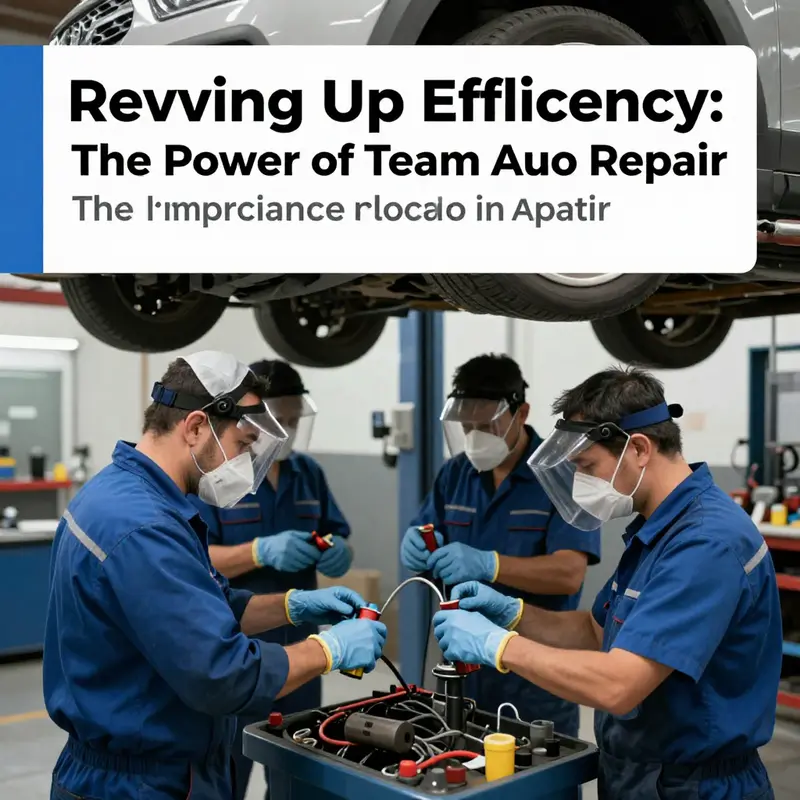
Safety and on-site protocols form a non-negotiable fourth wall in the studio of repair. A team that can manage roadside rescues or accident-scene recoveries must operate with discipline. That means setting up a clear scene with traffic control measures where needed, using appropriate PPE, and following procedures for hazardous materials handling and containment. Safety knowledge extends beyond personal protection; it encompasses an understanding of the vehicle’s potential hazards, the environment’s risks, and the legal parameters that govern roadside work. When teams prioritize safety, they minimize risk for themselves, the vehicle owner, and other road users. This commitment to safe practice is a quiet form of efficiency: fewer injuries, fewer delays, and fewer stories of insurance complications to navigate later.
Communication and customer service sit at the heart of how a repair team translates technical skill into trust. The most capable technicians can diagnose a fault, but if they cannot explain it clearly to a car owner, the repair experience loses its value. The best teams cultivate a language that bridges the technical and the human—describing symptoms in plain terms, outlining options with transparent costs, and offering realistic timelines. Inside the shop, open channels keep the team aligned. Regular updates, shared notes, and collaborative review of conclusions help prevent misinterpretations and reduce rework. When owners feel informed, anxiety gives way to confidence, and the repair process becomes a partnership rather than a transaction.
Problem-solving and adaptability complete the core. A repair site is a dynamic environment: weather may shift, a critical tool may fail, or a particularly stubborn fault may resist an initial strategy. In these moments, the team must assess quickly, adjust plans, and re-prioritize without sacrificing safety or quality. Critical thinking in this setting means asking the right questions, testing hypotheses with disciplined measurements, and recognizing when a detour is necessary to avoid creating new problems. The most effective teams cultivate a habit of reflective practice—reviewing what worked, what didn’t, and how to improve for the next job. This mindset supports a culture of continuous improvement, where the aim is not just to fix the current vehicle but to reduce the likelihood of repeating the same issues for future customers.
The interdependence of these skills becomes especially evident when the team pursues a model of zero rework. The concept—often described as a shared responsibility where a repair is completed once with minimal revisits—rests on three pillars. First, clear accountability for each step of the repair process prevents ambiguous ownership. When a task is assigned, the person responsible owns the results, which reduces the friction that can arise when multiple technicians assume someone else will address a fault. Second, data-driven accountability provides measurable KPIs that illuminate progress and quality. Even seemingly tiny benchmarks, like the accuracy of a torque sequence or the timing of a diagnostic test, accumulate into a comprehensive picture of performance. Third, a customer-centric approach ensures the service does not end with the repair’s completion but continues through follow-up checks and proactive guidance. In a high-performing shop, the owner’s peace of mind is not an afterthought—it is the natural byproduct of a well-executed process.
Digital platforms play a critical role in knitting the skill mosaic together. Modern repair shops rely on cloud-based workflows and repair management systems to keep information flowing smoothly. Real-time job tracking, smart inventory visibility, and streamlined invoicing align the team around shared objectives and deadlines. A centralized client record keeps everyone informed about the vehicle’s history and service plan, enhancing transparency and accountability. Diagnostic tools that share live data across devices enable multiple experts to collaborate on a single fault, accelerating the diagnosis while maintaining a clear audit trail. Even mobile or field teams benefit from offline capabilities, ensuring continuity of work when connectivity is interrupted. The social dimension of this technology is equally important: when the team can see how their individual inputs fit into the whole, the sense of collective ownership intensifies, and the drive toward seamless execution grows stronger.
Real-world demonstrations of these principles abound in the stories of highly effective teams. A notable example is a scenario where advanced posting of measurements and data enabled near-zero rework. In that case, the team’s approach shifted focus from individual pride in “I fixed it” to a shared commitment that “we completed it.” They linked each repair step to a specific technician with clearly defined expectations, then used data to validate progress and outcomes. The customer’s experience improved as well: owners received timely updates, a realistic forecast of next steps, and suggestions for preventive care that extended beyond the immediate fix. The result was not a single success in a single vehicle, but a scalable model that improved throughput, reduced waste, and built lasting trust.
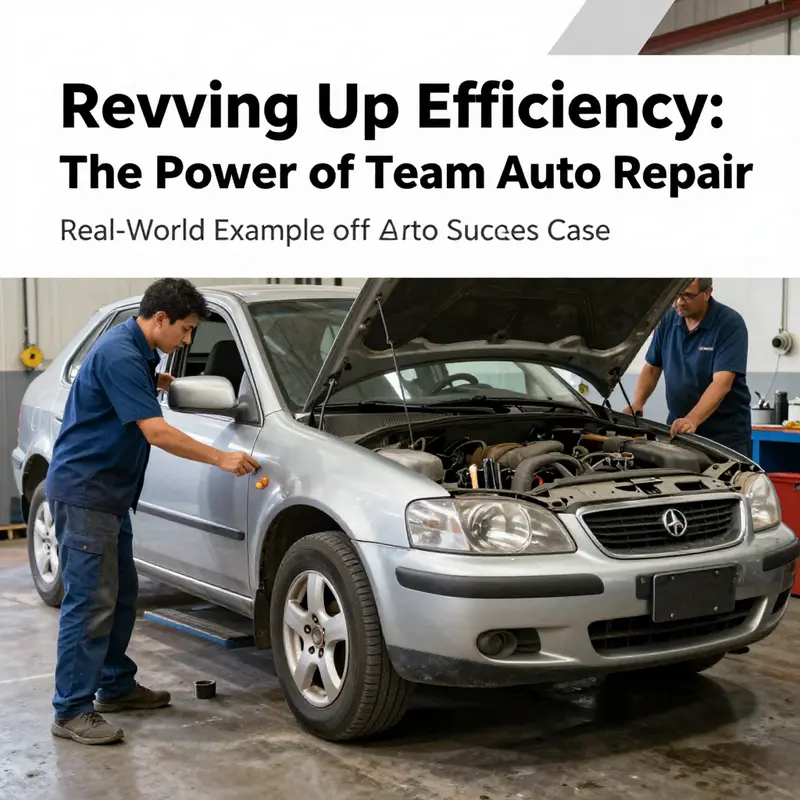
The Jieli case provides a vivid illustration of how the skill mosaic operates on the ground. The team deployed 3D scanning and precision body alignment tools to restore a severely damaged car to factory standards. Their diagnostic rigor extended to measuring cylinder wall scratch depth and analyzing oil pressure curves, enabling a repair with a remarkably low rate of rework. The lesson is clear: when a team couples deep knowledge with precise measurement and disciplined collaboration, the repair process becomes predictable rather than improvisational. Such outcomes are not accidental; they are the fruit of a culture that values learning, a willingness to adjust, and the discipline to document what works for future jobs. This approach resonates with the broader aim of turning car after-sales into a reliable, low-stress experience for owners, a goal that depends as much on process design as on technical prowess.
To tie these threads together, a high-performing team auto repair operates as a well-oiled organism where every skill reinforces the others. Foundational knowledge informs tool use; tool proficiency supports safer, more efficient work; safety and on-site protocols protect people and vehicles; communication clarifies expectations and maintains momentum; problem-solving and adaptability keep the process resilient in the face of uncertainty. When these elements align, the shop does not simply repair vehicles; it redefines the repair experience as trustworthy, transparent, and proactive. The lesson for any shop aiming to elevate its service is straightforward: cultivate the skill mosaic with intention, invest in robust collaborative practices, and measure progress with indicators that reward quality over speed alone.
For practitioners seeking structured guidance on building this capability, a practical route is to study foundational training and certification standards that shape professional development. A concise, widely recognized reference is the availability of standardized knowledge pathways and credentialing endured by the industry. To explore these standards further, see the resource linked here: A-to-Z Auto Repair.
External resources that complement this perspective underscore the value of professional ethics and technical excellence. For ongoing benchmarks and guidance, the automotive service community often references industry bodies and standard-setting organizations that codify best practices and testing criteria. See the external resource for broader context: https://www.ase.com
Tools That Bind a Team: How Software and Systems Orchestrate Modern Auto Repair
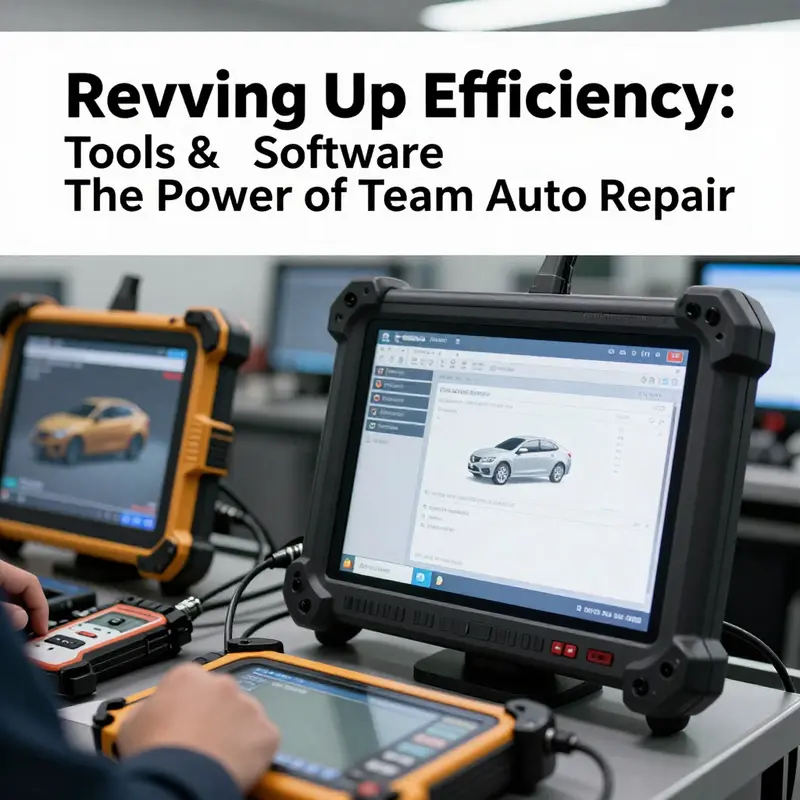
In a well-functioning auto repair shop, the true engine of productivity is not a single technician alone but a coordinated team bound together by digital tools that translate skill into reliable outcomes. A team auto repair thrives when information flows freely, decisions are data-driven, and each member—from the front counter to the bays—understands how their work connects with the next step. The modern shop is less about individual charisma and more about a synchronized choreography of diagnostics, service planning, parts readiness, and customer communication. Software and systems become the conductor that keeps that choreography in rhythm, ensuring that expertise is not siloed but shared, traceable, and continually improved. In this context, the most impactful tools are those that standardize procedures, illuminate the path from diagnosis to invoice, and enable collaboration across both people and locations.
Repair management platforms form the backbone of this orchestration. They provide the scaffolding for real-time job tracking, smart inventory management, and one-click invoicing, all tied to a neutral record of every repair decision. When used effectively, these platforms do more than list tasks; they map the repair journey, assign responsibility, and surface analytics that reveal where rework tends to creep in. A technician can see which steps have already been validated, which service advisories require a second opinion, and which customer promises must be kept. The result is a consistent quality bar across the team, regardless of who is on the shift or where the vehicle is located. In practice, the value lies in reducing guesswork and building a shared picture of progress that customers can follow with confidence.
Cloud-based systems extend that picture beyond a single shop floor. They enable centralized client records, shared work orders, and remote access to repair histories, so technicians at different bays or at a satellite location can pick up where colleagues left off. This level of connectivity is crucial when emergencies demand multi-person input or when a vehicle migrates through various service lanes, from diagnostic verification to alignment, to paint and finishing. The cloud also supports proactive service planning. With visibility into historical repairs and recurring issues, teams can anticipate parts needs before the order is critical, schedule preventive tasks, and allocate technicians according to expertise rather than simply by availability. It is this visibility that helps a team move from reactive problem-solving to proactive maintenance, a shift that underpins higher first-time fix rates and happier customers.
Diagnostic tools exist at the heart of the repair process because they translate raw sensor data into actionable decisions. Modern diagnostic ecosystems are not limited to a single machine. They allow multiple experts to share live data, annotate findings, and converge on a diagnosis even when specialists are in different rooms or on different floors of the same facility. This capability matters for complex vehicles that involve integrated electrical systems, advanced driver-assistance features, or emerging powertrains. When data is shareable and interpretable, the risk of misinterpretation diminishes. Teams can benefit from parallel analysis—one technician tracing a fault code, another monitoring oil pressure curves, and a third validating sensor calibrations—without stepping on each other’s toes. The result is a more rigorous diagnostic process and a reduced cycle time from problem discovery to repair decision.
A knowledge base that is truly shared across the team closes the loop between expertise and execution. Shops prosper when senior technicians codify tacit knowledge into accessible procedures, parts lists, and best practices that new hires can learn without shadowing for weeks. A central repository becomes a living curriculum: it grows with each repair, each retrofit, and each roadside rescue scenario. With a strong internal library, training becomes faster, onboarding becomes smoother, and consistency becomes the default rather than the exception. The most effective knowledge bases are not static archives but dynamic reference points that reward curious problem-solving while enforcing important safety and quality standards. In this sense, the team’s accumulated wisdom becomes a useful, repeatable asset rather than a hidden advantage of a few seasoned veterans.
Vehicle history sharing complements the repair workflow by providing the entire team with context before the first bolt is turned. Car history reports and maintenance logs are not just marketing fodder for customers; they are critical inputs that shape diagnostic hypotheses, parts selection, and service planning. When every technician sees the same maintenance milestones and past interventions, the likelihood of redundant work or misdiagnosis drops noticeably. The team can align on a plan that acknowledges prior repairs, known vulnerabilities, and recurring issues, reducing needless backtracking and enhancing transparency with the vehicle owner. This level of clarity also strengthens trust. Customers appreciate not only the outcome but the visible logic behind the decisions, the careful inventory management, and the predictable timelines the team communicates.
In practice, these tools cohere when a culture of shared responsibility applies to every repair step. The most successful teams cultivate a mindset that moves beyond “I fixed it” to “We completed it.” Digital systems support this mindset by making accountability concrete: each diagnostic decision, every reseal, and all torque specs are recorded against a technician’s name and a timestamp, with KPIs tied to measurable outcomes. The goal is not to assign blame for mistakes but to illuminate pathways to improvement. When a rework risk emerges, the platform flags it, the team re-evaluates, and the corrective action becomes part of the evolving standard. This data-driven accountability takes the guesswork out of performance reviews and creates a reliable feedback loop that motivates continuous refinement.
The interdependence of tools is the real story here. A repair management platform anchors the workflow, while cloud systems enable cross-location collaboration and a single source of truth for the customer’s vehicle. Diagnostic tools provide the raw material that the team converts into knowledge, and a robust knowledge base ensures that expertise is captured, shared, and accessible. Vehicle history reports tie all of these elements to the vehicle’s narrative, preventing misalignment and enabling smarter decisions about maintenance and repair. When these components operate in concert, the shop develops a rhythm that feels almost anticipatory: the right parts arrive as the vehicle enters the bay; the right technician is assigned based on the task’s complexity; the customer is updated with transparent progress notes; and the final invoice reflects a coherent, traceable sequence of actions rather than a patchwork of disconnected efforts.
For readers seeking a tangible example of how this orchestration plays out, consider a team that uses a central library of repair procedures. The knowledge base is not a dusty file cabinet but a living, searchable set of instructions that can be updated in real time as new repair techniques emerge. When a technician encounters a difficult alignment challenge after a collision, they can pull the relevant procedure, compare it with the live data from diagnostic tools, and confirm the corrected tolerances before proceeding. The platform records every step, assigns responsibility for validation, and feeds a metric that shows how many jobs proceed without rework. Over time, the team learns which procedures consistently reduce cycle time and which steps tend to introduce bottlenecks, enabling targeted process improvements that lift the entire operation.
To ground this discussion in a practical path for teams eager to enhance their collaboration, a simple entry point is to explore the knowledge base as a starting point for standardizing operations. A dedicated internal resource, such as the one highlighted in A-to-Z Auto Repair, can serve as a blueprint for building a shared library of repair procedures and notes that reflect the shop’s unique capabilities. From there, teams can layer in diagnostic data sharing, cloud-based workflows, and customer-facing transparency that aligns with the shop’s service philosophy. The promise of this approach is not a single gadget or a new software license, but a cohesive ecosystem where people, data, and process reinforce one another. It is this ecosystem—the alignment of tools, practices, and culture—that makes the auto repair experience reliable for customers and sustainable for technicians.
Ultimately, the tools and platforms described here are not ends in themselves. They are enablers of a broader objective: delivering high-quality repairs with efficiency, safety, and trust. When a team uses standardized procedures, shared data, and transparent communication, the repair journey becomes intelligible to everyone involved. The customer sees consistent results; the shop gains steadier workflow and better resource planning; and technicians grow through rapid access to expertise and collaborative problem-solving. In that sense, technology serves as the connective tissue of a well-run auto repair team, binding individuals into a single capable organism that can adapt to the evolving demands of modern vehicle technology and rising expectations for service excellence. External resources that illuminate best practices in this domain underscore the point that the industry is not merely adopting tools but cultivating disciplined, data-driven cultures that sustain quality over time. For readers seeking further reading on professional data standards, diagnostic accuracy, and workflow optimization, a trusted external reference provides additional depth to this ongoing transformation. https://www.repairpal.com/
null
null
Putting the Customer at the Core: How a Team Auto Repair Turns Service into Trust
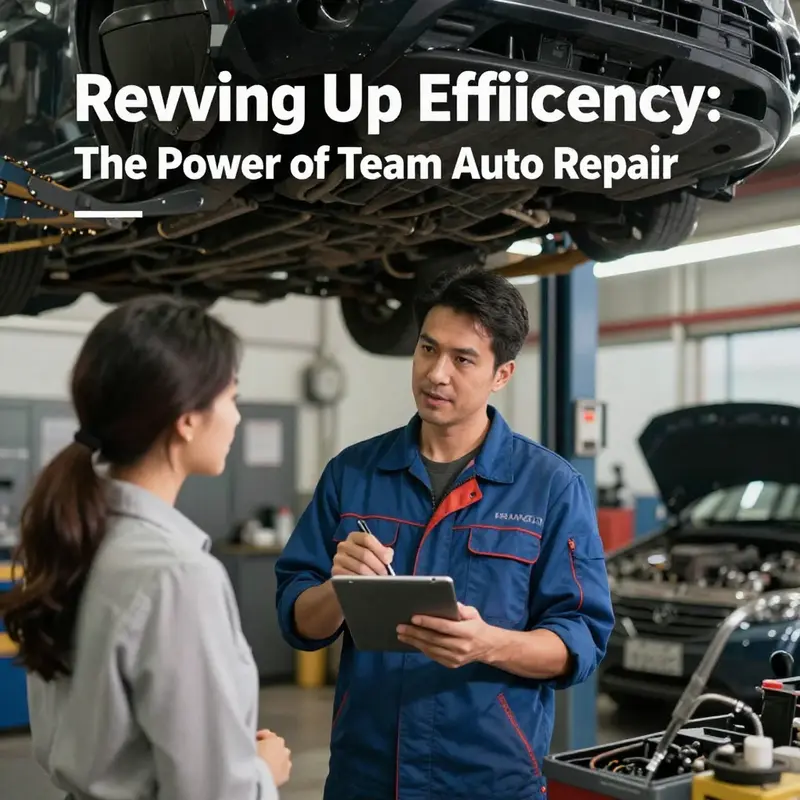
A team auto repair is at its best when every decision, from the first phone call to the final safeguard check, orbits the customer’s needs and experience. A truly customer-centric operation treats the vehicle as a shared problem to solve, not just a mechanical item to fix. The result is not only a repaired car but a strengthened bond of trust between shop and driver. In such a setting, technical excellence and humane service reinforce one another. When the team listens deeply, speaks plainly, estimates timelines accurately, and follows through with proactive care, the customer does not merely leave with a working vehicle; they leave with confidence in the workshop as a partner, one that respects time, transparency, and the worry that every car journey carries. The science behind this approach is as compelling as the craft itself, because it aligns what customers value with what technicians do best, creating a virtuous cycle of satisfaction and loyalty.\n\nTo understand how this works in real life, imagine a scenario that unfolds in a busy shop, where multiple tasks press for attention and every minute counts. A customer arrives with a noisy transmission concern. The technicians begin not with assumptions but with a careful, patient intake. The team members practice active listening, inviting the customer to describe when the noise occurs, what it feels like, and whether there are accompanying symptoms such as vibration, shifting issues, or sudden changes in performance. This is more than courtesy; it is a diagnostic compass. By listening, the team gathers the tacit information that often clarifies the fault before a wrench ever touches a bolt.\n\nNext comes communication that is crystal clear and free of jargon. In the best shops, a technician will translate complex fault codes into plain language. The explanation would cover what the problem is, why it happens, and how it will be repaired. The customer should understand not just the fix but the rationale behind it. This transparency eliminates the fear that a repair is being performed for the shop’s sake rather than the customer’s. It reduces the cognitive load on the driver, who might otherwise feel overwhelmed by technical terms and uncertain about costs. The team can use simple visuals, analogies, or step-by-step walk-throughs that map out the path from diagnosis to repair completion. The aim is to empower the customer with knowledge, so they can make informed decisions about timing, scope, and priority.\n\nTime management becomes a service in its own right. Accurate, realistic estimates matter just as much as the repair itself. In a customer-centric workflow, the team provides a trusted timeline at the outset and commits to updates as the work progresses. If a delay arises or if a second issue emerges, the customer is alerted promptly, with revised estimates and a clear explanation of why the change is necessary. This cadence of updates keeps anxiety at bay and reinforces reliability. It also demonstrates respect for the customer’s schedule—work that fits around life’s commitments rather than forcing life to fit around the shop’s calendar.\n\nBeyond the mechanics of repair, a robust feedback loop binds the shop to continuous improvement. Every customer interaction matters, and every piece of feedback—positive or negative—becomes a data point for service refinement. A truly customer-centric team does not treat feedback as a formality but as a lever for learning. The shop may close the loop with a quick post-service check-in, inviting the customer to rate their experience, comment on communication, and suggest enhancements. This is not a mere courtesy; it is a mechanism for aligning the repair process with evolving customer expectations. The data gathered from these interactions informs training, process adjustments, and the way the team prioritizes tasks.\n\nAs the repair unfolds, the customer-centric ethos extends into the shop’s broader service design. A thoughtful approach considers not just the current repair but also future needs. The team can offer a complimentary vehicle health check to screen for latent issues, propose a personalized maintenance plan, and provide convenient options such as pick-up and drop-off when feasible. These extras are not add-ons to pad profits; they are expressions of care that translate into lasting loyalty. When customers feel seen and valued, they become advocates, sharing their positive experiences with friends and family. The economic logic behind this is straightforward: retaining existing customers typically costs less than acquiring new ones, and satisfied customers are more likely to return for routine service rather than drifting to a competing shop. In this sense, customer-centricity is not a soft selling point but a durable competitive advantage grounded in service quality and relationship depth.\n\nThe road to this outcome is paved by culture as much as by process. Management leadership must articulate a customer-first standard that trickles down to every technician, advisor, and service writer. Regular training sessions that focus on empathy, clear communication, and proactive problem solving help embed the mindset. Frontline staff should be encouraged to go the extra mile—whether that means taking a moment to explain a repair in everyday terms, offering a courtesy vehicle, or coordinating with customers to minimize their downtime. When issues arise, the team should pursue honesty over bravado and transparency over quick fixes. If a problem lies beyond the shop’s purview, clarity about limitations and practical alternatives become a trust-building exercise in themselves. In such a culture, customers do not feel as if they are being sold a service; they feel they are being supported through a moment of car trouble by people who understand the stakes of everyday mobility.\n\nTechnology, rightly deployed, acts as an amplifier for this culture. Repair management platforms and cloud-based systems enable real-time collaboration, shared access to repair histories, and centralized client records. Live data from diagnostic tools can be interpreted by multiple experts in the same session, accelerating problem solving while preserving a clear trail of decisions. Importantly, the digital layer is not a cold administrator but a facilitator of human connection. It keeps everyone aligned, reduces miscommunication, and ensures that a customer’s preferences, appointment windows, and service history travel with them across visits. In practice, this means a customer who asks for a particular notification method—text, email, or phone—receives it consistently; a customer who values a precise estimate can expect it to be honored; and a customer who wants a detailed aftercare plan can receive one without delay. It is the integration of people and tech, not the triumph of one over the other, that sustains a high-performing, customer-centered operation.\n\nThis approach does not exist in isolation from the craft of repair. On the contrary, the technical and the interpersonal reinforce each other. Consider how a team handles a complex issue where data from multiple diagnostic sources suggests several potential faults. A customer-centric team will involve the owner in decision making, lay out the tradeoffs, and solicit consent for the chosen course of action. The precision with which the team executes the repair—backed by data-driven accountability—becomes proof that the customer’s trust was earned, not assumed. The goal of zero rework, a benchmark cited in industry studies, illustrates this synergy. When responsibility is shared—when the entire team feels ownership over a repair’s outcome—and when each step is linked to a clear KPI, the likelihood of returning faults drops dramatically. In such environments, rework becomes a rare exception rather than a recurrent cost, and the customer’s experience improves in parallel with the shop’s efficiency. A concrete manifestation of this mindset can be seen in the way the team handles communications—from the initial diagnostic report to the final confirmation that the issue is resolved, with a post-repair check ensuring that no secondary concerns have emerged.\n\nTo illustrate the power of this approach beyond theory, shops frequently look to examples that demonstrate practical adoption. For instance, a well-known operational mindset encourages shops to share responsibility for outcomes—shifting the language from “I fixed it” to “We completed it.” This subtle shift reframes the repair as a collective achievement, reinforcing teamwork and ensuring that all staff remain accountable for the customer experience. And it resonates with customers who want to feel their problem was treated as a joint venture rather than a one-off transaction. A partner-like stance toward customers—where advisors, technicians, and service coordinators speak with one voice—helps set expectations and reduces anxiety. When the customer senses unity across the shop, they naturally perceive the experience as smoother and more trustworthy. For readers curious about real-world replication, exploring shops that publicly embrace such principles can be instructive; a deeper dive into industry discussions reveals strategies for embedding customer-centric practices into daily routines. A practical takeaway is to examine one’s own service journey and identify a simple change that would improve clarity, speed, or reassurance for the customer. Small, consistent improvements compound into a remarkable reputational edge over time, especially when coupled with a transparent feedback loop and a generous, proactive follow-up plan.\n\nWithin this broader framework, a single link serves as a useful compass for those who want to glimpse how other shops narrate their customer journeys: A-to-Z Auto Repair. It offers a concise articulation of how a disciplined, customer-focused mindset translates into everyday practices, from intake to post-service touchpoints. While each shop must tailor its approach to its own community and constraints, the underlying principles—listening, clear communication, reliable timing, feedback loops, and caring extras—remain universal foundations of a successful, customer-centric team auto repair operation. The true value lies in translating these ideals into concrete routines, visible to customers at every step and reinforced by a culture that treats repair work as a service of trust as much as a craft of precision.\n\nExternal resource: Customer-centric approaches in automotive sales
Safety as Strategy: How Compliance and Culture Keep a Team Auto Repair Shop Running
Safety as Strategy: Compliance, Culture, and Daily Practice
A team auto repair shop is more than a collection of bays and tools. It is a coordinated system where people, processes, and equipment interact under conditions that can be dangerous. Prioritizing safety and compliance is a strategic choice. It reduces injuries, limits downtime, protects the business from liability, and preserves customer trust. For a collaborative repair team, safety becomes the framework that supports every technical decision and every workflow handoff.
Hazards in an auto repair environment are varied and persistent. Technicians lift heavy components, work beneath elevated vehicles, and handle pressurized systems. They mix solvents, paint, and other flammable materials. They confront batteries charged to high voltages. Each task carries its own risks, and small lapses can cascade into severe outcomes. Managing those risks starts with clear, documented rules. Regulatory requirements supply the baseline. They define minimum safe practices for ventilation, hazardous waste handling, machine guarding, and protective equipment. Following these rules keeps the shop within legal bounds and creates a reliable operating rhythm that teams can follow under pressure.
Regulatory compliance is not a checkbox exercise. It is the skeleton of a safety program. Regulations require hazard communication for chemicals, formal lockout/tagout procedures for machinery, and training records for employees. These mandates ensure that every worker understands the risks they will face. They also demand that shops maintain documentation. A repair team that records training sessions, inspections, and incident investigations gains two advantages. First, the team builds institutional memory, so lessons learned remain part of practice. Second, documentation creates accountability that reduces the chance of repeat mistakes.
However, rules alone do not prevent accidents. Strong compliance must live inside a proactive safety culture. In that culture, every team member feels empowered to speak up about hazards. Daily safety huddles and monthly audits keep safety visible. A technician who notices a frayed cable or a poorly functioning lift should be able to stop work without fear. Encouraging that behavior requires leadership that rewards reporting and corrects unsafe conditions quickly. When workers see hazards fixed promptly, they learn that safety is valued. That creates momentum. Safety then becomes the lens through which repair tasks are planned and executed.
Training is the connective tissue between policy and practice. Effective training covers core skills like proper use of personal protective equipment, safe lifting techniques, and correct handling of fuels and solvents. It must also include specialized instruction for modern systems. High-voltage hybrid and electric vehicle batteries demand specific isolation techniques. Technicians need to know how to de-energize systems, verify zero voltage, and use insulated tools. Diagnostic procedures for new energy vehicles often require both mechanical skill and electrical awareness. Regular drills and scenario-based exercises help embed these competencies. They make responses automatic when time is short and stakes are high.
Workplace design and equipment selection are practical safety levers. Proper ventilation in paint booths reduces inhalation risks and lowers fire potential. Clearly marked storage for flammable liquids and labeled containers follow hazard communication rules. Well-maintained lifts, wheel chocks, and engine hoists reduce mechanical failures. A routine inspection program identifies worn cables, leaking hoses, and loose fasteners before they cause harm. When inspections are part of the daily rhythm, repairs happen before failure becomes an emergency.
Tools and equipment also require disciplined maintenance and calibration. Torque wrenches, lifting devices, and diagnostic machines should have service records and scheduled checks. A miscalibrated torque wrench can lead to loose fasteners. A malfunctioning lift can suddenly drop a vehicle. Designating responsibility for each piece of equipment and tracking its condition creates shared ownership and reduces finger-pointing when something goes wrong.
Communication is central to coordinated safety. Clear handoffs between technicians, service advisors, and parts personnel prevent errors. A mechanic should know previous interventions and any outstanding hazards before starting work. Using standardized checklists for complex repairs prevents steps from being missed. These checklists, combined with visible notes on work orders, ensure the entire team has the same situational awareness. When the team adopts a shared language for hazards, the likelihood of misunderstandings drops.
Crisis management is a defining capability for repair teams. Roadside rescues, accident-damaged vehicles, and weather-driven emergencies require quick, disciplined responses. Teams that practice incident protocols can secure scenes, control traffic, and stabilize vehicles while protecting themselves and bystanders. Such preparedness depends on training in traffic control, use of PPE, and coordination with emergency services. It also depends on mobile capability: the ability to operate offline tools and document actions even without network access.
A culture of continuous improvement keeps safety effective over time. Near-miss reporting, root cause analysis, and follow-up actions turn every incident into a learning event. Assigning clear KPIs for safety-related tasks—such as completion of daily inspections or time to repair a reported hazard—creates measurable progress. When teams treat safety metrics with the same rigor as productivity metrics, they reinforce the message that safety and performance are complementary rather than opposed.
Safety also matters to customers. A shop that shows clean, organized work areas and communicates safety steps during service builds trust. Explaining why certain repairs require additional time or why specific precautions are necessary makes customers partners in the process. This transparency reduces misunderstandings and aligns expectations.
Technology supports these efforts. Cloud-based systems centralize records of training, inspections, and incident follow-ups. Shared work orders and live job tracking help technicians see the full history of a vehicle. Mobile platforms that work offline ensure field teams can document work and hazards without interruption. Digital checklists and automated reminders reduce human error. But technology cannot replace the human behaviors that underlie safety. It amplifies them.
For a collaborative repair team, safety and compliance are collective responsibilities. When each member accepts that role, the shop moves toward fewer accidents and higher quality outcomes. That collective approach mirrors the practices that lead to near-zero rework. Shared ownership, clear accountability, and data-driven follow-up strengthen both safety and service. Over time, these practices build a resilient operation that protects people, property, and reputation.
For practical reference on regulatory standards and requirements, consult the authoritative guidelines provided by oversight authorities. The Occupational Safety and Health Administration offers comprehensive standards that apply across repair operations, including hazard communication and machine safeguarding: https://www.osha.gov/standards
For a concise overview of practical repair processes that complement safety procedures, see this internal guide to repair workflows: A to Z auto repair.
Final thoughts
A successful team auto repair goes beyond individual skills; it embodies a culture of collaboration and commitment to quality service. By embracing the necessary technical proficiencies and modern tools, and by fostering clear communication and safety, these teams not only enhance repair efficiency but also build lasting relationships with their customers. Understanding the dynamics of team auto repair equips all stakeholders—from motorcycle owners to auto repair shops—on how best to engage and benefit from these advancements.