
For auto repair shops, securing the right insurance coverage is not just a legal requirement; it’s a critical part of safeguarding your business investment. With the vast array of services offered and the multitude of risks involved—from property damage to employee safety—understanding how much small business insurance costs can help shop owners make informed financial decisions. This guide will delve into the essential aspects of small business insurance for auto repair shops, exploring the various types of coverage, the factors that influence pricing, and practical tips on obtaining the best rates. As we journey through each chapter, readers will gain a comprehensive view that empowers them to protect their business effectively.
The Price of Protection: Navigating Insurance Costs for Auto Repair Shops

Protecting a small auto repair shop with the right insurance is more than a line item on a budget; it is a cornerstone of financial resilience. The costs you’ll face are not fixed, but depend on a spectrum of factors that mirror the risks you take every day in the shop. Location, shop size, number of employees, claims history, and the exact mix of coverages you choose all shape the final number. There isn’t a one-size-fits-all price, but there is a pattern you can rely on as you plan and compare: core protections are affordable for many shops, yet the total can rise quickly if risk and exposure pile up. Understanding this dynamic helps you make smarter choices about what to insure, how much to insure, and where to invest your dollars for the greatest protection and peace of mind.
At the heart of the matter are the standard policy categories that underpin most small-business packages for auto repair shops. General liability forms the foundation. For most shops, the annual premium falls somewhere between $500 and $1,500. This coverage is meant to catch the wide net of third-party bodily injury or property damage that could surface from everyday operations. A customer might trip in a waiting area, or a tool could momentarily slip from a bench and nick a customer’s car. The policy’s strength is in legal defense and settlement costs, should a claim arise. Next comes commercial property insurance, which guards the tangible assets without which a shop cannot function. Buildings, tools, lifts, parts inventory, and office equipment are all in play here. The premium range for property insurance typically sits between $800 and $3,000 annually, but those numbers can swing with the building’s value, the equipment you rely on, and how much you carry in spare parts inventory.
A critical consideration for any shop with employees is workers’ compensation, a line item that many owners reluctantly accept as a necessary obligation. Premiums for workers’ comp are not flat; they’re calculated from payroll and the job mix of the workers. For a small shop with 2–5 employees, a typical band might be $1,000 to $4,000 per year. The exact figure depends on how your state classifies the risk of each role and your payroll base. In practice, this means a mechanic’s wage and a helper’s wage both contribute to the rate, while the shop’s overall safety record can affect increases or reductions in that rate over time. In many shops, this is the line that changes most noticeably when you add employees or when you invest heavily in safety training and return-to-work programs.
Inland marine insurance, often aligned with what some shops refer to as garage keepers’ liability or equipment breakdown coverage, addresses the risk to the tools and vehicles you manage for customers. The range here is commonly $500 to $1,500 per year for basic protection, but as the value of the tools and the number of customer vehicles in your care grow, so too can the premium. In larger or higher-traffic operations, or in places with more stringent regulatory expectations, this line can become one of the more significant budget entries. Finally, if you own company vehicles used in day-to-day operations—tow trucks that tow, transport, or shuttle vehicles between sites—commercial auto insurance is essential. Rates for business-owned vehicles hinge on the fleet’s size, the types of vehicles, and how they are used. For many small shops, these premiums start around $1,000 to $3,000 per year but can climb with higher mileage, greater risk exposure, or a fleet that includes heavier or more specialized vehicles.
Taken together, a comprehensive package that combines general liability, property, workers’ comp, inland marine, and commercial auto insurance often lands in a broad range of $3,000 to $8,000 per year for a small to mid-sized operation. That band reflects a spectrum of risk profiles. A shop with a clean safety history, robust loss controls, and a conservative approach to coverage limits may land toward the lower end. Conversely, a shop located in a high-traffic urban corridor, with more employees, higher vehicle turnover, or a history of claims, can edge toward the higher end. It’s also worth noting that some shops manage to nudge costs down by bundling coverages with a single insurer, by selecting higher deductibles, or by implementing formal risk-management programs that demonstrate prudent practices to underwriters.
The practical upshot is that price alone isn’t the whole story. The right package aligns with the risk profile of your operation and your business goals. A few concrete steps can help you navigate the pricing landscape without sacrificing essential protection. Start by inventorying what you own and what you store for customers. Build replacement-cost estimates for tools, lifts, diagnostic equipment, and parts. The more accurate you are about replacement values, the more reliable your property and inland marine coverage will be. Small differences in declared values can translate into meaningful premium changes over a year.
Next, take a hard look at your claims history. A shop that has managed to avoid costly incidents may receive more favorable terms than one with a string of past claims. This isn’t about risk-shaming; it’s about the reality that underwriters price future risk in part based on past behavior and documented outcomes. If you’ve had a few claims, you can still secure favorable terms by investing in risk-reduction measures—employee training, improved shop layout to minimize slips and trips, better storage for flammable materials, and formal incident reporting that catches near-misses before they become losses. These steps don’t just reduce the chance of a claim; they also serve as tangible evidence to insurers that you’re serious about safety and continuity.
Another lever is your coverage limits and deductibles. Higher limits provide bigger protections but come at a higher price. A practical approach is to balance what you could reasonably lose against what you can reasonably absorb through a deductible. If a catastrophic event would threaten the very existence of the business, higher limits paired with a modest deductible can be worth the bite. If your operation sits on thinner margins, a higher deductible may be a pragmatic way to curb annual premiums while still preserving essential protections. It’s a conversation best had with a licensed broker who can tailor the numbers to your shop’s precise risk exposure.
While the math of premiums matters, the quality and scope of coverage matter just as much. For instance, inland marine coverage is often described as one of the most critical policies for repair shops because it covers damage to or loss of a customer’s vehicle under your care. A single incident can be financially devastating if it’s not included in your policy. Similarly, professional liability, or errors and omissions coverage, protects you from claims of negligence or mistakes in the service you provide. This can be particularly relevant for shops that perform advanced diagnostics or complex repairs whose outcomes can be argued as a service failure, even when the customer’s vehicle isn’t outright damaged. In many packages, this is a secondary layer, but for certain shops it’s a vital shield that prevents a single costly claim from derailing the business.
From an operations perspective, the way you run the shop contributes as much to your insurance cost as your address or the number of staff. Implementing a formal safety program, maintaining security systems, enforcing PPE use, and ensuring technicians are properly trained all signal to underwriters that you’re actively managing risk. Even small steps—clear ride-along protocols for apprentices, daily shop checklists, and documented accident reporting—can tilt the premium downward over time. The premium is not merely a number you pay; it’s a reflection of your commitment to consistent, controlled risk.
As you compare quotes, keep a few practical strategies in mind. Collect multiple quotes from brokers who specialize in commercial auto repair shop policies. This isn’t about chasing the lowest price; it’s about balancing price with the scope of coverage. Read the policy language carefully. Ask what is covered if a customer’s vehicle is damaged while in your care, who pays for a temporary repair that can prevent further damage, and how your business interruption protection would respond if a fire or major incident forced a shutdown. Think through the lifecycle of a typical week: what happens if a critical lift goes offline for a day, how long you could sustain payroll without revenue, and whether a policy includes expediting costs to fix equipment after a breakdown. These considerations inform not only the right limits but the right deductible and the right mix of coverage.
If you want a concrete example of how these pieces come together in a real-world context, consider a shop that operates with a lean crew of three mechanics, a front-desk administrator, and a small tow vehicle in a medium-sized town. The business owns the building, maintains a mid-range inventory of parts, and carries a modest value of diagnostic equipment. With this profile, the shop’s annual package might settle in the lower to mid-range of the general estimates—roughly a few thousand dollars for liability and property, plus several thousand for workers’ comp and inland marine, topped by a modest auto policy. The actual figure, of course, hinges on the specifics of the location, the exact vehicle mix, and the coverage limits selected. The takeaway is not that insurance is a fixed cost, but that it scales with how you choose to protect the shop’s assets, systems, and people. It also highlights the importance of proactive risk management as a lever to control premium growth over time.
In short, small business insurance for auto repair shops is a balancing act between what your budget can tolerate and what your exposure warrants. Most shops can secure a solid baseline package in the several-thousand-dollar range, but every niche—location, employee count, vehicle exposure, and claims history—modifies that baseline. The goal is to build a package that covers the common vulnerabilities while preserving enough cash flow to invest in safety and ongoing operations. If you’re unsure where to start, a licensed broker who specializes in auto repair shop policies can assess your operation, inventory value, and staffing plan, then tailor a package that hits both your protection needs and your price target. For a snapshot of how related daily costs can intersect with shop expenses, you might look at cost considerations in daily operating life, such as vehicle-related maintenance expenditures, by exploring resources like Auto A/C Repair Cost. This kind of cross-reference helps you place insurance costs in the broader context of running a shop well.
For readers seeking a broader regulatory or consumer guidance perspective, the National Association of Insurance Commissioners (NAIC) offers official resources and consumer information that can help you understand how coverage works and what protections are standard across policies. You can explore these general references at https://www.naic.org. They provide a framework for evaluating policy language, understanding exclusions, and confirming licensing and market practices in your state.
Internal link reference: To see how day-to-day maintenance costs intersect with shop economics, you may find it useful to review related content such as the article about Auto A/C Repair Cost, which offers a practical lens on how ongoing operational costs can influence budgeting decisions for insurance and risk management. Auto A/C Repair Cost.
Guardrails for the Garage: How Coverage Choices Shape Insurance Costs for Auto Repair Shops
In the busy, cluttered world of a small auto repair shop, insurance often lands as a necessary expense rather than a strategic tool. Yet the true value of the coverage you choose—and how you choose it—reaches far beyond a monthly premium. It shapes your risk tolerance, your ability to keep operating after a setback, and, ultimately, your capacity to grow. Costs for small business insurance in this sector do not come from a single source. They accumulate from a blend of location, shop size, the number of employees, historical claims, and the particular mix of policies you carry. There is no one size fits all price, but there is a clear pattern in how different coverages influence the bottom line and the level of protection you receive.
General liability insurance sits at the core of this pattern. It guards against third party bodily injury and property damage that can occur on the shop floor or in the wake of a repaired vehicle leaving the bay. A customer slipping on a slick floor, a vehicle collision that occurs after a test drive, or a vendor injury during a service call are typical scenarios. The premium you pay for this foundational policy tracks with the pace of customer traffic, the physical footprint of the shop, annual revenue, and your claims history. A larger shop with frequent transactions and a few prior incidents will naturally see higher premiums, while a smaller operation with a spotless safety record will enjoy a leaner price tag. The value of general liability is not merely financial; it sets a ceiling on what you can spend out of pocket when a claim arises and serves as a first line of defense as you navigate the legal and financial fallout of an accident.
Property insurance adds another layer of complexity. Auto shops house a constellation of high value assets: lifts, diagnostic tools, paint booths, inventory, and the shop’s own building or leased space. The premium here is a function of the value at risk, the construction type of the building, and the risk profile of the location—factors that can shift substantially by city, flood zone, or nearby crime statistics. A shop with valuable equipment stored in a high-risk area will pay more than a leaner, well-secured space in a lower-risk neighborhood. Security matters too: alarms, cameras, access control, fire suppression, and even regular maintenance of these systems can nudge premiums downward by demonstrating prudent risk management.
Workers’ compensation follows a different logic. For shops with employees, this coverage is often non negotiable and, in many places, legally required. Premiums are generated from payroll and the job risk classifications assigned to roles within the shop. The anatomy of a mechanician’s work—repetitive use of lifts and exposure to heavy machinery and chemicals—can elevate classification risk and, with it, the rate at which premiums accrue. A shop that invests in robust safety programs, regular training, and clear incident reporting typically earns favorable treatment from insurers, translating into lower costs over time. Conversely, a history peppered with injuries tends to compound costs, regardless of your current safety posture.
Inland marine or equipment breakdown insurance is the quiet workhorse that protects the tools you rely on every day. It acknowledges that the things that let you diagnose and fix cars—wrenches, scanners, jigs, power tools—are equally vulnerable to damage, theft, and wear. The cost for this coverage sits in a practical range because it reflects the aggregate value of gear you transport or use away from the shop, rather than the building itself. When a large, expensive tool goes down, the financial impact can be disproportionate to the cost of the policy that covers it, making inland marine a prudent addition for shops that move equipment around or maintain elaborate tool inventories.
Commercial auto insurance closes the circle with the vehicles your business uses—tow trucks, service vans, test-drive cars, and other company-owned transport. Premiums hinge on the number and type of vehicles, how they’re used, and the driving records of the people who operate them. A fleet with high annual miles and younger drivers will typically carry higher pricing, as will vehicles with higher theft risk or more exposed lines of work. The importance of these policies for a repair shop is unmistakable: without adequate coverage, a single incident can disrupt operations for days and trigger costs that ripple through payroll, customer commitments, and supplier relationships. Because these vehicles are often essential to daily operations, many shops accept a bit more premium as the price of keeping the wheels turning.
Taken together, the total package for a small to mid-sized auto repair shop can land somewhere in a broad corridor—from roughly three thousand to eight thousand dollars per year. That spread reflects the diversity of risk profiles across locales and shop operations. A shop that operates with a lean employee base, tight safety practices, and a calm neighborhood might sit near the lower end of the spectrum. A larger shop with a larger payroll, more vehicles, a bustling customer flow, and a history of claims can drift toward the higher end. It is not unusual for a shop to secure a composite policy bundle that includes general liability, property, workers’ compensation, inland marine, and commercial auto coverage, effectively creating a shield that balances risk with operating viability. Yet the premium is never a mere number; it is a reflection of the inherent risk in your day-to-day operations and your readiness to address it.
A useful way to think about these figures is to view insurance as a form of risk budgeting. Each policy line contributes a piece of the overall protection, but the way you structure your budget and your risk tolerance will influence the total you pay. For instance, increasing the deductible on a general liability policy can lower the premium, but it also raises the amount you’d owe out of pocket if a claim occurs. Similarly, investing in enhanced safety measures may reduce the chance of incidents and thus lower losses, which in turn can yield more favorable pricing over multiple policy periods. The calculus is not about stripping away coverage in pursuit of the cheapest option; it is about aligning protection with the actual risk you face and the cash flow you can sustain if a loss happens.
This alignment requires a balanced view of both likelihood and impact. A high traffic shop in a busy commercial corridor may encounter more slip and fall scenarios, increasing the likelihood component of general liability costs. A shop that stores expensive equipment in a building with limited security features faces greater risk of theft or fire, pushing up property premiums. A company with a strong safety program and well-documented training programs can signal to insurers that it is managing risk proactively, which often translates into better pricing over time. It is worth noting that a single high-cost incident can skew perception unless your insurer is looking at long-run risk metrics across several years of claims and safety performance. The best policy for shop owners is to approach insurance as a living, improving system, not a static price tag.
One practical step in this ongoing process is to view coverage decisions through the lens of core business operations. Think about the day-to-day realities of your shop: how many technicians do you employ, how many bays are in use, what is the typical daily mileage for service vehicles, and how critical are your tools to completing work on schedule. A clearer picture of these factors makes it easier to dialogue with a broker about what mix of coverages will deliver the protection you need without paying for protection you do not. When it comes to money, the phrase you want guiding the conversation is more about value than volume. Value comes from a policy that covers the most likely and potentially costly risks, while cost arises not just from the policy itself but from the risk you carry between renewal dates.
To that end, it helps to anchor your planning in a disciplined approach to risk assessment. Start with a baseline estimate across the five coverage areas already discussed. Then, test how changes in your shop’s profile affect costs. If you plan to hire more technicians, or if you intend to expand the service area or vehicle fleet, run the numbers again, factoring in the revised payroll, vehicle count, and property value. Consider a safety program that includes regular training, hazard communication, proper chemical storage, and documented incident reporting. Each of these elements signals to underwriters that you are actively reducing risk, which can translate into more favorable terms. And don’t overlook the practical expense side: maintaining clean floors to reduce slips, enforcing proper lift operation protocols, and implementing a robust cybersecurity policy for customer data can all influence cost trajectories in meaningful ways.
If you are curious about how specific cost considerations relate to your shop’s operations, you can explore practical, maintenance-related cost discussions within internal resources. For instance, the Auto AC Repair Cost article delves into how cooling system work interacts with vehicle repair workflows and equipment use—topics that indirectly relate to how you allocate capital for tools, parts, and shop infrastructure. While not a direct insurance guide, this broader view of shop economics helps you see how day-to-day decisions contribute to the risk profile insurers evaluate. Read more at A to Z Auto Repair, which offers a broad perspective on shop operations and maintenance decisions. A to Z Auto Repair.
Beyond the math, the human element remains constant. A shop that builds a culture of safety, prompt incident reporting, and transparent communications with customers creates a proven track record. Insurers look at your safety culture not only as a mechanism to reduce claims but as a predictor of future behavior in the event of a loss. The better you demonstrate consistency—through training logs, documented safety meetings, and clearly defined procedures—the more you can reasonably expect premiums to reflect that disciplined approach. You are not simply buying protection; you are investing in the shop’s resilience and continuity.
In the end, the question of cost is inseparable from the question of care. The more you invest in a comprehensive risk management program, the more protection you acquire against the unpredictable realities of a repair shop. The premium you pay is not just a line item; it is a living measure of your shop’s readiness to absorb shocks, safeguard employees and customers, and stay productive even after a setback. The objective is to arrive at a cost structure that supports daily operations while providing a shield against the financial ripple effects of accidents, equipment failures, or data incidents. By treating insurance as a strategic asset rather than a ceremonial compliance expense, shop owners can navigate the spectrum of coverage with greater confidence and clarity.
External resource: https://www.nasbo.org/insurance-coverage-for-auto-repair-shops
The Cost Equation: How Premiums Take Shape for Auto Repair Shops
Insurance pricing for small auto repair shops reads like a premium puzzle built from risk, asset value, and operational reality. The costs aren’t random; they are the arithmetic of exposure. When a policy underwriter considers a shop, they are essentially assessing how likely it is that a claim will be filed and how large a claim might be. The more vehicles, tools, solvents, and people under one roof, the higher the potential for an accident or loss. This intuitive logic is echoed across insurers, including principals in the industry who remind us that premium cost grows with risk. In practical terms, this means a shop with constant movement of vehicles, energetic work on engines and frames, and a sizable toolkit will see higher premiums than a quieter, smaller operation that keeps a tighter control on where and how work happens. The numbers people see in quotes reflect this relationship between risk and price, rather than a single universal fee for every auto repair business.
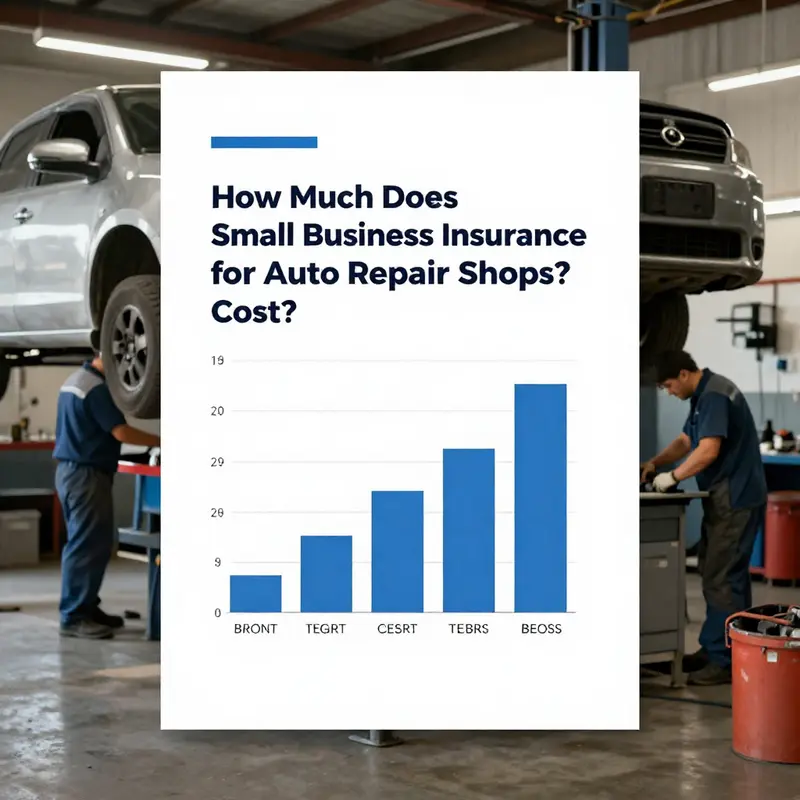
To understand the base price of small-business insurance for an auto repair shop, it helps to map out the core coverage types and their typical ranges. A general liability policy, which protects against third-party bodily injury and property damage claims, usually costs between roughly $500 and $1,500 per year. Property coverage, which insures the shop building, its contents, and inventory, generally falls in the $800 to $3,000 annual band depending on the value of the building and the protective measures in place. If the shop has employees, workers’ compensation becomes a non-negotiable line item in most states, with premiums driven by payroll and job risk; a shop with a small crew might see a range around $1,000 to $4,000 per year. Inland marine coverage, designed to protect tools and equipment used in the shop and during travel for job sites, commonly adds $500 to $1,500 annually. Finally, if the business maintains company-owned vehicles—tow trucks, service vans, or service fleets—commercial auto insurance can start around $1,000 to $3,000 per year, depending on vehicle type and usage. Taken together, a comprehensive package for a small to mid-sized shop often lands in the neighborhood of $3,000 to $8,000 per year. These figures are not universal, but they provide a practical frame for what shop owners should anticipate as the baseline cost of protection, with actual quotes tailored to specific risk profiles.
The real variation, however, emerges from how a shop differs in location, size, and operations. Location matters because urban areas carry higher traffic, more incidents, and greater exposure to theft and vandalism. A shop tucked into a busy metro corridor with high foot and vehicle traffic will typically face higher premiums than a rural counterpart, all else equal. The density of risk translates into more frequent claims, larger potential third-party losses, and in some cases, more stringent underwriting requirements. This is not merely about crime statistics; it is about the probability that a customer, a passerby, or a coworker could be affected by an accident on a site that is busy and active. For many insurers, the location signal also interacts with the shop’s access to quality risk management resources, like secured facilities, fire suppression systems, and proper storage for flammable solvents—elements that can influence rates by indicating stronger control over hazards.
Shop size and workforce composition play a parallel role. A larger staff expands the spectrum of risk, simply because more hands and bodies are around heavy machinery, lifts, and vehicles. A workforce with more experience might still prompt a higher premium because of payroll magnitude; yet safety history can mitigate that rate if the shop demonstrates consistent adherence to safety protocols and a clean claims history. Conversely, a shop with a rough safety record or frequent incidents can trigger rate increases as carriers price in the higher likelihood of losses. In practice, this means a two- or three-person operation in a single-vehicle bay can be quite different in price from a busier shop juggling multiple bays, tow operations, and a team that performs high-risk tasks such as welding or advanced bodywork.
The value and variety of equipment and inventory within the shop also shape the premium picture. Heavy tools, diagnostic machines, air compressors, lifts, and even the vehicles themselves contribute to the insured value. The more valuable the assets, the higher the exposure to total loss, equipment breakdown, or theft, and those exposures translate into higher premiums. Insurers assess not just the current value but the replacement cost and the likelihood of partial losses during a claim. This is why a shop that invests in high-quality equipment and robust security measures may secure lower rates than a similarly sized shop with outdated or poorly safeguarded assets. In practice, shops can manage this dimension by conducting regular equipment inventories, implementing preventive maintenance on tools and lifts, and ensuring that high-value items are adequately protected and documented for insurance purposes.
The services offered by the shop also matter. A general repair shop that mainly performs routine maintenance and common repairs generally presents a different risk profile than a shop that engages in higher-risk modifications, performance work, or structural changes to vehicles. Specialty services can entail unique hazards—welding, frame straightening, metal finishing, or dealing with hazardous materials—that require broader coverage or higher liability limits. Underwriters weigh these risk drivers when calculating premiums, and they often request detailed descriptions of the services performed and the materials used, especially if there are flammable solvents, paints, or custom fabrication involved. The more explicitly a shop can document standard operating procedures, the clearer it becomes to underwriters how risk is controlled, which can, in turn, influence pricing.
A crucial driver that quietly shapes premiums is the shop’s safety culture and risk-management discipline. A shop that prioritizes safety, maintains a clean and orderly workspace, conducts regular safety training, and keeps meticulous records of injuries, near-misses, and equipment maintenance frequently demonstrates to carriers that it actively reduces risk. Programs such as formal safety training, proper use of PPE, clear incident reporting channels, and routine equipment inspections can all contribute to a more favorable premium, even when the operational footprint is modest. In many markets, insurers explicitly reward these proactive practices with lower deductibles, lower limits, or even premium credits when the claimed loss history is clean and risk controls are robust. The logic is straightforward: prevention reduces loss, and loss history is a reliable predictor of future losses.
Another variable that often shifts the premium landscape is the claims history itself. A single serious incident or a pattern of smaller claims can alter the underwriting calculus. A shop with a history of frequent vehicle damage or worker injuries is likely to face higher premiums and may encounter more stringent policy conditions before renewals. On the flip side, a claim-free period, especially when paired with demonstrable risk-management improvements, can lead to favorable rate adjustments at renewal. This dynamic underscores the importance of accurate, timely reporting of incidents, thorough investigations to determine root causes, and proactive corrective actions to prevent recurrence. It also highlights the benefit of a disciplined approach to safety and training as ongoing investments in a shop’s financial health, not just its operational health.
The structure of the policy itself—how limits are set, what coverages are included, and which riders or endorsements are added—can shift premiums in meaningful ways. A basic package that blends general liability with property and a standard auto policy will be priced differently from a policy that includes specialized coverages such as inland marine for tools, equipment breakdown, or additional products-completed operations coverage. The decision to purchase higher limits or to add cyber liability, if the business stores customer data or uses connected diagnostics systems, can also influence the bottom line. For many small shops, pricing hinges on a careful balance: securing enough protection to cover plausible losses without paying for protections that offer little value given the shop’s actual risk profile. This balancing act often benefits from a candid conversation with an experienced broker who understands the nuances of auto repair operations and can tailor a package that aligns with both risk and budget.
If you are building a strategy to manage insurance costs, one practical approach is to frame premium decisions alongside other shop expenses. For instance, a comparison may be drawn with the costs of typical repair services or the investment in shop modernization. A useful, real-world reminder of the cost context comes from a broader industry perspective: higher risk translates to higher premiums, and the correlation is strongest where work involves vehicles, heavy machinery, and hazardous materials. A shop owner can translate this understanding into a proactive plan: invest in safety programs, maintain impeccable records, and document risk controls so underwriters see a well-managed operation. When these elements are in place, the price you pay for protection becomes a more accurate reflection of the actual risk you present, rather than a blunt, one-size-fits-all figure. This perspective helps explain why two shops with seemingly similar footprints can end up with notably different premium quotes.
For readers who want to see how these principles play out in a single narrative, consider how insurance costs compare to other ongoing expenses in a repair shop. The connection between asset value and coverage needs becomes clear once you recognize that the tools and vehicles in a shop are not just capital purchases; they are the physical backbone of the business. The amount of capital tied up in equipment and the potential downtime if that equipment is out of service are critical to how underwriting views risk. This is why a well-documented inventory and a robust maintenance schedule can influence not only reliability but also price, because they reassure insurers that loss exposure is being actively managed. It is a reminder that premium pricing, while complex, often rewards practical, proactive risk management as a core business practice.
In practical terms, when a shop owner sits down with a broker to discuss coverage, the first step is to catalog assets and risks in concrete terms. How many employees are on the payroll? What is the approximate value of the shop’s equipment and vehicles? What high-risk tasks are regularly performed? Where is the shop located, and what is the local crime and traffic environment? What safety programs and reporting systems exist? The broker can then translate this information into a staged package that balances protection with cost. A thoughtful approach might start with a solid general liability and property base, layer in inland marine for tools, and then evaluate whether adding specialized riders or reducing coverage gaps yields meaningful safety and cost benefits. The goal is to construct a policy that aligns with operational realities so premium changes reflect actual risk movements rather than guesswork.
As with any business decision, the path to affordable protection is iterative. A shop might begin with a baseline package and then, over renewals, adjust limits and coverages as the business grows or as risk controls improve. The right broker can serve as a partner in this evolution, helping to reassess exposure after major changes like hiring a new crew, expanding service offerings, or investing in new equipment. The result is not just a lower price, but a more resilient price that better mirrors the shop’s true risk profile. And for shop owners who want a clearer sense of how pricing aligns with their particular operation, it is worth exploring tailored quotes that reflect real-world variables rather than generic ranges. In the end, premiums are not fate; they are a reflection of how well a shop manages risk, protects its people, and preserves the continuity of its service with a vigilant, informed approach.
For a practical practicality reference on how such cost considerations can compare to other repair-shop costs, you can review material on Auto AC Repair Cost as a related cost topic. This can help in understanding how different kinds of equipment and service lines affect overall expenses and risk exposure, which in turn influence insurance pricing. Auto AC Repair Cost.
External resource for deeper context: the factors that influence business insurance cost are widely discussed by major insurers. For a detailed framework that encapsulates risk exposure, location, assets, and management practices, see the external resource on factors affecting business insurance cost. https://www.chubb.com/us-en/small-business-insurance/insurance-coverage/factors-affecting-business-insurance-cost.aspx
Sharper Premiums: Navigating and Negotiating Better Insurance Rates for Auto Repair Shops

When an auto repair shop owner sits down to price small business insurance, the exercise often begins with a simple question: how much will it cost? Yet the real answer is rarely a single number. Insurance is a bundled conversation about risk, operations, and preparedness. Rates are shaped by location, shop size, how many employees you have, how often you’ve filed claims in the past, and the exact mix of coverages you choose. A general liability policy, which handles third party bodily injury and property damage claims, might run from five hundred to fifteen hundred dollars a year. Commercial property insurance, protecting your building, inventory, and essential equipment, commonly lands between eight hundred and three thousand dollars annually. If your shop has employees, workers’ compensation becomes a must in most states, with premiums typically calculated from payroll and job risk; for a small shop with a handful of workers, that cost can fall around one thousand to four thousand dollars per year. Inland marine or equipment breakdown coverage, which guards the tools and vehicles you travel with, can add roughly five hundred to fifteen hundred dollars. And if you own company vehicles used for business, commercial auto insurance can start around one thousand to three thousand dollars per year, depending on vehicle type and usage. Taken together, a comprehensive package for a small to mid-sized auto repair operation often sits in the neighborhood of three thousand to eight thousand dollars per year. It is not rare for shops with especially low risk profiles, clean safety records, or modest fleets to pay a bit less, while those operating in higher risk areas or with more staff can face higher premiums. This reality underscores a central principle: the price you pay is not just a line item on a quote sheet but a reflection of how you run the business every day, how you manage risk, and how you demonstrate readiness to insurers when questions arise about safety and claims history.
To get a precise figure tailored to your operation, you’ll want to engage licensed brokers who specialize in commercial auto repair shop policies. They can translate the specifics of your shop into a policy that matches your real-world risk profile, not just a generic template. In the meantime, it helps to understand the levers insurers pull when evaluating your request for coverage. The facility itself matters. A well maintained space with clear pathways, safe storage for hazardous materials, adequate fire suppression equipment, and routine facility inspections signals to an underwriter that the shop is less likely to suffer or contribute to losses. The state of the equipment is another critical cue. Modern diagnostic tools, up-to-date lifts, and properly calibrated repair stands reduce the likelihood of accidents and mistakes. Insurers will look at how you maintain and use this equipment, how often you replace or upgrade older gear, and whether maintenance records are readily available. These factors do more than prevent losses; they shape the confidence an insurer feels in your ability to operate safely over time.
The quality of work performed by the shop also informs pricing, albeit in more nuanced ways. A shop with a track record of precise diagnostics, thorough test drives, and documented customer satisfaction tends to present a lower risk picture. When a history of quality work accompanies timely repairs and accurate estimates, the insurer can be more assured that the shop will minimize costly disputes, rework, or liability claims. Conversely, a pattern of customer complaints or repeated claims can push rates higher as the business is perceived to carry greater exposure. In this sense, the narrative you’ve built with customers through consistent, fair service becomes part of the risk assessment that underpins your premium. Safety standards compliance plays a similar role. Adherence to industry best practices—proper chemical handling, fire safety protocols, appropriate waste disposal, and thorough technician training—creeps into the underwriting equation as a signal of reduced hazard.
One notable point that often surprises shop owners is that insurance is not restricted by the ownership model of a shop. The research landscape indicates that providers are open to covering auto repair businesses regardless of whether they are owned by different demographic groups, as long as the operation meets established criteria for safety and risk. This means that success in obtaining favorable terms hinges less on who you are and more on how you run the business day to day. In practical terms, this translates into concrete steps you can take to improve your rate picture without changing ownership or a single policy provision. First, cultivate a robust safety record. Regular safety audits, corrective action plans for any identified hazards, and documented follow-through can translate into meaningful premium adjustments over time. Second, invest in employee training that directly impacts repair quality and efficiency. When workers understand both the technical and mathematical aspects of the job, they tend to produce consistent results with fewer mistakes. Third, embrace modernization. Up-to-date tools and facilities not only raise service quality but also reduce the likelihood of accidents, breakdowns, and missteps that result in claims.
These principles feed into a strategy for competitive pricing that goes beyond chasing the lowest quote. Bundling remains a reliable approach. Insurance providers frequently offer discounts when you purchase multiple coverages from the same carrier. A bundled policy—general liability, property, and workers’ compensation, for example—can produce savings greater than the sum of individual line-item discounts. In practical terms, if you are evaluating separate quotes, ask specifically about multi-policy discounts and how they are applied. Insurers will also look for consistency across coverages: if your property policy reflects a well-documented inventory, and your workers’ compensation policy aligns with your payroll realities, you create a coherent risk picture that underwriters can price with greater precision. The narrative you present in your risk management materials can matter as much as the numbers themselves. A cohesive story — facility upkeep, safety compliance, modern tools, and a demonstrated record of responsible operations — often translates into a premium that mirrors actual exposure rather than a best-guess estimate from a one-off questionnaire.
Beyond these structural factors, your approach to pricing itself can influence the final figure. Engaging a broker who knows the auto repair sector and who can tailor coverage to your shop’s specifics is essential. A broker can help you size the coverage to your real exposure, avoid overinsurance, and ensure you are not paying for protections you do not need. This is where the practical craft of negotiation comes into play. You can present three or four years of loss history, technician training certificates, and a documented maintenance program for equipment and lifts to a broker or underwriter. Doing so provides tangible evidence of risk reduction, which may lead to more favorable terms. The process is not simply about lowering price; it is about aligning the policy with the actual operational risk of your shop so that the coverage you buy truly matches your needs.
As you map this landscape, you will inevitably encounter the practical reality that premiums are influenced by the scope and quality of your risk management program. For example, a shop that keeps a clean, organized shop floor, with clearly marked exits and well-maintained electrical systems, conveys an image of discipline and control. When customers and insurers both observe that you regularly conduct staff safety briefings, document incidents, and address hazards in a timely fashion, you are effectively communicating a track record of proactive risk control. This kind of discipline often correlates with more stable premiums over time, simply because the insurer feels more confident in your ability to avoid or contain losses. It is not just about avoiding losses today; it is about shaping a low-risk trajectory for the years ahead.
If you are curious about the cost landscape of related operating expenses, you may find it useful to consider how various cost drivers interact with insurance decisions. For instance, the ongoing expense of vehicle maintenance and specialty repairs contributes to your overall operating risk. A trip to the shop floor to review the most common repair tasks can reveal where mistakes most frequently occur and where better processes or equipment could reduce those risks. In this regard, even a small investment in monitoring and documenting routine maintenance can serve as a quiet but powerful lever in your risk profile. For a practical sense of a common cost area in the shop, you might explore a topic like the price range for auto repair maintenance tasks, which sometimes appears alongside discussions of shop overhead. As a reference point, you can see how a specific repair cost example, such as the cost associated with an automotive air conditioning system service, plays into the broader financial picture—Auto AC repair cost. This is not a price prescription for insurance, but it helps you calibrate your overall budget and understand how risk and cost interact across the business.
The journey toward the best possible rates is not a single, one-time event. It is an ongoing program of risk assessment, safety investment, and strategic purchasing. You should plan regular reviews of your coverage as your shop grows, adds or retires equipment, expands services, or alters staffing. A small change in the business, such as adding a tow service or increasing the number of technicians, can shift your risk profile enough to justify a policy adjustment or a new coverage line. Your broker can help you forecast these changes and prepare updated risk mitigation documentation in advance. In this sense, insurance is not a static expense but a dynamic component of how you manage the business and protect stakeholders, including employees, customers, and lenders who may look at your risk profile before extending credit or support.
For those who want a longer-term view and a roadmap for staying competitive on premiums, keep in mind a few practical practices. Develop a formal safety program that encompasses not just the shop floor but the administrative processes that keep your operation orderly. Train your staff on how to handle common hazards, how to report near misses, and how to maintain accurate records for every service and repair. Align your inventory management with your coverage by maintaining a precise catalog of equipment, tools, and valuable parts. This accuracy helps when insurers assess the value of your property and the risk to your stock. And finally, maintain open lines of communication with your broker. Share changes in staffing, equipment, or service offerings as soon as they occur. The sooner an underwriter understands a change in risk, the more accurately they can price the policy, and the less likely you are to encounter surprises at renewal time.
In closing, the core message is that pricing for auto repair shop insurance is a function of your risk management culture as much as it is of numbers on a page. The best premiums come not from chasing the cheapest quote but from presenting a cohesive, well-documented picture of how you protect people, property, and profits. When you couple strong safety discipline with targeted investments in training and modern tooling, you create a narrative that insurers recognize as lower risk. Bundling coverages, maintaining a transparent history, and working with a broker who understands the sector all contribute to a pricing structure that reflects the actual exposure of your business rather than a generic risk stereotype. As you navigate this process, remember that you are not merely buying protection; you are signaling your readiness to operate responsibly and resiliently in a competitive market. The outcome is a rate that aligns with your real risk profile, supports your cash flow, and keeps your shop focused on delivering reliable, high-quality service to customers who rely on you every day.
External resource: For official guidance and up-to-date practice standards, consult the National Association of Insurance Commissioners at https://www.naic.org.
Final thoughts
Navigating the world of small business insurance for auto repair shops can seem daunting, but understanding the components that influence costs and coverage options can significantly enhance your business security. By being informed about the various types of insurance available, the factors that affect premiums, and practical approaches to shopping for rates, auto repair shop owners can make confident decisions. The investment in adequate insurance coverage not only protects your business but also provides peace of mind, allowing you to focus on what you do best: delivering quality auto repairs.