
Do-it-yourself auto repair shops are transforming the way motorcycle and auto owners maintain their vehicles. Offering self-serve spaces with access to tools and equipment, these shops empower individuals to tackle repairs and maintenance on their own. For motorcycle and auto owners alike, this trend is not only a gateway to hands-on learning but also a money-saving strategy in an era where repair costs can be burdensome. This article will explore the structure and advantages of the DIY auto repair shop model, the essential tools required for effective repair work, the economic implications of this growing movement, and the challenges that accompany taking repairs into one’s own hands. By delving into each of these facets, we aim to provide a thorough understanding of how DIY auto repair shops are reshaping vehicle maintenance across the board.
Hands-On Independence: Understanding and Living the Do It Yourself Auto Repair Shop Model
The do it yourself auto repair shop is more than a space with a lift and a toolbox. It is a pressure-tested environment where curiosity meets capability and where the act of repairing a car becomes a pathway to independence. In this chapter, we explore how the model functions as a living workshop, not just a service lane, and why it resonates with a broad spectrum of drivers who want to save money, learn a skill, and regain a sense of control over their vehicles. It is a concept that blends access to professional-grade equipment with a welcoming, shared atmosphere in which individuals can grow from tentative tinkering to confident maintenance work. What makes this model compelling is its dual focus: the tangible benefits of hands-on practice and the social ecosystem that supports learners at every stage. A customer may walk in with a stubborn squeak, a dashboard light they’d rather ignore, or simply a vague sense that maintenance should not be a mystery. In a self-serve shop, those motivations become entry points rather than obstacles. The space provides clean bays, robust safety protocols, clean air, proper lighting, and a curated selection of tools that are both reliable and approachable. The decision to participate is not just about saving labor costs; it is about choosing to invest time, curiosity, and patience into a process that rewards diligence with clearer understanding of how a car actually works. The model lowers the barriers that often keep people from attempting home repairs. With guidance available in the form of mentors, safety training, and a supportive environment, a novice can approach a task in manageable steps and learn to gauge risk, plan a sequence of actions, and assess outcomes with a critical eye. Over time, repetitive tasks—checking fluids, replacing a brake pad, swapping a battery, or replacing a light—accrue into a practical fluency that translates into more confident driving and more predictable repair costs. The appeal is not a solitary pursuit but a shared craft. People come for different reasons: a hobbyist’s appetite for hands-on problem solving, a budget-minded driver seeking predictable maintenance expenses, a parent teaching a teen the mechanics of a vehicle, or a curious amateur who wants to see how tools, torque, and timing interact in real systems. The shop becomes a bridge between passive consumption of services and active stewardship of one’s own transport. This cultural shift matters. It reframes vehicle care from something done to you by a service provider to something you participate in, with a clear line of sight from diagnosis to completion. In this sense, the DIY shop resembles a community workshop where the process of learning is visible, repeatable, and shareable. It invites questions, suggests experimentation, and cultivates a spirit of careful curiosity. The environment is designed to reduce fear. Safety training, proper equipment maintenance, and clear rules create a predictable framework within which experimentation is encouraged. That framework matters because working on a car can feel intimidating: dangerous fluids, heavy machinery, and the potential for error. When a space emphasizes safety without stifling inquiry, it invites people to test hypotheses, make mistakes, and learn quickly from those mistakes. The approach to tools is equally important. A well-chosen tool lineup—sturdy wrenches, precision torque wrenches, multimeters, and diagnostic devices—balances accessibility with reliability. Tools that feel sturdy in hand reinforce confidence; the user learns to trust measurements, recognize tolerances, and select the right tool for each job. The modular nature of the shop—bays that can be allocated to different tasks, lifts that accommodate various vehicle heights, air and power supplies that are reliable and quiet—further supports an iterative learning process. The result is a practical education in problem solving rather than a one-off fix. The experience is not merely technical. It also teaches time management, budgeting, and project planning. A repair or maintenance task becomes a small project with a defined scope, a bill of materials, and a sequence of steps. This mindset translates beyond cars. The discipline of planning, measuring, testing, and reviewing outcomes becomes a framework that can be applied to other hobbies, crafts, or even simple home improvements. The personal payoff is meaningful. Drivers who learn to perform routine maintenance themselves often discover that the car becomes less of a mystery and more of a companion whose quirks they recognize and manage. They gain the ability to interpret a dashboard light not as a badge of fear but as a signal that can be addressed with a methodical approach. Financially, the DIY model offers a realistic path to reduce the ongoing cost of ownership. When labor charges are removed from the equation, the incremental cost of parts and materials becomes the primary consideration. The math changes from a sunk cost of professional service to a variable cost that can be controlled and planned. For many families, the prospect of performing more work in-house means smoother budgeting for unexpected repairs and less anxiety around maintenance bills. There is also a social aspect worth noting. DIY auto repair shops foster a sense of belonging. Members share tips, swaps, and best practices in an informal, noncompetitive setting. The exchange is not about shortcuts or shortcuts; it is about building a repertoire of skills that help people be more self-reliant. In this sense, the shop becomes a small but meaningful community that values learning, transparency, and craftsmanship. The practical reality of running a DIY shop includes a careful balancing act: offering enough access to powerful equipment while maintaining safety and inventory discipline. A self-serve model requires robust liability protection, clear waivers, and trained staff who can supervise without turning the space into a service counter. These safeguards are not merely bureaucratic. They shape the culture of the space by signaling that learning is valued, that serious work deserves due regard, and that everyone can participate with confidence. The equipment mix speaks to the needs of a wide range of users. A lift, a capable set of hand tools, air supply, diagnostic interfaces, and a selection of consumables create a self-contained learning environment. The layout matters as much as the tools themselves. Clear workflow paths, well-marked zones for different tasks, and visible safety reminders help reduce the cognitive load for novices. When a person can visualize a path from problem identification to resolution, the task becomes approachable rather than overwhelming. The model also invites a wider conversation about the democratization of automotive knowledge. As more people pursue hands-on learning, the pressure on professional repair models to adapt grows. The DIY space serves as a proving ground for new approaches to car care—methods that emphasize prevention, routine maintenance, and the thoughtful use of diagnostics to avoid over-reliance on after-the-fact fixes. It fosters an ethos of responsibility: owners become stewards of their vehicles, not passive customers of an opaque system. The diorama world, though small in scale, reflects these same dynamics in a concentrated form. A miniature shop or repair scene, built with tiny cars, lifts, and tools, becomes a tactile map of the real space. It is more than decoration; it is a cognitive rehearsal of the work, a way to explore sequencing, torque, and workflow without the weight and risk of a full-scale repair. The diorama allows enthusiasts to stage scenarios, track how different tasks interlock, and anticipate what happens when a tool is misapplied or a part is not properly prepared. In some versions, the diorama adds an element of interactivity that echoes real-shop practice. Lighting conveys the importance of visibility in precision work, and small mechanical features—like a working lift at 1:18 scale—offer a sense of realism that feeds the imagination. Even when the model is purely decorative, the underlying concept embodies the same discipline and curiosity that power the real DIY shop. Beyond the hands-on experience, the broader ecosystem that supports the DIY shop plays a crucial role. A growing array of educational resources, community tutorials, and peer-to-peer guidance helps novices scale the learning curve. The best spaces combine practical access with mentorship, so that someone who is new can work alongside someone with more experience, absorbing not just the mechanics but also the judgment that comes from practice. The result is a sustainable culture. As more people become comfortable working on components that once seemed inscrutable, confidence grows, and so does the willingness to tackle more ambitious projects. Car enthusiasts may graduate from routine maintenance to projects that involve wiring, body work, or performance upgrades. The shop thus becomes a launchpad for growth rather than a mere venue for quick fixes. In sum, the do it yourself auto repair shop model is a multifaceted enterprise that marries technical access with social learning. It offers hands-on education, fosters responsible, cost-conscious ownership, and builds a community around shared curiosity. Its appeal lies in turning maintenance from a chore into a collaborative, creative, and empowering activity. For those curious about starting down this path, a practical first step is to explore basic mechanics and safe-handling practices alongside a simple plan for a starter task. A suitable starting point is to review beginner-friendly guidance on basic auto repair concepts, which can be found in accessible, reputable resources such as a concise primer on DIY auto repair basics. DIY auto repair basics. This kind of entry point helps ensure confidence grows with competence, and it demonstrates how a hands-on space can transform hesitation into capability and curiosity into proficiency.
For readers interested in the intersection of physical models and real-world practice, the miniature repair shop concept offers a playful, tangible analogy for how a full-scale space operates. A 1:24 scale desktop model might include around 750 pieces, with a car lift, tools, accessories, and decorative elements that mirror the real-world arrangement. A more ambitious 1:18 scale version may feature a working car lift, hammers home the idea that precision and reliability matter at every level. These models are more than gifts for enthusiasts; they are vehicles for learning, design thinking, and creative expression. They provide an approachable way to visualize workflow, plan layouts, and understand how different components interact in a functioning workspace. In a broader sense, the diorama philosophy mirrors the DIY shop’s emphasis on transparency and education. When a person can observe or manipulate a miniature system, they internalize concepts that translate to real repair work. The process reinforces memory through hands-on engagement, which is often more durable than theoretical study alone. And because these models can incorporate modern digital ideas—such as simulated vehicle identity checks or data-collection gestures in the model world—they become a bridge between tactile craft and the evolving data-centric reality of automotive care. This convergence of physical practice and digital awareness is essential as the field moves toward more integrated workflows. Even without naming any specific tools or platforms, the underlying trend is clear: hands-on practice paired with responsible use of data can make repairs more efficient, safer, and more predictable. The do it yourself shop model stands as a practical testament to how learning, autonomy, and community can coexist in a space where cars are more than machines—they are gateways to skill, confidence, and shared purpose. External resources that expand on the digital and process-oriented aspects of modern auto work can provide useful context for readers who want to explore beyond the workshop floor. For a broader view on professional workflow management and related concepts, you can consult external material at: https://www.autorepaircloud.com/prices.html.
Building a Self-Serve Garage: The Essential Tools That Make a Do It Yourself Auto Repair Shop Work
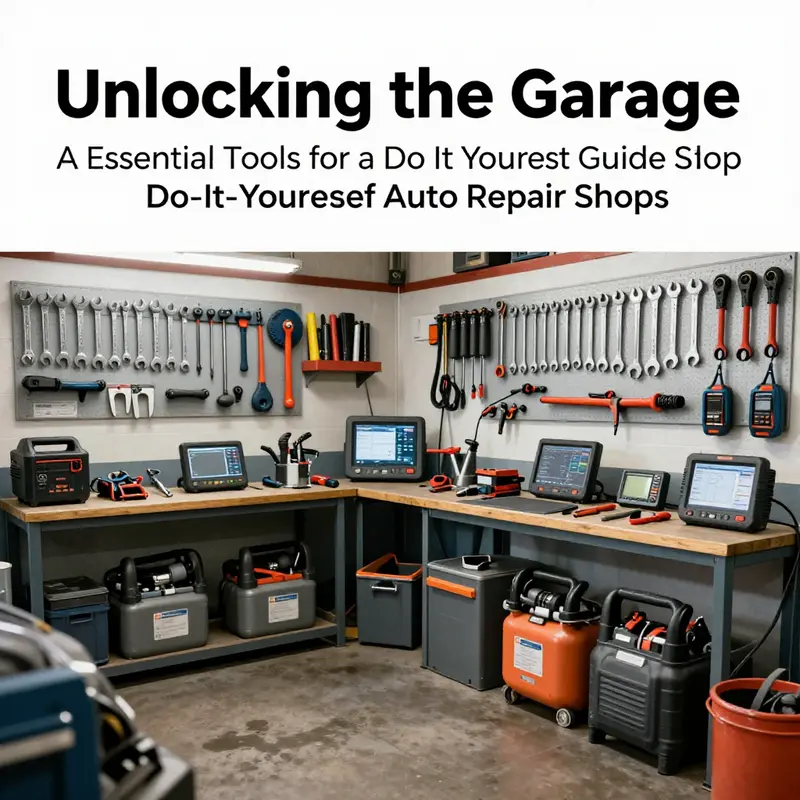
Setting up a do it yourself auto repair shop is less about stockpiling random devices and more about building a working ecosystem. Tools are the language you speak when you turn a garage into a workshop that can handle everything from routine maintenance to more ambitious restorations. The core idea is simple: choose tools for versatility, durability, and precision, then organize them in a way that respects your workspace and your safety. The right toolkit makes the difference between a project that stalls and one that progresses with steady momentum. In a well-planned shop, you begin with a foundation of hand tools, a reliable diagnostic setup, and power tools that can be used across many tasks. Together they create a rhythm that mirrors a professional shop while keeping the scale appropriate for a homestead garage and a curious mind. This alignment matters because the broader goal of the article is to advocate a sustainable, accessible model that empowers individuals to manage their own car care while gaining confidence and competence over time.
Core hand tools form the backbone of almost every repair. Start with a complete set of wrenches that covers both open-end and box-end profiles, and include both metric and standard sizes to avoid hunting for the right fit in the middle of a job. Add a broad screwdriving kit with flathead and Phillips drivers in sizes that match common fasteners, and include a selection of pliers ranging from combination to needle-nose for gripping, bending, and manipulating components in tight spaces. A robust socket set with a ratchet, a few extension bars, and a range of deep and shallow sockets unlocks bolts that sit behind shields or beneath suspension components. A reliable hammer, weighing choices for tapping and persuading parts without damage, rounds out the essentials. The test of any tool is how it behaves under real work: smooth action, solid metal, and comfortable handles that won’t shred your grip after long sessions. When you invest in high-quality hand tools, you reduce frustration and improve accuracy in every step, from brake pad swaps to steering rack adjustments. The emphasis should be on sets that offer both common sizes and rarer, specialty sizes that occasionally appear on older model cars. Organization matters too: keep wrenches grouped, label sockets, and maintain a clean tray so a bolt doesn’t disappear into a crevice where you can’t reach it again. As you assemble your kit, consider how often you’ll need to improvise with unconventional fasteners and how quickly you must adapt to different vehicle generations. A thoughtful approach to hand tools sets the tone for the entire shop, shaping your ability to move from one project to the next with minimal friction.
Diagnostic and safety equipment anchor your capacity to diagnose issues beyond visual inspection. In modern vehicles, diagnosis is as important as hands-on work. A solid OBD2 scanner is an essential gateway to the car’s hidden heartbeat, capable of reading fault codes, clearing them, and monitoring live data streams that reveal how sensors behave during idle, acceleration, and cruise. A compact multimeter helps you track voltage, continuity, and resistance in circuits you can’t see with the naked eye, while a battery tester provides quick confirmation of a healthy charge. A good lighting system—bright, adjustable, and shadow-free—lets you see tiny fasteners and the angle of a drilled hole as you work beneath dashboards or inside fenders. In addition to measurement tools, you’ll want a basic diagnostic software card or dongle if you’re tackling more modern vehicles with advanced modules; this is not a luxury, but a practicality that keeps you from guessing in gray areas of an engine misfire or a shifter fault. Safety comes into play here as well: use a sturdy workbench or lift that allows you to access the undercarriage without forcing your back into uncomfortable angles. A well-chosen bench becomes a staging area for parts, fasteners, and the little items that otherwise vanish mid-project. With good diagnostics and careful displays of torque, you can trace a symptom back to its source with confidence rather than bravado. You may also want a spill tray, absorbent mats, and a solvent cabinet to control fluids and keep a cleaner working surface, because cleanliness directly contributes to safety and efficiency.
Safety never takes a back seat in a serious DIY shop. Protective clothing, gloves, and safety glasses protect your hands and eyes from sharp edges, flying debris, and chemical splashes, which happen even to the most careful hobbyist. A set of sturdy, comfortable work gloves matched to your tasks—dexterity for small fasteners and rugged protection for metal cutting—will keep you moving without constant changes of gear. Protective glasses should be rated for impact and fit snugly to your face, with side shields if possible. A simple framework of protection includes sleeves or coveralls that resist oil, grease, and sparks, as well as hearing protection when using loud tools like rivet guns or impact wists; yes, even hobbyists benefit from hearing protection as projects grow longer. A fire extinguisher of the appropriate class sits near the work zone, with clear access and a short path to an exit. A first aid kit, stocked with bandages, antiseptics, and tape, is a small investment that pays off many times over in moments of minor injuries. Your shop should also be ventilated, particularly if you’re painting, solvent-wiping, or welding. A well-lit, clean space reduces the risk of accidents and makes it easier to stay organized as you progress from one task to another. In practice, organization translates to safety: a tidy space is a safer space, and a safer space invites more ambitious projects rather than hesitation. If your budget allows, add a dedicated area for a small paint booth or spray-curtain to manage fumes and protect the rest of your shop from overspray, but even simple measures like a well-sealed cabinet for solvents and a dedicated waste container improve both safety and cleanliness.
Power tools dramatically increase efficiency, turning hours of manual labor into minutes of work and reducing the physical strain that deters occasional hobbyists from attempting larger repairs. A cordless drill/driver is one of the most versatile tools in any shop, suitable for drilling, driving fasteners, and assembling temporary supports or jigs. An impact wrench earns its keep when you need to remove stubborn lug nuts, stubborn bolts, or rusty fasteners that won’t give up without a fight. A portable MIG welder is a standout for metalwork, providing capacity for patching panels, fabricating brackets, or even building small frames for project supports. Beyond the basics, specialized items like a torque wrench offer precise bolt tightening, a brake bleeder kit supports safe and thorough brake system maintenance, and a transmission jack helps you align heavy components during service without risking injury or damage. When selecting power tools, consider battery chemistry, endurance, weight, and how well the tool balances in your hand; a heavy, underpowered tool can slow you down more than it helps. The best approach is to opt for tools that are widely compatible with common accessories, so you can reuse drill bits, adaptors, and clamps across different tasks rather than chasing mismatched gear. A compact air compressor expands your capabilities, powering impact wrenches, pneumatic grinders, and cleaning tools; while it does require space and upkeep, its utility expands your repair options, making it easier to clean and dry parts after a replacement.
A toolkit is not just a pile of equipment; it is a system for discovering and completing a repair without losing momentum. The way you store and access tools shapes how you work. Start with a modular storage system that keeps hand tools in accessible drawers and sockets in labeled racks so you can locate the right size without flipping boxes on a bench. A lift or a sturdy workbench is central to most projects, enabling you to raise a vehicle to a comfortable height and to work from a comfortable stance rather than contorting your back. Ergonomics matter; plan your layout so frequently used items sit at chest or waist height, with heavier items in lower, reinforced shelves. Workflow emerges as you design zones within the shop: a fastener zone, a consumables zone with lubricants and cleaners, a brake-and-suspension zone, and a diagnostics zone near the electrical panel. The cohesion among these zones reduces wasted motion and makes it possible to pursue a repair methodically rather than episodically. Even the most basic project, like swapping brake pads, becomes smoother when you can reach wrenches and sockets without stepping away to fetch a missing item. The emphasis here is not sophistication for its own sake but the clarity of process: clear tool access, a clean bench, and well-timed safety checks that keep you moving forward. A well-planned workflow also means you can start documenting your process as you go, which helps you refine both technique and tool choices for future jobs.
Buying tools for a DIY shop is a long game; you want to maximize your time and your results while preserving your budget. Start by identifying the tasks you expect to perform most often and prioritize tools that handle those tasks well. Invest in high-use items first, and plan to upgrade or add specialty tools as your projects become more ambitious. A practical approach includes evaluating used tools with care: check for play in wrenches, wobble in sockets, blade edges on cutters, and the accuracy of torque wrenches. A well-maintained set often lasts longer than a cheaper array of tools that are constantly replaced. Consider setting aside a portion of your budget for tool maintenance and replacement parts—bit longevity comes from clean storage, proper lubrication, and periodic calibration where applicable. This is the point where you begin to notice the benefits of a learning mindset; you’ll be able to take apart and reassemble components with growing confidence, because your tool set is designed to be reliable rather than disposable. The growth you see in your mechanical skill is intimately tied to the quality of your tools and the discipline you bring to maintaining them. A balanced purchasing plan also means you resist impulse buys that appear flashy but won’t see long-term use in your projects, and you keep a running list of upgrades tied to specific tasks you want to master.
Across the DIY landscape, a broad catalog of tools is driving hands-on restoration and maintenance. The most helpful perspective comes from recognizing that high-quality, precise equipment spans from basic hand tools to more advanced fabrication gear. As the hobbyist increasingly tackles bodywork, wiring, and performance tuning, the toolkit must expand in proportion to ambition. A reputable toolmaker’s catalog often becomes a guiding resource, offering durable welders, paint systems, bodywork kits, and power tools that stand up to repeated use. That breadth, combined with reliable customer support, helps a curious technician push beyond the initial repairs and into real restoration or modification projects. The idea is to treat the shop as a learning lab where you accumulate experience, refine your techniques, and gradually broaden your scope. In this context, Eastwood’s broad catalog has become emblematic of the DIY movement’s evolution, while the practical takeaway remains universal: every tool you select should push your work toward greater precision, durability, and safety. For those seeking a grounded start, the linked resource below offers practical guidance on foundational skills and shop setup. Specifically, you can explore a practical primer here: DIY Auto Repair Basics.
Outside of your personal shop, the community and its shared wisdom matter as much as the tools themselves. The right guidance helps you calibrate expectations, avoid common mistakes, and approach a project with a plan rather than improvisation. Build a habit of documenting your work, testing your repairs, and refining your toolkit as you learn. A well-considered approach to the tool selection process—prioritizing versatility, durability, and safety—translates into real savings over time, not just in dollars booked on a credit card, but in the confidence you gain to tackle tasks you once avoided. In short, a DIY auto repair shop becomes a genuine workshop of skill, where every bolt turned, every wire traced, and every panel aligned contributes to a broader sense of technical competence. As you add tools and grow your repertoire, you’ll see the day when a challenging job that seemed out of reach becomes a routine, repeatable process. External resource: https://www.eastwood.com/automotive-tools-and-equipment.html
Shifting Gears and Saving Dimes: The Economic Ripple of Do-It-Yourself Auto Repair Shops
The rise of do-it-yourself auto repair shops marks a quiet but consequential shift in how people think about car upkeep. These spaces are not simply garages with rental bays; they are curated ecosystems that give drivers access to the tools, equipment, and guidance needed to tackle maintenance and repairs on their own terms. For the hobbyist, the curious learner, or the budget-conscious motorist, these shops promise something more than just a lower price tag. They offer control—the chance to decide when and how a car is maintained, and the opportunity to learn a craft that once seemed the sole province of professional mechanics. In that sense, the DIY auto repair shop sits at the intersection of consumer empowerment and practical economics. It reframes vehicle care from a routine service to a participatory activity, one where the customer becomes a collaborator with the shop’s infrastructure rather than a passive recipient of labor.
Within that frame, the economic effects radiate in several directions. For individuals, the most immediate impact is financial. Labor fees, which typically account for a large portion of repair costs, become avoidable or at least negotiable when the car owner shoulders the hands-on work. The savings can be substantial, especially for tasks that are straightforward or routine—oil changes, filter replacements, basic diagnostics, and similar maintenance activities. In a DIY environment, the money saved on labor can be redirected toward better tools, more frequent car care, or even the purchase of parts that a professional shop might price aggressively to cover equipment downtime. This is precisely the logic that draws many drivers to DIY spaces: the sense that maintenance becomes a series of decisions about timing, scope, and risk, rather than a fixed service with a one-size-fits-all price.
But the appeal of DIY is not merely about cutting costs. It also hinges on the perception of control over maintenance schedules and decisions about when a car should be serviced. The ability to perform preventive tasks on a personal timeline can translate into fewer surprises and more predictable cash outlays over the life of a vehicle. It is a form of budget sovereignty, where owners decide whether to wait for a convenient window or to address a small issue before it becomes a bigger one. In these terms, the economics of DIY repair extends beyond the sticker price of parts and tools; it touches the broader calculus of ownership, reliability, and opportunity cost. The tools that enable this transformation are rarely cheap up front, but in the long arc of ownership they can yield a favorable payback by extending service intervals and reducing downtime.
Yet the economic logic is bifurcated. While consumers may save on labor, the professional repair sector faces a different calculus. The influx of DIY participants can erode the demand for certain routine services, creating a narrower market for shops that rely heavily on labor-intensive, entry-level tasks. Larger repair operations—those with eight or more bays, for example—are reporting more pronounced financial pressures. A recent survey highlights several pain points: rising operational costs were seen by a large share of these shops, with 73.7% noting increases. Price adjustments followed closely, as 70.2% said they had to raise prices to sustain margins. And beyond price shifts, 63.2% faced additional financial pressures that hint at broader industry strain. Taken together, these numbers sketch a landscape where DIY is not simply about individual savings but about shifts in the competitive balance, forcing professional shops to rethink pricing, workflow, and service offerings to stay viable.
This tension between consumer savings and shop viability does not exist in a vacuum. It sits against the backdrop of a vehicle fleet that is becoming more complex and more software-driven. Modern cars incorporate advanced electronics, sensors, and control systems that can require specialized diagnostic access and software updates. For the average DIY enthusiast, this complexity can be a double-edged sword. On one hand, it reinforces the appeal of self-sufficiency—owners can learn and master the nuances of modern automobiles. On the other hand, it introduces risk. A misdiagnosis or an improper repair that affects electronics, braking, or energy management can cascade into safety concerns or costly damage. The DIY space therefore becomes a balancing act: it must foster skill development while recognizing where practical limitations lie. Education, reliable guidance, and access to quality, purpose-built tools matter as much as price when it comes to avoiding unintended consequences that could erode any initial cost savings.
In the wider ecosystem, the DIY movement intersects with how tools evolve and how access to professional-grade equipment is democratized. A notable dimension of this evolution is the role of specialized tool providers that serve as bridges between consumer curiosity and professional-level outcomes. For many enthusiasts, brands that design durable, precise, and user-friendly equipment—ranging from metal-working tools to diagnostic systems and paint-and-body repair kits—have become essential. These tools enable more ambitious projects, expand the range of tasks suitable for a DIY approach, and raise the quality of at-home repairs to levels that approach professional results. This dynamic underpins a broader industry trend: the consumer revolution in DIY auto repair. If a customer can now achieve professional-grade finishes and reliable diagnostics with equipment accessible to non-professionals, the perceived value proposition of DIY spaces strengthens. The narrative shifts from “labor savings” alone to a more nuanced equation that blends cost control, learning, capability, and outcomes. In many ways, the toolkit defines the boundaries of what is feasible in a DIY setting and shapes the expectations of both hobbyists and shop operators.
The availability of high-quality tools and the shift in consumer expectations also influence how DIY spaces market themselves and structure their services. Some operators position their spaces as purely self-serve facilities where customers bring their own projects and work independently under safety guidelines. Others add a touch of mentorship, offering periodic clinics, guided sessions, or supervised bays for tasks that require more expertise or specialized equipment. In either case, the business model often revolves around hour-by-hour access to space and tools, plus the option to purchase parts, lubricants, and consumables on-site. This blended approach—combining self-directed work with essential support—helps DIY shops manage risk, maintain profitability, and attract drivers who crave both autonomy and reassurance.
From a community perspective, these spaces contribute to a more resilient car-care culture. They foster peer learning, enable knowledge transfer across generations of drivers, and reduce the sense that car maintenance must be outsourced to professionals who hold all the expertise. A learner can start with simple tasks, gain confidence, and gradually take on more complex projects. The social dimension matters because confidence compounds: as individuals learn, they contribute to a culture of practical, hands-on maintenance that can sustain lower costs and better vehicle health. This community aspect also helps demystify what can seem like an impenetrable field, inviting more people to pursue skill development that might otherwise be postponed due to cost or intimidation.
The interplay of consumer empowerment, professional competition, and technical complexity also reshapes how readers think about the long-term economics of car ownership. When a driver learns to do oil changes, filter replacements, and basic diagnostics, the bite-sized repairs become part of a broader strategy for maintaining reliability without constantly deferring to specialists. Yet the same individual may also recognize that some tasks are better left to trained technicians, particularly when complex electronics, safety-critical systems, or warranty considerations are involved. The value proposition, therefore, is not a binary choice between DIY and professional service but a spectrum in which drivers calibrate their own capabilities, risk tolerance, and time availability. For many, a hybrid approach is the most economical and practical: handle routine maintenance personally, while reserving more intricate or high-stakes repairs for a trusted shop.
As readers navigate this landscape, a practical touchstone is the learning curve associated with DIY auto repair. Those who pursue a path through the DIY ecosystem often begin with foundational topics and gradually accumulate skill, experience, and confidence. A starting point for many is understanding the baseline costs of entry—what it takes to equip a space, what kinds of tasks are realistically doable without professional supervision, and how to source reliable parts at fair prices. The conversation then expands to risk management: how to establish safety protocols, how to document procedures for future reference, and how to avoid common pitfalls that lead to costly mistakes. For those who want to anchor their exploration in a structured path, there are educational resources and guides, such as the DIY Auto Repair Basics referenced in this chapter. Those resources help demystify the shop environment, explain the responsibilities of a DIYer, and provide a practical framework for assessing which repairs are within reach and which are not. See DIY Auto Repair Basics for a foundational guide to getting started, including safe practices and tool selection. [https://motorworksautorepair.com/blog/diy-auto-repair-basics/]
The economic narrative of DIY auto repair shops, then, is not only about cheaper labor or more affordable parts. It is about a reconfiguration of incentives and choices that influence how people care for their cars, how they allocate time and money, and how professional service providers respond to evolving consumer behavior. The shift carries both promise and risk: promise in the sense that empowered drivers can manage costs and learn valuable skills, and risk in the sense that poor outcomes from ill-fitted repairs can incur hidden costs over time. The financial health of conventional repair shops becomes a reflection of these evolving expectations, as they adapt by offering more value-added services, education, and safer, more transparent pricing structures. They may also pivot toward facilities that emphasize diagnostic acumen, warranty-backed repairs, and consumer education as a means of differentiating themselves in a market increasingly influenced by DIY capabilities.
In weighing these dynamics, it is helpful to acknowledge the broader macroeconomic conditions shaping the automotive service landscape. Tariffs, supply chain constraints, and regulatory shifts can alter the cost of parts and service, affecting both DIY participants and professional shops. A recent industry survey highlights that tariffs impacting repair shops in 2025 have added pressure to margins, complicating the decision calculus for shops that must balance competitive pricing with ongoing operational costs. For readers seeking an external perspective on these macro factors, the IMR Tariffs Impact on Repair Shops report offers detailed insights into how tariff environments translate into pricing, supply challenges, and strategic responses for labor-intensive service businesses. This external resource underscores that the economics of car care do not rest on the price of tools alone; they also hinge on policy and market dynamics that shape the affordability and availability of maintenance options for consumers and shops alike.
As the DIY movement continues to mature, the chapter of economics we began with evolves into a broader discussion about value, capability, and responsibility. The do-it-yourself auto repair shop becomes a microcosm of a changing economy where individuals increasingly shape their own cost structures and where service providers must respond with clarity, reliability, and education. The promise remains compelling: a world where ownership of a car is paired with ownership of knowledge, where the cost of care is transparent, and where discipline in learning translates into tangible economic benefits over time. The risks, of course, are real and deserve careful attention—from the potential for improper repairs to the possibility that equipment investments may outpace demand in a shifting market. In balancing these forces, consumers and shops alike can navigate toward a pragmatic equilibrium that preserves safety, quality, and affordability. This is the practical essence of the economic impact chapter—the story of how do-it-yourself auto repair shops reconfigure the math of car care without sacrificing the integrity of the vehicles they help keep on the road.
In sum, the economic effects of DIY auto repair shops extend beyond the dollars saved on labor. They reshape consumer expectations, pressure traditional service providers to reimagine value, and align tool accessibility with a growing culture of hands-on learning. The result is a more pluralistic car-care economy where people can choose between hands-on mastery and professional assurance, or, more often, a thoughtful blend of both. For readers who want to explore practical guidance on starting or joining a DIY space, and for those seeking to understand how this movement sits within the broader automotive industry, there is value in tracing the threads of empowerment, risk, and adaptation that bind these developments together. The conversation continues, with each repaired bolt and each saved hour contributing to a larger story about how people care for their cars—and how the economics of care are evolving in a world of accessible tools, educated customers, and shifting market pressures.
External resource for further context on macro factors influencing repair economics: https://www.imr.com/insights/tariffs-impact-repair-shops-2025
DIY Auto Repair Realities and Responsible Practice

DIY auto repair offers a blend of curiosity, practicality, and personal growth. It is more than a way to save money; it is a hands on way to learn how machines work and how to apply logic to real problems. But the path from enthusiasm to competence involves risks, responsibilities, and a deliberate plan.
Vehicles today are complex ecosystems that combine mechanical systems with software, sensors, and safety critical features. A dashboard message or a rough running condition can require more than intuition. Modern diagnostic work often depends on structured testing, data logging, and correct sequencing of steps. This is why the DIY mindset needs discipline, not heroics. In many spaces, the best learners build skills through small, safe challenges that gradually expand scope. Each task becomes a building block for understanding how subsystems interact, how to verify results, and how to stay safe while working around moving parts, hot surfaces, and stored energy.
Safety sits at the center of every repair plan. Tools can move heavy loads, sharp edges can cause cuts, and fluids can burn or irritate the skin. A car on a lift is a powerful reminder of gravity and leverage. The responsible DIY practitioner uses proper PPE, a clean workspace, a documented plan, and a clear exit strategy if conditions change. Even routine jobs such as draining fluids or replacing a sensor carry risk if done with improvised tools or without following the correct sequence. Building safety habits preserves the vehicle and the person performing the work, and keeps the DIY ethos alive for future projects.
Financial considerations also shape the journey. Quality tools, proper lighting, and good air supply require upfront investment, but the long term payoff is reduced downtime and better outcomes. A single poorly chosen tool or wrong part can waste time and money and raise the chance of mistakes. Time is another factor: a repair that a professional completes in an hour may take a dedicated learner several sessions. When approached with a plan, however, time becomes a measure of learning and progress rather than a gatekeeper.
Legal, warranty, and insurance realities add another layer of planning. In some regions certain repairs can affect warranties or trigger regulatory concerns. Insurance coverage may vary if a task is outside an approved scope of work or performed improperly. The prudent approach is to know where your skills end and when professional oversight should begin, especially for high pressure systems, safety critical components, or complex electronics. This is not surrender; it is stewardship of the vehicle and the learner’s safety.
A practical learning path emphasizes observation, hypothesis, and verification. Before turning a wrench, articulate a simple diagnostic plan: what symptom is present, what are the likely causes, what tools are needed, and what safe tests would prove or disprove a hypothesis. Documentation turns a single project into reusable knowledge. Start with foundational tasks such as basic maintenance, fluid checks, and simple replacements, then progress to electrical diagnostics, calibration, and multi step verification.
The social fabric of a workshop matters. A supportive space with mentors and peers can speed learning while maintaining safety and quality. Shared procedures, checklists, and well documented experiences help beginners progress with confidence and reduce rework. Seek communities that emphasize safety, transparency, and a willingness to learn from mistakes.
Ultimately, the DIY journey is about balance. It invites curiosity and skill while demanding caution, method, and respect for the vehicle. Know when to persevere and when to seek professional help. With a thoughtful plan, documentation, and a clear boundary between knowledge and risk, DIY auto repair can become a durable capability that benefits you, your vehicle, and your community. For those who want a practical start, begin with basic maintenance guides, safety procedures, and manufacturer guidelines, and use reputable resources to build a steady learning path.
Final thoughts
The rise of do-it-yourself auto repair shops is not merely a trend but a reflection of a shift towards empowerment and cost-effectiveness in vehicle maintenance. These shops provide an environment where not only tools and equipment are accessible but also a supportive community of fellow enthusiasts. As motorcycle and auto owners explore this DIY approach, they not only expand their mechanical knowledge but also contribute to local economies by reducing reliance on professional services. However, as discussed, challenges exist that require a commitment to learning and safety. By recognizing the benefits and the hurdles, individuals can make informed decisions that enhance their skills and save on maintenance costs.