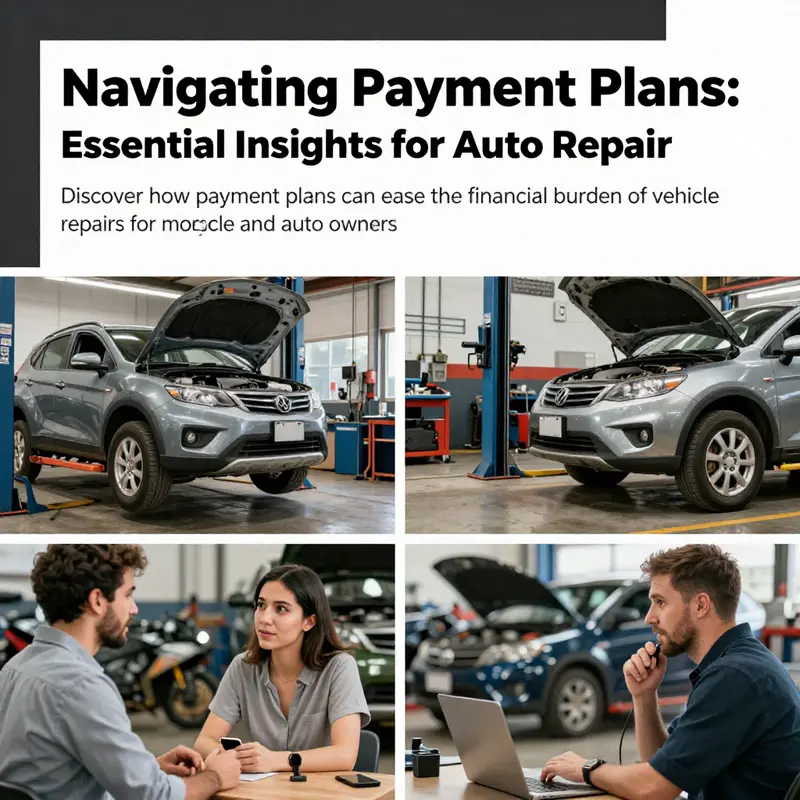
Facing unexpected vehicle repairs can strain anyone’s budget. To alleviate that stress, many auto repair shops offer payment plans tailored to meet customers’ needs. Understanding these options can significantly impact motorcycle and auto owners, as well as distributors and garages. This article walks you through the essentials of payment plans in auto repair shops. First, we’ll cover the basics of these offerings and how they can help during financial strain. Next, we’ll explore third-party financing options available for auto repairs, giving you insights into how they work and their advantages. Following that, we’ll look into in-house financing terms provided by repair shops, ensuring you understand the fine print. Finally, we’ll evaluate the positive impacts of these payment solutions on customer satisfaction. With informed knowledge, you can make better decisions when it comes to your vehicle repairs.
Financing the Fix: A Practical Guide to Payment Plans for Auto Repairs

When your car starts acting up, the disruption goes beyond the sound or the inconvenience. It arrives as a sudden demand on a budget that may already be stretched thin. A failed sensor, a cooling system leak, or worn brakes can require repairs that seem daunting in price. In those moments, many auto repair shops offer payment plans that transform a single, large bill into a series of smaller, more manageable payments. These arrangements are not a universal guarantee, but they have become a common option as shops strive to help customers get essential work done without delaying service. The result is not a free pass to ignore the problem, but a pathway to address it responsibly while keeping finances from spiraling out of control. The existence of a payment plan can change a crisis into a plan, and that difference matters when safety is on the line and time is of the essence.
What payment plans typically look like can vary a lot from one shop to another. In many cases, the core idea is straightforward: you pay for the repair in installments over a set period. Some plans are advertised as interest-free for a promotional window, while others carry low or standard interest charges depending on the term and the shop’s policies. A key distinction emerges at this point. Plans that involve third-party financing companies often provide a faster, more accessible route to approval, sometimes with softer credit checks or quicker decisions than traditional loans. Others may offer in-house financing, where the shop itself sets the terms and handles the repayment. Either approach aims to fit the payment into a monthly amount that aligns with the customer’s cash flow, rather than forcing a lump sum that might be impossible to cover at once. The practical effect is simple: you can proceed with the repair when it’s needed, rather than waiting for funds to materialize.
It’s important to recognize that these options are not identical in cost or risk. The terms can differ widely, even between shops that offer similar formats. A plan might look attractive with a low monthly payment, but the total cost could be higher if interest accrues over a long period. Some agreements impose fees for processing, late payments, or early payoff. Others may have penalties or penalties for reversing the terms if you miss a payment. The reality is that the price tag you see on the repair estimate is only part of the picture. The financing terms can dramatically alter the overall expense you end up paying over time. This is why transparency from the shop is essential and why customers should study the full agreement before signing.
When you start exploring options, the best approach is to ask directly about what is available at the specific shop you’re using. A conversation during booking or service discussion can reveal whether third-party financing is offered, what the approval criteria look like, and whether there is a no-interest window for certain repair amounts. If the shop presents in-house financing, ask about the terms, including the repayment timeline, the interest rate (if any), any fees, and what happens if you miss a payment. It’s perfectly reasonable to request a written outline of the plan, followed by a formal application if you want to proceed. A straightforward question like, “What would my monthly payment be for this repair, and what would be the total cost?” can produce a clear, comparable figure that you can weigh against other options.
In compiling options, keep in mind that a plan’s approval process may involve a credit check. Some financing paths use soft pulls that do not affect your credit score, while others perform a hard inquiry. The impact on your credit can be worthwhile if the plan helps you avoid high-interest loans or large upfront costs for essential work. However, it’s important to understand the terms as they relate to your credit, your repayment habit, and your overall financial picture. If you’re working with a repair shop that has a straightforward, in-house option, you may face fewer external checks but more direct terms to assess. Either way, the decision should center on whether the monthly payment fits your cash flow and whether the total cost aligns with your budget and priorities. A careful calculation before signing is always worth the extra minutes.
A practical challenge many customers face is comparing the real cost of financing against the benefit of completing the repair now. Monthly payment size matters, but so does the length of the term and the interest rate. A longer term can reduce monthly pressure but inflate the total interest paid. Conversely, a shorter term can spike monthly obligations yet keep total costs lower. The balancing act hinges on your income schedule, your other obligations, and how urgently the repair is needed. If the repair affects safety or reliability, the impulse to choose the fastest, most manageable path is understandable. But making a plan that you can sustain for the entire term matters just as much as getting the work done.
To make informed choices, it helps to have a clear view of the numbers. A useful, concrete reference for understanding how repair costs accumulate and how financing interacts with pricing is a page on auto repair cost. It offers practical context for estimating what you might pay out of pocket versus what could be financed through a plan. This kind of resource can strengthen your ability to compare two or three options side by side, rather than reacting to the first offer you receive. For a direct look, see this page: auto repair cost. It’s not a substitute for the specific estimate from your shop, but it provides a framework for evaluating the financial tradeoffs involved in financing a repair. Within the discussion here, you’ll notice that the decision isn’t about avoiding cost; it’s about distributing cost in a way that preserves safety and stability without creating new financial stress.
As you weigh options, it is worth considering what you are financing beyond the mechanics of the car. Financing decisions can influence your willingness to address smaller issues early, which can prevent larger, more expensive problems later. A payment plan can be a bridge to get timely work done while you adjust your budget, but that bridge should be built with attention to the end of the term. If you anticipate that your financial situation will improve in the coming months, a plan with a shorter term and a reasonable rate can save money in the long run. If your cash flow is uncertain, a longer term could be more sustainable, provided the plan does not accumulate excessive interest or fees. The important thing is to maintain clarity about how much you will pay in total, how many payments you owe, and when those payments are due.
Customers also benefit from maintaining open lines of communication with the shop throughout the process. If a repair requires additional parts or labor after work begins, it’s wise to request an updated estimate and confirm whether the financing plan can accommodate the change. Some plans are flexible enough to adjust terms midstream, while others might require a new agreement. In any case, the shop’s goal should be to partner with you to find a feasible solution that ensures the repair is completed and that you stay on top of the obligations. Clear, written estimates and a written financing agreement protect both sides and minimize the risk of surprise charges later on.
For those who want a more hands-on approach, consider gathering quotes from two or three shops. This not only helps you compare the bottom-line price but also the financing options. Even within a single city, terms can vary enough to matter. When you present multiple options, you empower yourself to choose the plan that aligns with your budget and your values around debt. If an option feels overly complicated or its terms seem opaque, ask for a simpler explanation or request to break down the cost line by line. A reputable shop will take the time to walk you through the numbers and will not pressure you into a plan that doesn’t fit your circumstances.
A note on shopping strategy is worth a moment of reflection. Some people find it logical to reserve financing for truly major repairs, while paying smaller issues out of pocket if possible. Others prefer to set a fixed monthly amount and select the shortest term that makes sense, aiming to minimize interest. Either approach can work, but the common thread is deliberate evaluation rather than impulse. The decision should reflect not just the price of the repair, but the total cost of financing, the risk profile of the agreement, and how well the payment aligns with your overall financial plan. By treating financing as a tool rather than a quick fix, you reduce the chance of trading one problem for another across the term of the loan or contract.
In closing, the practical reality is this: payment plans are increasingly common in auto repair shops, yet they are not a one-size-fits-all solution. They are intended to reduce upfront hardship and enable timely, necessary work. The best outcomes come from asking direct questions, reading the terms carefully, comparing a few options, and choosing a plan that preserves your safety and your financial health. If you can articulate your monthly budget, your expected timelines, and your comfort with debt, you will be better positioned to select a financing path that works for you. Most shops are happy to explain options, provide an itemized estimate, and help you weigh the tradeoffs between paying now and paying over time. The ultimate goal is simple: you get the repairs you need, you do so in a way that fits your budget, and you avoid creating new financial stress in the process.
For readers seeking broader context and consumer perspectives on financing auto repairs, see the Consumer Reports coverage on payment plans for auto repairs. Consumer Reports on Payment Plans for Auto Repairs.
Financing the Fix: How Third-Party Plans Shape Auto Repair Access and Affordability
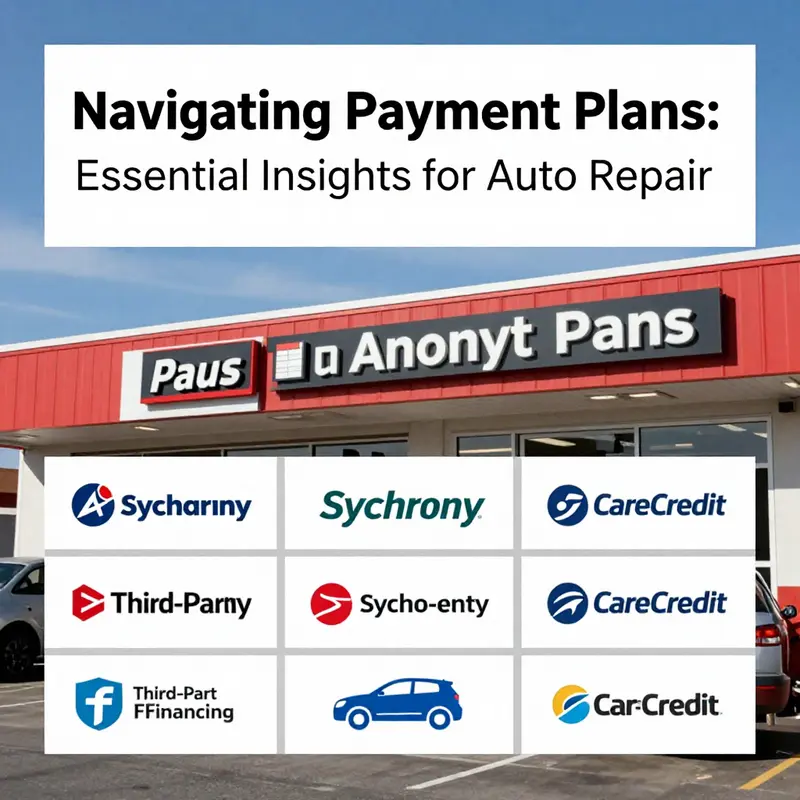
When a car breaks down, the dilemma often unfolds in two parts. First is the repair itself—the necessary fix that keeps a vehicle safe, reliable, and roadworthy. The second is the question of cost and payment, which can determine whether a repair is completed promptly or postponed until a more convenient time. Across many communities, auto repair shops have recognized that customers face tight budgets at precisely the moment they need service the most. The practical response is to offer payment plans, a bridge that helps households absorb the expense without sacrificing essential safety or habitability on the road. This chapter examines how third-party financing options become a common tool in a shop’s repertoire, why they matter for both customers and businesses, and how the financing landscape is evolving in ways that can influence choices and outcomes for drivers in the real world.
Third-party financing programs function as a kind of intermediary between the customer and the cost of repairs. Rather than paying the full amount upfront, a customer can extend the bill into installments. This can be especially advantageous for more extensive repairs, where a single payment would be disruptive to a household budget. In many cases, these programs offer installments with low or even no interest for short terms, which makes the decision to proceed with needed work easier to justify. For a customer, the appeal is straightforward: a predictable payment schedule, a way to manage cash flow, and the confidence that essential maintenance will not be delayed for weeks while funds are accumulated. For a repair shop, the incentive is equally practical. A financing option can expand the pool of customers who will authorize work on the spot, often increasing the likelihood that a customer will approve necessary but costly services rather than postponing them. The result is a smoother cash flow and a steadier pace of business, especially during seasons when demand for repairs spikes or when the repair requires parts and technician time that are not trivial in cost.
The types of third-party arrangements available can vary by shop and region. Some programs partner with financing networks that specialize in medical-like, consumer-friendly terms. The allure of these pairings lies in simplified approval processes, sometimes with minimal or no credit checks for smaller repair bills, and the possibility of saying yes to a client who might otherwise hesitate. Other programs are structured as installment plans that resemble consumer credit, with clear, written terms and a defined repayment period. The common thread across these options is transparency. Reputable providers emphasize that the customer should be fully aware of what the terms mean—the interest rate (if any), the total amount paid over time, any late fees, and the exact schedule of payments. Understanding these elements helps prevent situations where a customer might confront an unexpectedly high total cost or a consequence such as a negative impact on credit due to missed payments.
Beyond third-party financing, many shops offer in-house options designed to align with a customer’s financial reality. In-house financing can be more flexible than a standard credit product because it allows a shop to tailor terms to individual circumstances. The trade-off is that customers should scrutinize the terms as closely as they would with any loan. In-house plans may feature more forgiving payment arrangements or more creative terms, yet they can also carry higher interest rates or additional fees if the plan is not carefully managed. The key, as with third-party options, is open dialogue. A customer who asks precise questions—What is the APR? Are there administrative fees? What happens if I miss a payment? How is the repayment period structured?—is more likely to leave the conversation with a clear, actionable plan rather than a vague sense of obligation.
Cost awareness is central to any discussion about financing auto repairs. The terms may differ not only by company but by the scale of the repair and the overall credit profile of the customer. Even when a plan seems attractive, it is easy to underestimate the long-term cost if the repayment term is extended or if penalties accrue for late payment. For many households, a seemingly small monthly payment can unlock a broader repair on a vehicle that would otherwise remain nonfunctional, and that payoff comes with careful budgeting and careful reading of the contract. The consequence of rushing into an agreement without a full understanding can be painful: higher total interest, unexpected charges, and a sense of regret after the repair is completed. In that light, a repair shop that prioritizes clear communication about financing is reducing risk for both parties. The customer obtains the needed service with a plan that fits the budget, and the shop receives a payment arrangement that supports timely completion of the work.
This is where the practical, human dimension of financing plays out. A customer may find themselves facing a critical repair—say, a compromised brake system or an inflamed cooling circuit—that cannot wait. The question becomes not whether financing exists, but how it’s presented and explained. The shop that offers a straightforward quote, a straightforward financing option, and an opportunity to compare the plan with other payment methods—such as paying with a card, using a short-term credit card promotional offer, or paying in cash if possible—gives the customer a sense of ownership and control. A good process involves presenting a written estimate for the repair, then offering a financing quote that mirrors the estimate’s structure. The terms should be easy to compare against alternative payment routes, with a clear breakdown of interest (if any) and the schedule of payments. The conversation then shifts from one of fear and constraint to one of informed choice, empowering customers to proceed when the repair is necessary rather than when their bank balance happens to align with an arbitrary due date.
One could argue that financing is only a partial solution. If a repair is essential for safety or reliability, delaying it can create future costs that exceed the benefit of any early savings in interest. In such cases, customers may still pursue the lowest-cost path available, perhaps by opting for a more limited repair plan, a phased approach, or a diagnostic triage that prioritizes the most critical components. Shops, in turn, may offer staged payment arrangements that allow a customer to complete the most important fixes first while scheduling less urgent items for later. These arrangements require mutual trust and clear documentation, because the difference between a well-structured plan and a plan that spirals into debt often hinges on the precision of the written terms and the discipline of the repayment schedule.
The broader industry context helps explain why third-party financing has become more common even as some manufacturers push customers toward their own service networks. In a landscape where independent repair shops compete for business and where warranties can be tied to specific service providers, access to affordable financing is a tool that levels the playing field. When a shop can offer a financing option that feels reliable and straightforward, customers may have more confidence to authorize work with a lesser concern about the immediate price tag. This is not simply about affordability in the abstract; it is about preserving mobility and safety, especially for families and people who depend on their vehicles for work, school, and daily tasks. Financing thereby becomes part of a broader mission: to maintain vehicle reliability and availability while keeping maintenance within reach for a wider range of drivers.
From a consumer education standpoint, it is helpful to recognize that resources exist beyond the financing itself. Reputable guidance often points to practical, cost-conscious strategies for managing repair expenses, including shopping around for quotes, asking for a detailed diagnosis, and requesting a breakdown of parts and labor. Some credible sources provide insights that help drivers compare options more efficiently, and many shops encourage customers to consult diagnostic and repair planning resources as a way to understand why a particular repair is necessary and how it fits into the vehicle’s longer-term health. In this context, a small but meaningful step is to direct readers to a broad primer on auto repair workflows, such as the article at a-to-z-auto-repair, to set expectations for what a typical repair journey involves and how financing can weave into the overall process. a-to-z-auto-repair
The financing conversation is also increasingly shaped by new, shared models that reduce upfront capital requirements for independent shops. Rather than relying solely on large, consumer-facing loans, some technicians are gaining access to diagnostic tools and equipment through leasing or subscription-based arrangements that lower barrier to entry. The idea is to equip smaller shops with the capabilities they need to compete with larger networks while keeping repair prices accessible to customers. In this environment, the role of third-party financing expands beyond simply paying for a repair. It intersects with the shop’s ability to provide timely diagnostics, quality labor, and ongoing maintenance options that keep a vehicle on the road rather than sidelined in a driveway or a back lot. For consumers, this translates into more options, more competition among repair providers, and a greater likelihood that essential work can be completed when it is most needed, rather than postponed due to cash flow concerns.
Industry data from the mid-2020s supports this trend. A 2025 report from a leading market researcher indicates that a majority of independent repair shops that adopted third-party financing saw improvements in operational efficiency and customer satisfaction. The practical takeaway is that financing is not a mere add-on; it can be a differentiator that helps shops manage peak demand, reduce downtime for customers, and sustain a steady revenue stream across seasonal cycles. While the specifics of each financing program matter—fees, interest, repayment terms, and accessibility—the overarching message remains consistent: when financing is clear, fair, and well-integrated with the service experience, it strengthens the entire repair ecosystem rather than exploiting it. External readers can consult the report for a broader data-driven perspective on these dynamics: https://www.jdpower.com/automotive/aftermarket-financing-report-2025.
All of this points to a practical, customer-centered conclusion. Auto repair shops that offer financing options—whether through reputable third-party networks or in-house plans—are not simply selling a payment method. They are creating pathways for essential maintenance, improving access to timely repairs, and contributing to a more resilient transportation system. The onus remains on the customer to engage actively with the terms and to compare options with the same diligence one would apply to any significant purchase. Asking pointed questions, requesting written estimates and financing quotes, and considering the long-term cost implications of any plan are all prudent steps. The goal is not to normalize debt but to normalize informed decision-making about when and how to invest in vehicle health.
In the end, the decision to pursue financing is a personal one that blends financial realities with the practical demands of daily life. For many drivers, a well-structured third-party or in-house plan can transform a sudden, high-cost repair into a manageable obligation—one that preserves safety, keeps wheels turning, and avoids unnecessary disruption. As repair shops continue to evolve—balancing speed, quality, and affordability—the availability of financing remains a meaningful lever. It helps ensure that necessary work does not become optional work, and that responsible car ownership remains within reach even when the bill is sizable.
External resources and practical guidance continue to evolve, and readers are encouraged to seek out reliable information to compare options before committing to a plan. CarMD remains a useful reference point for broader repair-financing guidance and cost considerations. Meanwhile, the ongoing development of open-access diagnostic tools and shared platforms promises to expand the competitive landscape, potentially driving more transparent terms and more consumer choice in the months and years ahead.
In-House Financing Unpacked: Terms, Tradeoffs, and How It Shapes Your Auto Repair Budget

When a car suddenly needs work, the bill can feel like a pothole you didn’t see coming. Shops that offer in-house financing present a way to manage the cost without waiting for a bank loan or a credit card approval. This chapter examines what in-house financing really is, how the terms typically line up, and what that means for you as a driver trying to keep your budget intact while keeping the wheels turning. It’s a practical look at a financing option that can be a lifeline in a pinch, but it also comes with responsibilities and potential pitfalls that are worth understanding before you sign.
In-house financing is a straightforward concept: you receive the needed repair or service, and you pay the shop back over time directly through the same business. There’s no separate lender in between, no long wait for a bank decision, and often more flexible terms tied to the shop’s policies and your shown ability to keep up with payments. For many customers, this can translate into a smoother, faster path to getting a vehicle back on the road. Yet the ease of approval that makes in-house plans attractive can mask the financial edges you should examine closely before committing. The terms are where the real cost lives, and understanding the structure helps you avoid a plan that could strain your monthly cash flow while you still owe more than the car’s worth.
At the heart of any in-house financing offer are a few core terms that recur across shops and services. First, the interest rate is fundamental. In-house arrangements are typically priced to reflect the higher risk the shop bears when lending directly to customers. Because these loans do not transfer to a traditional financial institution, the shop takes on the responsibility of assessing repayment likelihood and managing the loan. As a result, the interest rates are often higher than those you’d find with a bank loan or a credit union, even when the repairs themselves are not unusually expensive. This means the total cost of the repair can grow noticeably over time if you extend the plan or carry a balance for many months. It can still be a reasonable choice if it preserves essential vehicle function and avoids the delay of waiting for financing elsewhere, but it’s wise to quantify the impact rather than assume a lower monthly payment equals a cheaper repair.
Second is the repayment period, which in many shops falls between a year and three years. A 12- to 36-month window is common, with shorter terms resulting in higher monthly payments but less interest paid over the life of the loan. Longer terms can offer a lighter monthly burden, but they also spread the cost, increasing the total interest. The choice between a shorter term and a longer one should reflect how stable your monthly budget is, whether you anticipate future repairs, and how close you are to other financial obligations. If you know you’ll have a tougher month coming up, you might prioritize a longer term, but you should still ask for a clear picture of the total amount paid by the end of the term.
Third is the down payment. Shops commonly require some upfront equity—often a percentage of the total repair cost, typically in the 10 to 25 percent range. A down payment signals commitment and reduces the lender’s risk; it also lowers the financed amount, which can keep total interest and monthly payments under better control. The exact percentage can vary based on the repair scope, the customer’s history with the shop, and the shop’s policies. A larger down payment can be a smart way to secure a more favorable overall cost, particularly for larger repairs, but it may not always be feasible if you’re juggling multiple financial obligations.
Credit approval, in the context of in-house financing, is generally a lighter lift than a bank application, but it’s not a free pass. Shops assess whether you can make consistent payments, and some may request proof of income or perform a basic check to gauge reliability. The standard is not to demand a flawless credit history; rather, they look for a reasonable confidence that you’ll honor the agreement. This is the shop’s way of balancing the need to help customers with the risk of nonpayment. If you have fluctuating income or recent delinquencies, you may face more scrutiny or a narrower range of terms. Being prepared with documentation that shows current income and a stable budget can streamline the process and may unlock more favorable terms.
Late fees and penalties are another predictable feature of many in-house agreements. Nearly all contracts include some consequence for missed payments, whether a late fee, a higher APR reset, or a reminder that continued nonpayment could affect the agreement. In some cases, and while less common than the shop would like to admit, there can be serious consequences, including the possibility that the loan becomes delinquent and the shop takes steps to recover what is owed. While the idea of repossession is more typical for collateral-based financing, the concept remains a reminder that an in-house plan is a real loan with real responsibilities. It’s essential to know exactly what happens if a payment slips and how many days of grace you’re allowed before penalties apply.
Contracts are, understandably, the part of financing most people skim for speed. In-house arrangements can be written as straightforward as a simple agreement with a few key terms, or they can be more detailed, listing remedies, remedies for default, and the exact structure of payments. The risk here is not that the shop will trap you in a mysterious clause, but rather that you accept terms without fully understanding what you’re agreeing to. Before you sign, read the fine print carefully. Look for any prepayment penalties if you plan to pay early, the exact due date for each payment, how payments are applied if you have multiple balances, and whether there are any extra charges tied to service visits or late notices. If anything feels unclear, ask for clarification or request a revised contract that uses plain language. A reputable shop will welcome questions and help you understand how the plan works in practice, not just in theory.
From a consumer standpoint, the appeal of in-house financing rests on control and immediacy. You can secure needed repairs today and establish a payment cadence that aligns with your cash flow. But that control comes with tradeoffs. The absence of a traditional lender means less external oversight and, in some cases, looser consumer protections. You won’t have a standard credit bureau entry to monitor or dispute through a broader financial ecosystem. Instead, you’ll be negotiating terms directly with the shop, and your remedy if something goes wrong is usually channelled through the shop itself. This makes trust a central ingredient in the decision. If the shop has a transparent process, clear cost estimates, and a willingness to explain the full cost of ownership across the life of the loan, you’re likely stepping into a fair arrangement. If, on the other hand, the terms feel opaque or pressure-laden, it’s wise to pause and compare options.
Another practical dimension is how in-house financing fits with broader financing choices. Some customers prefer third-party financing to keep their credit line separate from the repair event. Outside lenders may offer promotional periods with low or zero interest for qualifying balances, helpful if the repair is substantial or if you expect a future improvement in your credit standing. In-house financing, by contrast, offers speed and a closer connection to the mechanic who knows your car’s history and the shop’s own workloads. When deciding, it’s useful to estimate the total cost of the repair under each option. If the third-party path presents a significantly lower total cost because of favorable terms or promotional rates, it may be worth pursuing—even if the process takes a bit longer. If you choose in-house financing, ask the shop to provide a side-by-side cost comparison that shows the monthly payment, the total interest, and the total amount paid over the term. A clear apples-to-apples comparison makes the decision much easier.
Affordability should be your compass. Start with a realistic monthly budget that accommodates all essential expenses—rent or mortgage, utilities, food, insurance, and minimum debt obligations. Subtract these fixed costs from your monthly income to determine how much you can safely devote to a repair loan without sacrificing other necessities. Then, bring that number back to the shop and ask for a plan that fits within it. If you’re considering a longer term to lower monthly payments, request a written projection that shows how much interest you’ll pay over the course of the loan. It’s surprising how often a small shift in term length can produce a noticeably different total cost. If a plan’s total cost exceeds what you’re comfortable with, or if the terms require you to stretch beyond what you can reliably meet, it’s perfectly reasonable to pause and seek alternatives.
Negotiation plays a vital role in any financing arrangement, including in-house plans. You can discuss several levers to tailor the terms to your situation. For example, you might negotiate the down payment amount or the interest rate, especially if you’ve been a longtime customer or have a proven payment history with the shop. Some shops may offer a simple, fixed-rate plan with predictable payments rather than a fluctuating schedule tied to changing interest charges. If there’s room, you can propose a mid-term option that balances monthly obligations with total cost. If a straightforward loan would still strain your budget, you could propose a staged payment plan: complete the essential repairs first, then address optional enhancements when you can allocate extra funds. The critical ingredient is a clear, honest conversation about what you can realistically manage, paired with a written, mutually agreed plan.
Beyond the numbers, approach the agreement with a practical mindset. Treat in-house financing as part of a broader strategy to keep your vehicle reliable without derailing your finances. Discuss with the shop what alternatives exist if a payment plan proves unworkable. Some shops can suggest a phased approach where critical safety repairs are completed first, followed by less urgent work when funds become available. In some cases, the shop may help you arrange a temporary loan from a credit union or bank that you can pay off quickly, reducing the amount you need to borrow from the in-house option. The goal is to preserve essential safety and reliability while maintaining a responsible balance sheet.
As you navigate these decisions, a practical reminder remains essential: ask for documentation and maintain records. Get a copy of the financing contract, a breakdown of the scheduled payments, any fees, and the consequences for late payments. Use your own tracking system—calendar reminders, a simple spreadsheet, or a budgeting app—to monitor payments and ensure you stay on track. If you ever find a payment slipping, contact the shop early. They may offer grace periods or alternative arrangements, but proactive communication is crucial to preventing default and protecting your credit and vehicle ownership. A responsible approach isn’t about exploiting a loan; it’s about using a financing option to preserve mobility and avoid more disruptive emergencies down the road.
For readers who want an additional resource on financing options in automotive repair, a broad, industry-wide overview is available through professional associations and educational resources. These materials can help you frame questions to ask at the shop and compare options more effectively. For a deeper, formal exploration of financing options for automotive repairs, you can consult the guidance from a leading automotive service association at their financing options page. It offers structured explanations of how financing can work in this sector and what to expect from reputable providers. In addition, a practical look at how the costs of common repairs can accumulate underscores why a thoughtful payment plan can sometimes save you money in the long run, when used wisely.
To help you think about the cost side in a concrete way, you may also want to review resources that discuss typical repair expenses and the factors that influence them. For example, a detailed look at how the cost of air conditioning repair can stack up across different vehicles provides a baseline for understanding how a plan might fit into your budget. When you link to resources that focus on actual repair costs, you gain a clearer picture of the size of the dollar amounts you’ll be financing and can make more informed decisions about down payments, term length, and what you’re comfortable financing.
If you’re ready to explore a specific example, consider a common repair scenario where in-house financing could be applied. A vehicle needs a moderate repair that costs a few thousand dollars. The shop offers a 24-month plan with a 15 percent down payment and a fixed interest rate. The monthly payment is within your budget, and you can see precisely how much you’ll pay in total over the life of the loan. You still compare that to a third-party option that might offer a promotional 0 percent APR for a promotional period or a longer-term loan with a lower overall cost. The key is to compare the real total cost, not just the monthly payment, and to ensure you’re choosing a solution that aligns with your broader financial goals rather than only easing the immediate cash outflow.
In sum, in-house financing for auto repairs can be a practical and timely way to manage essential work without delaying vehicle safety or reliability. The terms—interest rates, repayment periods, down payments, credit considerations, late fees, and contract details—shape the true cost of the plan. By approaching the decision with clear budgeting, a thorough read of the contract, and a readiness to negotiate, you can leverage this option to keep your car on the road without compromising your financial health. It’s not a universal solution, and it won’t fit every repair scenario, but when used intentionally, in-house financing can bridge the gap between urgent need and affordable repayment. And if the plan is used with discernment, it can be a legitimate tool for maintaining mobility while you stabilize your finances and plan for future upkeep.
For readers who want a structured starting point on how to evaluate financing options within automotive service, the ASE resource linked above provides a comprehensive overview of financing approaches and the protections that reputable providers offer, which can help you navigate both in-house and third-party options with greater confidence. Remember, the most successful financing choice is the one that keeps you moving and protects you from debt that lingers beyond the repair needs.
Internal link reference: If you’re looking for a concrete discussion of how repair costs can accumulate and how that affects budgeting, you can explore detailed cost insights at the linked article about auto repair costs: auto-ac-repair-cost.
Flexible Financing, Clear Costs: How Payment Plans Shape Trust and Satisfaction in Auto Repair
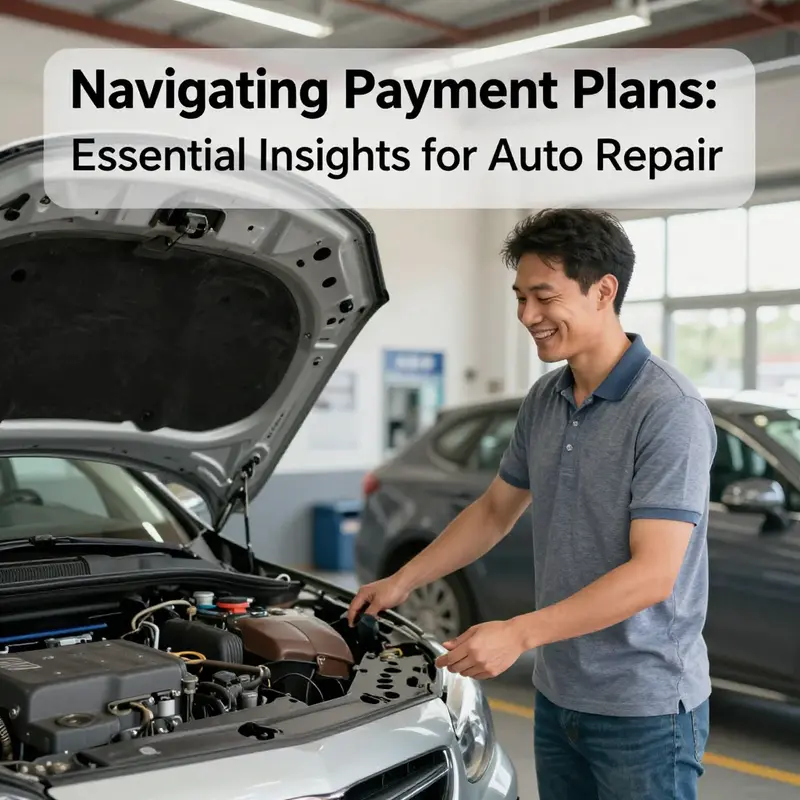
When a car breaks down or suddenly demands a costly repair, the moment of truth for the driver often isn’t the diagnosis but the bill. That bill can feel like a sudden weight on a budget that, by necessity, already carries the other essentials of daily life. In this moment, the offer of a payment plan can be more than a convenience; it can become a pathway to maintaining trust between a shop and its customers. The logic behind payment plans in auto repair rests on two simple ideas: affordability and transparency. When a shop presents a clear path to spreading the cost, the customer perceives not just a price tag but a service that respects their financial realities. This perception matters deeply. It shapes not only whether the customer proceeds with the repair today but also whether they return for future service, recommend the shop to others, or—crucially—keep their vehicle roadworthy in the long run. In practical terms, payment plans come in several forms. Some shops partner with third‑party financing firms that specialize in borrowing for automotive work. Others opt to offer in‑house financing, crafting terms that fit their own cash flow and the typical timetable of their clientele. The most common promise these options convey is simple: the customer can get necessary work done now and pay over time, ideally with minimal friction and without the horror of a surprise, long rabbit-hole interest rate. There is a careful balance for the shop to strike here. On one side is the imperative to facilitate repairs that keep a car safe and functional; on the other is the risk that financing can become a cycle of high costs if terms aren’t clearly understood or if the customer overextends. The best shops address this with rigorous upfront communication. They explain what the plan covers, the total projected cost, any interest or fees, the repayment schedule, and what happens if a payment is late. They also emphasize what the plan does not cover. This openness isn’t just good manners; it is a business strategy grounded in trust. When customers feel informed, they are more likely to view the repair as a transparent exchange rather than a debt trap. In turn, that trust translates into higher satisfaction scores, repeat visits, and a willingness to engage in recommended maintenance rather than postponing it in fear of future bills. The empirical link between payment flexibility and satisfaction has begun to appear in service-sector research as well as in automotive contexts. A 2023 study from a national automotive service standards body found that customers who used installment options were markedly more likely—47 percent—to rate their overall experience as “excellent” compared with those who paid upfront. The reasoning behind this effect is not merely sentimental. It rests on a perception of affordability, which reduces emotional stress; and on transparency, which fosters trust by making pricing expectations explicit rather than opaque. Customers who encounter clear, structured payment options feel that the shop respects their financial boundaries and treats them as partners in a problem-solving process rather than as sources of revenue. That dynamic matters because car repair, unlike some consumer services, often involves situations where urgency competes with budget, and where the customer’s long view matters as much as the immediate need. When the repair is framed as a collaborative solution—an agreement that helps the driver preserve mobility without wrecking a month’s finances—the customer is more likely to accept a recommended course of action, even if it requires more than a single installment or a tiered plan. Shops that succeed in this arena typically couple payment options with a consistent emphasis on value. Value, in this context, does not mean “the cheapest price.” It means a clear sense of what customers are getting for their money and an assurance that the cost is fair for the work performed. The repair is not merely a transaction; it is a service encounter in which expertise, time, and parts converge to restore function. In that sense, payment plans are a channel to communicate value more fully. A customer who understands the scope of the repair—the diagnostic findings, the recommended parts, the labor involved, and the alternatives—will also understand how the payment plan supports that value. The psychology here matters as much as the numbers. People weigh decisions not only by the amount they owe but by how they feel about the choice: Do they feel coerced or informed? Do they feel supported or rushed? Do they feel that the shop has their best interests at heart? These questions drive satisfaction because they touch on trust, which is the currency of recurring business in a field where word-of-mouth can be as impactful as a marketing campaign. The practical implementation of payment plans in an auto repair shop is rarely one-size-fits-all. In practice, most shops offer a menu of options designed to fit a range of repair sizes and customer circumstances. For smaller repairs, a short, interest-free installment plan may suffice, potentially with a minimal upfront fee that helps the shop cover administration costs. For more substantial work, longer-term financing might be offered, with a clear amortization structure and a transparent annual percentage rate. Some customers may prefer an in-house plan that the shop tailors directly to their situation, with terms that consider the customer’s income cycle and fixed obligations. Others may opt for a third-party financing route for reasons of speed or negotiation leverage, especially when the customer wants a firm, predictable repayment schedule rather than negotiating the specifics of a payment plan with the shop directly. Regardless of the mechanism, the tone of the conversation matters most. The shop should invite questions, encourage comparison with other options, and help the customer evaluate how a given plan affects total outlay over time. The goal is not merely to soften an upfront sticker shock but to cultivate a sense of financial agency in the customer. In this spirit, it can be useful to present the plan as part of the service plan, not as a separate add-on. A customer who perceives the financing discussion as an integrated, transparent component of the repair experience—one that clarifies what is being repaired, why, and how it will be paid—emerges with a more favorable impression of both the work and the shop’s stewardship. It is at this intersection of service clarity and flexible payment that satisfaction flourishes. For readers who want to explore how such financing concepts intersect with broader consumer behavior in service industries, one can find relevant analysis in the automotive services literature. For a broader sense of how shops frame their service options, see A-to-Z Auto Repair. This reference provides a pragmatic view of how a shop communicates its service portfolio in a way that supports understanding and trust without devolving into jargon or pressure. The importance of clarity cannot be overstated. Terms that are confusing or buried in footnotes undermine the very purpose of offering a payment option. Customers who walk away with questions about interest accrual, late fees, or the consequences of missed payments are less likely to perceive the repair as a fair exchange. They may even defer essential maintenance because the path to payment feels uncertain or perilous. This is where consistent, customer-centered communication becomes a differentiator. Shops that train their front-desk staff and technicians to talk through the payment options with the same clarity and courtesy with which they describe the repair experience tend to see higher satisfaction scores and lower service friction. The customer’s journey—from the moment they first inquire about a repair to the moment the last payment is completed—becomes a sequence of predictable touchpoints. Each touchpoint reinforces the idea that the shop is attentive, responsible, and committed to the customer’s long-term mobility. There is also a pragmatic cost consideration for the shop that cannot be ignored. Financing, when done well, can support cash flow and capacity to handle larger or more complex jobs. It can also mitigate the risk that a customer will defer or abandon a repair because of immediate price concerns. From a shop’s perspective, offering payment options is not a sign of weakness or desperation; it is a strategic tool for aligning the repair need with the customer’s financial reality, thereby preserving the relationship and the opportunity for ongoing maintenance work that keeps the vehicle reliable. For customers, the takeaway is practical as well as moral. If you are navigating a repair with a sizeable price tag, ask for a breakdown of how the plan works, request a projected total cost, and compare it against paying upfront if that is possible. Consider whether any interest or fees are affected by the duration of the plan and whether there are penalties for late payments. If a repair is urgent, you may choose the fastest path to get the car back on the road and reserve longer-term financing for future upkeep. If it is a matter of prevention and routine maintenance, you might opt for a plan that supports regular service intervals, helping you budget more predictably across the year. The overarching message here is simple: payment plans work best when they are part of a transparent, value-focused dialogue rather than a hidden surcharge or a coercive sales moment. They become meaningful only when the customer feels they are a partner, not a captive. As you plan ahead for future visits or repairs, remember that the availability of affordable, understandable payment options is a feature of modern auto care, not a makeshift solution. It reflects a broader shift toward service models that respect consumer budgets while sustaining the technical expertise and quality work that keep vehicles safe and dependable on the road. External research continues to illuminate how these options influence consumer decisions, and readers who want to dive deeper into the empirical side can consult the ASE’s research on payment flexibility and customer satisfaction in automotive service. External resource: https://www.ase.com/research/impact-of-payment-flexibility-on-customer-satisfaction-in-automotive-service
Final thoughts
Payment plans offered by auto repair shops can significantly relieve the financial burden of unexpected repairs for vehicle owners. By understanding the various options available, including third-party financing and in-house plans, customers can make informed decisions that suit their financial situations. Moreover, these plans contribute positively to customer satisfaction, reinforcing the importance of clear communication from repair shops. Ultimately, being proactive in exploring payment options can lead to more manageable repair experiences. Don’t be hesitant; inquire about financing opportunities that can ease your next repair bill.