

Vehicle maintenance is a vital part of owning and enjoying your motorcycle or car; ensuring that your ride performs at its best entails more than just basic checks. With the help of Care Auto Repair solutions like CARFAX Car Care, owners can harness advanced tools designed for comprehensive vehicle care. This approach integrates personalized reminders to stay on top of maintenance, tracks the history of repairs, estimates repair costs to avoid unwelcome surprises, and helps locate trusted repair centers in your area. In exploring these components, we will uncover how each aspect supports seamless vehicle upkeep, ultimately helping you extend the life of your vehicle and enhance your driving experience.
Personalized Reminders, Safer Journeys: How Care Auto Repair Keeps Your Car in Check
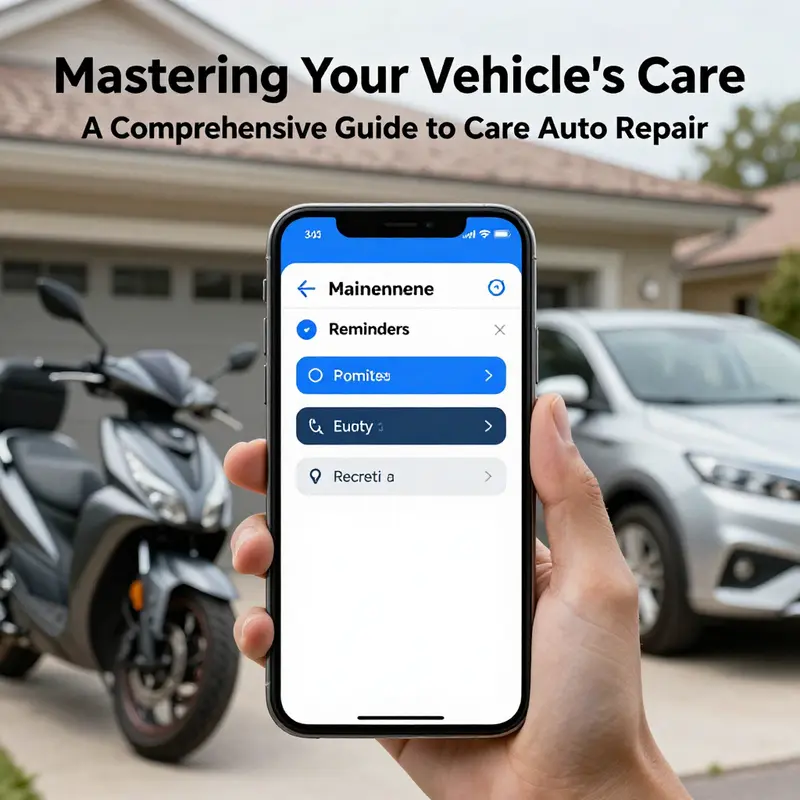
A car is more than a machine that takes you from one place to another. It is a living system that depends on timely care to run smoothly, quietly, and safely. The moment you shift from reacting to repairs to anticipating maintenance, you begin to treat your vehicle as a responsible partner rather than a stubborn inconvenience. This shift is at the heart of Care Auto Repair as a concept: turning maintenance into a continual, personalized dialogue between you, your vehicle, and the care network that supports it. The chapter you are reading explores how personalized reminders transform ordinary upkeep into reliable protection, comfort, and long-term cost savings, all while weaving together the practical mechanics of health data with the everyday realities of driving. In practice, these reminders do more than nudge you about an oil change; they align with the specific needs of your car, your driving patterns, and your life rhythm, so that every mile is a little safer and a little more predictable.
Imagine you own a car with a schedule carved into its design by the manufacturer and refined by years of real-world experience. The reminder system reads that schedule, but it also listens to your day-to-day life. It notes that you commute across a city with stop-and-go traffic more often in the winter, that you often drive with a full trunk or a heavy payload, and that your vehicle’s tires wear differently depending on whether you take long highway trips or short local hops. From this, the system builds a tailored alert calendar: the moment your odometer clicks past a certain milestone, or when a service interval aligns with a meaningful pattern in your driving, you receive a notification that feels less like a nuisance and more like a proactive health check. In other words, reminders become a digital co-pilot that translates the car’s hidden language into human, actionable steps.
The core appeal of personalized reminders lies in their adaptability. An oil-change reminder rooted in vehicle manufacturer recommendations is valuable, but it becomes transformative when it adapts to how you actually use the car. Some drivers follow strict interval schedules, others work with mileage thresholds, and a few rely on a more fluid blend, depending on season, climate, and driving style. The system design embraces this variety. It allows you to customize alerts around the precise service intervals prescribed for your make and model, giving you notifications that fit your calendar rather than interrupting it. This customization is not merely a convenience; it is a safeguard, because the car’s internal ecosystems depend on timely attention. Delayed oil changes, skipped brake inspections, or deferred air-filter replacements can quietly erode performance or safety. A well-tuned reminder system counters that risk by signaling when attention is due, in a manner that respects your schedule and your responsibilities.
Within this personalized framework, critical service notifications deserve particular attention. It isn’t enough to remind you of routine tasks; the system must also flag services whose timing has outsized consequences for safety and reliability. Brake inspections and pad replacements are a prime example. Brakes require regular assessment, not only to avoid unexpected failure but to preserve the precise bite, balance, and responsiveness that spells the line between a smooth stop and a near-miss. The reminder architecture emphasizes these high-stakes alerts, delivering timely notices when sensor data, wear indicators, or mileage milestones coincide with safety-critical thresholds. The aim is to shorten the window between detection and action, so you can schedule maintenance at a moment that minimizes risk while avoiding last-minute emergencies.
The value of timely reminders extends beyond safety. It touches the broader health of the vehicle and the financial health of the owner. When maintenance is anticipated rather than forced by a breakdown, you can plan for costs more effectively. The reminder system often includes maintenance cost estimates that reflect current market conditions and typical service ranges. This information helps you discern ordinary wear from problems that may require more extensive attention. Instead of feeling surprised by an unexpected bill, you face a transparent forecast that informs decisions. You can compare the projected costs of a routine service against the potential expense of deferred maintenance, and you can decide whether to pursue a recommended service immediately or schedule it for a more favorable time. In this sense, personalized reminders are not just about avoiding inconvenience; they are a practical tool for financial planning that respects the realities of car ownership.
Setting up and managing these reminders is a straightforward, almost habitual process. It starts with collecting essential vehicle data—your car’s make, model, year, and current mileage—and then layering in your driving context. You are asked to input typical routes, common road conditions, and climate patterns. The system uses this information to calibrate notification timing. For instance, a car that operates frequently in stop-and-go traffic in a cold climate may require oil changes and brake inspections a bit sooner than a similar model used mostly on highway trips in temperate weather. The design intent is not to nag, but to tune alerts to the realities of your life and your vehicle’s physiology. Once the baseline is established, you can adjust the cadence of reminders, choosing monthly summaries, event-driven alerts, or a hybrid approach that blends both. You can also decide which maintenance categories you want to emphasize or suppress. If you know your tires wear fast on certain road surfaces or under specific loads, you can flag tire rotation reminders to align with those conditions. This degree of control makes the reminder system a personal maintenance coach, a companion that grows more precise as you share more driving history and feedback.
An integral component of this approach is the maintenance history that accompanies the reminders. Every service entry, every part replacement, every fluid top-off becomes part of a permanent, searchable record. When you look back over months or years, you see a narrative of your car’s health, not just a list of dates. This history proves invaluable when you sell the vehicle or when you turn to a repair shop for an advisory. The trusted repair centers in the network value this complete history because it reduces uncertainty, speeds up diagnostics, and helps technicians determine whether a service interval has been truly met or if there’s an underlying issue that warrants deeper attention. A well-maintained history can also prevent repeat work, because technicians can quickly verify what has already been done, what remains due, and whether a certain approach has proven effective for your particular model and driving style.
The ecosystem that supports personalized reminders also includes practical, real-world tools for cost awareness. Cost estimates derived from current market data provide a realistic framework for budgeting. Rather than encountering a surprise invoice after a service, you can anticipate typical fees for routine maintenance and identify outliers that may indicate the need for additional diagnostics or a different service path. This transparency reduces the sense of being overcharged and increases trust in the maintenance process. It also helps you negotiate more effectively with repair shops, because you bring to the table a grounded sense of what is reasonable for your locale, vehicle, and service level. The broader message here is that reminders, when combined with cost clarity, empower you to make informed decisions that align with both your vehicle’s needs and your financial comfort zone.
The reminder system’s value becomes especially clear when considering safety recall notifications. If a vehicle has an outstanding safety recall, the system can flag it immediately, prompting you to arrange a repair at a certified service center. Recall notices are not merely information; they are urgent prompts to address potential safety vulnerabilities. Integrating recall alerts into the same dashboard that manages routine maintenance consolidates all the care your car requires into one place. You do not need to hunt down separate emails, letters, or receipts; you receive a cohesive, real-time stream of essential health signals for your vehicle. This integration reinforces a key principle: proactive maintenance is an act of stewardship. By staying ahead of issues, you reduce risk, extend the vehicle’s life, and create a safer driving experience for you and everyone on the road.
A crucial but sometimes overlooked feature of these systems is their ability to suggest reliable service options. Even with perfect reminders, many drivers still worry about where to take their car for service. A robust maintenance ecosystem guides owners toward reputable repair centers with verifiable feedback and consistent quality. While the landscape of shops varies by region, the overarching goal remains: connect drivers with centers that demonstrate integrity, transparency, and competence. When a reminder signals a needed service, the platform can present nearby options, compare estimates, and show user reviews. This aspect does more than convenience; it helps ensure that the care you request for your vehicle is matched with a trustworthy partner who respects your time, budget, and safety.
All of these features—personalization, high-stakes alerts, transparent cost information, comprehensive maintenance history, recall notifications, and trusted repair network integration—work together to transform maintenance from a reactive obligation into a proactive practice. The practical daily value of personalized reminders lies in their ability to align the car’s needs with the owner’s life. If you commute daily, you wake earlier, and your mornings are tight, a reminder that lands the night before can give you the chance to schedule service at a convenient time. If you enjoy weekend road trips, reminders can be scheduled to flag services before you head out, ensuring you leave with a vehicle that is as prepared as you are for the miles ahead. In every case, the aim is to reduce the cognitive load on the driver while maintaining the car’s health at a level that supports reliable performance and safety.
In practice, implementing personalized reminders is not a one-size-fits-all project. It benefits from thoughtful setup, ongoing feedback, and periodic refinements. After you choose your preferred reminder cadence and service categories, you should review your vehicle’s service history and adjust the alerts as needed. If a particular service tends to drift in timing—perhaps due to seasonal driving patterns or unusual workloads—you can recalibrate the reminders to reflect reality rather than theory. The process is iterative but simple, designed to fit the rhythm of everyday life rather than disrupt it. The payoff is a car that feels cared for in a quiet, almost invisible way: fewer unexpected breakdowns, more predictable costs, and a sense that the vehicle is listening to your needs even when you are not actively thinking about it.
For readers curious about practical examples and deeper how-to guidance, consider exploring related resources that illustrate the broader philosophy of proactive maintenance. A practical reference can be found in the DIY oil-change guide, which echoes the same principle of budgeting time and money around maintenance rather than chasing after it after a failure. This resource emphasizes that small, well-timed acts of care accumulate into significant, long-term benefits. Ultimate guide to DIY oil changes provides concrete steps, cost considerations, and decision points that resonate with the reminders model—namely, that knowledge paired with timely action creates dependable outcomes. While this chapter is focused on the digital reminder system, the underlying ethics remain the same: respect the car’s needs, respect your time, and respect the budget you set for maintenance. By learning how reminders integrate with practical steps like oil changes, tire rotations, and brake inspections, you can see how a seemingly simple notification becomes a meaningful, shared commitment between you and your vehicle.
In closing, personalized reminders in a care-focused auto maintenance ecosystem are more than a convenience; they are a philosophy of responsible ownership. They acknowledge that a car is a dynamic system that benefits from ongoing attention, that safety is enhanced by timely intervention, and that financial planning improves when maintenance costs are predictable rather than surprising. They also reflect a broader trend toward digital stewardship—an approach that coordinates data, policy, and human judgment to keep cars healthier longer. The result is a driver experience that feels empowered, informed, and secure, with fewer interruptions to daily life and more confidence on every road. In this sense, care auto repair becomes not just a service you rely on, but a partner that helps you navigate the road ahead with clarity and calm.
External resource: For further context on how reminder-based maintenance can work in the digital age, see an iOS maintenance reminder app that demonstrates the practical realization of these concepts. This external reference offers a concrete example of how mobile platforms translate vehicle health data into timely, actionable notifications. https://apps.apple.com/us/app/car-maintenance-reminders/id1547328963
The Maintenance Ledger: Building a Reliable Service History for Care Auto Repair
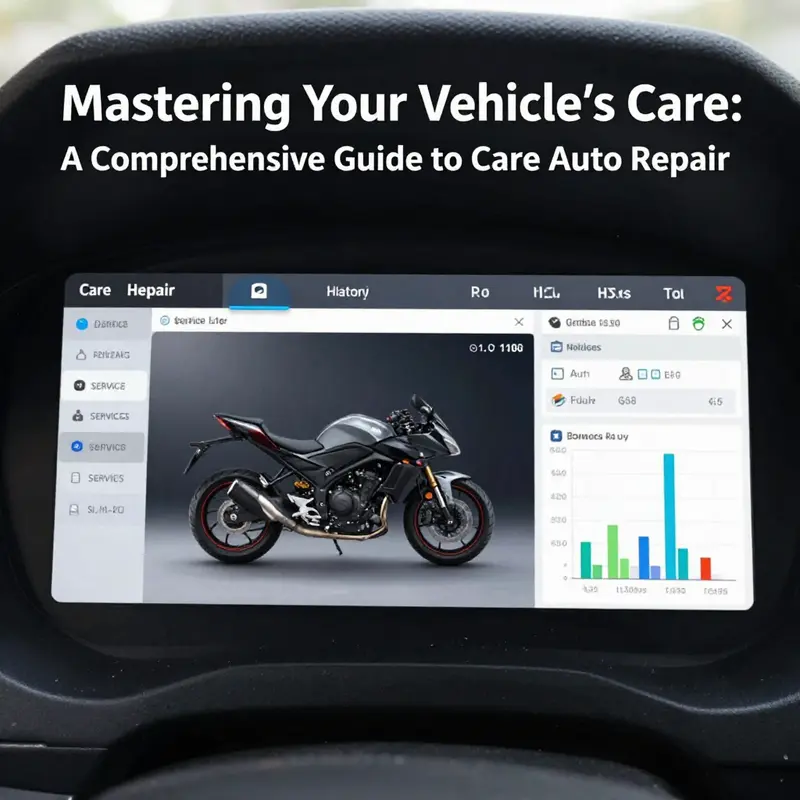
Maintaining a complete maintenance history is the backbone of thoughtful vehicle care. For owners and technicians alike, a well-kept ledger transforms reactive repairs into proactive decisions. It preserves safety, supports predictable budgets, and raises the resale value of every vehicle that passes through a shop. When maintenance records are accurate, accessible, and consistently updated, they become an active tool for diagnosing recurring problems, planning service intervals, and proving work performed to customers or regulators.
A practical maintenance history captures a small set of recurring data points for every event: the date, the odometer reading, the service performed, the parts used, the cost, and who performed the work. Photographs of receipts, replaced parts, and inspection findings add context that short notes cannot convey. This simple template supports complex needs. In fleet situations, it enables trend analysis across vehicles. For single-vehicle owners, it provides an honest narrative for future buyers. For repair shops, it documents liability and creates upsell opportunities based on documented trends.
The value of this ledger rises with consistency. A single, unified record is far more useful than multiple, incomplete notes scattered across paper invoices, email threads, or sticky notes. Consolidation simplifies answers to common questions: when was the last belt replaced, who installed the last set of brakes, and how much did a particular repair cost last time? To be useful, the record must be easy to query by type of service, date range, or vehicle component. Good filtering turns a static archive into a dynamic decision aid.
Digital tools make consolidation practical. They reduce clerical errors and make sharing seamless. Digital entries can be tagged, filtered, and exported for reporting. They support attachments and automatic backups. But technology is only a means, not an end. The processes that govern data entry matter more than the interface alone. Establishing clear conventions for naming shops, describing services, and categorizing parts preserves the ledger’s clarity as it grows. Shops that train staff to follow a standard entry format avoid ambiguity and future rework.
A second essential principle is traceability. Each entry should answer who, what, when, where, and why. Who performed the work? What was done? When was it done and at what mileage? Where was the vehicle serviced? Why was the repair necessary? Traceability supports warranty claims and dispute resolution. It also helps shops identify repeat failures. If a component keeps failing, a traceable history helps isolate whether the cause is part quality, installation practice, or operating conditions.
For fleets, traceability becomes a management imperative. Fleet managers need to see not only isolated repairs but patterns across multiple units. A robust ledger allows grouping by make, model, or specific part numbers. It enables predictive maintenance models that reduce downtime. For example, if several trucks begin showing similar wear at a specific mileage, the ledger exposes that trend. Managers can then schedule preemptive service, order parts in bulk, and adjust training for drivers or technicians.
Cost control is another direct benefit of diligent records. When every repair is logged with a cost and context, shops and owners can identify expensive recurring issues. A ledger helps separate one-off failures from systemic problems. Over time, this insight guides investment decisions. Owners can decide whether to rebuild a component, replace it, or alter operating practices. For shops, documented histories often justify bundled maintenance packages that save customers money while increasing shop throughput.
A strong maintenance history also advances transparency with customers. When a driver can see exactly what was done, when, and why, trust grows. Detailed notes that include part numbers and photos remove ambiguity. Customers who receive clear records are less likely to feel overcharged or misled. Moreover, transparent histories become marketing assets. Shops that can demonstrate methodical care often earn repeat business and referrals.
Data portability deserves attention. A service history trapped on a single desktop, in proprietary format, or on paper limits value. Vehicles change hands. Drivers move between companies. A good ledger strategy includes export options and backups in standard formats. Periodic exports create archival snapshots for tax, warranty, and compliance needs. When switching software or handing records to a buyer, portability prevents data loss and preserves continuity of care.
Usability matters as much as features. A system that offers many capabilities but is difficult to use will generate incomplete data. Common usability pitfalls include complicated registration, poor navigation, and unclear data fields. When users encounter friction, they bypass the ledger or create ad-hoc records elsewhere. That fragmentation erodes the single source of truth. Invest time up front to choose tools with intuitive flows and reliable performance. Equally important is an onboarding plan that teaches staff how to enter data consistently.
Even the best tools can fail in edge cases. Account lockouts, stalled registration, and sync errors are not theoretical problems. They interrupt workflows and discourage regular logging. When technical issues surface, shops should have fallback processes, like a temporary standardized paper form, to capture critical data until systems are restored. These forms should mirror the digital template, so entries can be migrated without loss of detail.
Security and privacy cannot be overlooked. Maintenance histories often include personally identifiable information and location data. Systems that store these records should use secure authentication and encrypted backups. Access controls are important; not every employee needs the same level of visibility. Regularly review who has access and why. In the event of a data breach, having a written response plan will speed recovery and communication to affected parties.
Integrating maintenance records with scheduling and reminders multiplies the ledger’s value. When past services trigger automatic reminders, shops can move from reactive to proactive care. Reminders tied to mileage or time reduce missed services. For fleet operators, automated alerts help redistribute workload and reduce emergency repairs. Reminders can be segmented: safety-critical items get higher priority than cosmetic checks. This prioritization ensures limited shop capacity addresses what matters most.
Standardized naming conventions are a small investment with big returns. Decide how to list shops, parts, and service types. Use consistent abbreviations and avoid ambiguous shorthand. For example, decide whether to write “brake pads” or use a numeric part identifier. Consistency enables reliable filtering and clearer communication with parts suppliers.
When maintenance histories are accurate, they support more efficient repairs. Technicians can review prior work before disassembly. That review often reveals prior mistakes, prior part substitutions, or previous diagnostics that inform the current approach. It shortens troubleshooting time and avoids duplicate work. Shops that incorporate history review into their intake process increase first-time fix rates and improve shop profitability.
Finally, treat the maintenance ledger as a living asset. It should be reviewed periodically to remove duplicates, correct errors, and update categorization rules. Annual audits help keep the dataset clean and useful. During audits, reconcile physical receipts with digital entries. Cleanup reduces the time needed to answer customer questions and improves the quality of fleet-level analysis.
For those migrating from paper or scattered digital notes, begin with a focused pilot. Choose a representative subset of vehicles, document every repair with the standardized template, and collect feedback from technicians about the workflow. Iterate quickly. Once the process fits real work, scale it across the shop or fleet. Training and simple, repeatable templates accelerate adoption.
Recordkeeping is not an extra chore. It is a service enhancement that pays dividends in reduced downtime, better diagnostics, stronger customer trust, and clearer financial management. A carefully maintained ledger turns maintenance into a predictable, auditable practice. The clarity it provides benefits owners, drivers, technicians, and managers in equal measure.
For more practical guidance about common service pitfalls and how to avoid them, see this resource on common engine maintenance mistakes: 10 common engine maintenance mistakes.
If you want to explore a mobile solution that lets you register vehicles, attach photos of receipts, and generate custom reports, the most current verified download is available here: https://apps.apple.com/app/truck-maintenance-repair-log/id1457920638
Care Auto Repair Costs Unveiled: A Practical Guide to Estimating Vehicle Repairs

When a car needs care, the first question is not only what needs fixing but how much it will cost. In modern maintenance, cost estimation is part of responsible ownership. A thoughtful approach treats cost as a family of factors—labor time, parts quality, vehicle specifics, and repair path—woven together by priorities and the shop’s pricing philosophy. This chapter moves beyond rough estimates toward a framework that helps owners forecast the bill with clarity, using a digital maintenance mindset that mirrors how care platforms organize car health, alerts, and history. Think of translating a car’s health report into a trustworthy forecast of the next service bill, rather than reacting to a shock invoice after the work. This aligns with driver-focused platforms that centralize reminders, history, and estimates, delivering a clear map from problem to price while emphasizing safety and transparency.
Labor costs form the backbone of pricing. Labor is priced by the hour, but rates and hours vary across shop categories. High-end repair shops command higher hourly rates but may deliver faster turnaround and precision for complex tasks. Independent shops may offer more affordable rates but longer durations due to workflow differences or limited access to specialized equipment. Specialized services such as engine machining or ADAS calibration often carry longer hours and higher skill requirements, reflecting complexity. The actual hours depend on the repair’s scope; a spark plug replacement might take a couple of hours, while a major engine overhaul could stretch to many hours. When you combine hours with the shop’s rate, you see how the same problem can yield different price tags.
Parts and materials can swing in price. OEM parts tend to be higher priced but offer perfect fit and warranties. Aftermarket or remanufactured parts offer substantial savings and are suitable for many daily drivers. Other inputs—oil, filters, sealants, consumables—add to the bill and rise or fall with the chosen quality tier. For example, brake components on a luxury platform may involve premium parts, while a standard sedan may use economical equivalents. A simple brake pad replacement expands into a spectrum reflecting part quality, rotor type, sensors, and labor to remove and reinstall components.
Vehicle-specific factors amplify or dampen costs. Make and model set the baseline for parts availability and service ease. Luxury or European brands incur higher parts costs and longer repair times due to specialized components, tighter tolerances, and the skill level required. Age and mileage influence maintenance cycles and the likelihood of encountering discontinued parts. The severity of damage matters: minor cosmetic issues cost less than structural damage that requires panel work or frame repairs. Even the same repair can look different depending on the car’s architecture and the location of the work.
The channel through which the repair is performed also influences price. Dealerships, often described as 4S stores, use genuine OEM parts and can offer warranties, but labor tends to be higher. Chain repair shops provide value with standardized processes and broader reach, typically with lower labor rates. Quick-service centers offer low upfront costs but may compromise warranty coverage and the scope of work for advanced models. The choice of channel should align with the repair’s nature, the vehicle’s worth, and the driver’s confidence in the facility. A careful estimate weighs potential added costs from parts substitutions, warranty terms, and aftercare.
Hidden or ancillary costs deserve careful attention. Paint choices can push costs higher, especially with metallic or special finishes. Modern cars may require recalibration of ADAS when sensors are involved, adding a separate line item. Accessibility can add labor or tool costs; regional wage norms and local costs influence prices. These factors show that a price tag is a forecast that evolves with the repair roadmap.
How can a driver assemble a reliable estimate? Collect quotes from three providers, including at least one dealership, one chain shop, and one quick-service center if possible. Use online tools that publish current market prices for parts as a benchmark. If involved in an accident, the insurer’s appraiser can serve as a reference point, but you can request a third-party appraisal if needed. The vehicle’s history matters: a well-documented maintenance record helps anticipate recurring failures or wear that might influence costs. A platform that aggregates reminders, history, and recalls can be valuable, providing a proactive view of when components need attention and how to time repairs for cost efficiency and reliability.
When navigating the estimate, a repair price is a snapshot of the path to restore reliability, not a verdict about the car’s future. A well-constructed estimate separates essentials from nice-to-haves. For major repairs, insist on a transparent breakdown: labor hours, unit prices for parts, consumables, and optional replacements that could improve longevity. Ask for a failure cascade: which components are likely to fail next, how does the current repair affect those risks, and what warranties attach to parts and labor? This disciplined conversation helps prevent sticker shock and aligns expectations with outcomes.
null
null
Final thoughts
Incorporating effective Care Auto Repair strategies into your vehicle maintenance routine not only improves performance but also enhances your driving experience. Personal reminders help you stay proactive, while tracking your maintenance history ensures no detail is overlooked. By accurately estimating repair costs, you can make informed financial decisions and avoid unwanted expenses. Lastly, knowing where to find trusted repair services simplifies the process, giving you peace of mind. A well-managed vehicle is a joy to drive, ensuring safety and reliability every mile of the journey.