
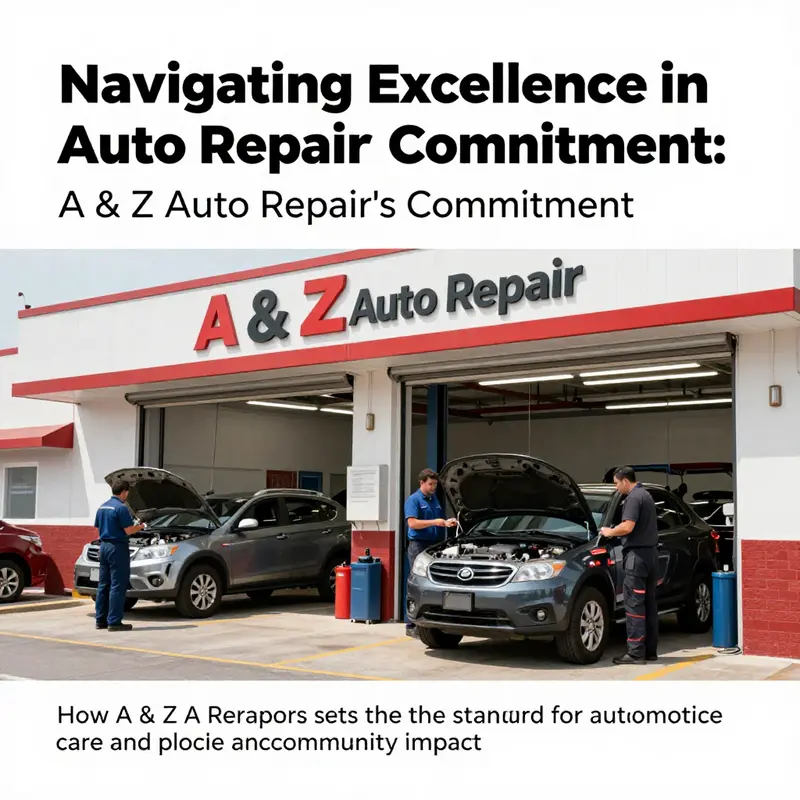
For motorcycle owners and auto enthusiasts alike, A & Z Auto Repair stands as a pillar of quality service and community-focused automotive care. With independent facilities in Houston and Glendale, each auto repair center not only specializes in essential automotive services but is also keenly attuned to their local neighborhoods’ specific needs. This article delves into the comprehensive services offered, prioritizing customer experience, embracing cutting-edge technology, and examining the economic contributions these centers make to their communities. Moreover, we will explore future trends that could shape the automotive repair landscape. Let’s embark on this journey to understand the integral role A & Z Auto Repair plays in fostering automotive excellence.
Beyond Wrenches: How A & Z Auto Repair Keeps Cars Safe Across Houston and Glendale
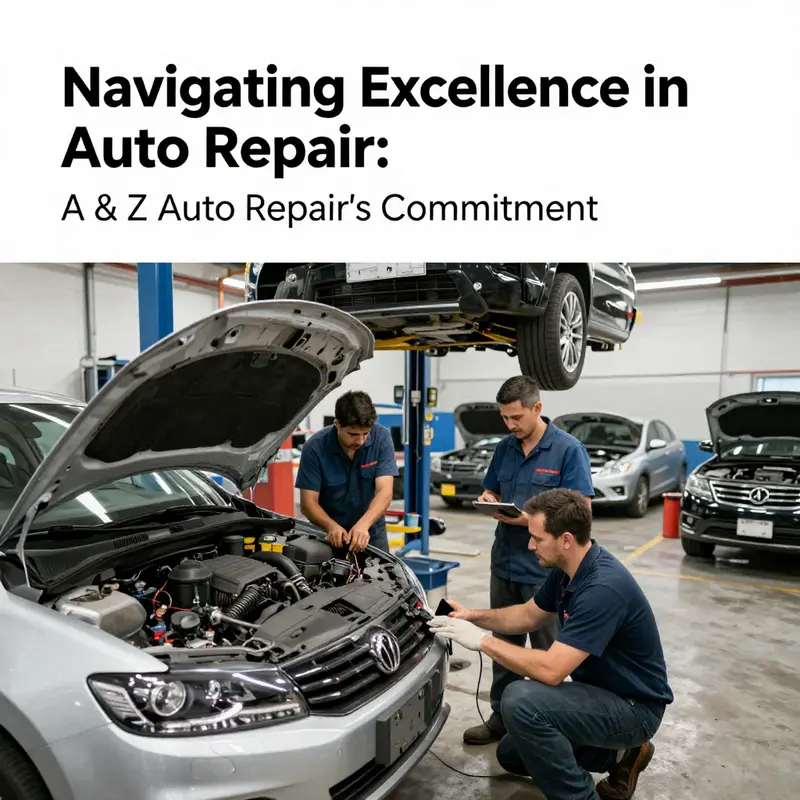
Across the map of the American auto repair landscape, A & Z Auto Repair stands out not because it owns a single shop, but because it represents a network of independent centers united by a common purpose: to keep vehicles safe, reliable, and locally trusted. The Houston outpost on Martha Lane and the Glendale storefront on West Glendale Avenue sit miles apart and in very different communities, yet they share a deliberate philosophy. Each center runs as its own operation, catering to nearby drivers while aligning with a broader standard of service quality. It is in this balance—local responsiveness reinforced by a shared commitment to excellence—that the true strength of A & Z Auto Repair becomes apparent. The result is not a uniform factory service, but a family of shops that understands the unique rhythms of their neighborhoods while drawing on a common toolkit of training, processes, and parts to deliver dependable care for a wide range of vehicles.
The everyday work of these centers begins with routine maintenance, the quiet backbone of any vehicle’s reliability. Oil changes, tire rotations, and fluid checks are not afterthought tasks but essential rituals that protect the engine, prolong tire life, and prevent minor issues from becoming expensive repairs. When you pull into the Houston shop for a routine service, technicians approach the appointment as a chance to gauge wear patterns, spot potential leaks, and verify that every fluid line has a clear path to optimal temperature and viscosity. In the heat and stop-and-go patterns common to city driving, oil and transmission fluid can degrade more quickly, while cooling fans and radiators shoulder heavier loads. A well-executed maintenance visit answers questions before they become problems and translates into fewer surprises on the highway. The same careful cadence informs the Glendale center’s approach, though the local climate and traffic nuances may shift emphasis toward shorter maintenance intervals or tailored checks for vehicles that endure long commutes through arid air and sprawling city streets.
Behind the routine lies a robust safety framework built piece by piece. The brake system, for example, receives particular attention. Inspections target brake pads and rotors for thickness and wear, while fluid levels are checked for correct friction properties and proper anti-corrosion protection. This is not a one-size-fits-all process but a diagnostic mindset that considers vehicle age, typical loads, and driving habits. If a pad sensor is triggered or rotor runout is detected, technicians don’t simply replace parts; they explain wear patterns, discuss how driving styles influence braking performance, and propose a plan that fits the customer’s budget and safety goals. In both Houston and Glendale, customers can expect clear communication about the condition of their brakes and transparent options for repair or replacement. The overarching aim is reliability—so a driver can stop with confidence in the car they depend on for daily routines, weekend getaways, or critical work obligations.
Diagnostic testing forms another pillar of A & Z Auto Repair’s comprehensive approach. Advances in automotive electronics mean that modern vehicles carry an intricate web of engine control modules, transmission logic, and electrical systems that must be interpreted with care. The centers deploy up-to-date diagnostic tools and software to pinpoint problems that may not be immediately obvious through a casual inspection. A diagnostic session becomes more than a code read; it evolves into a collaborative assessment where technicians translate complex data into actionable recommendations. This is where the independence of each center matters as well. Local technicians bring experiential knowledge of common trouble spots in the community’s driving environments, whether that’s a particular model’s transmission calibration or a recurring issue with a known fault code in a range of year groups. The Houston shop may encounter patterns tied to heavier traffic and extreme humidity, while the Glendale shop may see cases tied to higher temperatures and unique model mixes. In both places, the diagnostic process remains anchored in accuracy, documentation, and a commitment to doing what is necessary to restore performance without unnecessary interventions.
Beyond the core maintenance and diagnostics lie additional services that address systems critical to engine health, comfort, and compliance. Cooling system maintenance is a care category often demanded by busy drivers who rely on their vehicles year-round. Radiators, hoses, and coolant circuits must be in good condition to prevent overheating that can cascade into head-gasket failures or warped components. Exhaust system repairs, too, matter for emissions compliance and engine efficiency. A & Z Auto Repair centers treat exhaust not as a mere noise-maker but as a key indicator of engine performance and environmental responsibility. Suspension services complete the triad, ensuring that handling remains predictable and that tire contact with the road is optimized for grip and ride comfort. While these services are common to both the Houston and Glendale locations, the centers’ specialists tailor the approach to each vehicle’s specifications and the owner’s priorities, explaining how a revised cooling path or a revised exhaust routing can yield meaningful gains in reliability and efficiency.
The chapter’s broader arc, however, is not merely a catalogue of tasks. It is a portrait of how independent centers can uphold a shared standard while honoring local needs. A & Z Auto Repair emphasizes transparency as a non-negotiable value. From the moment a vehicle enters the shop to the issuance of a completed service record, customers receive documentation that chronicles work performed, parts used, and the rationale behind every decision. This approach builds trust, because customers understand what was checked, what was replaced, and why. In a world where service histories can become tangled across many visits, having clear, cross-era records helps customers manage maintenance proactively rather than reacting to costly breakdowns. The practice also assists future service decisions: when a car returns for a follow-up, technicians can reference past actions to avoid duplicative work and to plan a more efficient path to long-term reliability.
Underlying these processes is attention to parts quality. A & Z Auto Repair’s standard of excellence relies on dependable components, installed with precision, and backed by accurate warranties. The emphasis on high-quality parts is not merely about immediate performance; it is about sustainable value. Vehicles accumulate mileage, and wear accumulates as well. A reputable shop acknowledges that a small premium on a component today can prevent a larger investment tomorrow. The result is a cycle of maintenance that supports safety and peace of mind, a cycle that customers in Houston and Glendale come to rely on as part of their regular vehicle-ownership routines.
All of this unfolds within a framework of customer-centric service. The centers listen, explain, and educate. They recognize that every driver has different priorities—budget, urgency, and the intended life span of the vehicle—and they tailor recommendations accordingly. This is where a reader can connect the local and the systemic: the Houston shop may emphasize practical, timely maintenance for fleets and families alike, while the Glendale center might highlight performance-oriented services that appeal to enthusiasts or time-strapped commuters seeking efficient turnarounds. Yet the throughline remains the same—rigor, honesty, and responsiveness. When drivers leave a shop after a visit, they should feel confident that their car has been evaluated fairly, repaired correctly, and prepared for the road ahead.
For readers curious about the broader philosophy and how it translates into actionable lessons, the approach mirrors the narrative found in related industry coverage. A short exploration of the A to Z Auto Repair story provides a helpful frame for this discussion and invites readers to see how a local shop can scale a principled practice without sacrificing neighborhood accessibility. See the article A to Z Auto Repair for a concise look at the brand’s core values and service philosophy. A to Z Auto Repair.
In sum, the comprehensive suite of services offered by A & Z Auto Repair is more than a menu of repairs. It is a cohesive, local-first strategy that respects the realities of Houston and Glendale driving while upholding a universal standard of quality. Routine maintenance, thorough brake and diagnostic work, and thoughtful attention to cooling, exhaust, and suspension compose a chain of care designed to extend a vehicle’s life, protect its occupants, and preserve the owner’s investment. The centers’ commitment to transparency, careful record-keeping, and high-part quality completes a cycle that supports safety and trust across communities. When a driver chooses A & Z Auto Repair, they are choosing a partner that recognizes today’s cars require not only skilled hands but also a clear, communicative, and dependable process that treats each vehicle as a valued part of a driver’s life. This is the essence of what makes these independent centers, though geographically dispersed, integral to the broader auto-repair ecosystem—and why their work matters to the daily safety and reliability of the driving public.
External resource: https://motorworksautorepair.com/blog/engine-overheating-tips/
Trust on the Road: Delivering Consistent, Customer-Centric Service Across A & Z Auto Repair
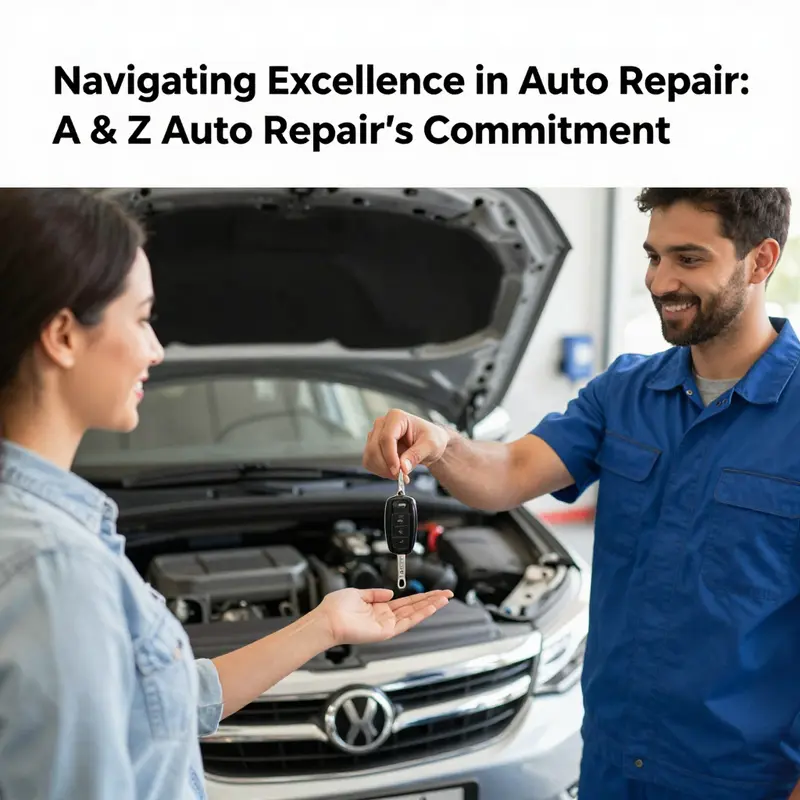
When a driver arrives at an A & Z Auto Repair shop, the experience begins with welcome and clarity. Across the Houston and Glendale centers, staff greet customers with calm, unhurried professionalism. Transparent estimates and clear explanations set the tone for the visit, so drivers know what will be done and why before any work starts.
The process continues in the bay, where technicians communicate in plain language, show the root causes of issues, and outline steps for repair. The goal is not to upsell but to build understanding and trust, with fair pricing and accurate timelines. Reviews from local customers emphasize quick quotes, thorough explanations, and a plan that feels approachable rather than intimidating.
Once a vehicle is in service, precision and consistency matter. Routine inspections and common repairs are performed with attention to detail, and technicians verify the result with the customer. The result is a repair journey that minimizes surprises and helps drivers schedule around appointments with confidence, knowing the shop stands behind the work.
The human element is central. Front-desk staff, service advisors, and technicians collaborate to make the experience respectful, transparent, and dependable. This culture travels between the two centers, even as each shop reflects its neighborhood, because the core commitment to safe, reliable transportation remains the shared standard.
For readers curious about the broader identity of A & Z Auto Repair, a concise profile exists that captures the brand’s approach to service and the values that drive repeat visits. The profile supports the sense that trustworthy, customer-centric care is not a marketing line but a routine practice grounded in communication, honesty, and technical proficiency.
In the end, the experience is measured by trust: drivers leave knowing they were heard, informed, and treated fairly, with a vehicle that will perform reliably on the road. This is the texture of customer experience at A & Z Auto Repair: consistent, respectful service that travels with you, wherever you drive.
From Diagnostics to Dashboards: The Tech-Driven Transformation of A & Z Auto Repair
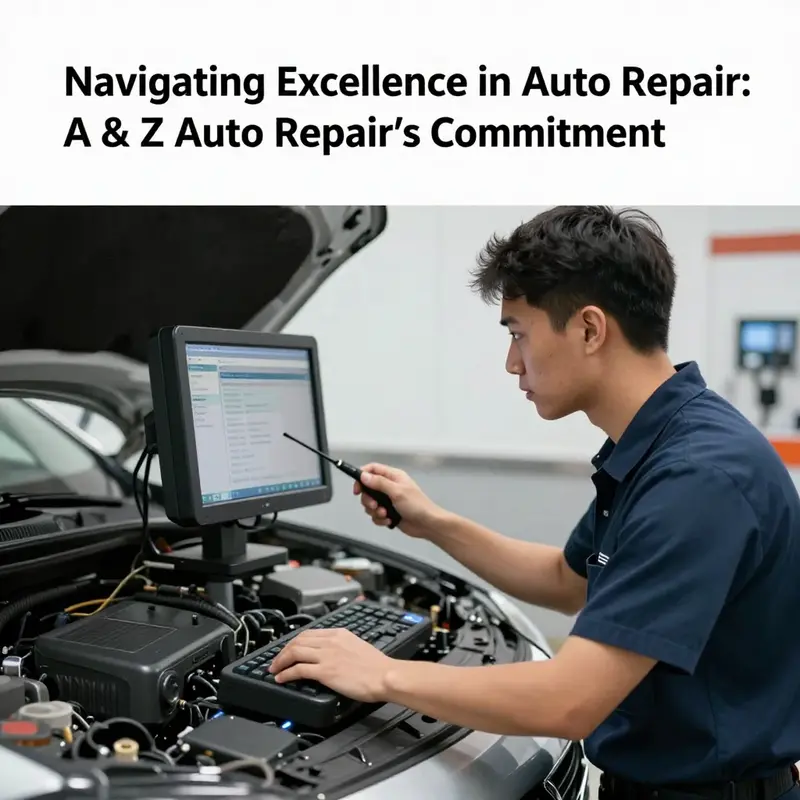
In the quiet hum of service bays and the constant cadence of diagnostic beeps, a quiet revolution is reshaping how A & Z Auto Repair serves communities in Houston and Glendale. What began as a promise to keep vehicles safe on the road has grown into a disciplined integration of digital tools that extend beyond the wrench. The centers share a name and a standard of care, yet they operate as distinct microcosms tailored to local needs. In both places, however, the shift toward technology is less about flashy gadgets and more about the patient, data-driven relationship between car, technician, and customer. The younger generations—Millennials and Gen Z—carry digital expectations into every interaction, expecting transparency, speed, and a traceable path from problem to solution. That expectation is not a distraction from the craft of auto repair; it is the scaffold that supports more accurate diagnoses, safer outcomes, and a cleaner customer journey. When a vehicle rolls into A TO Z AUTO REPAIR in Houston or A TO Z AUTO REPAIR CENTER in Glendale, the techs begin not just with a problem statement but with a digital trace of the vehicle’s history, a record of prior repairs, and a live map of sensor data that speaks in a language the human eye cannot read quickly enough. The result is a repair experience that feels both intimate and efficient, where a customer can sense the technician’s certainty as much as the repair itself. This is not science fiction. It is the practical marriage of mobile diagnostic capabilities, cloud-based management, and real-time communication that keeps pace with how people live today. Mobile diagnostic tools enable technicians to bring the lab to the car rather than the car to the lab. A quick scan in the service bay can reveal a cascade of fault codes, but the real value lies in the ability to observe live sensor streams, confirm anomalies at the scene, and create a diagnostic narrative that the customer can follow. This approach shortens the time between arrival and repair, and it reduces the likelihood of cascading issues that can arise when a car sits in a lot with uncertain prognosis. Alongside portable diagnostics, cloud-based customer management systems thread together appointment histories, service itineraries, and vehicle health snapshots into a single, accessible tapestry. For the shop, this means technicians perform work with full context: what was last serviced, which maintenance tasks are overdue, and what future repairs the vehicle might require. For the customer, it means an accessible, evolving portrait of their vehicle’s health instead of a single invoice at checkout. The ability to pull up a vehicle’s life story on a phone or tablet, even across visits to different A & Z locations, cultivates trust. The social media and messaging channels that many Millennials and Gen Z drivers rely on today have found a natural ally in auto repair. Real-time updates—photos of worn parts, quick explanations of what’s happening next, and a clear schedule of milestones—transform the way customers experience the repair process. Rather than waiting in the dark for a phone call, customers can receive bite-sized, trustworthy updates as the work unfolds. This kind of transparency is not merely a nice-to-have; it is a differentiator that elevates the entire service experience and strengthens loyalty to local shops that understand the value of open communication. As the headcount on the floor remains essential, the way the team coordinates internally has changed. Cloud platforms enable scheduling that respects both the customer’s time and the technician’s expertise. It is not unusual to see a single technician collaborate with a remote diagnostician or experienced mentor through a secure channel, sharing dashboards and data streams in real time. The result is a more precise allocation of labor, shorter turnaround times, and a lower likelihood of misdiagnosis. The California-Houston-Glendale triad of centers might be geographically distant, but technologically they share a common backbone: data-first workflows that guide decisions and a culture that treats every vehicle as a narrative rather than a one-off problem. AI and machine learning sit at the frontier of this narrative. AI-powered diagnostic systems can sift through vast arrays of sensor data, flags, and historical repair records to detect subtle patterns that a human might miss. They can highlight anomalies, rank probable causes, and even tailor repair recommendations to the vehicle’s unique profile. The technology does not replace the skilled mechanic; it augments the technician’s intuition with a breadth of pattern recognition and predictive insight. In practice, predictive maintenance becomes more than a slogan. When a car is approaching the threshold of a likely failure, alerts can surface in the customer’s dashboard or in the service portal, suggesting preemptive service that prevents breakdowns or more expensive repairs. This proactive posture aligns with the broader shift toward value-based care in automotive maintenance, where the goal is to keep drivers reliably on the road while avoiding the downstream costs of preventable failures. The 2024 survey by K Rana illuminates the broader horizon of these developments. It points to AI and machine learning expanding beyond traditional ADAS optimization and into the overall maintenance and repair workflows. The research suggests that intelligent systems are increasingly capable of learning from each repair, refining fault detection, and personalizing customer interactions in ways that were once the stuff of science fiction. To a reader who worries about the human touch in auto repair, this evolution is not about automation replacing technicians. It is about enabling the shop team to apply human judgment with sharper tools, freeing time to explain, reassure, and collaborate with customers. The practical upshot is a repair ecosystem that is faster, more accurate, and distinctly more trustworthy. Within the local context of A & Z Auto Repair, the Houston center’s emphasis on general repairs and diagnostics complements Glendale’s potential emphasis on performance-oriented or specialty repairs, reflecting the local demand that shapes each independent shop under the A & Z banner. The operational harmony across centers is achieved not through uniform products, but through shared principles: transparent data, clear communications, and the disciplined use of technology to enhance craftsmanship. The customer experience, in this sense, becomes a seamless thread that binds the work done in Houston to that in Glendale, and to the daily lives of drivers who rely on these shops to keep their journeys uninterrupted. For readers who want to see how these ideas translate into a concrete, locally anchored practice, a deeper dive into the A & Z Auto Repair story is available in the blog post that outlines the broader approach of the brand and its local expressions in different markets a-to-z-auto-repair. The post describes how the brand navigates growth while staying true to the hands-on expertise that customers expect, a balance that is essential when technology is steering more and more of the diagnostic and service workflow. While the tools and dashboards may evolve, the core relationship between technician and driver remains rooted in trust, clarity, and accountability. To complement the practical implications of these changes, researchers and practitioners alike point to the academic foundations of this shift. The field recognizes that AI and machine learning are unlocking new levels of efficiency and intelligence in maintenance and repair workflows, enabling more accurate fault detection and more personalized customer encounters. For readers seeking a broader, more formal treatment of these trends, an external resource offers a rigorous synthesis of how AI and ML are shaping automotive intelligence beyond the realm of driver assistance systems. See the MDPI article for a deeper academic perspective on these developments: MDPI article on automotive intelligence. In the end, the practical story of A & Z Auto Repair is a story about listening—to the road, to the data the road generates, and to the people who trust these shops with their daily drivers. The result is a service model that feels both modern and personal, a rare combination that resonates with a diverse and digitally engaged customer base. The fusion of mobile diagnostics, cloud-based management, real-time communications, and AI-driven insights is not merely a set of tools. It is a way of rethinking accountability in repair work, ensuring that every inspection, every recommendation, and every repair is as transparent as it needs to be for customers who want to understand what keeps their cars safe and on the road. And in communities across Houston and Glendale, that clarity makes A & Z Auto Repair not just a place to fix a car, but a dependable partner in the ongoing journey of vehicle ownership.
The Local Engine: Economic Ripples of A & Z Auto Repair Across Houston and Glendale
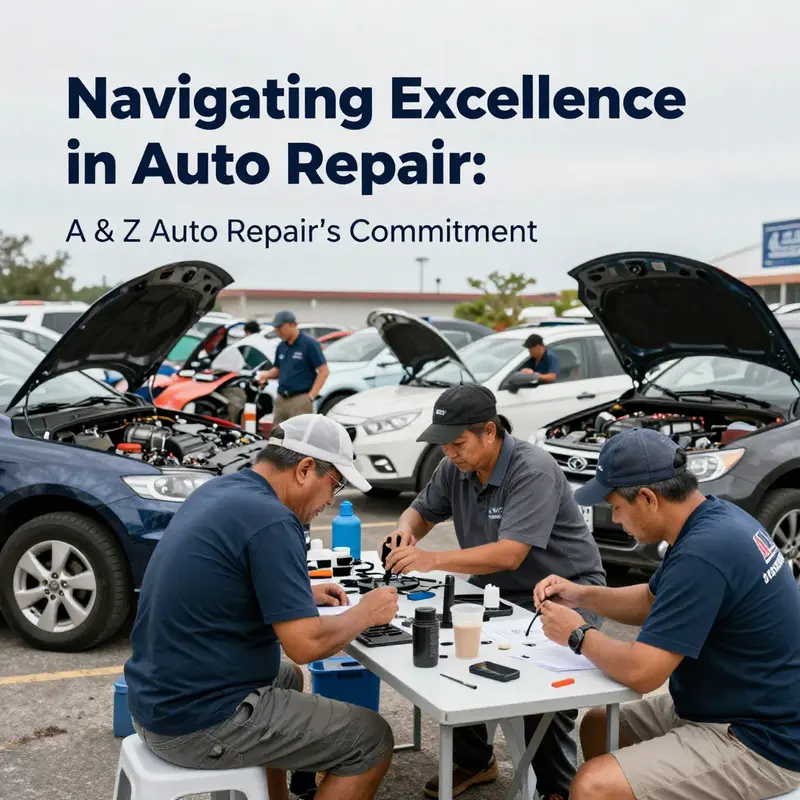
Across cities and neighborhoods, small, independent auto repair shops often operate as the unsung engines of local economies. A & Z Auto Repair, with centers in Houston, Texas, and Glendale, Arizona, epitomizes this dynamic. Each shop, while sharing a familiar name, functions as a distinct local business with its own customer base, community ties, and day-to-day rhythms. The chapter that follows treats A & Z Auto Repair not merely as a roadside maintenance option, but as a deliberate economic actor within the communities it serves. It seeks to illuminate how such centers shape livelihoods, supply chains, and the broader sense of readiness that keeps a city moving. In Houston, where traffic density and a broad mix of vehicle makes and models place a premium on reliable service, the A & Z Auto Repair shop there has built a foundation on trust, convenience, and responsive maintenance. In Glendale, where local demand might tilt toward specialized repairs or performance-oriented services, the footprint remains just as significant, because the center’s decisions ripple outward through its employees, suppliers, and the many residents who depend on timely repairs to keep their workdays intact. Although the two centers operate independently, the shared name carries a promise of consistency in customer experience. This consistency extends beyond the bay doors and diagnostic screens into the neighborhood, influencing how people think about car maintenance as a dependable, local service rather than a distant, impersonal transaction. When a resident in Houston schedules a diagnostic check, the outcome is not merely a car repair contingency resolved; it is a reaffirmation of the community’s capacity to keep moving with minimal disruption. When a Glendale customer returns for seasonal maintenance, the interaction reinforces the idea that a local business can respond quickly to changing needs, whether it’s routine maintenance ahead of summer heat or a more complex repair after a harsh winter drive. The economic implications of these everyday transactions accumulate in meaningful ways. Each repair completed locally generates direct employment—from technicians and advisors to shop clerks and service writers. These jobs offer wages, training opportunities, and pathways to career advancement within the automotive ecosystem. For a neighborhood economy, those roles translate into disposable income circulating through nearby stores, restaurants, and service providers, thereby supporting a broader local market. The effect is not merely about keeping cars functional; it is about sustaining livelihoods and enabling residents to participate more fully in daily life. A & Z Auto Repair centers, by their nature, rely on a network of local suppliers for parts, tools, and consumables. The procurement choices of these centers often favor regional distributors, which helps nurture a resilient supply chain within the region. The result is a twofold benefit: steadier demand for local suppliers and a more predictable, quick turnaround for customers. The shops’ ability to source parts efficiently reduces downtime for vehicles and, by extension, minimizes the economic losses that occur when people cannot travel for work, school, or errands. In this sense, the centers become a stabilizing force within the local economy, absorbing shocks that might arise from fluctuations in broader markets. This stability is further reinforced by the tax contributions generated from wages, property usage, and business activity. Local governments tend to see a measurable uplift when stable, small businesses thrive, and that revenue supports essential services—from road maintenance to public safety programs. Beyond dollars and employment, there is a social currency at play. A & Z Auto Repair centers often anchor their relationships in the communities they serve, offering predictable hours, transparent pricing, and responsive customer service. This approach yields trust, loyalty, and repeat business, which in turn supports ongoing employment and steady cash flow for the centers. The impact on residents’ perceptions of local business can be subtle but powerful; when people feel their neighborhood has competent, accessible automotive care, they are more likely to invest time and resources locally, shop at nearby stores, or patronize local events. In Glendale, where one might find a concentration of households that balance family needs with commuting demands, an auto repair center that understands the local rhythm can ease daily life by minimizing downtime and maximizing vehicle uptime. In Houston, the same logic applies amid a bustling urban environment where families, small businesses, and ride-share drivers depend on reliable service options. These practical outcomes—lower downtime, faster repairs, and dependable scheduling—translate into a broader economic signal: a community that can keep its transportation network intact enjoys greater mobility, productivity, and resilience. The broader industry context adds another layer to this assessment. The automotive sector is undergoing the ACES transformation—Autonomous, Connected, Electric, Shared—which redefines what repair work looks like and how costs accrue. For independent shops, this shift presents both challenges and opportunities. On one hand, electric vehicles and connected systems require new diagnostic capabilities and specialized equipment, which can entail substantial upfront investment. On the other hand, the same trends can reduce certain kinds of wear or maintenance tasks, expand the scope of preventive care, and create demand for skilled technicians who can troubleshoot complex electrical architectures with efficiency and accuracy. Within each A & Z center, strategic responses to these changes tend to reflect local realities. The Houston shop, serving a city with a large, diverse vehicle mix, often emphasizes comprehensive diagnostics, preventive maintenance, and timely repairs that minimize downtime for working families and fleets alike. The Glendale center, with its own local demand patterns, may lean into targeted services such as performance upgrades or specialized repairs, responding to customers who seek enhanced vehicle capabilities or bespoke solutions. This local adaptability underscores a broader truth: independent auto repair centers thrive by aligning their offerings with the unique needs of their communities while maintaining high standards of service. The micro-dynamics of such alignment—training, equipment investment, and customer engagement—become macro-level drivers of regional economic health. As these centers recruit and train technicians, they contribute to skill development within the local labor market. Apprenticeships and on-the-job training foster a pipeline of qualified workers who can pursue satisfying careers in automotive care, while also ensuring a higher level of service quality for customers. The result is a positive feedback loop: skilled labor improves service quality, which bolsters customer confidence, which sustains steady demand for repairs and maintenance, which in turn supports employment and local purchasing power. The chapter would be incomplete without acknowledging that precise, city-level data on A & Z Auto Repair’s economic impact is not readily available in the public research materials. Yet the qualitative narrative drawn from the independent-shop model, combined with industry-wide trends, suggests a pattern in which local repair centers act as economic accelerators. They anchor neighborhoods, sustain skilled employment, nurture local supply chains, and contribute to the reliability and safety of everyday mobility. A concise lens into this model can be found by exploring a related overview of the brand’s local footprint and service approach, which can be accessed through a short, contextual write-up such as a-to-z-auto-repair. a-to-z-auto-repair. This touchpoint helps readers connect the overarching economic themes with the practical realities of daily shop life and customer experience, reinforcing the idea that local automotive care is inseparable from local economic vitality. The broader industry context remains essential, and readers seeking a more formal framework for these trends can consult external research resources to deepen understanding of labor dynamics, adoption of new technologies, and the evolving economics of vehicle maintenance. External evidence points to a shifting skill set and capital investment landscape that independent shops must navigate to stay competitive while preserving the accessibility and reliability that communities rely on. While numbers may vary by locale, the core principle endures: when a neighborhood can count on a capable, nearby repair shop, mobility is strengthened, and with mobility comes opportunity. External resource: https://www.bls.gov/ooh/occupation-profiles/automotive-service-technicians-and-mechanics.htm
null
null
Final thoughts
A & Z Auto Repair exemplifies what it means to provide not only exceptional automotive service but also to serve as a cornerstone within local communities. By offering comprehensive services tailored to the needs of both auto and motorcycle owners, prioritizing customer experience, and embracing new technologies, A & Z Auto Repair is well-positioned to continue making a meaningful impact. As they adapt to future trends and address evolving automotive landscapes, their commitment will undoubtedly pave the way for continued success and community engagement.