
Understanding the intricacies of auto insurance coverage is vital for motorcycle and car owners alike. One pivotal area often overlooked is transmission repair coverage. While standard policies might not cater to mechanical failure or wear and tear, specific conditions could offer financial relief. In this guide, we’ll explore how collision and comprehensive coverages work concerning transmission repairs. Additionally, we’ll dive into the nuances of mechanical breakdown insurance and its importance. Finally, we’ll assess the economic implications of transmission repairs and how insurance can mitigate costs. This holistic approach ensures you’re well-informed about your coverage options and responsibilities.
Collision Coverage and Transmission Repairs: When Insurance Meets the Transmission
After a collision, many drivers assume their transmission will be repaired under collision coverage. In practice, whether the transmission repair is covered depends on causation and policy language. Collision coverage pays to repair or replace your vehicle after a crash with another vehicle or object. It is not a general maintenance plan. If the damage to the transmission is a direct result of the crash, coverage is likely. If the issue is wear or a preexisting defect, it may not be covered.
Key questions include: did the crash cause physical damage to the transmission, such as a broken housing or damaged mount, or did the failure stem from wear that evolved over time? The insurer will look for a clear link between the incident and the observed transmission damage. A documented chain of events, repair estimates, and expert opinions help support a claim.
Even when collision coverage applies, there are limits. The policy may require payment of a deductible and may exclude wear and tear or internal failures not directly caused by the crash. In ambiguous cases, a second opinion or a forensic assessment can help determine causation.
Drivers may consider alternatives such as mechanical breakdown insurance or extended warranties to protect against non crash related failures. Those options differ by provider and policy and should be evaluated for age and mileage of the vehicle.
Practical steps after a crash: ensure safety, document the scene, contact the insurer, and obtain professional assessments that link damage to the collision. Request multiple repair estimates and keep detailed records.
Understanding the interaction between collision coverage and transmission repairs helps manage expectations, deductions, and total costs while restoring safe operation of the vehicle.
Beyond the Breakage: How Comprehensive Coverage Relates to Transmission Damage in Auto Insurance

A car’s transmission is less glamorous than its engine’s horsepower but every bit as crucial to how a vehicle actually runs. When people ask whether auto insurance covers transmission repair, they are really asking how broad the policy’s protection is and what counts as a covered event. The truth is nuanced. Standard auto policies are built to guard you against accidents, theft, and certain non-c accident risks—events that happen suddenly and are not part of routine maintenance. Transmission repair, however, sits at the threshold between a maintenance issue and an insured loss, depending on what caused the problem and which part of the policy applies. To navigate this terrain, it helps to understand how coverage is typically structured, where there are meaningful exceptions, and what options sit beyond the standard policy to protect drivetrain components over the car’s lifespan.
At the core, most drivers are familiar with liability, collision, and comprehensive coverage. Liability covers damage you cause to others; collision covers damage to your own car resulting from a crash with another vehicle or object; comprehensive covers damage from non-collision events such as theft, vandalism, weather-related events, and animals. When it comes to the transmission, the distinction between these coverages becomes the difference between a repair you pay for out of pocket and a claim that may be filed with the insurer, depending on the cause of the damage.
One of the simplest ways to frame the issue is to separate causes from maintenance. If the damage to a transmission comes from a sudden, external incident—say your car is rear-ended, and the impact strains or physically damages the transmission—collision coverage becomes relevant. In this scenario, you would typically pay your deductible, and the insurer would cover the repair costs that fall under the policy limits. The transmission is not being repaired because of wear or a chronic fault; it’s a repair resulting from a specific crash. In practical terms, the insurer is stepping in because a covered peril in the policy framework has caused the loss.
Comprehensive coverage, by contrast, is designed to address non-collision perils. If a deer collision damages your car in a way that also harms the transmission, comprehensive coverage could step in, subject to the deductible and policy terms. If a branch falls on your car during a storm and damages the transmission, that event might be handled through comprehensive coverage. The key nuance is causation: the coverage can apply when the damage results from an event that the policy explicitly covers, not when the damage is the consequence of ordinary wear, gradual degradation, or neglect.
Yet the line remains precise because many transmission problems arise from wear and tear, age, or poor maintenance. A transmission that fails after years of normal operation, or after missing essential fluid changes or mismanaging seals, is typically categorized as maintenance or wear-related. In those cases, neither collision nor comprehensive coverage will pay for the repair. This distinction is not merely pedantic; it reflects the policy’s design to avoid subsidizing routine upkeep that you are responsible for managing as the vehicle owner. If your transmission fails due to wear or a manufacturing defect that manifests gradually, insurers commonly decline the claim. They may request maintenance records, require an inspection, and, in some cases, deny outright. The policy is not a maintenance plan; it is a risk-transfer mechanism for defined perils and sudden losses.
A related concept worth understanding is a mechanical breakdown insurance (MBI) or an extended warranty. These products sit outside standard auto insurance and are marketed specifically to cover certain components that fail due to mechanical reasons. An MBI or warranty can provide coverage for transmission repairs if the breakdown fits the plan’s terms, beyond what a conventional liability, collision, or comprehensive policy would cover. The practical effect is that you gain a safety net for drivetrain failures that are not tied to a collision or a covered external event. It is important to recognize, though, that MBIs and warranties come with their own conditions, exclusions, and deductible structures. They are not universal substitutes for standard coverage; rather, they are targeted protections that supplement the policy when you want broader protection for the drivetrain.
To illustrate how these distinctions play out in real life, consider a few scenarios. A car hits a pothole or is involved in a minor collision that damages the transmission. If the root cause is the crash, collision coverage would typically handle the repair, while comprehensive coverage might also contribute depending on the circumstances and the policy’s language about the incident. If the damage results from an unrelated event—say, a flood that seeps into the engine bay and affects the transmission—comprehensive coverage could be the driver’s ally, provided the event is one the policy explicitly covers and the deductible is addressed. But if your transmission fails because the vehicle has clocked many miles without a fluid change, the claim is unlikely to be honored. The insurer’s assessment will often hinge on documentation: service records, the timing of the failure, and expert evaluation that links the failure to a covered peril or to maintenance neglect.
This is a point where many drivers benefit from proactive assessment. A repair bill for a failed transmission is expensive enough to justify a careful review of coverage. Before you file a claim, it helps to consult your policy’s wording or speak with a licensed agent or adjuster who can explain how your terms would apply to a transmission-related loss. Ask whether the policy treats the incident as a collision event or a comprehensive event, and confirm whether the cause of failure must be linked to the incident as described or if a broader interpretation is possible. If you own a vehicle with a more complex drivetrain—such as a CVT or a transmission integrated with hybrid powertrains—recognize that some insurers may apply even more specific terms for these components. In some cases, manufacturers’ guidance and the service history can influence how a claim is adjudicated. The upshot is simple: when you understand the logic behind coverage, you can decide whether a claim makes sense, whether a warranty or MBI would be more appropriate, or whether a maintenance plan offers better value over time.
The prohibition against routine maintenance claims is not just a regulatory label; it reflects a broader principle about insurance as a risk-transfer tool. Insurance coverage exists to mitigate an unexpected, non-preventable event. Routine maintenance, on the other hand, is a scheduled, proactive activity that reduces the probability of a breakdown. In practice, this means that even if a transmission fails soon after a maintenance item was performed, insurers will scrutinize whether the failure was caused by the maintenance item or by an unrelated incident. A failure caused by a delayed fluid change, for example, is more often treated as maintenance neglect rather than a covered loss. Conversely, if a failure follows a flagged accident or a weather-driven event, the door to coverage reopens, provided the policy provisions align with the event type.
Policyholders who want to maximize protection should consider a layered approach. Maintain meticulous service records, keep receipts for all transmission-related work, and be aware of the policy’s exact exclusions. When preparing for renewal, review whether the liability, collision, or comprehensive components align with your risk tolerance. If you anticipate exposure to events that could affect your transmission—like frequent animal traffic in rural areas or severe weather—comprehensive coverage becomes more valuable, especially if you want protection for external incidents that could indirectly damage the drivetrain. If you suspect your driving environment or vehicle complexity could stress the transmission, explore the option of MBIs or extended warranties that explicitly cover drivetrain components. These tools can provide a safety net that standard insurance does not offer.
Dealing with a transmission repair claim after a covered event requires a methodical approach. Start with the incident documentation: police report if applicable, photos of the damage, and third-party estimates from reputable repair facilities. Many insurers require a damage assessment that links the transmission failure to the incident. Keep in regular contact with the insurer and the shop, ensuring that the repair plan reflects a covered scope of work and that any diagnostic steps are clearly documented. In some cases, the insurer will need to appoint an adjuster to inspect the vehicle and determine causation. Here, the timing matters. Quick reporting may preserve your rights, while delays can complicate coverage decisions or lead to disputes about the cause. If a claim is denied, you can appeal and request a written explanation that cites the policy language. This is where policyholders often learn the limits of their coverage and why a separate warranty or MBIs may be worth pursuing for future protection.
In thinking about coverage more broadly, it is worth acknowledging that most people underestimate how much their policy should cover beyond the moment of a crash. Transmission failure is an expensive event, and while coverage can help in some scenarios, it is not a universal shield against all types of failure. If you own a vehicle with unusual drivetrain complexity or have a history of transmission issues in a particular model, you might intentionally seek coverage that emphasizes preventative protections for that component, including bulletproof maintenance requirements, extended service contracts, or a mechanical breakdown policy that includes the drivetrain. The goal is to reduce the risk of an out-of-pocket burden that could otherwise arise during a repair that far exceeds routine maintenance costs.
For readers who want a more technical articulation of the limits and allowances in comprehensive auto insurance, external guidance from consumer protection and insurance regulatory sources can provide clarity. Although the exact policy language varies by insurer and state, the underlying principle remains consistent: comprehensive coverage is a safety net for external events that cause damage, while maintenance and wear are not covered unless a separate product or warranty provides protection. Understanding this distinction helps drivers set realistic expectations and make informed decisions about how to balance premiums, deductibles, and risk tolerance over the life of their vehicle.
If you are curious about a practical, car-repair oriented perspective alongside the insurance framework, you may find it useful to explore broader repair and maintenance guidance from industry resources. For example, a clear overview of how routine maintenance interacts with insurance coverage can be found in general repair and maintenance discussions that emphasize proactive care and documentation. As you read these materials, keep one thought in mind: the more you know about your own policy’s rules and the more you document your maintenance, the less likely you are to misinterpret coverage when a transmission issue arises. The path from a breakdown to a covered repair is not automatic; it requires careful alignment of cause, policy language, and the insurer’s interpretation.
Internal link: For a practical overview of how maintenance and repair decisions can influence coverage later, see the A-to-Z Auto Repair blog post that walks through the basics of car care and common maintenance pitfalls. It provides a useful companion perspective to the insurance framework described here. A-to-Z Auto Repair.
When thinking about the chapter as a whole, the takeaway is straightforward: auto insurance can cover transmission repair in specific, clearly defined circumstances, but it is not a blanket maintenance substitute. Collision and comprehensive cover different paths to recovery, and the existence of MBIs or warranties offers additional options to protect one of the most costly vehicle systems. The best approach is to tailor coverage to your risk profile, maintain rigorous maintenance practices, and keep a careful record of all service activities. In doing so, you ensure that when the transmission’s stubborn resilience is tested, you are prepared with a claim strategy that matches the realities of your policy and the demands of modern drivetrain technology.
External resource for deeper understanding: For a broader, consumer-focused explanation of comprehensive auto insurance and its limitations, see the detailed article on Comprehensive Auto Insurance. Comprehensive Auto Insurance.
Beyond the Premium: How Mechanical Breakdown Insurance Shields Transmission Repairs
When a transmission throws a gear, the sound is more than a mechanical groan; it can be a wrenching reminder that cars are complex machines whose hidden systems hum along until they don’t. For many drivers, the immediate thought is simple: will my auto policy cover this kind of repair? The short answer, in most cases, is no. Standard auto insurance—liability, collision, comprehensive—tends to protect you from damage caused by accidents, theft, or specific external events, not the day-to-day wear and tear or internal failures that can strand you at the side of the road. Yet the story does not end there, because there is a more targeted form of protection that operates in a different lane of risk management: Mechanical Breakdown Insurance, or MBI. This chapter explores how MBI sits in relation to transmission repair, what it promises, where it falls short, and how a thoughtful insurance plan can bridge the gap between a costly repair bill and the peace of mind that comes from predictable finances. It is not a universal remedy, but for certain vehicles and certain circumstances, MBI can be a financial life raft when the transmission falters unexpectedly.
To begin, it is important to distinguish the kinds of protection you buy for a vehicle. Traditional auto insurance is primarily about risk that arises from outside the vehicle—an auto collision after a distracted driver, a flood that floods the interior, or a tree limb that slams into the roof. In those contexts, coverage is triggered by external events or accidental damage, with particular deductibles and policy limits. When a transmission fails due to internal wear, manufacturing defect, or routine decline in mechanical function, you are looking at a different branch of risk management. This is where MBI enters the narrative. Mechanical Breakdown Insurance is designed to address the cost of internal mechanical failures—engine problems, transmission malfunctions, drivetrain issues, and other major components that, once they fail, have the potential to drain a savings cushion or drive up credit card debt. The promise of MBI is straightforward: it helps cover the costs that fall outside the scope of regular auto insurance, providing coverage for components that fail due to internal causes rather than external events.
The contrast between what standard auto insurance covers and what MBI covers is not merely academic. When a transmission issues arise, the consequences can range from a minor, intermittent problem like rough shifting to a catastrophic failure that leaves the car immobile. Repair bills for transmissions can run from a few hundred dollars for a serviceable repair to several thousand dollars for a rebuild or replacement. In many cases, the driver’s only cushion is a dash of luck or a well-padded emergency fund. MBI changes that calculus by offering a policy that is specifically tuned to mechanical failures. It acts as a shield against the unpredictability of large repair costs, and in this sense, it speaks to a different kind of risk—the risk of expensive, sudden repairs that can upend long-term budgeting and vehicle reliability.
One of the core features of MBI is its focus on major mechanical systems rather than routine maintenance or wear-related items. When we talk about transmission repairs, MBI is more likely to cover costs that stem from sudden, unforeseen failures rather than wear from normal use. A well-structured MBI policy tends to exclude wear-and-tear items—things that degrade simply with age and mileage, such as belts, hoses, or brake pads. Instead, it targets the essence of the problem: a transmission that fails to function as designed due to internal mechanical faults, a scenario that can leave drivers facing a substantial repair bill. This focus is what makes MBI a compelling option for owners of vehicles that are approaching the end of a factory warranty, or for those who want to extend protection even when the original coverage has expired.
There is a practical dimension to how MBI can operate in the real world. In many policies, the transmission is treated as a covered major component, and claims are processed similarly to other mechanical system failures. The mechanics of a claim typically involve an inspection or diagnostic assessment to determine the root cause of the failure. If the failure is deemed to be within the scope of the policy—say, a transmission that fails due to an internal component defect rather than external damage—the policy can begin to contribute toward the repair costs, subject to any deductible and policy limits. In some plans, the deductible is zero or very low, which makes the decision to file a claim relatively straightforward when confronted with a high-cost repair. In others, the deductible can be more substantial, and the decision to use MBI depends on how the costs compare to the deductible and the remaining coverage limits.
MBI exists in a landscape of options that includes factory warranties, extended vehicle warranties, and third-party service contracts. Each of these options has its own logic and scope. A manufacturer’s or dealer extended warranty may provide comprehensive coverage for major components after the base warranty expires, sometimes with similar exclusions to wear and tear but often with a broader suite of covered items. Mechanical Breakdown Insurance, by contrast, is commonly offered as an add-on to a standard auto policy or as a standalone policy through specialized providers. The distinction matters because the funding mechanism, the network of approved repair shops, the claims process, and the administrative experience can vary significantly across these offerings. For some drivers, MBI provides a bridge when a dealer warranty is no longer in effect but a full replacement policy would be cost-prohibitive. For others, MBI might be redundant if a robust extended warranty already covers the same components. The key is to understand what is truly offered, what is excluded, and how those terms align with one’s vehicle, its age, and its maintenance history.
The eligibility landscape for MBI is nuanced. Not every vehicle qualifies, and eligibility often hinges on factors such as the age and mileage of the car, the vehicle’s condition, and sometimes even the vehicle history, including prior repairs. Some insurers that offer MBI require the vehicle to be relatively new, with limited miles, or to have an inspection prior to coverage. Others may extend MBI to older vehicles but with higher premiums or more constrained coverage limits. Because MBI is not universally standardized, prospective buyers must read policy language carefully and compare apples to apples: the scope of covered items, the per-claim deductible, the annual or lifetime coverage cap, and the policy’s exclusions. A thorough review helps ensure that a driver is not surprised by a denial when the transmission fails and the bill arrives. In particular, most MBIs emphasize coverage for major mechanical systems and may exclude components that have worn down due to neglect or insufficient maintenance. Regular maintenance, a well-kept service history, and adherence to manufacturer-recommended service intervals often strengthen an applicant’s case for coverage and reduce the risk that a claim is denied on the basis of wear.
It is also important to understand how MBI relates to the broader strategy of financial risk management for vehicle ownership. For some people, MBI is a form of self-insurance against the one-time shock of a major repair. For others, it serves as a complement to a well-funded emergency fund, providing leverage to preserve cash reserves for other needs while still guaranteeing access to timely repairs. The decision to purchase MBI should be integrated with a broader assessment of risk tolerance, liquidity, and the expected lifespan of the vehicle. A newer car with a strong warranty tail might not need MBI as aggressively as an older model approaching high mileage, where the probability of a mechanical failure increases and the potential repair costs rise. This is not a one-size-fits-all decision; it is a personalized analysis of how much risk you are willing to shoulder and how you want to allocate resources over time.
Another dimension worth considering is how MBI interacts with the service ecosystem available to policyholders. MBIs can partner with preferred networks of repair shops, technician certifications, and diagnostic protocols that streamline the claims experience. A smooth claims process translates into less downtime and faster access to the repairs your vehicle needs. The choice of provider matters as much as the coverage itself. Some policies offer direct-payment arrangements with the shop, while others require you to pay the repair out of pocket and then submit a claim for reimbursement. In either case, understanding the mechanics of the process ahead of a failure can help drivers avoid delays and ensure they maximize the value of their coverage. It is also prudent to consider whether the policy allows for coverage of the transmission’s major subcomponents—such as the torque converter, planetary gears, clutches, and valve body—and whether it extends to the costs of diagnosing the root cause, not just the repair itself. A comprehensive approach to coverage should consider both the repair and the diagnostic steps necessary to identify the problem accurately.
The financial calculus of deciding to pursue MBI depends on several variables: the anticipated cost of a transmission repair, the likelihood of a failure given the vehicle’s age and mileage, the size of the deductible, and the availability of funds if a breakdown occurs. For a car with an expensive transmission, a policy with a favorable deductible structure could be the difference between paying out of pocket and keeping the vehicle on the road. For a vehicle closer to the end of its life, with higher maintenance needs, MBI might seem attractive as a way to preserve long-term reliability and resale value. Yet the premium for MBI must be weighed against the probability of a claim and the cost savings of avoiding an emergency repair bill. In this balancing act, the policy’s exclusions play a decisive role. A typical MBI will not reward neglect or poor maintenance; if a failure is deemed the result of deferred service or ignored warnings, coverage could be denied. This reinforces a practical truth: MBIs work best when paired with disciplined maintenance and a transparent, proactive approach to vehicle care.
From a consumer’s perspective, the question often comes down to a careful comparison: how much would you pay in annual premiums, and what is the deductible for transmission-related claims, versus the probable outlay if the transmission fails and you must cover the repair yourself? The answer will differ by vehicle, by the policy, and by personal financial circumstances. For some, it will be worth it; for others, a robust savings plan or a traditional warranty extension may be a better match. In either case, the core idea remains: MBI recognizes that transmission repair is a substantial, non-discretionary expense—one that does not arise from a single accident or a random external event, but from the mechanical life cycle of the vehicle. It reframes risk from a fluctuating, unpredictable event into a managed, budgetable cost over time.
The decision to integrate MBI into an overall protection plan should be a deliberate, informed choice. Consultations with an insurer or a trusted broker can illuminate how a policy would respond to your specific make, model, and maintenance history. When evaluating a potential policy, it helps to examine real-world scenarios: a transmission slipping gears during daily commuting, a failure that occurs after a high-mileage road trip, or an intermittent fault that surfaces only in particular weather conditions. How would the policy respond in these cases? Would it cover diagnostic fees, parts, labor, or all of the above? Would it cover a full transmission replacement if repair costs exceed a certain threshold, or would it cap payouts at a fixed limit? These questions are not trivial, because the answers shape the true value of MBI in practical terms.
In this broader narrative about transmission repair and protection, one practical takeaway emerges clearly. While auto insurance in its standard forms largely does not cover routine maintenance or internal mechanical failures, MBI exists to fill a specific gap. It is a targeted instrument designed for those who want to cap exposure to major mechanical failures. The transmission is often one of the most expensive components to repair or replace, making it a focal point for risk management. For some drivers, MBI offers the combination of predictable costs and timely access to qualified technicians that reduces both financial stress and downtime. For others, the same exposure can be managed more efficiently through other means, such as a robust maintenance program and an extended warranty that aligns with the vehicle’s expected life. The decision hinges on vehicle type, ownership horizon, financial flexibility, and comfort with the complexity of policy language. What remains consistent is that MBI represents a purposeful choice to shift some of the risk from the balance sheet to an insurer that shares in that risk. When a transmission problem arises, the difference between a covered repair and an uncovered bill can be measured not just in dollars but in the relative ease with which a driver can continue on the road, with confidence that a major failure does not derail plans.
To weave this into everyday decision-making, consider a practical approach. If you are near the end of a factory warranty and anticipate higher maintenance costs due to mileage, an MBI option might be worth a close look. Start by comparing what a policy would cover against the known costs of unusually expensive transmission work. Check whether the deductible is aligned with your comfort level and whether there is a cap that would still leave you with a substantial out-of-pocket exposure if a catastrophic failure were to occur. Look for coverage language that addresses the diagnostic process, the shop network, and the timeline for approvals and payments. Ask about exclusions tied to maintenance history or pre-existing conditions, and whether the policy provides rental reimbursement during repairs. These details determine how smoothly a claim would unfold and how quickly a driver can return to normal routines.
For readers who want to anchor this discussion in a practical reference point, an evidence-based guide can help illuminate the landscape of MBIs and transmission coverage. A reputable resource outlines the purpose of MBI, its typical scope, and how it sits alongside other protections. While no single resource captures every nuance of every policy, it offers a reliable frame for evaluating options and preparing questions for insurers. It also helps demystify the concept for those who may be uncertain whether MBI is a sensible addition to their protection plan. In short, knowledge about MBI empowers drivers to make informed decisions that align with their vehicle’s realities and their financial goals.
As you reflect on these insights, you may also find value in exploring broader maintenance literature and guidance that connects routine care with long-term reliability. A well-timed maintenance regimen—oil changes, filter replacements, belt inspections, and transmission service when indicated—often complements an MBI by reducing the chances that a prosecutor of maintenance neglect would challenge coverage. The alignment of maintenance discipline with insurance protection creates a feedback loop: proactive care lowers risk, and the coverage created by MBI cushions the financial impact when risk manifests as a mechanical failure. This synergy is the essence of thoughtful vehicle ownership. It is not about evading responsibility or seeking a quick fix; it is about designing a protection strategy that reflects the realities of modern automotive engineering and the financial responsibilities that come with owning a car.
In closing, the transmission is a linchpin of a vehicle’s performance. Its failure tests both mechanical resilience and financial planning. Standard auto insurance will not cover routine failures or wear-related breakdowns, but Mechanical Breakdown Insurance offers a targeted shield for those who want predictability around major mechanical repairs. The decision to purchase MBI should be grounded in a careful assessment of the vehicle’s age and condition, the expected use pattern, maintenance history, and the availability of funds to cover potential gaps in coverage. When used judiciously, MBI can transform a potentially devastating repair bill into a manageable expense that preserves mobility, protects resale value, and reduces the emotional strain that accompanies sudden vehicle downtime.
Internal resource note: for drivers seeking a general primer on how professionals view vehicle maintenance and repair, see the broadly applicable overview article on A-to-Z Auto Repair. This resource provides foundational context on general repair practices and maintenance expectations, which can help frame decisions about more specialized protections like MBI. You can read it here: A-to-Z Auto Repair.
External resource: for a comprehensive overview of Mechanical Breakdown Insurance from a consumer guidance perspective, consult Bankrate’s guide to MBI, which explains coverage concepts, typical terms, and how to weigh the decision against other protection options. https://www.bankrate.com/insurance/mechanical-breakdown-insurance/
The Price of a Shift: Economic Realities in Transmission Repair and Auto Insurance Coverage
The transmission is often described as the car’s heartbeat, a complex, tightly integrated system that translates engine power into motion, manages gear ratios, and keeps the vehicle moving smoothly through countless driving situations. When it falters, the ripple effects extend far beyond a single mechanical nuisance. A transmission problem can strand a driver, drain savings, and force a reassessment of a vehicle’s remaining value. In that sense, the economic implications of transmission repairs sit at the intersection of mechanical reality and financial planning. The way auto insurance addresses those costs is rarely straightforward because standard policies are built around protecting people from accidents, theft, and certain perils, not routine maintenance or mechanical failures born from wear and tear. Yet the reality of owning a car is that the line between accident-related damage and mechanical failure can blur, and decision points about repair versus replacement carry meaningful cost consequences that ripple through household budgets, dealership trade-ins, and long-term mobility choices. Understanding these dynamics requires moving beyond the headline numbers of a repair bill to the underlying economics, the policy language that governs coverage, and the practical steps drivers can take to shield themselves from avoidable financial stress.
For many owners, the first question is whether insurance will foot the bill when a transmission problem arises. The short answer is that most standard auto policies do not cover transmission repairs caused by normal wear, age, or mechanical failure. Standard coverage like liability, collision, and comprehensive is designed to respond to external events or damage arising from an accident. If the transmission damage results from a collision, especially in a scenario such as a rear-end impact where the transmission is damaged as part of the collision damage, collision coverage could help pay for repairs, subject to the policy’s deductible. If the damage stems from a noncollision peril, but a covered peril such as vandalism or a fire leads to transmission damage, comprehensive coverage could apply. These are the kinds of edge cases where the coverage envelope becomes situational rather than automatic. It is a reminder that policy language matters, and two drivers with similar vehicles can face different financial outcomes simply because their plans were written differently or interpreted differently by a claims adjuster.
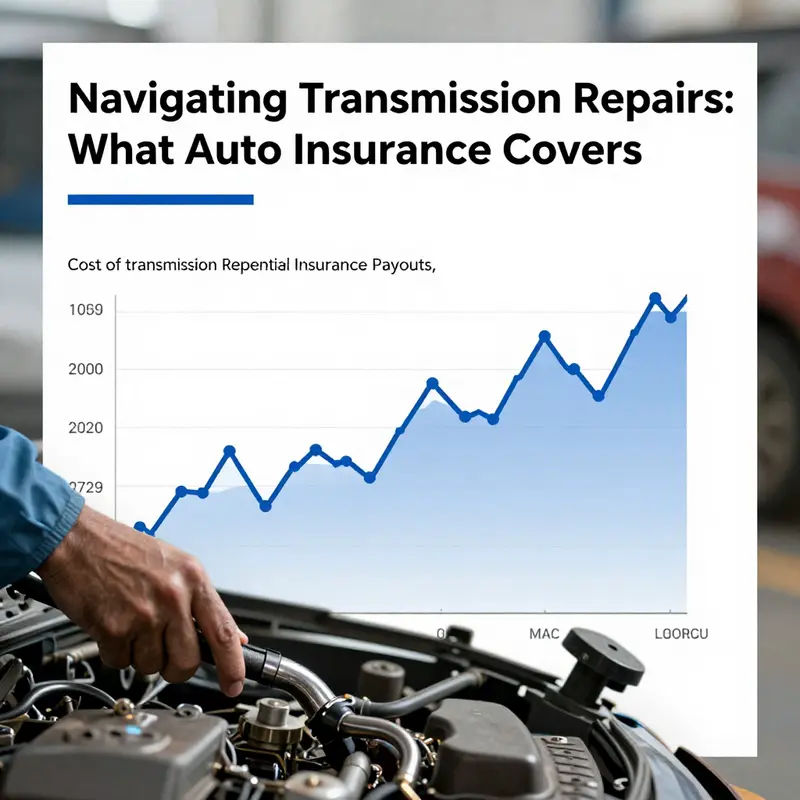
When the engine and transmission operate within their intended design limits, routine maintenance is the cheapest way to preserve function and value. But when problems do arise, the economics of repair versus replacement become central to decision making. Minor transmission issues can sometimes be managed within a warranty framework or through optional coverage, but the costs escalate quickly as issues become more serious. A basic transmission repair that preserves functionality but fixes seals, clutches, or sensor controls can involve a several hundred to a couple thousand dollars, depending on the car’s make and model and the technician’s labor rate. Yet more extensive repairs, such as rebuilding or replacing the transmission, can push the bill well into the range of one and a half thousand to four thousand dollars or more. Some cars are comparatively simpler to repair, while others rely on more costly parts or specialized labor. The variability across makes and models means that the same diagnosis in two different vehicles could translate into a radically different price tag.
This is where the repair-versus-replacement calculus becomes critical. Repeated, costly repairs over several years can end up costing more than a one-time transmission replacement. In cases where the vehicle is otherwise reliable and has retained value, replacing the transmission might offer operational certainty and a longer remaining life, potentially preserving resale value and preventing ongoing downtime. From a household budgeting perspective, that dynamic matters, because the incremental cost of ongoing repairs compounds with each incident and each deductible paid, while a single large investment might produce more predictable maintenance planning and fewer surprise bills in the near term. Consumers weighing these options should factor in not just the price tag of a repair or replacement, but also the vehicle’s age, mileage, expected remaining life, fuel efficiency implications, and future repair costs that might emerge as mechanical systems age together.
Insurance coverage sits alongside this calculus, not in isolation but as part of a broader risk management strategy. Premiums, deductibles, coverage limits, and the presence or absence of optional mechanical breakdown insurance or an extended warranty shape the actual out-of-pocket cost after a transmission failure. Traditional auto policies generally exclude normal wear and tear and mechanical failures from coverage. However, optional features like mechanical breakdown insurance, sometimes offered by insurers or as part of extended warranty packages, can help defray the cost of transmission repairs. These options typically come with their own sets of rules, limitations, and exclusions, such as coverage caps, waiting periods, or requirements for certain types of repairs to be performed at approved facilities. The decision to add such coverage involves balancing the cost of the premium against the probability of a breakdown, as well as the potential to cushion a major expense that could otherwise disrupt monthly budgets or force difficult financing decisions.
Practical decision making in this arena hinges on a clear-eyed assessment of risk and a solid understanding of the policy you carry. The first step is to review the policy declarations and the terms of any rider or endorsement related to mechanical breakdown or coverage for repair costs. Ask specific questions: Does the policy include coverage for mechanical failures beyond a collision? Are there limits or caps on transmission-related repairs? Is the coverage subject to a deductible, and if so, how does that interact with other coverages you carry? Does the plan require using specific repair shops or technicians with certifications? Does it cover labor, parts, and diagnostic fees, or are there exclusions that could shift costs to you even when a claim is filed?
Another important dimension is the concept of an expanded protection plan that some drivers pursue to protect against the kind of large, unpredictable repair bill that transmission work can entail. These programs often resemble extended warranties but are separate products with their own quirks. They can provide reimbursement for parts and labor or offer a capped benefit that moves the burden away from the vehicle owner. Yet they come with tradeoffs—premiums that persist over time, depreciation in value as the vehicle ages, and occasionally complex claim procedures that require careful documentation. Vehicle owners must decide whether the predictable annual expenditure of such a plan is worth the potential protection in the event of a major failure. In this calculus, the vehicle’s age and reliability profile matter a great deal. A newer or low-mileage vehicle with a strong service history may warrant a different approach than an older car with rising maintenance needs and uncertain longevity.
From a budgeting lens, many households find it useful to project three scenarios. In the first scenario, the car develops a minor transmission issue that is easily repaired under warranty or with a standard service. In the second, the car requires a major repair that nearly equals the cost of replacing the transmission, with a modest deductible and uncertain future reliability. In the third scenario, the vehicle experiences chronic, progressive transmission problems that lead to repeated repairs over several years. Each scenario produces distinct financial footprints: the first favoring maintenance and small, predictable costs; the second favoring a potentially strategic replacement decision; the third pushing toward a longer-term financial reevaluation of ownership as a whole. The key is to translate technical risk into tangible dollars, then align those dollars with your overall financial plan and tolerance for uncertainty.
There is a broader, practical takeaway that emerges from this economic lens. Vehicle ownership is not a static equation of price and performance. It is a dynamic decision space in which maintenance needs, insurance coverage, and personal risk tolerance shift over time. A well-chosen mix of preventative maintenance, informed insurance choices, and a realistic appraisal of replacement versus repair can produce a smoother financial trajectory, even when a transmission crisis arises. The path you choose should reflect not only the immediate repair cost but the longer horizon: the car’s expected remaining life, the likelihood of further issues, and the value you place on dependable transportation in daily life and work.
To reinforce this framework, it is worth recognizing the value of learning from credible sources that aggregate data on repair costs and the financial consequences of transmission decisions. Consumer Reports has highlighted how transmission repair costs may compare with replacement costs, underscoring a central reality: even a well-advised decision can hinge on a long-term view of total cost of ownership rather than the sticker price of a single quote. This perspective helps translate the mechanical complexity of transmissions into a business-minded assessment of value and risk. For readers who want to explore this comparison in more depth, the linked resource offers a structured examination of when repair is prudent and when replacement becomes the more economical route. The practical takeaway is simple: approach transmission issues with a plan that weighs up-front costs, long-run reliability, and the potential impact on resale value, rather than reacting purely to the most recent repair quote.
In the midst of this, there is value in staying curious about how maintenance habits can affect the economics of transmission health. Routine maintenance—fluid checks, fluid changes within manufacturer guidelines, and attention to shifting quality and transmission behavior—can delay or soften the financial blow of more serious failures. While maintenance is not a guaranteed hedge against breakdown, it can extend the interval between expensive repairs and preserve the car’s value as an asset. This is where the broader conversation about costs and coverage converges with practical behavior. A proactive approach to service, combined with a clear understanding of what insurance will and will not cover, empowers drivers to plan for the inevitable challenges of ownership without being blindsided by a large, unexpected bill.
For readers who want to see how these concepts play out in real-world terms, a concise primer on maintenance and cost considerations can be found in a general auto repair resource that emphasizes foundational practices and budgeting for repairs. The link provided in this chapter reflects a broader industry conversation about how to navigate repair costs, insurance choices, and long-term ownership strategy. It is not a prescription but a prompt to think through the tradeoffs with clarity and methodical budgeting. The aim is to equip drivers with a framework that helps translate mechanical risk into manageable financial decisions, so a transmission issue becomes a solvable problem rather than an insurmountable shock to the household budget.
In closing, the economics of transmission repair within the context of auto insurance coverage is not about a single policy tweak or a one-time decision. It is about building resilience into your ownership plan: choosing the right mix of maintenance discipline, insurance protection, and long-term strategic thinking about replacement versus repair. When a transmission problem does arise, you can navigate the path with a clearer sense of the financial implications and a plan that aligns with your vehicle’s value, your budget, and your tolerance for risk. The result is not merely a repair outcome but a broader, smarter approach to car ownership that accounts for the uncertainty inherent in mechanical aging while preserving mobility and financial stability.
External resources can provide additional context for the cost comparisons involved in transmission repair versus replacement. For a detailed exploration of the financial dynamics of these decisions, see the following external source on cost comparison and ownership planning: https://www.consumerreports.org/cars/transmission-repair-vs-replacement-costs-a2938476. This resource complements the discussion by focusing on the long-term cost calculus that every owner should consider when facing transmission work and the insurance coverage questions that accompany it.
Internal resources for deeper context and practical guidance can be found in broader auto maintenance discussions. For readers seeking guidance that aligns with the everyday realities of maintenance budgeting and repair decision making, a helpful overview is available at the following article, which covers general principles of auto repair planning and cost awareness: A-to-Z auto repair article.
Final thoughts
In summary, while standard auto insurance policies often do not cover routine transmission repairs, exceptions under collision and comprehensive coverage can provide essential financial support. Understanding the role of mechanical breakdown insurance further enhances coverage options. By grasping these elements, vehicle owners, especially motorcycle and car enthusiasts, can better navigate their insurance policies and foster more informed financial decisions concerning vehicle maintenance and repairs. Keep these insights in mind to safeguard against unexpected transmission repair costs effectively.