

Finding a reputable auto repair shop is crucial for motorcycle and auto owners alike, as it directly impacts vehicle performance and longevity. The complexity of choosing the right shop often leaves many frustrated. Reputation and reliable recommendations, technical qualifications and professionalism of staff, and the shop’s equipment and environment are key pillars that influence this decision. By delving into these aspects, motorcycle owners, auto repair shops, and parts distributors can understand how to choose a repair shop that not only meets but exceeds expectations, ensuring the best care for their vehicles. This guide serves to illuminate these steps, empowering readers to make informed decisions when seeking better auto repair services.
Trust on Every Turn: Building Reputation and Smart Recommendations for a Better Auto Repair Experience
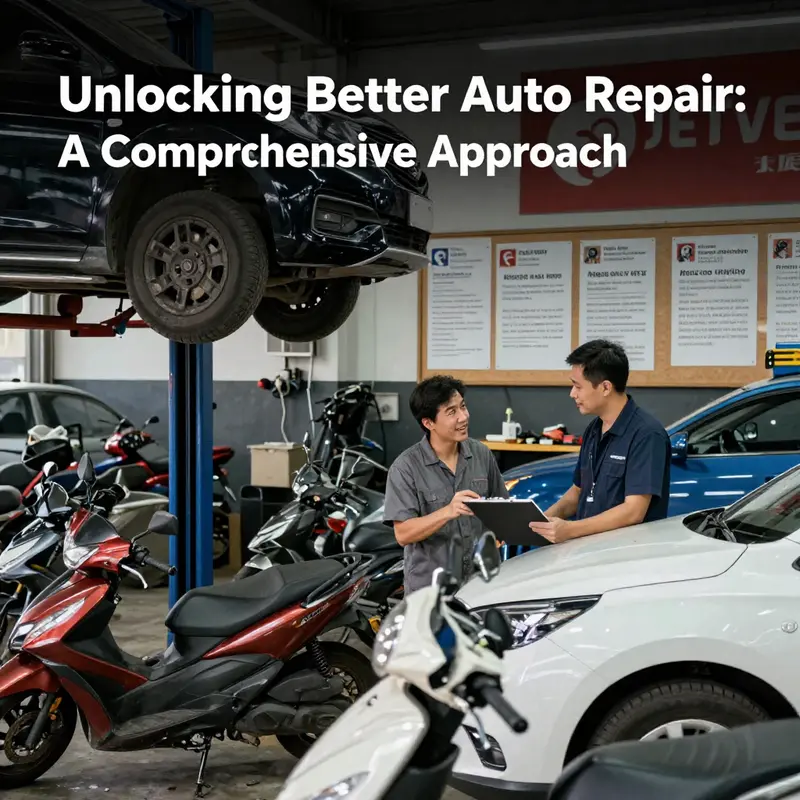
Reputation is seldom a single moment of praise or a lone five-star rating. In auto repair, it’s a living, breathing signal that runs through every interaction a shop has with a customer—from the first phone call to the moment a vehicle rolls back onto the street with a job stickered and a maintenance plan in hand. The chapter you’re about to read treats reputation not as a veneer but as a core capability. It positions trust as the foundation of a better auto repair experience, one that aligns the shop’s technical competence with the customer’s need for honesty, clarity, and fair value. In doing so, it connects the dots between what customers expect and what a shop must deliver to earn and sustain their confidence, especially in a market where repairs often come with questions about necessity, cost, and future reliability.
The business of auto repair thrives or withers on the word of mouth and the echoes of online reviews. A solid reputation creates a halo that reduces perceived risk for a customer who may not know the precise diagnosis or the exact parts involved. When a shop consistently demonstrates that it uses up-to-date diagnostic methods, that its technicians hold meaningful qualifications, and that pricing is transparent, customers are more willing to accept the proposed repair plan without the fear of hidden costs or unnecessary work. The reputation advantage compounds over time: new customers enter through referrals and searches, while existing customers return, knowing they will receive predictable service quality and clear explanations. In short, reputation is a strategic asset that complements technical skill and process discipline.
One of the most powerful levers in building this asset is the deliberate investment in quality tools and equipment. A shop that operates with modern diagnostic systems, precise lifting and alignment gear, and organized tool storerooms signals to customers that the team adheres to consistent standards. These tools don’t just enable quicker fixes; they reduce the likelihood of misdiagnosis and the need for follow-up visits. When customers hear their technician explain how a modern scanner pinpointed a root cause, or how a alignment readout confirms wheels are back in spec, they gain confidence that the repair was necessary and performed correctly. The visible evidence of capability—screens, gauges, and neatly arranged toolboxes—works as a quiet, ongoing testimonial to professional rigor. It also helps the shop staff stay calm and methodical, which translates into clearer communication with the customer and fewer miscommunications about what the repair will entail.
Equally important is service quality that is consistent across every touchpoint. Consistency is not about sameness; it’s about reliability. A customer who has one good service experience and one poor one may not return, even if the shop is technically capable. Consistency means that the shop has clear service protocols: a well-defined intake process that records the vehicle’s symptoms, a transparent repair plan that explains why certain components are needed, and a schedule that updates the customer about progress. It means training front-line staff to listen and paraphrase before offering a solution, so the customer leaves feeling understood rather than shuffled through a sales funnel. Most customers value clarity over jargon: they want to know what is being done, why it is necessary, and how long it will take. When a repair is more complex than anticipated, proactive communication—frankly outlining new costs, revised timelines, and optional alternatives—mitigates anxiety and preserves trust.
In the age of digital feedback, online engagement has become a primary channel for reputation management. It’s no longer enough to fix the car well; a shop must also manage the story of the repair in public forums. Active online engagement means answering questions, acknowledging mistakes, and highlighting the steps taken to ensure quality. When a customer posts a concern about a repair, a timely, respectful response can convert a potential reputational risk into a demonstration of accountability. Conversely, ignored reviews can fester into a perception of indifference. The most resilient shops view online presence as a service channel, not merely a marketing exercise. They maintain an informative site, publish useful maintenance guidance, and respond to reviews with specific references to the customer’s situation, the actions taken, and the outcomes expected. This approach builds a transparent narrative that new customers can read and trust, even before they walk into the shop.
The chapter here does not minimize the value of word-of-mouth. In many communities, neighbors, coworkers, and fellow drivers are the most trusted sources of information about local auto repair options. A manager who understands this reality will cultivate relationships with customers even after a repair is completed. Simple acts—sending a note confirming that a follow-up check is available, inviting customers back for a complimentary recheck, or offering a minor courtesy service—can convert a one-off transaction into a long-standing relationship. These gestures, though small, accumulate into a reputation that is visible not just in reviews but in local conversations and in the quiet conversations that happen in the shop’s waiting area. People remember how they felt during the repair more than the specifics of the fix, and those memories shape future referrals and repeat visits.
To translate reputation into a practical competitive advantage, the shop must demonstrate a policy of transparency around parts and pricing. A reputable shop is not the cheapest shop, but the cheapest shop is rarely the most trustworthy. Price competition tends to erode trust when it is driven by undisclosed markup, unnecessary add-ons, or vague explanations. A reputation-forward shop combats this risk with a clear parts-traceability system that shows where components come from, how much they cost, and how they perform. Traceability is not merely a cost-control measure; it’s a confidence-building mechanism. In an era when counterfeit or substandard parts can be difficult to detect, customers want proof that the parts installed are authentic or approved for their vehicle and that the vendor chain complies with industry standards. When a shop provides this level of visibility, it signals respect for the customer and pride in the workmanship.
Of course, reputation cannot thrive without qualified people. Technical qualifications and professionalism matter as much as the hardware in the shop. Customers may not understand the details of an intermediate or senior auto repair certificate, but they recognize when the technician speaks with confidence about diagnosis, repair options, and risk mitigation. Shops that publicly display technician qualifications reinforce this perception, even for customers who cannot interpret every credential. The idea is not to overwhelm with certificates but to communicate a culture of learning, standardization, and accountability. For brand-specific or model-specific repairs, alignment with manufacturers’ authorized service protocols ensures that the workmanship aligns with factory standards. When technicians complete manufacturer training, customers gain assurance that the repair adheres to the upstream engineering intent, reducing the likelihood of post-repair trouble and the need for follow-ups.
The physical environment of the shop also contributes to reputation. A tidy workspace, clean floors, and well-organized tool areas are not just maintenance habits; they are signals of respect for the vehicle and for the customer’s time. A clean customer lounge with comfortable seating, refreshment options, and a visible display of repair progress can dramatically reduce anxiety. Customers who see their vehicle parked in view during the repair process, or who understand stage-by-stage progress through a display, feel included rather than left outside the decision process. These environmental cues are part of a broader safety and quality framework. When customers observe clean floors and proper waste management, they infer a broader commitment to safe practices and responsible workmanship. The environment is, in effect, a nonverbal contract: it communicates that the shop takes pride in its processes and cares about the customer’s experience as much as the final result.
The chapter’s discussion would be incomplete without addressing how a shop handles missteps. Every repair operation faces uncertainty. Parts can be delayed, diagnostics can be inconclusive, and timelines can slip. Reputation management requires a deliberate approach to errors: acknowledge when something goes off plan, explain clearly what happened, and lay out concrete steps to remedy it. The best practices include offering transparent cost estimates, prioritizing communication over excuses, and following through with a recheck or warranty-based assurance. Proactive problem resolution often yields higher customer satisfaction than a flawless initial encounter that later reveals a hidden issue. A shop that can own a problem and fix it efficiently demonstrates a maturity that strengthens its reputation more than a flawless but untested process.
The idea of reputation extends beyond the shop’s doors into the content that customers find when they search for a repair. This is where internal and external resources matter. An internal article or a blog post that clearly explains common repairs, the rationale for recommended services, and a straightforward pricing framework can demystify the process for readers who are weighing options. A well-structured online presence, augmented by authentic customer stories and testimonials, creates social proof that resonates with cautious buyers. The strategy is not to flood channels with promotional content but to share reliable knowledge and practical guidance that helps customers make informed decisions. When customers encounter credible information that aligns with what they experience in the shop, the odds of converting inquiries into loyal customers rise dramatically.
To ground these ideas in a tangible signal of trust, consider how a shop presents onboarding and aftercare as part of its reputation program. The onboarding experience should set expectations about how the vehicle is inspected, how repair decisions are communicated, and how customers can participate in the process. Aftercare should emphasize follow-up checks, warranty terms, and a clear policy for rechecks at no or low cost within a defined period. When customers feel welcomed into a transparent, collaborative process, their perception of value grows. They are more likely to view the repair as a partnership rather than a transactional event, a shift that has meaningful implications for pricing tolerance, future maintenance planning, and willingness to recommend the shop to others.
The narrative above also links to a broader industry conversation about reputation management. The content ecosystem around auto repair is becoming increasingly sophisticated. Shops can benefit from learning models and frameworks that emphasize service quality as a driver of reputation, rather than treating reputation management as a separate marketing function. A well-rounded approach integrates the technical, the operational, and the relational: investing in capable tools, maintaining high professional standards, communicating with clarity, and engaging online with integrity. When done cohesively, the result is a brand that people do not just know of but trust—an essential predicate for a better auto repair experience across all vehicles, contexts, and budgets.
As the chapter closes, it’s useful to anchor these ideas in practical steps. First, adopt transparency as a default posture. Publish clear repair plans, expected timelines, and price ranges. Second, build a visible competency framework. Display qualifications, training milestones, and equipment inventory in ways that are accessible and understandable to customers. Third, design a deliberate customer experience that includes onboarding, progress updates, and post-service follow-up. Fourth, cultivate a responsive online presence. Listen to reviews, address concerns promptly, and share educational content that helps customers understand why repairs matter. Fifth, reinforce quality through parts traceability. Provide documentation that traces components through the supply chain, and explain how this informs the repair’s reliability. Sixth, celebrate the human element. Recognize technicians and staff who embody professional standards, empathy, and problem-solving in their daily work. Together, these steps create a reputation engine that not only attracts customers but sustains them, turning a one-time repair into a lasting relationship.
Within this framework, small signals can become significant differentiators. For example, a shop can host an accessible onboarding page that politely outlines what a customer should expect from the diagnostic process, the vehicle’s inspection, and the repair plan. A concise but informative post about the rationales behind common maintenance tasks can reassure customers who are weighing options. A single, thoughtfully crafted blog post can travel far through word-of-mouth and search results, reinforcing the shop’s credibility with readers who may not have visited yet. In this sense, reputation is both a mirror and a roadmap: it reflects current performance while guiding future improvements. The best shops use reputation not only to attract more customers but to sharpen their own standards, ensuring that every repair is a learning opportunity and every customer interaction an opportunity to reinforce trust.
A practical way to illustrate these ideas is to think of a shop’s reputation as an ongoing dialogue with the community it serves. The shop speaks through its technicians, its front-desk associates, and its online content. The community replies with its reviews, questions, and referrals. When the dialogue remains constructive—when feedback is acknowledged, explained, and acted upon—the relationship grows stronger. Customers feel heard, staff feel empowered, and the business gains a durable advantage over competitors that treat trust as a one-off outcome rather than a daily practice. In a landscape where many repairs are not visible until the vehicle is back on the road, reputation becomes the most reliable indicator of whether a shop can be trusted to protect what matters most—the driver’s safety and peace of mind.
If you want a concrete example of how reputation works in practice, consider how a customer who discovers a well-documented repair and a transparent pricing narrative responds. They are likely to share the experience with a small network of friends and colleagues. That person might also explore additional content on the shop’s site, such as educational resources or FAQs, and be reassured by a consistently accurate diagnosis and fair pricing. The trust earned in this single interaction extends beyond the current service; it informs future decisions and establishes a benchmark for what a better auto repair should feel like. Such a benchmark is not merely aspirational. It is measurable in the shop’s growth, in repeat business, and in the willingness of customers to recommend the shop to others. The reputational advantage compounds as more people join the conversation, share their own experiences, and see that the shop remains accountable and responsive over time.
To close, reputation is not an optional facet of running an auto repair business. It is a strategic framework that integrates the shop’s technical capabilities, service culture, and community engagement into a single, coherent value proposition. A better auto repair emerges when reputation becomes a living standard—one that guides how a shop invests in tools, trains people, communicates with customers, and treats every vehicle as an opportunity to earn trust again. In that sense, every repair is a chance to reinforce the narrative of reliability and honesty that customers rely on when their cars go from being a problem to being a trusted partner on the road. As you explore your own practice or choose a shop for your vehicle, let reputation guide your questions and shape your expectations: Is the shop transparent about the plan and the parts? Do the technicians demonstrate relevant qualifications and communicate in plain language? Is the customer experience aligned with what you value most in a risk-aware, value-conscious repair journey? If the answer is yes, you are likely on the path to a genuinely better auto repair experience.
Internal reference for readers seeking a broader perspective on reputation management in the auto repair sector can be found in practical guidance on how to build and sustain trust online and offline: Hello World.
External resource for deeper insights into reputation management strategies tailored to automotive service providers: https://www.automd.com/blog/reputation-management-for-auto-repair-shops
The Skill, The Code, and The Craft: How Technical Qualifications and Professionalism Define a Better Auto Repair
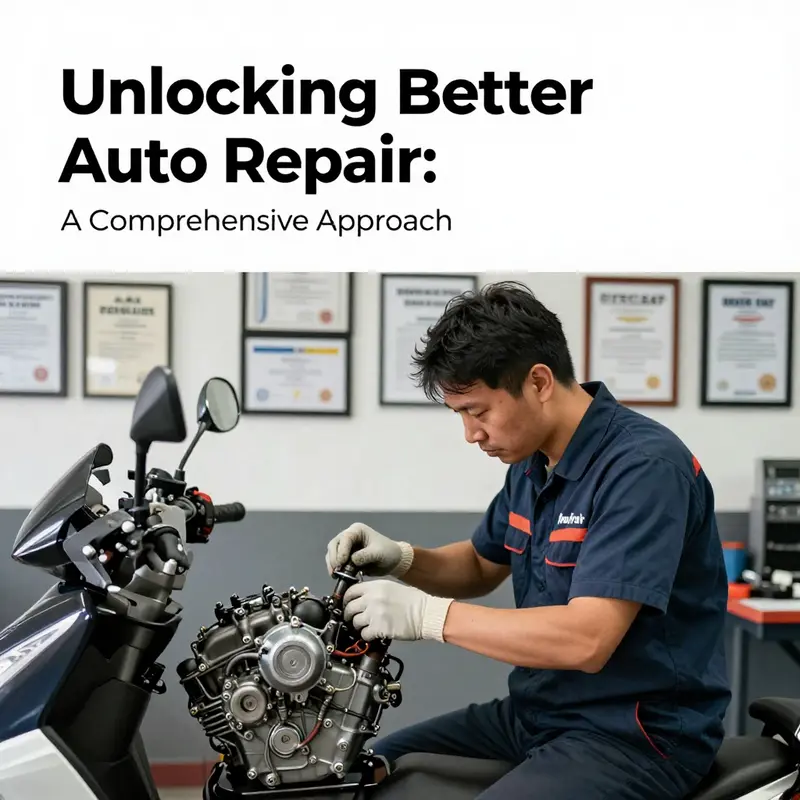
The reliability of an auto repair experience rests on a quiet, unwavering standard: the blend of technical qualifications and professional conduct that guides every diagnostic decision, every parts choice, and every interaction with a vehicle owner. In a field where a misstep can ripple into safety concerns, longevity issues, and escalating costs, the value of rigorous credentials and a culture of professionalism cannot be overstated. This chapter surveys how certified expertise and a disciplined, customer-centered attitude work in concert to elevate service quality, and it offers a practical sense of what drivers should look for when seeking that rare combination of competence and care. The insight is not merely about achieving what is technically correct; it is about building a relationship of trust that stands up to scrutiny, time, and the inevitable test of real-world driving.
At the heart of any credible repair operation lies recognized credentials. The most widely respected benchmarks in the industry come from independent certification programs that validate a technician’s knowledge across core automotive systems. Certifications such as those awarded by national or regional bodies signal that a technician has demonstrated proficiency in areas like engine performance, brakes, electrical systems, and climate control. They are not mere ornaments but evidence of a disciplined preparation that keeps pace with evolving technology. Vehicles today demand an understanding that extends far beyond the basics; microprocessors control more subsystems than ever, and a technician must be fluent in both classic mechanical reasoning and modern electronic diagnostics. Certifications, by their nature, are a floor, not a ceiling. They indicate baseline competence, but they also set expectations for ongoing learning as vehicles grow smarter, more integrated, and more dependent on advanced driver-assist features, telematics, and increasingly complex high-voltage systems.
Beyond such formal credentials, the professional real world of auto repair rests on the daily practice of standards-based workmanship. The idea that qualifications alone guarantee a faultless outcome is a tempting illusion; the reality is that the best technicians combine their formal training with disciplined habits that keep a shop’s performance consistently high. Publicly displayed qualifications—intermediate or senior auto repair certificates, annual safety training, and documented adherence to industry standards—serve not only as proof of capability but as a signal of accountability. Customers can see that the team is not relying on scattered talent or episodic training, but is instead anchored in a structured approach to skill development. This foundation is essential in a business where the level of detail matters—from correctly diagnosing a fault to choosing a repair path that aligns with the owner’s budget and safety priorities.
The role of formal certification expands far beyond the individual technician. A shop that cultivates a culture of professional development aligns its entire operation with consistent process, quality control, and safety norms. The most forward-looking shops view certification as part of a broader lifecycle that includes manufacturer-aligned training, participation in recognized repair networks, and a clear pathway for upgrading skills as technology shifts. For instance, manufacturers that maintain affiliated repair stations require technicians to undergo systematic training on specific models and systems. Although the world of manufacturers is diverse, the underlying principle is the same: standardized training creates predictable outcomes. When technicians operate with the confidence that their training aligns with factory specifications, repairs and calibrations—especially those related to intricate systems like steering, suspension, or complex powertrains—are more likely to meet original performance targets and warranty criteria.
This synergy between formal credentials and professional behavior mirrors the way elite teams in any craft operate. Certification provides the technical map, but professionalism provides the terrain to navigate that map safely and efficiently. A professional technician does more than run the diagnostic tools; they interpret the results with honesty and clarity, translating complex findings into information the vehicle owner can understand and act upon. They provide transparent estimates that detail labor, parts, and any ancillary costs, and they avoid steering customers toward unnecessary work. In a highly competitive market, this combination of clear communication and ethical conduct often differentiates a better auto repair experience from a merely competent one. Customers who feel respected and informed are more likely to engage in future visits, recommend the shop to others, and view the service as a valuable investment in vehicle reliability rather than a transactional expense.
Education and training extend into the evolving landscape of technology that automakers are continuously deploying. The surge in hybrid and electric propulsion, the rise of advanced driver-assistance systems, and the integration of telematics and over-the-air updates mean that technicians must be prepared to handle far more than spark plugs and timing belts. The best shops invest in ongoing training to ensure that technicians’ skill sets are current with the latest diagnostic platforms, calibration procedures, and safety protocols for high-voltage systems. This ongoing learning is not an optional add-on; it is an operational imperative that reduces rework, minimizes error risk, and speeds up turnaround times. When technicians are seen updating their certifications, participating in specialized workshops, and applying new knowledge to real-world service, customers experience a tangible sense of progress in the shop’s capability to address modern vehicles.
Technical qualifications, however, are just one piece of the puzzle. The professionalism of the people delivering the service—their communication style, reliability, and ethical posture—shapes the customer experience as surely as the accuracy of a repair. A professional auto repair technician communicates diagnostic findings in plain terms, explaining what was found, why it matters, and how the repair aligns with the vehicle’s safety requirements and the owner’s priorities. They present a transparent plan that lays out the recommended work, the rationale for it, and any risks or alternatives. They listen to the owner’s preferences and constraints, offering options that respect the driver’s time, budget, and safety considerations. This approach helps build a partnership with the customer rather than a transactional relationship. Particularly in cases where the repair involves advanced systems or premium components, the ability to discuss trade-offs with honesty can preserve trust even when decisions are difficult or costly.
Ethical conduct is a fundamental thread in the fabric of professionalism. A shop that emphasizes integrity will avoid unnecessary repairs or upselling, and will be explicit about warranties, recheck policies, and service guarantees. It is not enough to fix a problem; the repair provider should stand behind the work with a clear, straightforward warranty framework that covers parts and labor for a defined period or mileage. A more professional operation also offers rechecks, or follow-up inspections, at no or minimal cost, to verify that the issue is resolved and that no new concerns have emerged. This commitment to follow-through reinforces confidence, particularly for those owners who use their vehicles in demanding or high-stakes settings, such as daily commuting or long-distance travel. In practice, a customer who encounters a shop with robust recheck mechanisms and honest, transparent communication feels informed, protected, and respected—even when confronted with the need for a more expensive repair.
The narrative of better auto repair is inseparable from the vehicles it serves. The technicians who carry high-level qualifications and who demonstrate consistent professionalism contribute to safer roads, better vehicle performance, and longer-lasting ownership experiences. When a shop can articulate its training roadmap, identify the specific certifications held by its staff, and show how those credentials inform the diagnostic and repair process, it communicates legitimacy. Customers can then assess not only the potential quality of the work but the likelihood that the shop will keep pace with future technologies and changing safety standards. In parallel, the shop’s internal discipline—organized workspaces, standardized tool management, and systematic approach to diagnostics and part sourcing—reflects a readiness to deliver reliable results under pressure. This relational and operational discipline, built on qualified expertise and professional conduct, creates a dependable foundation for the entire repair journey.
For readers seeking a compact primer on shop structure and service philosophies, consider a concise overview of A-to-Z Auto Repair. It offers a clear sense of how a shop organizes its technical teams, communicates with customers, and aligns with industry standards while delivering practical outcomes. See https://motorworksautorepair.com/blog/a-to-z-auto-repair/. This reference can help contextualize the expectations outlined in this chapter and illustrate how the theoretical ideals of qualifications and professionalism translate into everyday practice within a repair shop.
In contemplating where to turn for reputable service, it is helpful to recall a few practical signals that correlate with strong technical qualifications and genuine professionalism. Visible proof of technician credentials, a transparent workflow that shows diagnostic steps and cost estimates before any work begins, a facility where tools and parts are organized and labeled, and a customer lounge that keeps you informed of progress—all of these elements point toward a service model rooted in discipline, learning, and respect for the vehicle owner. The most reliable shops treat the repair journey as a continuous dialogue, not a one-off transaction. They recognize that even minor repairs are opportunities to reinforce trust and to demonstrate the value of competent, ethical service. The net effect is not simply a repaired car; it is a strengthened relationship between driver and technician, built on the assurance that the work will be done correctly, efficiently, and with accountability.
The road to a better auto repair moves through the discipline of certification and the manners of professional interaction. It is a journey that asks shops to invest in people, process, and ongoing education, and it invites drivers to look beyond first impressions or price cues toward a deeper credentialed competence and a respectful, transparent service culture. When these elements converge, the result is a repair experience that is not only technically sound but also reassuring in its integrity. It is, in essence, the form of service a responsible driver should expect: a reliable, informed, and respectful partnership that keeps vehicles safe on the road and owners confident in their choice of repair provider. This is the core spirit of a better auto repair, a standard that grows stronger as technology evolves and as the demands of everyday mobility become more complex.
External standards and best practices guide this evolution. Professionals and customers alike benefit from consulting established industry benchmarks and certification bodies, whose guidelines help shape expectations and improve outcomes across the repair ecosystem. For those seeking an authoritative resource that codifies the essentials of technician qualifications and professional behavior, the ASE’s official site offers a comprehensive view of the competencies that underpin high-quality auto repair. External resources are not an endorsement of any single shop but rather a framework to help drivers evaluate the capabilities and reliability of the teams they entrust with their vehicles. External resource: https://www.ase.com
The Quiet Engine Behind Better Auto Repair: Equipment Quality and a Well-Designed Workspace
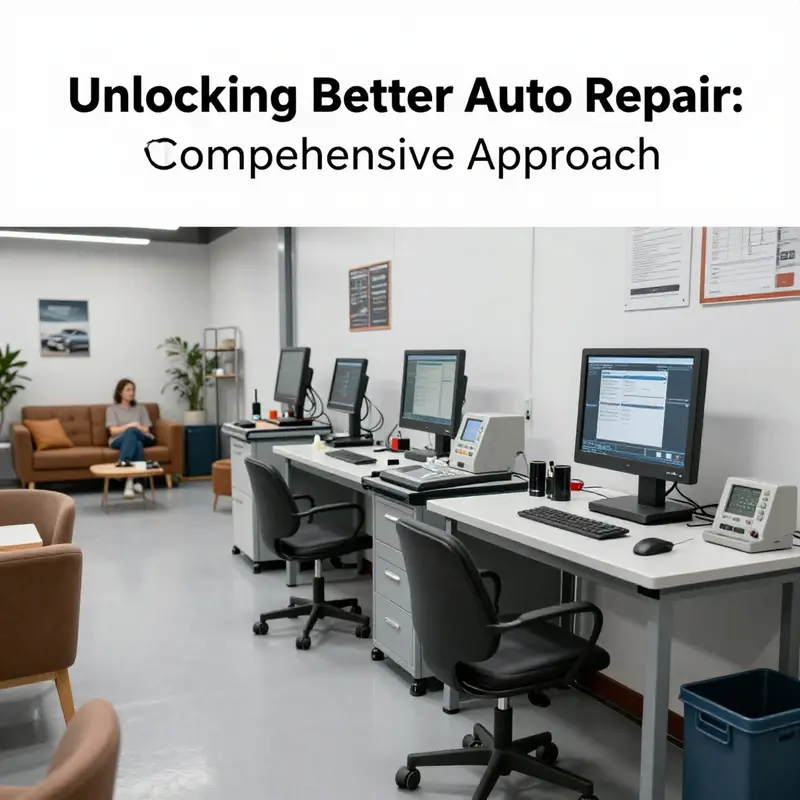
Behind every precise diagnostic and every smooth repair lies a quiet engine that many customers never see—the dependable equipment and the thoughtfully designed workspace that support the hands-on work. In the world of auto repair, the most obvious acts—draining fluids, tightening bolts, replacing parts—are only as good as the tools and the room in which they happen. A lift that creaks under a heavy load, a wheel alignment rack that wobbles, or a scanning console with lagging updates can turn a straightforward fix into a prolonged ordeal. Conversely, when a shop pairs high-quality, well-maintained equipment with a clean, well-lit, and safety-focused environment, every technician gains a trusted ally. The result is not merely faster service; it is more accurate diagnostics, safer work practices, and a consistent standard that can be felt by waiting customers as much as by the vehicles on the lifts.
High-quality equipment is more than a collection of hardware. It is the infrastructure that translates expertise into reliable outcomes. Lifting equipment, for instance, is more than a means to raise a car. It must be rated for the vehicle classes it encounters, calibrated to exacting tolerances, and maintained on a regular schedule. A robust lifting system reduces the risk of uneven loads, minimizes the chance of drips or mishaps, and helps technicians work with the confidence that the foundations of the vehicle are secure during every step of the repair. Similarly, four-wheel alignment instruments serve as the bridge between perception and reality on a vehicle’s steering and suspension. An accurately calibrated alignment setup can reveal subtle misalignments that would otherwise go unnoticed, guiding technicians toward the right corrective actions. These devices are not luxury add-ons; they are essential for preserving tire life, stabilizing handling, and ensuring that the repaired alignment aligns with the manufacturer’s design intent.
The diagnostic cockpit is another core pillar. Modern vehicles are governed by a network of modules, sensors, and communication buses. A capable diagnostic computer with current software is not merely a data collector; it is a translator between the technician’s knowledge and the vehicle’s electronic brain. A fast, reliable interface reduces turnaround time and curbs the temptation to guess at complex faults. A tool set that integrates with diagnostic data—such as code readers, bidirectional scanners, and the ability to log and export fault data—helps technicians trace the roots of a problem rather than merely treating symptoms. This connection between hardware and software becomes especially important when addressing newer architectures, where even minor misdiagnoses can lead to cascading issues.
Beyond the visible devices, the routines that govern their care and the conditions that surround them determine whether equipment truly serves the shop. Calibration schedules, preventive maintenance logs, and routine sign-offs create a culture that values precision over expediency. The idea of traceability—knowing exactly when a tool was last calibrated, who used it, and for which job—may seem abstract, but it translates into tangible reliability. A torque wrench that has not been calibrated recently may read falsely, leading to fasteners that are too loose or too tight. A miscalibrated balance on a wheel al g nment system can skew results by a fraction of a millimeter, enough to upset tire wear patterns over thousands of miles. Each instrument’s history matters because it anchors the technician’s judgment to a known standard rather than to memory or assumption.
This is where the environment takes the stage. A well-organized shop is more than a clean place to work; it is a physical manifestation of a standardized workflow. Neatly arranged toolboxes, each drawer labeled and color-coded, reduce the time spent searching and minimize cross-contamination of tools between tasks. When tools returned after use are promptly checked and re-shelved, the team reinforces accountability and reduces the risk of leaving critical items behind on a bench or under a vehicle. The floor matters too. An oil-free, well-sealed surface reduces slip hazards, makes spills easier to contain, and contributes to a cleaner air environment through better ventilation. A tidy space is not an aesthetic preference; it is a safety habit that helps technicians think clearly and work steadily under pressure.
Lighting is more than comfort; it is clarity. Bright, even illumination reveals leaks, corrosion, and subtle wear that might go unseen in dim corners. Good lighting reduces eye strain for technicians who spend long hours peering into engine bays, electrical harnesses, or brake assemblies. An orderly queue of workstations with clearly marked progression indicators—progress boards in a customer lounge, digital displays of repair stages, and transparent timing estimates—improves communication with customers. It closes the loop between the repair effort and the customer experience, reinforcing trust that the shop is not only capable but also organized and honest about what is happening to the vehicle.
Sound judgment also enters the shop floor through waste management and environmental controls. Proper disposal of fluids, used parts, and oily rags is more than legal compliance; it is a reflection of rigorous safety standards. Facilities that allocate dedicated containers, schedule routine cleanups, and enforce waste segregation demonstrate an operational discipline that aligns with high repair standards. This discipline extends to the customer lounge, where a clear display of maintenance progress, anticipated timelines, and useful safety guidelines helps drivers feel informed and secure about the care their car is receiving.
The connection between equipment and environment and the quality of service is not theoretical. It translates into outcomes a driver can actually feel: fewer misdiagnoses, fewer delays, and fewer reworks. When a shop relies on precise lifting and measurement, uses up-to-date diagnostic software, and maintains a clean, well-lit space, technicians can operate with a consistent baseline of accuracy. They can validate their conclusions against reliable data rather than relying on a hunch. The transparency of the workspace—where tools live in their labeled homes, where the floor is free of oil slicks, and where lighting makes every small fault visible—also communicates a message to customers about reliability. People gauge the quality of service in part by the environment in which the service happens; a well-kept shop signals that the business cares about the craft and about safety.
That connection extends to the broader questions customers ask about repair shops: Will the shop have the necessary equipment to address my car’s needs? Can they diagnose the issue without guessing? Will the work be performed in a controlled, safety-minded setting? Equipment and environment provide the practical answers. They are the empirical proof behind the claims of skill and experience. A shop that invests in robust lifting systems and precise four-wheel alignment gear is signaling its readiness to handle both routine maintenance and complex repairs with the same level of care. A shop that prioritizes cleanliness, proper lighting, and safe, orderly processes demonstrates its commitment to safety and consistency, which matters as much as any diagnostic or repair skill.
This emphasis on machinery and room also complements the more customer-facing dimensions of better auto repair. Reputation often rests not only on a technician’s knowledge but on the reliability of the work environment. A shop that maintains an organized, well-equipped workspace makes it easier for staff to collaborate, verify results, and trace any discrepancies back to their source. It also makes it easier to document what was done, which can be crucial when a vehicle returns with a concern after a service. In a market where consumers compare quotes and timelines, the tangible proof of equipment quality and workspace standards can be a differentiator, one that justifies the investment in more rigorous processes and higher-quality components.
A practical touchpoint for readers seeking a concrete example of how equipment signals capability is to examine the way a shop communicates its competencies. In many well-run operations, the equipment roster is not hidden behind closed doors; it is reflected in the shop’s workflow and visible to the customer. For instance, demonstrating the use of a four-wheel alignment machine with real-time readouts in the service area not only educates customers but also reinforces accountability. It becomes part of the narrative that repairs are performed with tools that produce measurable, repeatable results. The same logic applies to the diagnostic workstation. When a shop shows that its technicians can pull diagnostic codes, interpret live data streams, and cross-check findings with multiple data sources, customers gain confidence that the repair plan is grounded in verifiable evidence rather than guesswork. An integrated approach—where equipment and process safety align with clear communication—creates a durable framework for achieving better auto repair.
In weaving together equipment and environment, there is also a quiet sustainability in play. Shops that invest in durable, repairable tools reduce waste associated with frequent replacements. They avoid the trap of relying on disposable, low-cost devices that degrade quickly and invite a cycle of frequent downtime. The same logic applies to workspace design. A shop that uses modular, well-maintained workstations can reconfigure layouts to accommodate different tasks without sacrificing safety or efficiency. It is not just about keeping things pristine; it is about maintaining continuity of service. When a vehicle moves from diagnostic to repair to inspection, the seamless transition depends on a workspace that supports flow rather than bottlenecks. The end result is a repair experience that feels smooth, predictable, and trustworthy to the driver who relies on the car for daily life.
To give full life to this viewpoint, consider the way an established shop uses its internal communications to reflect its equipment and environment philosophy. A shop that maintains a runbook for equipment maintenance, pairs each tool with a preventive maintenance schedule, and audits the condition of its lifting devices monthly conveys a professional ethos. Technicians learn to treat the workspace as a shared responsibility—every scrap disposed of, every tool returned to its rightful place, every calibration logged. In such an environment, the craft of auto repair becomes a disciplined practice rather than a series of impulsive, improvised fixes. The result is not a single successful repair but a pattern of consistent outcomes over time, with fewer surprises and more reliable warranties.
For readers who want a quick reference that connects this chapter to practical guidance, a concise overview of shop organization and tool management can be found in broader industry resources. In particular, a well-regarded reference point for understanding the role of proper tools and workshop conditions in automotive repair highlights how essential these factors are to service quality. This guide emphasizes the link between equipment currency, safety, and productivity, underscoring that ongoing investment in tools and workspace is an investment in customer trust and vehicle safety. Seeing this principle in action can help a shop owner or technician evaluate current practices and identify areas where incremental improvements in equipment maintenance or workspace design could yield meaningful results.
As a practical note for readers seeking to explore a concrete example or to anchor these ideas in a familiar context, consider how a shop might present its capabilities to customers through a straightforward reference like the A to Z Auto Repair guide. This kind of resource can offer a digestible snapshot of how equipment and workspace choices translate into everyday service benefits, from faster turnarounds to more precise fault finding. A to Z Auto Repair provides a compact framework for understanding how a shop communicates its readiness to handle a broad range of vehicles with confidence. The takeaway is simple: the gear behind the scenes—the tools, the lifts, the diagnostic stations, and the workspace itself—directly shapes the repair experience the customer values most.
Of course, readers who want to deepen their understanding of how professional shops sustain high standards will find corroborating evidence in industry literature. A comprehensive external resource discusses the importance of a well-managed workshop environment and tool management in automotive repair. It reinforces the idea that accuracy, safety, and efficiency hinge on disciplined equipment maintenance and a clean, orderly work setting. This material complements the practical observations offered here, providing a broader context for how equipment and environment support every step of the repair journey.
In sum, better auto repair starts with the quiet mechanics of the shop: the quality and condition of the tools, the reliability of diagnostic interfaces, the precision of lifting and alignment gear, and the clarity of the work environment. When these elements are treated as core assets—not afterthoughts—the service experience becomes predictable and trustworthy. Vehicles leave the bay not just with a repaired symptom, but with a repair built on solid foundations. The technician’s confidence and the customer’s peace of mind grow together, driven by a workspace designed for precision, safety, and transparency. The end result is a better auto repair—one that shows up in reliability, in measured outcomes, and in the everyday satisfaction of drivers who return to the road with less worry and more road ahead.
External reference for further reading: For a deeper dive into the role of proper tools and workshop conditions in automotive repair, see this comprehensive guide from a leading industry resource: https://www.ase.com/education/articles/automotive-workshop-environment-and-tool-management
Final thoughts
Choosing the right auto repair shop is a decision that requires careful consideration of multiple factors, intertwining reputation, qualifications, and the repair environment. By understanding the significance of each element discussed—recognizing quality recommendations, evaluating technician expertise, and ensuring the availability of the right equipment—motorcycle and auto owners can confidently select a shop that meets their needs. By fostering these connections, we can ensure vehicles receive the quality care they deserve, optimizing performance and longevity while building long-lasting relationships with trustworthy repair professionals.