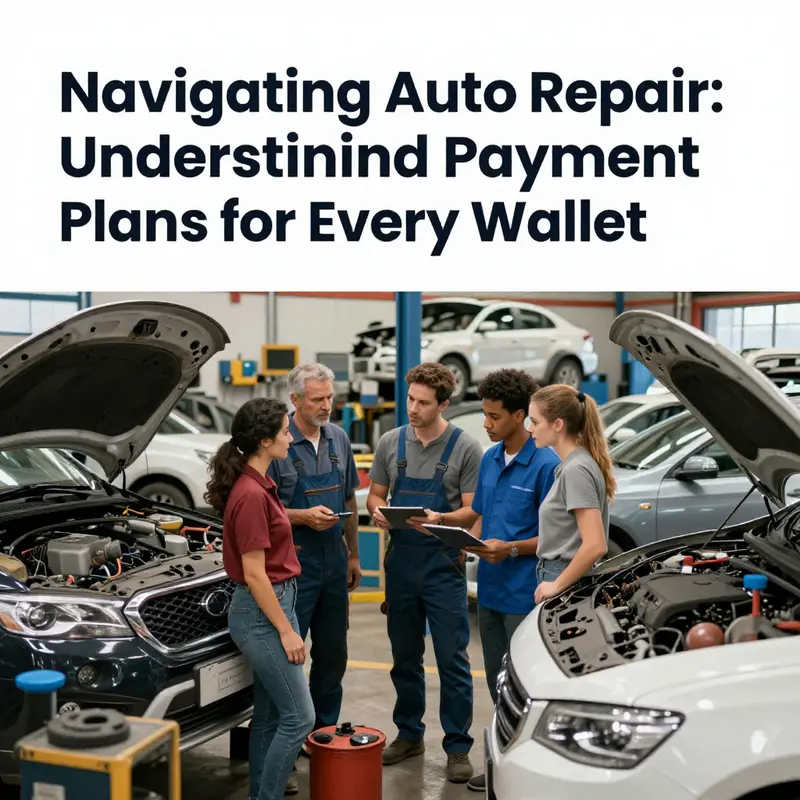
Managing vehicle repairs can often be a financial strain on many auto owners and business entities. Understanding payment plans offered by auto repair shops is crucial for motorcycle enthusiasts, car owners, auto parts distributors, and garages. These payment solutions, including in-house financing and partnerships with third-party companies, make larger repairs more accessible. In this article, we will explore the various payment options available, the differences between independent and franchise shops, and how these financial plans can enhance customer satisfaction. Each chapter provides insights that collectively empower readers to make informed decisions regarding automotive repairs.
Turning Big Repairs Into Manageable Months: Do Auto Shops Offer Payment Plans for Large Repairs?

When a vehicle suddenly needs major work—an engine fault, a failing transmission, or a sophisticated diagnostic that reveals multiple systems at once—the price tag can stop you in your tracks. It’s not just the sticker shock of thousands of dollars; it’s the pressure of making the right call for safety, reliability, and budget all at once. For many drivers, a large repair isn’t something to be paid in a single deposit. It’s a moment when a trusted shop’s willingness to offer a payment plan can mean the difference between driving a car that’s safe to operate and leaving it in the driveway while a solution waits for pay cycles to line up. In practice, you’ll find that a growing number of shops recognize this reality and respond with flexible financing options designed to keep customers on the road without compromising essential repairs. The idea is simple: the shop wants to fix the car, and the customer wants to fix the budget, so they meet in the middle through a structured payment plan that spreads the burden over time rather than concentrating it all at once.
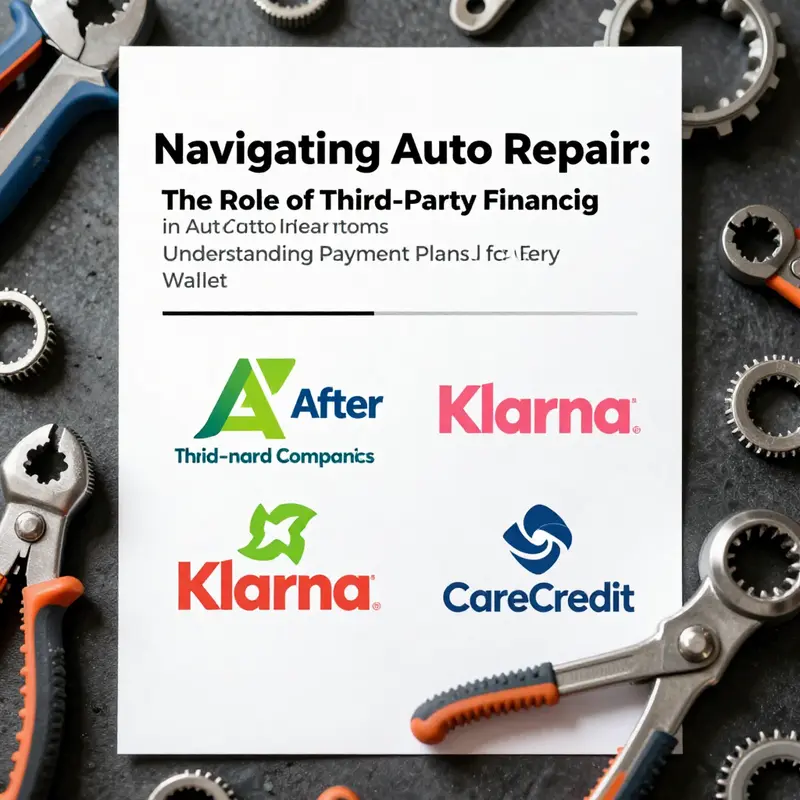
Across the country, the approach varies from shop to shop, but the core principle is consistent. Large repairs are the kind of expense that benefits from predictable, manageable monthly payments rather than a single, potentially destabilizing hit to savings. A sophisticated diagnostic or an involved repair can easily reach a few thousand dollars. Even when the math is sound and the work is necessary, a portion of drivers may hesitate, balancing the repair against other monthly obligations. In response, many repair shops partner with third‑party lenders or offer in‑house installment options to distribute the cost. The economics for the shop are straightforward: a financed job improves the odds of completing the work promptly, preserves customer safety, and builds long‑term loyalty through transparent, humane financing practices. For customers, the benefit is clear—access to essential services now, with payments that fit into a reasonable cadence over several months—while still maintaining a sense of financial control.
What makes these arrangements practical is the structure behind them. A typical plan divides the total repair bill into equal monthly installments, often spanning three, six, or twelve months. In some cases, there are promotional terms that offer little or no interest if the balance is paid within a specified window and if payments are made on time. The exact terms depend on the shop’s policy and the financing partner, but the underlying concept remains the same: you can proceed with the repair today and allocate a portion of your monthly budget to it until it’s paid off. The emphasis is on clarity and simplicity. Customers receive a clear estimate that includes the total loaned amount, any potential fees, the interest rate if applicable, and the payment schedule. There’s no guesswork about what you owe, and there’s no hidden penalty for missing a payment, though most programs do outline late fees and how interest accrues.
From the customer’s perspective, understanding the options means asking the right questions. Is there an in‑house plan that doesn’t involve a third party? If so, what are the terms—how many months, what is the APR, and are there any upfront fees? If a third‑party lender is involved, what is the impact on the total cost if I carry balances across several months? Will the plan affect my ability to use existing credit, or will there be a hard inquiry on my credit report? Some shops also offer a hybrid approach: an in‑house installment option for smaller, more frequent repairs and a longer, more flexible plan for larger, more disruptive work. The key is transparency; you should walk away with a detailed, written statement that spells out exactly how the repayment will unfold, what you’re paying, and when.
The practical realities of financing auto repairs hinge on the scale of the job and the driver’s financial situation. A routine maintenance visit might be paid in full upfront, but when the work involves an engine overhaul or a transmission replacement, a payment plan can turn a daunting expense into a sequence of manageable payments. It’s common to see plans advertised as interest‑free if paid within a certain period, with minimal, clearly disclosed interest thereafter if the balance extends beyond the promo window. It’s also worth noting that the decision to finance is not a judgment on the customer’s budgeting capability; it is a method to align the timing of a necessary service with the customer’s cash flow. In many communities, shops report that customers are more likely to approve necessary repairs when payment plans are available, which in turn correlates with higher overall satisfaction and a stronger sense of trust in the shop’s commitment to the customer’s safety and mobility.
When you walk into a shop with a large repair on the horizon, the conversation you have at intake can set the tone for a smooth process. A responsible technician or service adviser will present a comprehensive estimate that includes the repair’s scope, the parts and labor required, and the total cost. From there, they’ll outline the financing options, explaining the pros and cons of each route without pressuring you toward a particular choice. It’s helpful to bring documentation that can strengthen your financing application, such as recent pay stubs or a basic overview of other monthly obligations, though many lenders will work with a simple verification process. Some customers worry about the impact of financing on warranty coverage. In most cases, financing arrangements are compatible with existing warranties, but it’s prudent to confirm that there are no conditions that could affect coverage if the repair is not paid in full upfront. If you retain copies of the repair order and the financing agreement, you have a clear record of what was promised and what you agreed to, which is invaluable should questions arise later.
For those who want to understand the scope of typical costs and how plans translate into real numbers, it can be instructive to consider the kinds of repairs that commonly prompt a financing discussion. A high‑end diagnostic that maps multiple systems, a clutch replacement, or a full engine restoration can quickly push the total into the thousands. Even work that seems routine—like a comprehensive brake overhaul or a steering and suspension rebuild—can accumulate if multiple components require replacement or extensive labor time. In such cases, a plan that accommodates monthly payments helps preserve the vehicle’s safety and road readiness without forcing an immediate hit to savings. It also helps drivers avoid delaying critical work for fear of an upfront bill that they cannot cover at once. The result is a scenario where the car remains safe to drive while the repair work is completed methodically, rather than postponed until funds appear from an uncertain source.
One practical consideration is the total cost once interest and any fees are included. It’s easy to focus on the monthly payment without considering the cumulative cost over the life of the loan. A plan with a six‑month term and modest interest can end up being cheaper than diverting savings from an emergency fund, especially if the repair prevents further damage and additional future expenses. Conversely, a long‑term plan with higher interest could make a seemingly affordable monthly payment add up to a higher overall cost than expected. This is why the written estimate should itemize not only the repair costs but also the financing terms, including any promotional periods that waive interest. You should compare terms across shops when possible, but the most reliable decision often comes down to a balance between total cost and the peace of mind you gain from moving forward now.
A final consideration is the broader financial impact. Financing repairs may offer relief in the short term, but it also introduces a debt obligation that could influence other financial goals. If your priority is to minimize debt, you might explore options like setting up a dedicated repair fund or a small emergency savings cushion specifically for vehicle needs. Some customers use a hybrid approach: they finance only a portion of a large repair while paying the remainder from savings, thereby reducing the amount financed and the total cost. Others opt for a phased repair plan, breaking the project into smaller tasks that align with monthly budgets. The underlying principle remains constant: you should feel empowered to ask for a plan that aligns with your financial reality, not a plan that compels you to stretch beyond your means.
If you’re curious about how pricing typically works for related components and why a given repair might trigger a financing discussion, you can explore deeper into the cost landscape through accessible resources that map repair finance options. For practical context on how financing is positioned across repair shops, consider this external guide on repair financing options: https://www.carmd.com/repair-financing-options. And for a view into the cost implications that sometimes drive decisions about major systems, you might also look at information onRepair costs and budgeting linked here: Auto A/C repair cost.
In sum, the reality is that paying for large auto repairs is often made more workable through thoughtful financing. Shops that offer payment plans recognize that safety and mobility seldom wait for the perfect moment to align with a customer’s budget. By presenting clear terms, avoiding pressure, and offering options that suit different financial circumstances, they help keep vehicles on the road while protecting the integrity of the repair process. For drivers, the key is to engage early, ask questions, and request a detailed, written plan before any work begins. When you approach the conversation with a clear sense of what you can manage each month, you empower the shop to tailor a solution that preserves safety, trust, and financial stability—one installment at a time.
null
null
null
null
Bridging the Gap: In-House Payment Plans that Make Auto Repairs Affordable
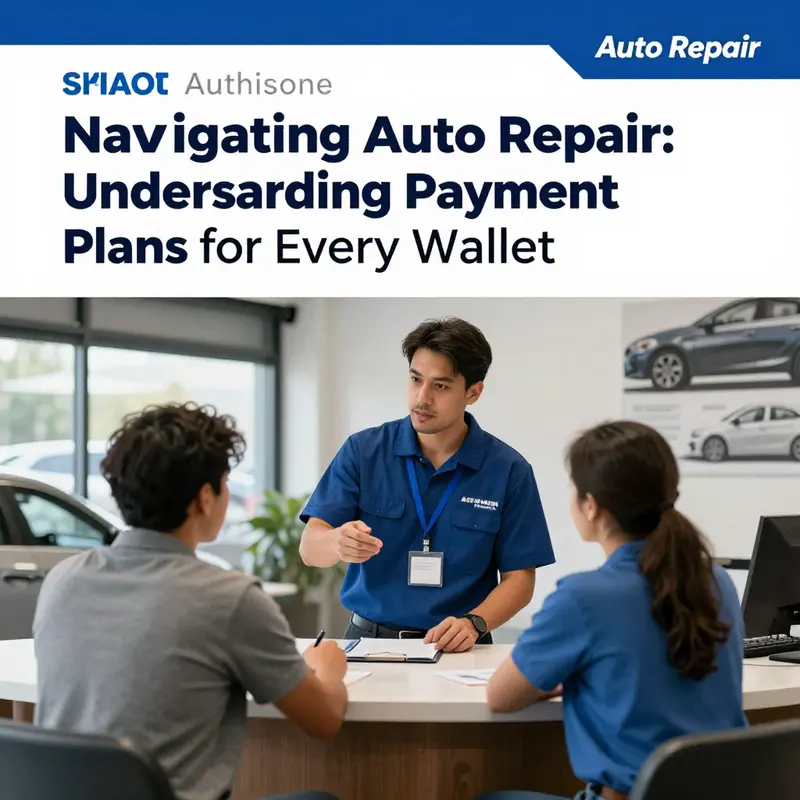
When a vehicle needs significant work, the bill can strain a budget. In-house payment plans offered by auto repair shops let customers spread the cost over weeks or months, often with minimal or no involvement from third parties. By keeping financing in-house, shops can speed approvals, tailor terms to the budget, and reduce friction at the counter. For customers, the payoff is a clearer path to safe, reliable transportation without a large upfront expense. For shops, the arrangement can drive faster approval, higher completion rates, and stronger customer relationships. This approach works best when terms are simple, transparent, and documented in a written agreement.
The mechanics are straightforward: the shop extends credit for the repair amount and the customer repays over a defined period. There may be a down payment, a monthly installment, and an end date. Interest rates vary, and some plans offer 0% introductory periods with balance repayment coverage. Importantly, plans should be easy to understand and free of hidden fees. A good in-house program emphasizes clarity and flexibility rather than aggressive, hard-to-follow terms.
From the consumer perspective, the key questions are: Can I afford the monthly payments? What is the total cost, and are there penalties for late or missed payments? How long is the plan, and what happens if the scope of the repair changes? Consumers should ask for a written proposal that lists the total cost, down payment, monthly payments, and the duration of the agreement. Shops benefit from providing clear, up-front information and a formal agreement that minimizes surprises for both sides.
For those evaluating options, it’s worth comparing in-house financing against third-party lenders or credit cards. Look beyond the monthly payment and consider the total financed amount, the term length, any fees, and the impact on your credit. A well-structured in-house plan should balance the customer’s budgeting needs with the shop’s ability to provide prompt, reliable service. When used thoughtfully, in-house financing can help keep vehicles on the road and budgets on track, without sacrificing the quality of care or the integrity of the repair process.
Beyond the Bill: How Payment Plans Extend Access and Build Trust in Auto Repair
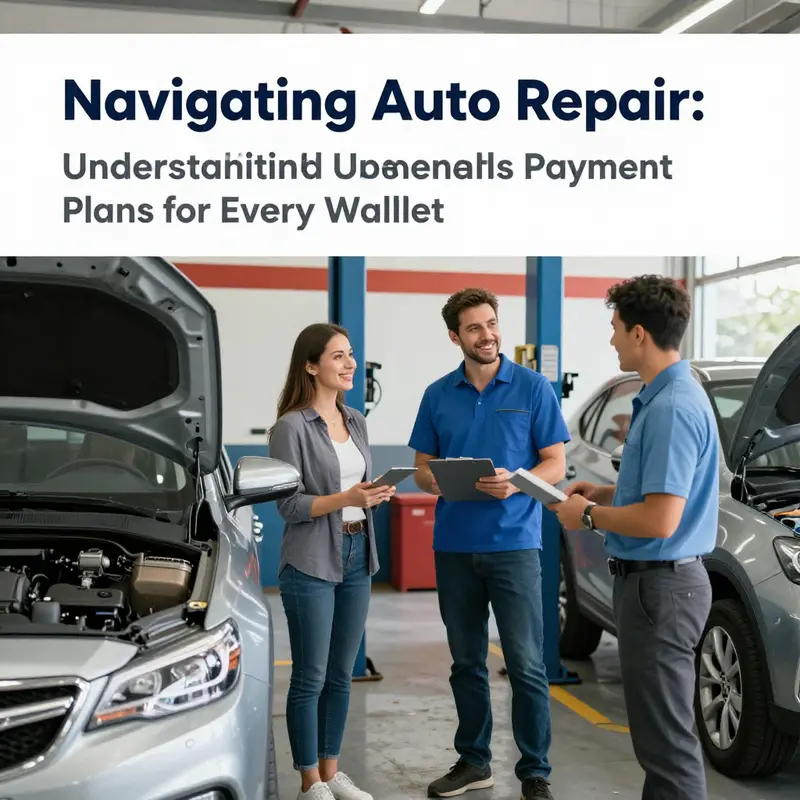
When your car pulls to a stop and the check engine light blinks or a clunking noise hints at trouble, the last thing you want is a financial roadblock. Breakdowns rarely come at convenient times, and the costs of necessary repairs can be daunting. In this environment, payment plans have evolved from a niche offering to a practical, customer-centered approach that many auto repair shops now embrace. They are not simply a way to finance a bill; they are a strategic tool that reshapes the repair experience from the moment a vehicle enters the shop lot to the moment the customer drives away with peace of mind. The essence of these plans lies in financial flexibility. When a major repair—think engine work, transmission service, or an advanced diagnostic—can run into the thousands of dollars, spreading the cost over several months can turn a potential crisis into a manageable obligation. This flexibility helps customers avoid delaying essential maintenance, which, in turn, prevents small problems from blossoming into larger, more expensive failures. The impact is not merely economic; it touches the customer’s sense of control. Instead of an unanswerable demand for cash on the spot, people feel they are choosing a path that respects their current finances while still prioritizing vehicle safety and reliability. That feeling of agency is a quiet but powerful driver of satisfaction.
Customer satisfaction tends to rise when a shop demonstrates that it understands the emotional terrain of car ownership: the fear of the unknown, the anxiety about debt, and the worry that a repair expense will derail a budget. Payment plans address these concerns head-on. They provide a transparent framework with predictable monthly outlays, clear terms, and, ideally, simple application processes. When a shop can explain not only what repairs are needed but also how the payments will work—and when the customer can expect to be debt-free or close to it—trust grows. This trust translates into more than a single service visit; it fosters long-term loyalty. Customers who feel respected in their financial needs are more likely to return for future maintenance, seek preventive services, and recommend the shop to friends and family. In other words, payment plans can become a cornerstone of a shop’s value proposition, reinforcing reliability and accessibility at every touchpoint.
Accessibility is the watchword here. Not every household has a robust emergency fund, and many people live paycheck to paycheck. The cost of a major repair can force an uncomfortable choice: repair now and stretch the budget or delay and risk further damage. Payment plans tilt the balance toward timely care, enabling customers to act quickly when a problem arises rather than postponing until the issue worsens. This broader accessibility is especially important in an era when consumers increasingly prioritize value and practicality over brand prestige. A shop that offers flexible financing signals that it is attuned to real-world financial constraints and committed to helping people maintain safe, reliable transportation rather than simply selling a service. In practice, this means repair shops are not only diagnosing and fixing problems but also partnering with customers to manage risk and protect their mobility.
From a business perspective, the adoption of payment plans is often a deliberate, customer-centric strategy rather than a gamble on revenue. Shops that implement these options tend to position themselves as empathetic, transparent, and dependable. They present terms clearly, disclose any interest or fees up front, and avoid the kind of pressure that can erode trust. The perception of fairness matters as much as the mechanics of the plan. When customers understand exactly what they owe and over what period, they are more likely to engage fully with the service process—from accepting an estimate to approving the repair plan and authorizing subsequent work. This transparency feeds a cycle of higher satisfaction and positive word of mouth, which becomes a practical form of marketing for the shop.
A payment plan also aligns with a proactive repair approach. Instead of delaying a repair because the customer cannot pay immediately, a shop can move forward with necessary diagnostics, parts ordering, and scheduling. The result is fewer follow-up visits for avoidable issues and a smoother repair workflow. The shop benefits from a steadier cash flow and a clearer revenue forecast, while the customer benefits from timely intervention that preserves vehicle health and safety. In this sense, payment plans are not merely financial instruments; they function as operational levers that streamline the repair process and reduce the friction that often slows critical maintenance.
Technological integration plays a significant role in making these plans practical and user-friendly. Digital platforms can facilitate instant credit checks, rapid approvals, and online application workflows that fit into a customer’s day—often within minutes while the vehicle is in the shop. A modern shop can offer installment options with flexible terms, pre-authorization routines, and automated reminders that help customers stay on track without manual oversight. The goal is simplicity: to make the funding piece as invisible as possible so the focus remains on diagnosing the issue, explaining the remedy, and delivering reliable results. When technology is used to reduce hardship rather than create new hurdles, it reinforces the customer’s sense of support and competence in choosing the right repair path for their vehicle.
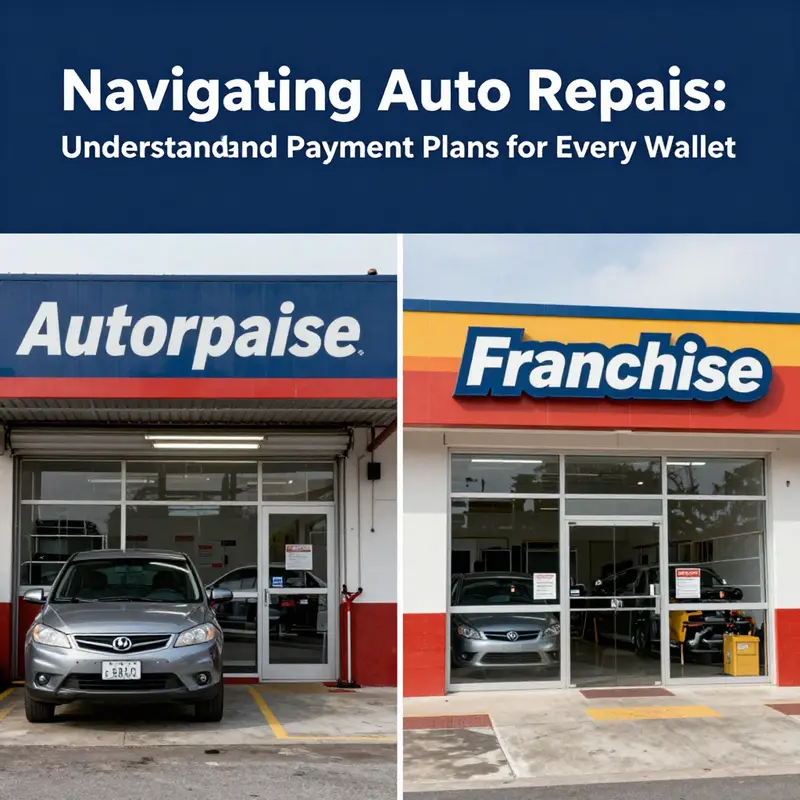
Not all shops approach payment plans in the same way, and flexibility remains key in choosing a model that fits the business and its customers. Some shops partner with third-party financing firms that specialize in consumer credit, while others develop in-house installment programs that are tailored to their unique service offerings and cost structure. Regardless of the path, the best options share a few common traits: clear terms, responsible lending practices, and a focus on helping customers complete essential repairs without compromising financial stability. For customers, the prudent course is to ask questions that reveal these traits: What are the interest rates or fees? Are there penalties for late payments or early payoff? Is there a grace period for the first payment? How does the shop determine eligibility, and what documentation is required? A thoughtful dialogue around these questions can illuminate not only the affordability of a given repair but also the shop’s commitment to fair dealing and ongoing customer support.
Customers should also consider how a payment plan interacts with other costs of ownership. Some recurring maintenance tasks are best treated as ongoing investments in reliability. A plan that accommodates routine alignments, brake inspections, or coolant services can become part of a broader maintenance strategy, helping customers keep their cars healthier for longer. In this way, a payment plan can function as an integrated component of a vehicle ownership plan, encouraging timely care and reducing the risk of compounding issues. Shops that recognize this holistic value—treating repairs as essential but manageable investments—position themselves as partners in prolonged vehicle health, not just providers of a one-off service.
Of course, customers should remain vigilant about the terms and the implications of financing. It is wise to compare options and to read the fine print. Some plans may carry higher interest than conventional loans, while others may include fees that accumulate if a payment is missed or if the balance remains unpaid after a given period. Understanding the total cost of financing over the life of the plan helps customers decide whether paying in installments is the most economical path or if alternatives—such as prioritizing essential repairs and budgeting gradually—might be preferable in a given situation. Shops that are transparent about these trade-offs earn credibility and reduce the risk of later disagreements or dissatisfaction. The ultimate measure of success for a payment-plan program is not only the number of repairs completed under the plan but the degree to which customers feel respected, informed, and in control of their finances throughout the repair journey.
As with any service strategy, the artistry lies in the details. A shop that communicates clearly about eligibility, terms, and expectations—paired with a straightforward application process and considerate repayment schedules—creates a seamless experience. When a customer enters the bay for a diagnostic and leaves with a repair plan that respects both vehicle health and household finances, trust is established. The estimator who can forecast a repair timeline and a payment schedule without jargon, and who can answer questions in plain language, is as important as the technician who identifies the root cause of the problem. In this light, payment plans become a collaborative tool: a way for the customer, the advisor, and the technician to coordinate care, minimize disruption, and empower responsible decisions about vehicle maintenance.
For readers seeking more practical context, the broader industry literature underscores these themes. Research highlights that financing options can improve customer satisfaction by reducing stress and enabling timely service. They also point to higher retention and positive referrals as downstream effects of a customer-centric financing approach. In addition, digital platforms that streamline credit checks and applications further enhance accessibility by making the process quick and predictable. These findings align with the lived experiences of many shop teams that have embraced financing as a standard part of customer care rather than a fleeting novelty. When presented with a transparent, well-structured financing option, customers often feel that their autonomy is valued and that the shop is genuinely invested in keeping them safely on the road.
For readers who want a broader context within the broader landscape of auto repair resources, see the A-Z Auto Repair guide as a helpful companion to navigate common service decisions and upkeep strategies. It offers a straightforward overview of typical repair pathways and maintenance considerations that pair well with thoughtful financing discussions. A-Z Auto Repair guide.
External resource for further industry insights: ASE researchers have documented how payment plans influence customer satisfaction and service outcomes in auto repair. Their findings provide a rigorous lens to understand the potential benefits and risks of financing in this sector. For a detailed review, see the ASE report on the impact of payment plans on customer satisfaction in auto repair: https://www.ase.com/research/impact-of-payment-plans-on-customer-satisfaction-in-auto-repair
Final thoughts
In conclusion, understanding payment plans in auto repair shops is essential for both vehicle owners and businesses. These financial tools not only allow for smoother management of repair costs but also enhance overall customer satisfaction. Whether through third-party financing or in-house options, having flexible payment solutions can bridge the gap between essential repairs and customer budgets. As more auto repair shops recognize the importance of these offerings, customers are encouraged to ask about available options to ensure they make informed financial decisions regarding their vehicle maintenance.