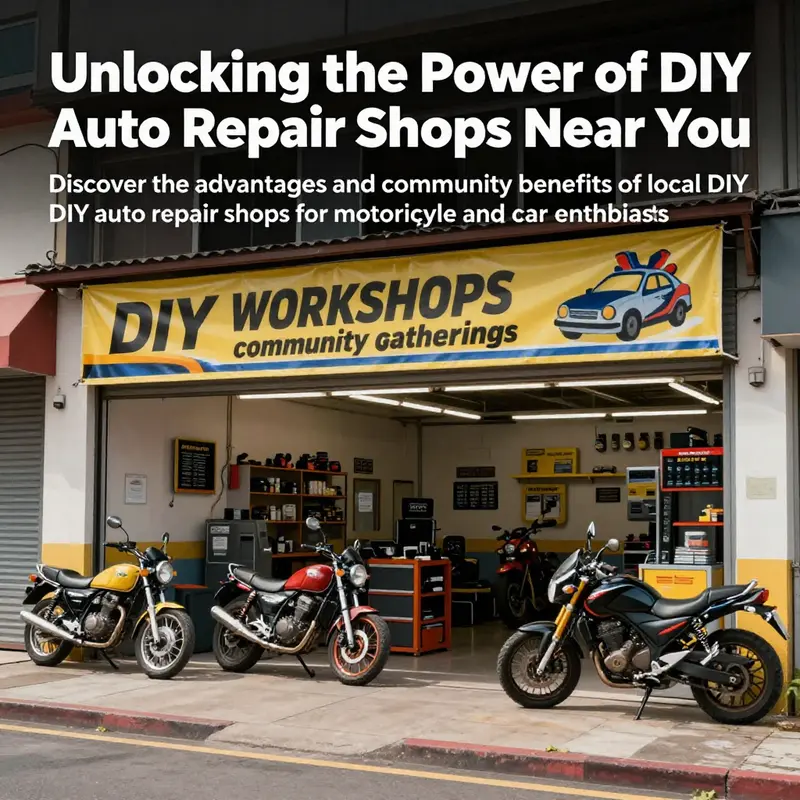
The rising trend of DIY auto repair shops offers vehicle owners, from motorcycle enthusiasts to everyday car owners, an empowering pathway to maintain and repair their vehicles. By providing access to professional tools and resources at local shops, these establishments cater to those eager to gain hands-on experience in vehicle maintenance. In the following chapters, we will delve into the various services these shops offer, explore the economic benefits of DIY repairs, and examine the community impact of these auto repair resources, revealing a holistic view of their significance in today’s automotive landscape.
Lifting the Hood: A Deep Dive into Local DIY Auto Repair Spaces, Access, and the Hands-On Community
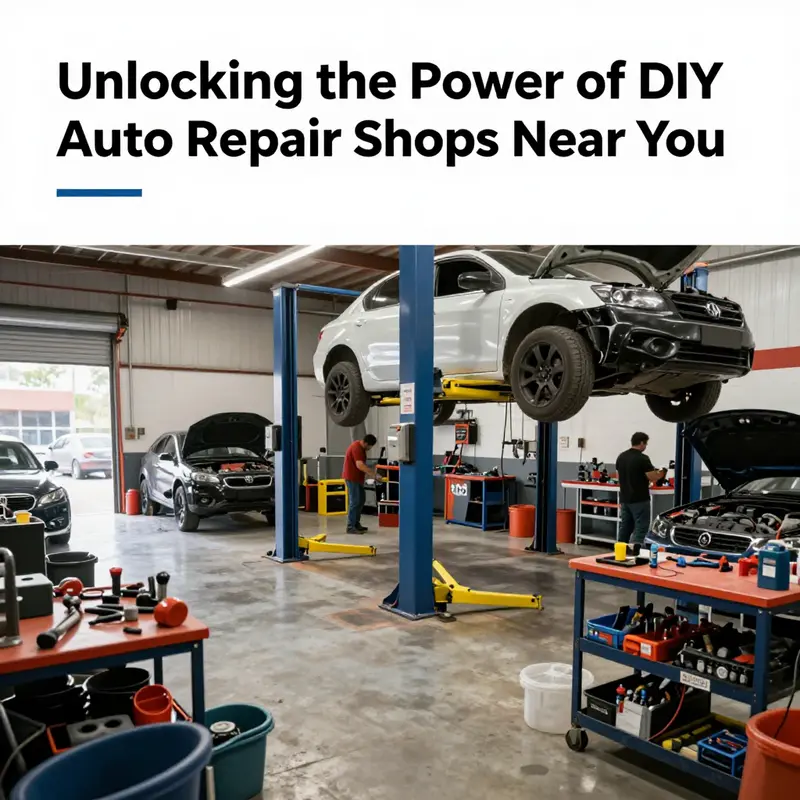
The lure of working with your hands to care for a car runs deeper than the need to save a few dollars at the pump. It taps into a sense of agency, curiosity, and the practical satisfaction of watching parts, tools, and clever technique cohere into a roadworthy machine. As more drivers seek affordable, accountable ways to maintain or repair their vehicles, local DIY auto repair spaces have emerged as thriving hubs where enthusiasts and everyday car owners can access professional-grade tools, guidance, and space without the overhead of a full-service shop. In these environments, a driver can perform routine maintenance, troubleshoot stubborn issues, or tackle more ambitious repairs with a level of autonomy that was once out of reach for most individuals. The core appeal is clear: access to hydraulic lifts, diagnostic equipment, and well‑stocked workbenches at a community scale that blends learning, collaboration, and self-reliance into a practical lifestyle choice.
The spectrum of services you’ll encounter in a typical DIY space is surprisingly broad. Think of it as a hybrid between a well-equipped workshop and a support network. Engine diagnostics, for instance, can be approached with professional-grade scan tools and software that would ordinarily be outsized, expensive, or impractical for a private garage. The same environment often supports tire changes, brake inspections, and routine maintenance like oil changes, battery replacements, and suspension work. Each service is not merely a task to complete but a learning opportunity where you gain familiarity with the vehicle’s feedback—sensor readings, system pressures, and mechanical noises—that can become a lifelong skill set. The availability of these tools allows owners to convert a complex repair into a sequence of manageable steps, rather than a mystery that must be solved by a shop’s technician.
What makes these spaces truly distinct is the combination of equipment, accessibility, and the culture that forms around them. A hydraulic lift can make a world of difference when you need to access the undercarriage or inspect suspension components; professional-grade diagnostic software can illuminate why a light is on and what subsystems require attention. Yet the equipment alone isn’t the full story. Many DIY spaces pair access with technical support, guidance, and governance that helps novices avoid common missteps. The presence of mentors, technicians, or experienced members who are willing to explain a process, demonstrate a technique, or review a plan fosters an environment where learning and doing go hand in hand. This educational dimension is essential because it lowers the risk that someone will misdiagnose a problem, perform an unsafe repair, or buy the wrong parts for a job.
The promise of savings is another powerful driver. Across the country, drivers experimenting with DIY auto repair report the potential to reduce costs by a substantial margin, sometimes upwards of half the price of conventional repair shop services for similar tasks. That financial edge matters more today as operating costs tighten for many households. The math isn’t simply about the sticker price of a repair; it also reflects time, waste, and the opportunity to build confidence in one’s ability to handle future maintenance. Seasonal promotions, learning programs, and community workshops hosted by these spaces not only help newcomers dip their toes into the practice but also create ongoing incentives to stay engaged and expand skills. In a landscape where car ownership is often a long-term financial equation, DIY spaces offer a practical pathway to greater control over maintenance budgets while cultivating a sense of craft.
Accessibility, of course, is a function of geography. Urban environments tend to cluster DIY spaces, creating a dense ecosystem of options that allow drivers to choose between different membership models, hours, and focuses. Rural areas, by contrast, may offer fewer storefronts, but the existing spaces often become crucial anchors for local knowledge networks. For anyone evaluating where to begin, it helps to understand not just the services offered but how easy it is to schedule time on a lift, reserve a workstation, or rent specialized tools when needed. Some shops run a membership model that provides discounted rates or priority access for regular users, while others operate more flexibly on a pay-as-you-go or per‑session basis. This variance means a careful buyer’s eye is warranted: you’ll want to gauge the typical usage you anticipate, the kind of repairs you expect to tackle, and whether a mixed approach—membership for frequent tasks plus occasional outsourcing for more complex work—fits your budget and schedule.
Reflecting on practical steps can help you chart a path into the DIY space without feeling overwhelmed. A reliable starting point is the realization that many aspects of car repair are methodical, repeatable, and ultimately learnable with the right guidance. A strong first move is to identify the kinds of tasks you want to undertake and then map those to the services most commonly offered in your area. If your aim is to handle preventive maintenance—oil changes, brake inspections, tire rotations, or battery checks—these are typically well-supported by most DIY spaces and align well with a pay-as-you-go model or a modest membership. For owners confronting more delicate issues—engine diagnostics tied to sensor data, or suspension work that requires precise torque specifications—the presence of experienced staff or seasoned members can be the difference between a successful repair and a frustrating, time-consuming detour. Even with a roadmap in hand, the value of the space lies as much in the social environment as in the tools: you learn faster when you observe others, ask questions in real time, and share solutions that emerge from hands-on experimentation.
Once you have a sense of what you want to do, the next step is to explore the practicalities of access. Location, hours, and the transparency of rules all shape how comfortably a driver can fit DIY work into daily life. Urban spaces tend to offer flexible evening and weekend hours to accommodate workdays and family commitments, while rural venues might emphasize weekend windows that align with off-peak traffic and longer daylight hours. Accessibility also extends to the knowledge base that the space supports. Do they offer introductory sessions, tool etiquette guidelines, and safety briefings that can help novices navigate risks? Is there a mentoring process or a buddy system that pairs first-timers with more experienced participants? These questions matter because a well‑run DIY space makes the practice approachable rather than intimidating. They help reduce common barriers to entry, such as fear of making the wrong move, misusing a tool, or underestimating a repair’s complexity.
Part of the draw is also the way these spaces democratize access to specialized equipment. Diagnostic software that can decode fault codes, live data streams, and transmission parameter readouts, once reserved for dealers and professional shops, becomes available on a shared basis. Lifts and alignment rigs, air tools, torque wrenches calibrated to industry standards, and a bench full of parts catalogs become tangible assets that empower a car owner to approach a repair with a plan rather than a guess. It’s important to note that while these environments enable substantial self-reliance, they also carry safety and liability considerations. The best spaces enforce clear safety protocols, require training or supervision for certain tasks, and encourage a patient, methodical approach to work. The emphasis is on building competence and confidence step by step, not rushing through a repair to meet an arbitrary deadline.
For someone considering taking the plunge, a practical pathway often begins with a simple, high-leverage project—an oil change, a brake inspection, or a tire swap. These jobs provide immediate feedback: you see the difference in how the vehicle handles, hear the changes in sound or feel, and gain a tangible sense of mastery as you verify the repair. As confidence grows, you can graduate to more challenging undertakings, such as diagnosing a recurring electrical fault, testing the health of the battery and charging system under load, or inspecting the steering and suspension geometry after a pothole-heavy winter. At each step, the community that surrounds the DIY space serves as a curriculum, mentor, and safety net. The shared language of tools and procedures—the clink of a ratchet on a persistent bolt, the precise torque specification that accompanies a critical fastener—transforms car repair from a solitary task into a collaborative craft.
In the context of a broader article about do it yourself auto repair shops near me, it helps to anchor this narrative in practical reality. A quick, targeted search can reveal a handful of nearby spaces that offer the equipment and the social infrastructure described above. The path from curiosity to competence becomes clearer when you are aware that these environments exist not as glamorous labs but as everyday workshops designed for real-world use. They are places where you can learn what a diagnostic readout means, how to interpret a wear pattern on a brake rotor, and how to estimate the lifespan of a battery under seasonal stress. The experience reinforces the idea that car maintenance is not a one-off task but an ongoing relationship with a machine that ages with you and adapts to your skill level.
For readers who want a concrete starting point in their journey, there is a reliable route to locate a nearby space and begin experimenting with hands-on maintenance. Do-it-yourself auto repair shop near me can be the anchor phrase that connects you to a practical search tool and a network of local resources. This approach aligns with two core themes: first, the accessibility of professional-grade tools in a community setting, and second, the social and educational opportunities that emerge when people come together to work on their vehicles. The combination of practical equipment and practical knowledge creates a powerful incentive to invest time in learning, practicing, and gradually expanding your repair repertoire. It is not merely about saving money; it is about cultivating a sense of agency and responsibility for the condition and performance of your own car.
As you consider this path, you may also want to align your expectations with broader trends noted by enthusiasts and researchers alike. The growth of the DIY auto repair sector is energized by economic incentives—people seeking cost savings, greater transparency, and a more personalized approach to maintenance. The experience of spaces like those in San Marcos, CA, where community-oriented shops emphasize user satisfaction and accessibility, demonstrates how a local ecosystem can thrive on trust, skill exchange, and shared tools. The community dynamics—member-driven knowledge sharing, mentorship, and ongoing learning programs—help sustain momentum and invite newcomers to participate with increasing competence. In this sense, the DIY space becomes more than a place to fix a car; it becomes a learning community that extends beyond a single repair job and into a lifestyle choice that values skill-building, collaboration, and practical resilience.
To translate these ideas into everyday decision-making, you can think of your DIY space as a partner for your car’s long-term health. You will likely begin by identifying a few fundamental tasks you want to master, then gradually building a toolkit of knowledge and hands-on experience. Each visit offers an opportunity to refine a technique, check off a repair plan, and document insights for future reference. The process reinforces the idea that maintenance is not a series of random acts but a coherent practice—an ongoing dialogue between you, your vehicle, and a community committed to helping you learn by doing. And as you grow more confident, you may discover that the cost savings and the sense of capability extend beyond the handshake of a repair script; they permeate the way you approach car ownership, budgeting for maintenance, and even planning future projects that you will tackle with pride and competence.
In closing, the landscape of do it yourself auto repair shops near me is less a single destination and more a network of practical spaces that invite curiosity, reward careful learning, and enable affordable, reliable car care. The services available—ranging from engine diagnostics to tire changes, from brake inspections to oil changes, battery replacements, and suspension work—are not simply a menu of tasks but a scaffold for building skill. Access to specialized tools and lifts, coupled with the social dimension of mentorship and shared learning, turns a garage‑style curiosity into a reliable capability. If you are ready to begin, a simple search for a nearby DIY space can open doors to a community where hands-on work is valued, where mistakes become teachable moments, and where you can grow from a curious driver into a more capable steward of your vehicle. As you move forward, keep in mind that the journey is as important as the destination, and the road to competence is paved with patient practice, thoughtful questions, and the steady rhythm of turning wrenches in a space that welcomes your questions and your ambition.
External resource: https://www.autozone.com
For readers seeking a practical entry point into the DIY space via a local resource, you can explore the options through the niche you already know well: do-it-yourself auto repair shop near me. This internal reference packet serves as a bridge to local knowledge and hands-on opportunity, guiding you toward a space where your vehicle’s care is both economical and educational. If you want to explore more targeted guidance or real-world stories of people who began with a basic maintenance plan and graduated to more complex repairs, the following internal note can be a helpful compass: do-it-yourself auto repair shop near me. The link is a doorway to a community-focused resource that emphasizes practical skill-building, safety, and budget-conscious maintenance—and it mirrors the broader themes of this chapter: the accessibility of professional-grade tools, the value of shared knowledge, and the empowerment that comes from taking control of your own car care.
From the Lift to the Ledger: The Local DIY Auto Repair Shop Advantage
When people imagine fixing their car with clockwork precision, they often picture a workshop filled with tools, humming machines, and a sense of quiet competence. Do-it-yourself auto repair shops near me have transformed that image from a solitary, garage-bound project into a community-based, access-driven model. The core appeal is straightforward: professional-grade tools and spaces that enable car owners to take control of routine maintenance and even some repairs without always paying the markup that traditional service bays charge. What begins as a practical decision—save money, learn a skill, regain control over timing—softly evolves into a broader economic mindset that touches budgets, local entrepreneurship, and the way communities value self-reliance in an era of rising service costs. The economics of this model sit at the intersection of personal finance, labor markets, and the evolving tools of the modern automobile. The result is not merely a cost calculation but a shift in how people think about ownership, time, and the relationship between a vehicle and its owner. In places like San Marcos and other communities, the trend has grown from curiosity to a familiar pattern, and the numbers behind that pattern are both pragmatic and reassuring to anyone who has spent too much on a routine oil change or a brake job that seemed to spring from nowhere.
At its most tangible level, the economic case for a do-it-yourself approach in a shared shop rests on the simple math of labor costs versus the price of parts and services. Labor, in particular, tends to be the most expensive portion of a repair bill. Data from the U.S. Bureau of Labor Statistics place automotive service technicians’ wages in a range that, when translated into a cash flow through a repair bill, quickly compounds into a substantial amount. In 2023, the average hourly wage for technicians hovered around $25 to $30 per hour, depending on region, demand, and credentials. Add overhead, not to mention shop profit margins, and the price tag of even routine maintenance—oil changes, filter replacements, brake pad installs, tire rotations—can balloon beyond a homeowner’s expectation. DIY auto repair shops near me exist to mitigate that disparity by offering access to professional-grade tools, diagnostic equipment, and protected workspaces for a flat fee, a membership, or a per-use model. The difference is palpable: rather than paying for someone else’s labor, the car owner pays for space and tools that enable them to perform the job themselves.
This is where the economic narrative broadens beyond a single savings line. The DIY model is not simply about subtracting expensive labor from a repair bill; it is about reconfiguring the relationship between cost, knowledge, and time. In practical terms, a person can schedule an oil change on a weekend, bring their own filter and oil, and complete the task with the guidance of available manuals and a staff member who can clarify questions about drain plugs, torque specifications, or proper disposal. The goal is not to replace professional mechanics but to provide an option for those repairs that do not demand advanced diagnostics or complex system work. A well-run DIY space will feature hydraulic lifts, torque wrenches calibrated to precise ranges, scanners for fundamental data like fault codes, and a workstation setup that makes common maintenance tasks straightforward and less intimidating for a novice. By removing the friction associated with obtaining tools and space, DIY shops convert the idea of repairing a car from a dreaded expense into a manageable project—one that can be completed at a pace that fits a person’s schedule and budget.
In the broader economy, the growth of DIY repair spaces has ripple effects that extend beyond the immediate savings. They create demand for aftermarket parts, which often comes with a more favorable price-to-performance ratio than OEM components for routine tasks. Think of air filters, brake pads, wiper blades, and other consumables that are purchased repeatedly. DIY shops act as a bridge between the consumer and the larger supply chain, supporting online marketplaces and local vendors by normalizing frequent, small-scale purchases. The result is a small but meaningful boost to local commerce, a reinforcement of consumer purchasing power in the hands of individuals rather than a few centralized repair chains. This pattern of localized demand supports not only the shops themselves but the broader ecosystem of parts distributors, tool manufacturers, and service education programs that thrive when there is a consistent flow of customers who are eager to learn and save.
The community dimension is perhaps the most defining feature of these spaces. The workshop floor doubles as a classroom, filled with people who share a common curiosity about cars and a practical interest in keeping them safe and reliable. Many DIY shops offer introductory workshops, hands-on demonstrations, and mentorship programs that demystify repairs that once seemed esoteric. These community-building efforts translate into social capital: neighbors become collaborators, weekends become study sessions, and the garage becomes a hub for problem-solving rather than a solitary chore. In the long run, this contributes to a more resilient local economy where knowledge is circulated rather than hoarded. Shareable knowledge—step-by-step guides, troubleshooting tips, and safety practices—reduces the long-term reliance on expensive services and fosters a culture of sustainable vehicle use.
From an individual perspective, the financial payoff of DIY repair is not merely measured in dollars saved on a single job but in the cumulative effect of ongoing maintenance, early issue detection, and the ability to address minor problems before they escalate into major failures. The practical upshot is a car that runs more reliably and a owner who feels equipped to respond quickly to minor malfunctions without waiting weeks for an appointment or incurring a premium diagnostic fee. This self-reliant habit supports a broader objective: financial resilience. Rather than oscillating between high-cost repairs and the anxiety of potential breakdowns, a well-utilized DIY space provides a predictable rhythm of maintenance tasks that fit a realistic budget. The discipline of regular checks—oil levels, battery condition, fluid statuses, brake wear—becomes a habit rather than a panic response to a sudden symptom.
There is also an economic logic to the way these shops are structured. Access models—membership, per-use, or time-based passes—reflect a pragmatic approach to balancing demand with equipment depreciation and staff supervision. The membership model, for example, aims to smooth out utilization patterns, ensuring that lifts and diagnostic bays are available when owners need them while maintaining a predictable revenue stream for the facility. The per-use model, on the other hand, can attract casual users who want a one-off service. Either model acknowledges that the value lies not just in the space but in the ecosystem surrounding it: the mentors, the quick-reference guides, the safety protocols, and the stance toward learning as a shared activity. These factors collectively reduce the psychological barrier to DIY maintenance—a barrier that often centers on the fear of making things worse. When people know they can access guidance, have the right tools, and operate within a safety-conscious environment, they are more likely to take on tasks they previously avoided.
Seasonal promotions and learning programs add another layer of economic encouragement. Discounts on tool rentals, bundles for maintenance tasks that align with the seasons, and workshops that teach fundamentals—oil changes, filter replacements, brake inspections—are not merely marketing ploys. They are strategic incentives that cultivate a steady flow of new participants into the world of DIY auto care. This creates a virtuous cycle: as more people develop basic skills, the demand for space and tools grows in a controlled, scalable way, which in turn justifies investment in better equipment and more robust coaching. The result is a self-reinforcing market dynamic that benefits both the consumer and the shop operator. A well-informed customer base is less likely to damage a vehicle, more likely to contribute to a safe, orderly workspace, and more likely to advocate for DIY options within their own social circles—multiplying the reach of these facilities beyond the initial core audience.
The socioeconomic impact also extends into the realm of education and skill-building. Community-focused DIY spaces democratize technical knowledge, enabling younger drivers or adults returning to the workforce to pick up practical, valuable competencies. They become places where people who would not ordinarily have access to professional tools or formal training can gain confidence through guided, hands-on practice. In turn, this lowers the long-term cost of maintaining a vehicle for households with limited budgets and creates pathways into technician-related fields for people who discover a passion for automotive systems in a low-risk setting. The research landscape surrounding DIY repair recognizes this broader education utility as a meaningful, if intangible, economic benefit. While the direct savings on a single oil change or brake pad replacement are easy to quantify, the longer-term advantages—enhanced financial autonomy, workforce development, and community capacity for problem-solving—are equally important as part of a resilient local economy.
Within this evolving framework, the practical question remains: how does a consumer decide if a DIY space near them is the right choice? Proximity, obviously, matters. A convenient location reduces friction, making it easier to schedule maintenance tasks around life commitments. But proximity is only part of the calculus. The quality of the space—the reliability of equipment, the availability of trained staff for guidance, the clarity of safety rules, and the culture of the community—shapes the actual experience of DIY maintenance more than any single factor. Prospective users should consider the scope of equipment offered. Lifts that handle the typical passenger vehicle and light trucks, torque wrenches with properly calibrated settings, a capable diagnostic station that can read common codes, and a tidy workspace all contribute to a successful outcome. Price structures matter too. A transparent fee schedule that avoids hidden costs, clear rules for tool usage, and a straightforward process for disposing of used fluids or worn parts help maintain a positive experience. A shop that balances these elements well becomes more than a place to work on a car; it becomes a practical partner in ongoing vehicle care.
In this sense, the DIY auto repair space near me offers something more than the sum of its parts: a pragmatic, scalable way to manage vehicle maintenance in a world where repair costs can feel unpredictable. It makes the act of caring for a vehicle into a measurable, repeatable routine rather than a sporadic, expensive venture. It invites a broader segment of the population to participate in car maintenance, thereby changing the cultural conversation around ownership—from a dependency on specialists to a collaborative practice where individuals contribute their time, learn new skills, and benefit financially in tangible ways. The reward is not just a tighter grip on a monthly budget but a richer sense of agency in daily life. And for those who want to dip their toes into the world of DIY auto care without committing to a home-built garage, the local shop near me can serve as a gateway—a safe, structured, and supportive environment where the first steps are guided, the risks are mitigated, and the potential is substantial.
For readers curious about what a typical DIY space might offer, many communities have adopted a common blueprint: a bright, organized floor with clearly marked bays, a handful of lifts that can accommodate most consumer vehicles, a central bench with essential hand tools, and a wall lined with instruction sheets, safety reminders, and troubleshooting tips. The atmosphere tends to be pragmatic rather than theatrical; the emphasis is on getting the job done right, safely, and affordably. Staff members or mentors are available to answer questions, demonstrate proper techniques, and help interpret codes or service bulletins that arise during a repair. This is where the learning dimension becomes most valuable: a novice can complete a straightforward oil change and move on to a more challenging task with a firmer understanding of the process and a growing confidence in their own abilities. Over time, that confidence translates into better maintenance decisions, fewer unexpected breakdowns, and a lower threshold for taking toward more ambitious projects—perhaps replacing brake rotors, bleeding brakes, or performing a simple transmission service with proper preparation and supervision.
The personal finance payoff, when viewed over the long arc, is reinforced by the predictable cadence of maintenance. Regular care reduces the likelihood of major failures that require emergency service, towed trips, or expensive, last-minute parts orders. It also builds a reserve of mechanical literacy that can be especially valuable for families with multiple vehicles or for individuals who rely on a vehicle for work. The more people participate in DIY maintenance through a local space, the less anxious individuals may feel about the costs of unexpected repairs. The practical impact is a more manageable total cost of ownership, better budgeting for routine expenses, and a sense of preparedness that aligns with a broader consumer philosophy: invest in your own capability, and you invest in your future financial stability.
In those communities where the DIY culture has matured, there is an emergent ecosystem of support that complements the hands-on work performed inside the shop. Online forums, informal meetups, and user-generated content about maintenance tasks create a knowledge network that travels beyond the concrete walls of the workspace. These networks help newcomers bypass some of the initial learning friction by offering shared checklists, common-sense safety practices, and practical, experience-based tips for selecting parts and tools. This is, in effect, a social multiplier: the more people engage with the DIY approach, the more efficient and empowering it becomes for everyone involved. The economic benefits thus multiply, extending to families who realize savings, students who gain practical skills, and small businesses that supply tools, consumables, and instructional materials to supporting venues. Even as technology evolves—new diagnostic interfaces, telematics-enabled maintenance alerts, and higher-tech electrical systems—the core model remains robust: access to capable tools, safe guidance, and the incentive to keep costs predictable.
An important caveat remains: DIY repair is not a universal solution. Some tasks require specialized equipment, detailed service knowledge, or upstream diagnostics that demand professional training. The goal of the local DIY space is not to replace the skilled technician but to democratize access to routine maintenance, empower informed decision-making, and lower the barrier for affordable care. For people who want to test the waters, the experience can be eye-opening, and the cost savings can be substantial even when not every task is within reach. For those who embrace the learning path, the payoff includes not only monetary savings but the satisfaction of mastering a skill and the confidence that comes with being more self-reliant. This alignment of practical savings, personal growth, and community vitality is what makes the DIY auto repair shop model a compelling component of the modern automotive landscape.
As the world of vehicles continues to evolve—electrification, advanced driver-assistance systems, and ever-more-complex powertrains—the DIY space near me may adapt by offering more modular training, safer high-voltage handling practice, and digital resources to support non-professional repair work. Even with such changes, the fundamental benefits remain stable: reduced labor costs, enhanced financial autonomy, and a robust, local framework for learning and sharing knowledge. The chapter’s evidence points to a future in which DIY spaces, rather than fading as cars become more technologically sophisticated, will become even more essential to how drivers maintain their vehicles and how communities sustain themselves economically. For readers who want to explore a space close to home, the path often begins with a simple question: what can I fix on my own, with the right tools, a supportive mentor, and a workspace that values safety and learning as much as efficiency? The answer will vary by vehicle, skill, and time, but the underlying economics remains clear: use the lift, understand the ledger, and your car—and your wallet—will benefit in tangible ways.
To get a sense of how this plays out in real numbers, consider the broader context that shapes every calculation in a DIY setting. The savings on routine maintenance can accumulate to hundreds of dollars per year for a typical driver who practices regular upkeep rather than waiting for symptoms to escalate into more costly problems. The ability to arrange maintenance around a schedule that fits a busy life contributes to reduced downtime and, by extension, less disruption to work and family commitments. In communities where DIY shops have established a steady user base, the cumulative savings and reliability improvements can even influence decisions about vehicle ownership itself. People may choose to keep a car longer, invest in higher-quality components where appropriate, or allocate funds toward education and tools that empower ongoing self-care. The synergy between personal finance, community development, and a pragmatic approach to car care is the essence of why the local DIY auto repair shop has moved from novelty to necessity in many neighborhoods.
For readers who want to explore the practical, day-to-day experience of a DIY shop near me, a quick look at the offerings and culture can be instructive. These spaces typically pride themselves on transparency—a clear fee structure, accessible safety rules, and an emphasis on helping customers build skills rather than simply completing a job. The intention is not to replace professional service entirely but to provide a legitimate, credible option for those tasks that fall within a reasonable skill and tool range. A well-run shop knows that trust is built not only through price but through the quality of guidance, the reliability of equipment, and the warmth of the community that gathers around a shared interest. In this sense, the local DIY auto repair shop becomes a kind of public good: a place where knowledge is accessible, costs are contained, and people can participate in a hands-on activity that benefits their daily lives as well as the local economy.
As the narrative around DIY auto care continues to unfold, the role of information becomes more important than ever. Prospective participants should seek out spaces that provide clear safety orientations, comfortable guidance for beginners, and opportunities to learn through practice rather than through a one-size-fits-all instruction. They should also pay attention to how the shop communicates about maintenance tasks—whether it offers checklists, tutorials, or mentorship options—that can help novices progress toward greater independence over time. The most valuable spaces are those that strike a balance between empowerment and safety, offering a structured path from simple tasks to more meaningful, confidence-building repairs. In short, the local DIY shop near me serves as a laboratory for affordable, practical learning, a launchpad for financial resilience, and a community resource that nurtures both skill and solidarity.
For readers seeking a tangible example of what this looks like in practice, consider the kind of support a shop can provide without substituting professional diagnostics. A typical oil change, when framed as a DIY project in a supportive environment, can become a weekend learning module: you bring the oil and filter, you follow recommended torque specs, you utilize a calibrated torque wrench, and you receive guidance to avoid the most common missteps. The result is not only a successfully completed task but a deeper understanding of your own vehicle’s maintenance needs. Likewise, small tasks such as air filter replacements or brake pad changes can be framed as carefully guided projects, with a mentor present to answer questions about rotor wear, pad thickness, or proper lubrication points. With access to a range of tools, a calm and safety-focused environment, and a culture of sharing, the DIY space transforms what could be a daunting obligation into an approachable, repeatable routine—one that strengthens the driver’s relationship with their car, finances, and community.
In sum, the economic benefits of do-it-yourself auto repair shops near me extend far beyond the immediate savings visible on a single receipt. They encompass financial autonomy, the stimulation of local markets, the cultivation of practical knowledge, and the forging of social ties that support ongoing skill development. They also reflect a pragmatic response to contemporary consumer realities—cost volatility in maintenance, the desire for more predictable budgeting, and the growing importance of lifelong, hands-on learning. The chapter’s exploration of these benefits points toward a broader understanding of how DIY spaces contribute to a healthier, more connected local economy. For readers ready to explore this path, the journey begins with a decision to learn, a willingness to invest time, and a belief that a community workshop can be as valuable as any professional service when it comes to keeping a car in good shape and keeping a household budget balanced. If you’re curious about how such spaces operate near you, you can explore what a typical DIY auto repair shop near me offers and how it feels to work within a community-driven repair model. Do-It-Yourself Auto Repair Shop Near Me provides a sense of the practical atmosphere, the kind of equipment you can expect, and the supportive touchstone that makes hands-on maintenance an accessible, affordable option for a broad range of drivers.
External resource: For a broader economic context and wage benchmarks that influence the cost structure of DIY repair spaces, see the U.S. Bureau of Labor Statistics report on Occupational Employment and Wages, May 2023. https://www.bls.gov/oes/current/oes499091.htm
Under the Lift: The Community Ripple of Do-It- Yourself Auto Repair Shops in Local Neighborhoods
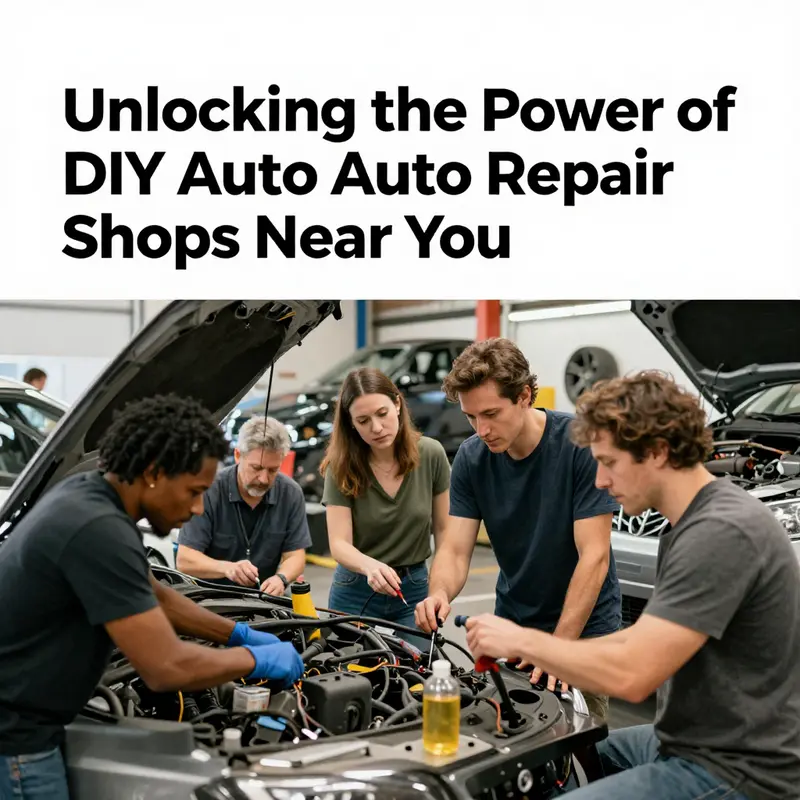
The rise of do-it-yourself auto repair shops near me has quietly reshaped how communities think about work, skill, and the value of local economy. These spaces are more than car repair bays; they are social arenas where neighbors share tools, exchange knowledge, and invest in the kind of resilience that small districts rarely notice until it is gone. When a car stumbles on the road, the eager driver with a basic toolkit and a curious mind can now turn to a nearby shop that offers not only space and equipment, but also guidance and a sense of belonging. The impact ripples outward. It changes who can afford to fix a vehicle, how families budget transportation, and whether a neighborhood can rely on itself long enough to weather tougher times. This is not a simple, transactional service. It is a seed for a localized economy that grows through access, education, and shared responsibility for the neighborhood’s mobility and welfare.
The most immediate benefit of these shops is financial. Repairs that used to flicker through a manual with a mechanic across town now become opportunities to learn and save. The data behind the broader do-it-yourself movement points to households reducing maintenance costs by a substantial margin when they take repair work into their own hands. The savings are not only on price tags but on the time and energy spent coordinating rides or waiting days for a scheduled appointment. In communities with variable transit and work hours, the ability to perform routine maintenance, replace worn parts, or swap fluids during a single weekend can preserve a family’s budget and reduce the stress of vehicle downtime. Yet the value goes beyond dollars. When people learn to diagnose problems, they gain not just a skill but a framework for problem solving that applies to other areas of life. The confidence that comes with handling a tool, reading a diagnostic screen, or following a repair procedure translates into a broader sense of agency living beyond the lift bay.
Accessibility is a core thread. DIY shops often cultivate a welcoming environment that lowers barriers for people who previously felt intimidated by auto repair. The spaces are designed to be inclusive training grounds with mentors who explain concepts in plain language, demonstrate steps, and provide safe practices that gradually raise a patron’s competency. This educational function matters because it expands the pool of people who can maintain their own vehicles, which in turn broadens the base of potential customers for the shop itself. It also helps to demystify a field that has long been perceived as the exclusive domain of seasoned technicians. In practical terms, a community member who learns to perform oil changes, replace brake pads, or test a battery can continue to manage minor repairs in the future, reducing their susceptibility to sudden equipment failures that might otherwise keep a family stranded.
The social fabric of neighborhoods also benefits from the knowledge-sharing culture that DIY shops foster. In many communities, workshops and online forums sponsored by these shops become virtual and physical gathering places where experience is exchanged, questions are asked, and best practices are codified. Novices get a safe venue to pose questions, compare approaches, and advance from curiosity to competence. Experienced hobbyists, in turn, contribute by mentoring, correcting techniques, and offering troubleshooting advice. Those interactions build social capital that extends beyond cars. People learn to collaborate, respect different skill levels, and recognize the value of patient, practical teaching. The result is a more tightly woven neighborhood where neighbors are more likely to help each other, share resources, and participate in community life beyond the work of repairing a single vehicle.
This community energy has a tangible effect on local economies. DIY shops create direct employment for instructors, shop managers, parts specialists, and sales staff. They also support a network of local suppliers who provide tools, fluids, and parts needed for repair projects. By keeping economic activity within the neighborhood, these businesses help recirculate money that might otherwise flow to distant chains or online marketplaces. The impact is especially meaningful in districts where small retail stores face intense competition from large retailers. When a neighborhood has a thriving DIY repair ecosystem, it channels consumer dollars into the local economy and helps sustain the broader commercial district. In this sense, a DIY shop can act as a small but steady anchor that draws foot traffic, encourages adjacent businesses, and contributes to the vitality of a block or corridor.
Beyond economics, the environmental implications of local, self-directed repair work are nuanced and significant. Proponents argue that DIY repair reduces waste by extending the life of vehicles and avoiding unnecessary disposal. On the flip side, the potential downsides include improper disposal of used oil, batteries, and other hazardous materials if the shop culture does not embed strong environmental protocols. Responsible DIY spaces respond to this tension with clear safety standards, certified training programs, and recycling initiatives. They implement oil recycling programs, proper disposal streams for batteries, and guidelines for the safe handling of solvents. When these practices are woven into daily operations, the environmental footprint of the neighborhood’s vehicle maintenance can move toward sustainability rather than merely shifting the burden elsewhere.
Social and environmental benefits, however, depend on robust governance. A DIY shop that prioritizes safety education and ongoing training helps ensure that repairs performed by non-professionals do not compromise road safety. The line between empowerment and risk is navigated through structured programs, stepwise skill-building, and a culture that encourages patrons to seek professional help for complex tasks. In a well-governed space, safety becomes a shared value rather than an afterthought. The shops may offer certified courses that align with local regulations, encouraging customers to obtain the credentials that support safer practices and greater confidence. This governance also extends to environmental stewardship. A responsible shop will adopt recycling partnerships, minimize waste, and educate members about responsible disposal practices as part of the customer experience, not as an after-action requirement.
The narrative around Do It Yourself Auto Repair Shops Near Me also intertwines with broader civic life. These spaces become nodes in a wider network of community resilience. They host workshops on topics ranging from preventive maintenance to fuel efficiency, share data on common failure modes, and foster online forums where residents can troubleshoot common issues before calling a tow truck or booking a formal appointment elsewhere. In some communities, the shops serve as informal job centers, linking apprentices with mentors who have years of experience and establishing a pathway toward more formal training or even certification. The social value of such pathways is hard to quantify, but it shows up in narratives of people who regain independence after a layoff, rediscover technical passions, or reframe their relationship to work and family responsibilities. The chapters of this story are not merely about car parts; they are about what it means for a neighborhood to invest in practical knowledge and the people who carry it forward.
As these spaces proliferate, the geography of repair shifts. No longer is car maintenance something that happens only in a centralized service area or a dealer network. Instead, it becomes an activity that can take place in mixed-use districts, in former retail spaces, or in purpose-built hubs where the atmosphere is as much about learning as it is about turning a wrench. The shift in location has consequences for traffic patterns, parking norms, and the daily rhythms of street life. A neighborhood that embraces DIY repair may see more foot traffic during evenings and weekends, when people are off work and seeking educational activities. This, in turn, influences the design of adjacent storefronts, the allocation of street parking, and even the way local authorities plan for small-business districts. In short, the impact of these shops extends into urban planning, not just into the engine bay.
Yet the movement does not come without concerns. A community that grows around shared tools and open knowledge must confront the risk that information and skills may outpace safety and quality controls. The most common fear is not that people become less capable, but that unsafe practices could yield accidents or long-term damage to vehicles. The responsible response is to elevate education, not to restrict access. Shops that partner with local vocational programs, community colleges, or training organizations can provide structured curricula that graduates can carry into professional settings. Certification programs, even if they are non-murchandised or loosely regulated, offer a framework within which novices can progress. Such frameworks reduce the likelihood of substandard work and reassure the broader community that DIY participation remains a trusted pathway rather than a wild frontier.
Another challenge lies in inclusivity. When communities organize around a tool-based culture, it is crucial to ensure everyone who wants to participate feels welcome. Access is not merely about money; it is about availability of time, language access, and physical accessibility for people with disabilities. A truly inclusive model offers sliding scale memberships, volunteer mentors, multilingual instruction, and adaptive equipment. The most successful spaces actively solicit feedback from diverse participants and adjust programming to meet varying needs. They recognize that the strength of a local repair ecosystem depends on broad participation across age groups, backgrounds, and experience levels. In this sense, the DIY shop becomes not just a place to mend cars but a civic space that honors the community’s diversity and curiosity.
The narrative of community impact also circles back to the practical questions of accessibility and location. For many people, a nearby shop is the difference between manageable maintenance and deferred repairs that escalate into more costly problems. When a neighborhood fostered by a vibrant DIY repair culture sits near residences, schools, and small businesses, it creates a feedback loop: residents gain skills, the local economy strengthens, and the street life becomes richer. The sense of place changes as people come to view their block as a learning commons, a place where neighbors come together to solve problems, share knowledge, and support one another through the practical work of keeping vehicles on the road. This is not merely about repairing a car; it is about cultivating a model of local agency that improves everyday life and builds capability that endures past the current repair cycle.
In this light, the do-it-yourself auto repair movement becomes an instrument for neighborhood renewal. It invites residents to participate in a shared enterprise, to commit to sustainable practices, and to invest in a skill set that remains relevant no matter what the broader economy does. When people can repair, teach, and learn close to home, the community gains a form of social capital that is hard to quantify but easy to feel: pride in local resourcefulness, trust in neighbors, and a sense that the community is capable of solving its own problems with practical ingenuity. The gains are incremental but cumulative: lower household costs, stronger local networks, better environmental stewardship, and a more resilient urban fabric that can absorb shocks without dissolving into disarray.
The best way to understand this impact is to imagine a typical, unnoticed block where a small DIY auto shop anchors a cluster of storefronts, a coffee shop, a bike repair corner, and a youth program across the street. On a Tuesday evening, a parent helps a teenager learn to replace brake pads while a retired mechanic explains how to handle a caliper. A customer who learned to change oil last month returns to ask about tire tread depth and road-safety checks. A part-time instructor demonstrates how to use a diagnostic tool, guiding a newcomer through step-by-step thinking about what a message on the screen might mean. The cadence of learning, the exchange of tools, and the informal mentorship create a micro-ecosystem that nourishes curiosity and practical intelligence. The neighborhood begins to feel like a place where knowledge is a shared asset rather than a private preserve. It is not a utopia, but it is a scaffold for everyday resilience that can adapt as the city evolves.
The NPR perspective on the sustainability and growth of DIY repair landscapes offers a useful lens for understanding these dynamics. It highlights how evolving attitudes toward repair, consumption, and local skill-building reflect broader shifts in economy and culture. The article points to the way communities are increasingly embracing repair as a durable form of sustainability, not just a workaround to save money. That framing matters here because it reframes the DIY shop from a niche hobby space into a progressive community resource. It positions repair as a civic act—one that reduces waste, supports local employment, and strengthens social ties. For communities exploring the question of what do-it-yourself auto repair shops near me can mean for them, this perspective provides a framework for balancing access with safety, learning with accountability, and economic advantage with environmental care. The intersection of personal autonomy and communal well-being is the heart of this story, and it unfolds most vividly where neighbors gather under one roof to learn, fix, and grow together.
The practical implication of this analysis is clear: when communities invest in accessible, well-governed DIY repair spaces, they invite a form of neighborliness that is both tangible and enduring. Local leaders and residents who want to cultivate this energy can prioritize several core practices. First, they can support partnerships with vocational programs and safety training to ensure that DIY work meets reliable standards. Second, they can encourage environmental stewardship through accessible recycling and waste-management protocols. Third, they can foster inclusive programming that welcomes diverse participants, ensuring that everyone who wants to contribute can do so meaningfully. Finally, they can promote the concept of repair as a civic habit—an everyday act that sustains not only vehicles but the social fabric itself. The chapter you are reading is part of a broader exploration of how the do-it-yourself auto repair movement interacts with urban life, but the thread running through this discussion is clear: access to tools, access to knowledge, and access to community are the three pillars upon which the most resilient neighborhoods are built.
As you move forward in this chapter, keep in mind that the impact of do-it-yourself auto repair shops near me is not only measured in completed repairs. It is measured in the confidence of a parent who can guide a child through a safe maintenance routine, in the pride of a neighborhood that can rely on its own knowledge base during a crisis, in the flow of dollars that recirculate within a street’s small businesses, and in the ability of residents to articulate a future where practical skills are cultivated, shared, and celebrated. The community that forms around these spaces is a living laboratory—a place where people of different backgrounds learn to negotiate common goals, solve problems collaboratively, and contribute to a shared sense of belonging. In this sense, the chapter closes not with a final verdict but with an invitation: to consider DIY repair spaces as legitimate community infrastructure, as important as parks, libraries, or transit lines. They are places where people become proficient, where trust is built through hands-on practice, and where the simple act of fixing a vehicle becomes a vehicle for social improvement.
For those who wonder how to translate these insights into action in their own neighborhoods, the answer lies in thoughtful design, generous access, and a commitment to education. It means creating spaces that welcome a range of skill levels, offering structured curricula for safety and procedure, and ensuring disposal and environmental practices are transparent and rigorous. It also means recognizing the potential for a DIY shop to become a catalyst for other collaborative efforts: neighborhood tool libraries, volunteer maintenance programs, and cross-generational tutoring that bridges the gap between experienced craftspeople and curious youth. When the community treats repair as a shared enterprise rather than a solitary task, the lift becomes symbolic as well as practical: a shared ascent toward stronger, more capable neighborhoods.
In sum, the community impact of do-it-yourself auto repair shops near me is multi-layered and deeply connective. They empower individuals with technical competence, foster social networks that extend beyond the shop floor, stimulate local economies by retaining spending within the neighborhood, and promote environmentally responsible practices through education and stewardship. They also pose challenges that require deliberate governance, including safeguarding safety, ensuring accessible training, and embracing inclusive participation. When these elements come into alignment, the result is a neighborhood where repair is not a solitary chore but a communal craft—one that anchors a culture of practical learning, mutual aid, and local pride. As communities test and refine these spaces, they illuminate a path toward more resilient, more interconnected, and more self-reliant places to live. The potential is real, and the effort to realize it is worth pursuing for anyone who believes that everyday skills can be a powerful engine of neighborhood renewal.
External resource for broader context: https://www.npr.org/2023/11/08/1210457688/diy-car-repair-trends-sustainability
Internal link: For readers seeking a nearby starting point or a primer on basic DIY techniques, explore the practical overview available at the following resource: do-it-yourself-auto-repair-shop-near-me. This article offers a concise guide to finding a local space that emphasizes safety, community, and accessible learning while aligning with the broader themes of neighborhood resilience and fiscally sensible car ownership.
In the end, the story of do-it-yourself auto repair shops near me is a story about people who refuse to surrender control of their daily needs to distance providers. It is a story about neighbors who choose to learn together, share tools, and keep their communities moving. It is a narrative of practical empowerment, of local economies that stay alive on small, deliberate acts of repair, and of a civic culture that believes in the value of hands-on knowledge. If you listen closely, you can hear the soft hum of a lift, the careful click of a ratchet, and the quiet conversations that make a neighborhood stronger, one repair at a time.
Final thoughts
DIY auto repair shops not only empower individuals to take control of their vehicle maintenance but also foster a vibrant community of enthusiasts and learners. By providing access to tools, knowledge, and support, they cut costs and enhance vehicle ownership experiences. The chapters of this article underline the significant role these shops play in facilitating personal and communal growth, encouraging more enthusiasts to explore the rewarding world of hands-on automotive repair.