
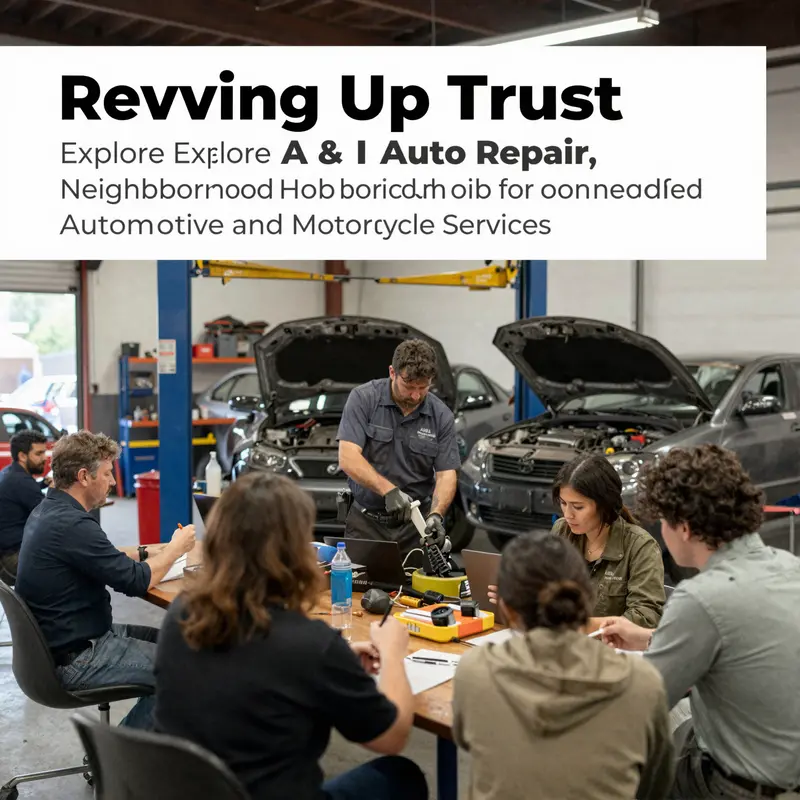
Nestled in the heart of Los Angeles, A & I Auto Repair stands out as a premier service center for motorcycle and auto owners alike. With a comprehensive range of repair and maintenance services, this establishment prioritizes quality workmanship and customer satisfaction, making it a trusted choice in the automotive community. In the chapters that follow, we’ll delve into the specific services offered, explore the extraordinary focus on customer satisfaction, highlight A & I Auto Repair’s significant community impact, and provide an insight into the advanced technology and equipment that ensures high-quality service. Join us as we uncover what makes A & I Auto Repair a preferred destination for drivers and bikers in Los Angeles.
A Path Through the Garage: A Comprehensive Look at the Services of A & I Auto Repair in Los Angeles
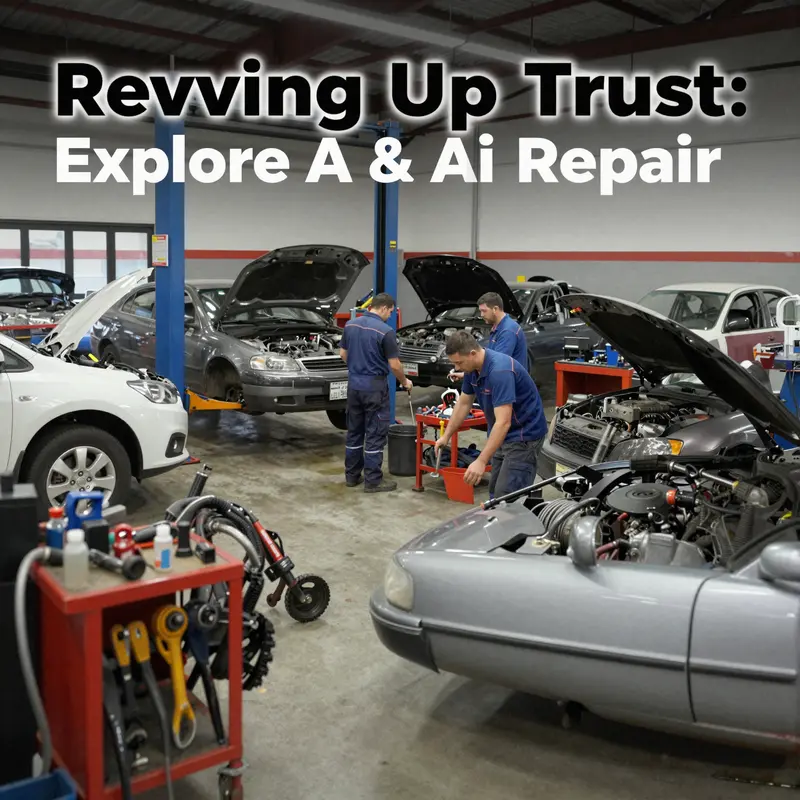
In the bustling heart of Los Angeles, where streets curve with traffic and the sun leans on each chrome trim, A & I Auto Repair sits at 1417 W Washington Blvd as a steady hand for drivers who depend on reliability. The shop is more than a collection of tools and machines; it is a place where years of experience meet careful inspection, honest advice, and workmanship that earns trust day after day. From the moment a vehicle pulls into the bay doors, the guiding principle is clear: keep people moving with safety, clarity, and efficiency. The technicians talk in the language of engines and suspensions, but they also speak the language of the customer—the person who needs a car to get to work, ferry kids to practice, or simply enjoy the freedom of a smooth ride. The goal is not merely to fix what is broken but to understand how the whole vehicle operates as a connected system, so every intervention makes sense within the larger picture of ongoing care.
The breadth of services offered by A & I Auto Repair reflects a philosophy that sound maintenance and careful diagnostics form the backbone of longevity. The shop’s approach begins with a careful assessment, because every repair or service starts with an accurate read of the vehicle’s current condition. Engine health, transmission performance, braking reliability, electrical stability, and steering responsiveness each play a crucial role in how safely and confidently a car can drive day in and day out. The team recognizes that a problem can rarely be found in isolation; it usually emerges as a symptom of wear, drift, or a momentary lapse in routine maintenance. Their diagnostic testing capabilities are designed to reveal these underlying issues with precision, not guesswork. This commitment to accuracy matters just as much as the skill with which a technician uses the toolset; in a neighborhood where convenience matters, trusting the diagnosis is a major part of the service.
Among the most fundamental offerings is the engine repair and maintenance program. Engines are marvels of complexity, a choreography of pistons, belts, valves, sensors, and ignition patterns that must stay in step. When minor fouls accumulate or when a component begins to wear at an uneven pace, performance can degrade in subtle and not-so-subtle ways. The technicians at A & I Auto Repair approach engine work as a seamless continuum—from preventive maintenance to major repairs. Routine maintenance is the first line of defense, with tasks that include inspecting fluid levels, checking for leaks, and monitoring cooling and ignition systems. When a deeper concern surfaces, their work on engine repair can involve component restoration, calibration checks, and the careful replacement of aging parts. The aim is not to upsell but to preserve the engine’s efficiency, reduce fuel consumption, and extend the engine’s life—values that matter to drivers who depend on dependable performance rather than abrupt breakdowns.
Closely tied to engine health is transmission servicing. Transmission systems govern how power is transferred from the engine to the wheels, and a single fault can ripple into shifting hesitations, unresponsive gears, or strange noises under load. A & I Auto Repair treats transmission work as a partnership with the vehicle’s overall drivetrain. Servicing may involve fluid checks and replacements, pan inspections, and careful assessments of clutch performance where applicable. The team emphasizes that transmission care is not solely about reacting to a slipping or hard-to-shift condition; it is about maintaining the smooth, predictable operation that makes daily driving stress-free. In many cases, early diagnostics can prevent more serious, expensive repairs later on. The shop’s clinicians use diagnostic tools to verify the health of solenoids, pressure systems, and electronic control modules, ensuring that a future problem is neither missed nor misdiagnosed.
A well-functioning brake system sits at the core of road safety, and the brakes are often the most visible and forthcoming indicator of a vehicle’s condition. The service philosophy at A & I Auto Repair treats brake work as both preventative and responsive. Inspections cover the entire system: pads, rotors, calipers, lines, and the master cylinder, all checked against wear limits and performance criteria. When repairs become necessary, the team approaches them with a focus on durability and reliability, using procedures that restore consistent stopping power and pedal feel. They understand that drivers rely on their brakes every day in a city that blends heavy traffic with sudden changes in speed and direction. Transparent explanations help customers understand why certain parts must be replaced and how the repair will affect braking performance in the long run. This is not an isolated service but a cornerstone of the vehicle’s safety profile.
Electrical system diagnostics are another area where modern cars reveal their intricate interdependencies. A & I Auto Repair recognizes that a vehicle’s electrical architecture is the nervous system of the car, coordinating everything from ignition timing to infotainment and climate control. Electrical issues often present as subtle inconveniences—intermittent sensor readings, dimming lights, or unresponsive modules—that require careful tracing with sophisticated equipment. The diagnostics process becomes a journey through the vehicle’s data streams, where technicians verify sensor outputs, scan for fault codes, and test circuits under load. The goal is to pinpoint the root cause rather than chase symptoms, ensuring that the solution is lasting and cost-efficient. As vehicles become more connected, the ability to interpret these signals becomes more valuable, and A & I Auto Repair emphasizes a methodical approach that keeps the car’s electronics coherent with its mechanical systems.
Suspension and steering adjustments are master classes in tie-rod geometry, spring rates, and alignment dynamics. The suspension keeps the ride comfortable while the steering system translates driver intent into direct control. Over time, normal road wear, potholes, and changing loads can produce subtle drift, uneven tire wear, or a steering feel that is not quite right. The team at A & I Auto Repair conducts thorough inspections of linkages, bushings, and mounting points, looking for signs of wear that could compromise handling or ride quality. When adjustments or parts replacements are necessary, the work is integrated with the broader maintenance plan to ensure that steering response remains precise and predictable. The result is a vehicle that not only handles well but also recovers its footing quickly after sharp maneuvers or sudden braking—an essential characteristic for navigating the urban environment safely.
Routinely, the shop emphasizes oil changes as a simple yet impactful service that has lasting consequences for engine health. Regular oil changes are more than a routine chore; they are a core practice in maintaining lubrication, cooling, and filtration. The technicians explain when and why an oil change should occur based on driving patterns, climate, and the vehicle’s design. They also highlight the role of the oil filter in removing contaminants and how high-quality oil maintains viscosity under a range of operating conditions. This clarity helps customers understand that even a routine change can contribute to improved performance, reduced wear, and better fuel efficiency. The oil change may seem mundane, but it stands as a reliable checkpoint in the larger cycle of maintenance that keeps a vehicle dependable for the long haul.
Across all services, the diagnostic testing capacity at A & I Auto Repair stands as a unifying thread. The shop leverages advanced equipment to identify issues that are not immediately obvious through a visual inspection alone. The diagnostic process begins with a careful listening to the customer’s description of the problem, followed by data collection from the vehicle’s onboard systems. Technicians then interpret the results, considering how the observed symptoms align with the vehicle’s history and the driver’s reported experiences. This disciplined approach minimizes unnecessary interventions while ensuring that necessary repairs are grounded in objective evidence. The emphasis on transparency is not merely about communicating what is found; it is about explaining why a particular repair is recommended and how it contributes to the vehicle’s overall reliability and safety. Customers leave the shop with a clear sense of what was done, why it was necessary, and what to expect in terms of performance going forward.
The practical value of these services becomes even more evident when viewed through the lens of a driver who depends on predictable reliability. A & I Auto Repair’s work is anchored in a commitment to quality workmanship and clear communication. They strive to build trust through straightforward explanations, detailed estimates, and a transparent workflow that keeps the customer informed at every stage. The shop understands that a vehicle is more than metal and circuits; it is a partner in daily life, and a failure in any one system can ripple into missed commitments or disrupted routines. By approaching each service as part of a broader maintenance strategy, they help customers avoid the surprises that come with unexpected breakdowns. They also recognize the importance of building a relationship with the local community, a relationship grounded in workmanship that stands up to scrutiny and service that respects a customer’s time and budget.
For readers seeking a broader panorama of auto repair concepts, a resource such as A to Z Auto Repair offers a wide framework of how individual components and systems interconnect in a modern vehicle. This perspective complements the hands-on experience of visiting a shop like A & I Auto Repair, where theory meets practice under the hood. The interplay between engine health, transmission behavior, braking reliability, electrical stability, and chassis dynamics becomes tangible when you can trace how a single fault might cascade through the vehicle’s operations. The neighborhood setting of Los Angeles adds another layer of immediacy to the conversation: cars must perform in traffic, in heat, and in urban conditions that demand continuous attention to safety and efficiency. The shop’s approach, grounded in both technical proficiency and transparent customer communication, demonstrates how a local repair center can deliver service that resonates with drivers who value dependability, honesty, and a straightforward plan for maintenance.
In sum, the services offered by A & I Auto Repair are not a checklist so much as a cohesive system of care. Engine health informs transmission performance, which in turn influences braking and steering safety, while electrical diagnostics ensure that the vehicle’s brain and body communicate as they should. Routine oil changes anchor the maintenance cycle, serving as regular touchpoints that reinforce the vehicle’s reliability. The diagnostic testing framework ties the entire network together, translating observed symptoms into actionable repairs. In a city where life moves quickly and the road can be unpredictable, this integrated approach provides drivers with a sense of security and continuity. What emerges is not a fragmented mix of fixes but a thoughtfully organized service philosophy that respects the driver’s time, the vehicle’s needs, and the community’s trust. The result is a garage that does more than repair cars; it sustains the pace of daily life with competence, candor, and care.
External resource: For additional guidance on common maintenance missteps and practical prevention strategies, explore the detailed guidance at the external article linked here: https://motorworksautorepair.com/blog/10-common-engine-maintenance-mistakes/
Trust, Transparency, and Turnarounds: How A & I Auto Repair Wins Customer Satisfaction
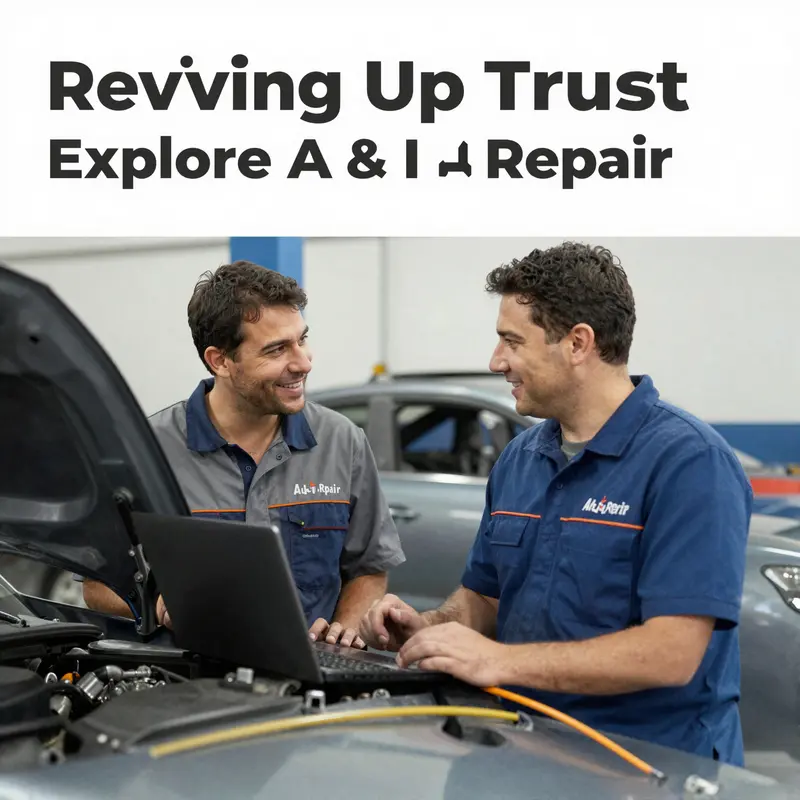
A & I Auto Repair has earned a reputation that stretches beyond routine service. Customers return after years because the shop consistently delivers fair pricing, clear explanations, and dependable repairs. That kind of loyalty is not accidental. It is the result of policies, people, and processes that align around one clear goal: make vehicle ownership easier and less stressful for every customer who walks through the door.
Customer satisfaction at an automotive shop is rarely created by a single action. It is an accumulation of small, consistent touches that add up. At A & I Auto Repair, those touches are visible from the moment a car rolls into the bay. Staff greet drivers, listen carefully to concerns, and take time to document symptoms. That initial attentiveness matters. It sets expectations and builds trust. Drivers feel heard, and technicians get clearer information to diagnose the problem quickly and accurately.
Honesty about repairs is another cornerstone. When a shop explains what is needed, what is optional, and what can wait, it empowers the car owner. One long-time customer expressed appreciation for “very fair pricing and honest assessment/repair.” Those three words reveal a lot. Fair pricing speaks to competitive rates and transparent estimates. Honest assessment reflects proper diagnostic practices and a refusal to recommend unnecessary work. Honest repair signals quality workmanship and a commitment to doing the job right the first time. Together, they form a simple but powerful promise: we will not take advantage of you, and we will fix what matters.
Consistency plays a vital role in building that promise. When customers have the same positive experience on multiple visits, trust compounds. Repeat business is a sign that a shop has institutionalized reliable processes. At A & I Auto Repair, those processes include clear intake protocols, thorough diagnostics, and documented repair notes. Technicians use checklists and communicate expected timelines and costs up front. This procedural rigor reduces surprises and allows customers to make informed decisions. It also gives the shop a defensible position when discussing warranties and follow-up service.
Communication is the grease that keeps this machine running smoothly. A good shop bridges the knowledge gap between technicians and drivers without talking down to either party. A & I Auto Repair emphasizes plain-language explanations that focus on what the car needs, why it needs it, and what will happen if the repair is delayed. Clear explanations remove anxiety. They prevent the common frustration of leaving a shop feeling uncertain about what was done. When invoices are detailed and include before-and-after notes, customers can see the value they received.
Another factor that drives satisfaction is the ability to balance speed with thoroughness. Nobody wants unnecessary delays, especially when a vehicle is essential for daily life. A & I Auto Repair manages workflows to minimize waiting times while avoiding rushed, incomplete work. When a repair is complex and requires parts or additional diagnostics, staff communicate timelines and provide interim options. Small accommodations, like loaner vehicles or shuttle arrangements, often make the difference between a one-time inconvenience and a long-term customer relationship.
Pricing transparency is closely tied to fairness. A & I Auto Repair’s approach includes itemized estimates and explanations of labor and parts. Customers appreciate knowing what they are paying for. The shop doesn’t hide costs in vague terms. Instead, it offers comparisons and alternatives when appropriate. For example, if a premium part is recommended but a quality aftermarket option is available, technicians present both choices with pros and cons. This honest approach builds confidence and helps drivers choose what fits their budget and priorities.
Quality control completes the chain from estimate to satisfied customer. Repairs are inspected before a vehicle leaves the lot. Technicians perform test drives and function checks to ensure the issue is resolved. This extra step reduces the chance of return visits for the same problem. When follow-up is needed, A & I Auto Repair stands behind its work. Warranties and clear policies make it easy for customers to come back and have a concern addressed promptly. That responsiveness reinforces the message that the shop cares about long-term outcomes, not just single transactions.
The shop’s community reputation is both a product and a driver of satisfaction. Word-of-mouth remains potent in densely populated areas like Los Angeles. When one neighbor tells another about a fair, honest mechanic, it leads to a chain of referrals. Positive online reviews amplify that effect. Reviews that mention fair pricing and honesty influence potential customers more than promotional claims. A & I Auto Repair benefits from a cycle: satisfied customers leave positive reviews, and new customers arrive with reasonable expectations. The shop then meets or exceeds those expectations, continuing the loop.
Not every interaction is perfect. What distinguishes a truly customer-focused shop is how it responds when things go wrong. Mistakes happen. Parts can fail prematurely. A repair can miss the mark. A & I Auto Repair’s approach to such situations is candid and solution-focused. Rather than avoiding responsibility, staff investigate, explain what occurred, and propose a clear remedy. That accountability converts a negative experience into an opportunity to demonstrate commitment. Customers often remember how a business handled a problem more than the problem itself.
Training and staffing are fundamental to sustaining high satisfaction. The shop invests in technicians who can diagnose modern vehicles and communicate effectively. Ongoing training keeps staff current on new systems and repair methods. When a technician can explain complex issues without jargon, customers feel included in the decision-making process. Staffing policies that value empathy and patience also shape interactions. A friendly voice on the phone or a calm explanation at the counter reduces stress and fosters loyalty.
Facilities and cleanliness play their part as well. A tidy reception area, organized parts storage, and clean work bays signal professionalism. Customers often infer the quality of mechanical work from visible tidiness. A & I Auto Repair’s physical environment complements its service philosophy. It demonstrates respect for the customer’s vehicle and for the customer themselves.
Beyond the direct repair experience, A & I Auto Repair builds satisfaction through convenience and education. Staff offer maintenance schedules and reminders, helping owners avoid costly repairs. They explain routine checks and encourage drivers to follow preventive maintenance. Practical guidance on tire care, fluid choices, and basic inspections empowers owners. When drivers can prevent issues through simple steps, they associate the shop with long-term savings. For readers interested in avoiding common maintenance mistakes, the shop’s advice aligns with practical guides like this article on how routine maintenance packages can save money and stress. https://motorworksautorepair.com/blog/avoid-car-maintenance-mistakes-how-routine-maintenance-packages-save-you-money-and-stress/
The final element that shapes customer satisfaction is authenticity. People can sense when a business is trying to be something it’s not. A & I Auto Repair’s strength comes from being straightforward and reliable. It does not promise miracles. Instead, it delivers clear estimates, careful repairs, and honest advice. That authenticity resonates with customers who value straightforward relationships over polished salesmanship.
In sum, customer satisfaction at A & I Auto Repair is the result of a deliberately cultivated culture. It combines attentive intake, transparent pricing, clear communication, consistent workmanship, and accountable follow-up. These practices reduce uncertainty and make vehicle ownership less burdensome. They turn one-time customers into long-term patrons who recommend the shop to friends and family.
For automotive businesses seeking to emulate this model, the lesson is clear. Invest in people and processes that prioritize clarity and fairness. Train technicians to diagnose and to explain. Standardize workflows to reduce errors. Keep invoices itemized and readable. And when problems arise, respond quickly and honestly. Satisfaction is built one reliable interaction at a time, and that is precisely how A & I Auto Repair has built its reputation in Los Angeles.
The deeper payoff of this approach is trust. When customers trust their mechanic, they are more likely to follow maintenance advice, return for needed repairs, and recommend the service to others. Trust reduces friction in the customer relationship and fosters predictable revenue. It also attracts employees who prefer working in an environment grounded in respect and integrity.
Ultimately, customer satisfaction is measurable but also intangible. It shows up in steady referrals, glowing online reviews, and repeat visits. It is reflected in a simple review from a long-time customer who praises fair pricing and honest assessment and repair. That praise sums up what many drivers seek: a mechanic they can rely on, without worry. A & I Auto Repair delivers that experience, and in doing so, it has become a trusted choice for drivers across the community.
Neighborhood Anchor: How A & I Auto Repair Shapes Local Life and Keeps Communities Moving
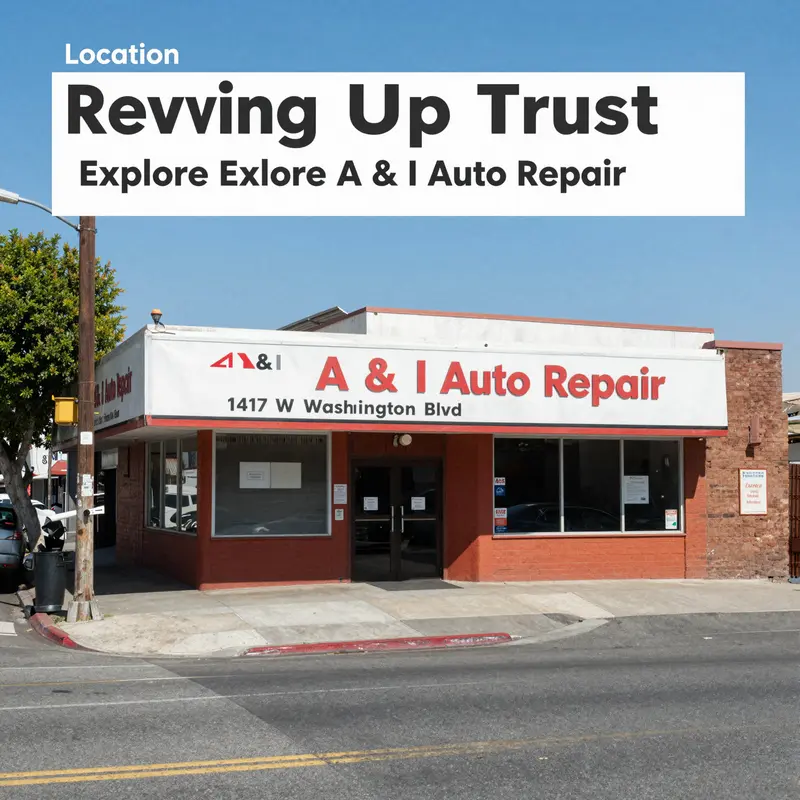
A & I Auto Repair has always been more than a place to fix a car. Whether operating under that name in Los Angeles or as a family-run auto service in Toronto, the business becomes woven into daily routines, local economies, and the wider fabric of urban life. The location of a repair shop determines the rhythms of its work—rush-hour drop-offs, weekend tune-ups, winter-ready inspections—and shapes how people rely on it. In neighborhoods where public transit is uneven or vehicle ownership is essential, a dependable repair shop is not a convenience; it is a community utility. This chapter explores how a local auto repair shop located at a specific address can influence safety, employment, trust, and neighborhood character, using the profile of A & I and similar local shops as a lens.
Geography and accessibility set the stage. A repair shop on a busy corridor serves commuters, gig drivers, and families. Proximity to residential streets means walk-in customers and repeat business. The Toronto location at 741 Runnymede Road reflects the kind of placement that transforms a shop into a community hub: close enough for routine service stops, visible enough for neighborhood trust, and accessible enough for drivers of every background. For a Los Angeles-based facility, a site on West Washington Boulevard places the shop within a dense urban matrix where motorists rely on quick, competent service to stay on the move. In both settings, the shop’s physical presence matters. It provides a reliable point for vehicle care and a steady source of human interaction that strengthens local ties.
Economic impact extends beyond the baying of engines. A & I’s steady flow of customers creates jobs, often hiring locally for technician roles, front-desk positions, and parts procurement. For many employees, the shop becomes a place to build a career and learn transferable skills. Technical know-how acquired in a neighborhood repair shop can lead to certifications, independent contracting work, or supervisory roles—pathways that bolster local incomes and professional mobility. Small businesses like this circulate money in the community: parts suppliers, towing services, and nearby cafés that benefit from staff and customer visits all feel the ripple effect. Over time, the shop’s spending habits and hiring choices help shape the micro-economy of a street or block.
Trust and transparency are central to the relationship between a shop and its neighbors. When residents see a business that has operated for over a decade, they associate longevity with reliability. A & I Automotive Inc.’s 15-plus years of service in Toronto has fostered a base of repeat customers who value clear communication and fair pricing. This trust is earned through consistent workmanship, accurate diagnostics, and sensible recommendations that prioritize safety over upselling. Word-of-mouth endorsements spread quickly in neighborhoods. A single positive interaction—an honest assessment that averts an unnecessary repair—can convert a nervous first-time customer into a loyal advocate. Conversely, a single bad experience travels at the same speed. That makes community-centered practices, visible warranties, and straightforward invoices critical for shops that want to remain embedded and respected.
Safety is another direct way shops contribute to community welfare. Routine maintenance keeps vehicles roadworthy, reduces breakdowns, and lowers the likelihood of accidents caused by brake failure, tire blowouts, or faulty lighting. By offering accessible inspections and preventive services, a neighborhood shop functions like a public safety partner. The local knowledge technicians develop—understanding which streets flood during storms, which intersections are prone to collisions, or how winter salt affects undercarriages—enables targeted advice that keeps drivers safer. For families and older drivers, the ability to obtain trustworthy maintenance nearby means fewer risky journeys in unreliable cars and more confidence on the road.
Community engagement often takes practical forms. Local shops sponsor school sports teams, offer discounts for seniors or essential workers, or host seasonal safety clinics. These gestures build goodwill and produce tangible benefits. A free winter-check event or a discounted brake inspection clinic can prevent accidents and save families money. When a shop invests time in community outreach, it extends its role beyond transactional repair work to become a resource. That kind of involvement also deepens the shop’s understanding of local needs and informs service offerings that match those needs: extended hours during harvest or festival seasons, shuttle services for residents without alternate transport, or mobile repairs for immobile vehicles.
Small businesses also shape neighborhood identity. A long-running auto shop occupies a visible, steady presence in the urban landscape. Its signage, its technicians’ uniforms, and even the rhythm of cars waiting for service become part of the street’s character. Residents develop mental maps around such landmarks. For new drivers learning where to go for reliable service, the presence of a trusted shop reduces decision friction. The shop’s reputation can elevate the street’s perceived safety and convenience, making nearby properties more attractive to residents who value dependable service options.
Training and knowledge transfer are quieter but important contributions. A & I and similar operations often mentor apprentices and new technicians. Those training relationships keep technical skills circulating in the community. A shop that invests in apprentice training not only strengthens its own workforce but also builds local capacity for automotive care. That capacity matters when larger service centers are hours away or when specific expertise is required for older or specialty vehicles. Technicians who learn their craft locally often remain embedded in local networks, providing continuity of care that national chains cannot always match.
Environmental considerations factor into community impact as well. Repair shops that handle fluids, tires, and parts must adhere to safe disposal practices. A shop that treats hazardous waste properly protects soil, groundwater, and public health. Furthermore, promoting vehicle efficiency through tune-ups, proper tire inflation, and emissions checks reduces local pollution. In densely populated areas, cleaner-running vehicles contribute to better air quality for residents. By combining good environmental practices with customer education, a shop becomes a steward of neighborhood well-being.
The customer experience shapes long-term relationships. A repair shop that explains work clearly, offers realistic timelines, and provides fair estimates fosters loyalty. Many customers choose shops based on perceived honesty as much as on technical skill. Local shops succeed when they demystify repair processes, offer transparent pricing, and follow up after service. Those small efforts—A phone call to confirm a finished job, an explanation of which parts were replaced and why, or a quick demonstration of how a repaired system works—translate into trust that keeps customers returning and referring their neighbors.
Accessibility and inclusivity matter too. A shop that offers flexible payment options, multilingual staff, or accommodations for customers with disabilities broadens its service to more residents. In diverse urban neighborhoods, the ability to communicate across language barriers and to treat customers with cultural sensitivity is an advantage. Inclusive practices also reinforce the shop’s role as a community partner rather than a transactional business.
Finally, the cumulative presence of local shops contributes to urban resilience. When chains centralize services in large facilities, neighborhoods risk losing these vital touchpoints. Diverse local businesses create redundancy in the service ecosystem. If one shop temporarily closes, others can absorb the demand. Technicians trained locally can staff multiple facilities or respond to emergencies. This networked resilience helps a city adapt to disruptions, from weather events to supply chain hiccups.
A & I’s story, whether tied to a Los Angeles address or rooted on a Toronto road, illustrates how an auto repair shop functions as a node of practical help, steady employment, and civic trust. Its location determines the everyday interactions that make it indispensable. Its longevity and investment in people generate skills and economic activity. Its practices in safety, environmental stewardship, and customer care shape how residents move, live, and feel about their neighborhood. For drivers, the shop is a partner in mobility. For communities, it is a reliable neighbor.
For practical guidance on avoiding common maintenance pitfalls that strain these relationships, see this resource on how routine maintenance packages can save money and reduce stress: how routine maintenance packages save you money and stress.
External reference: A local example of long-standing community service is found at 741 Runnymede Road, a shop that has served its neighborhood for more than a decade, reflecting the broader ways a single address can shape local life.
How A & I Auto Repair Uses Modern Tech to Deliver Reliable Service
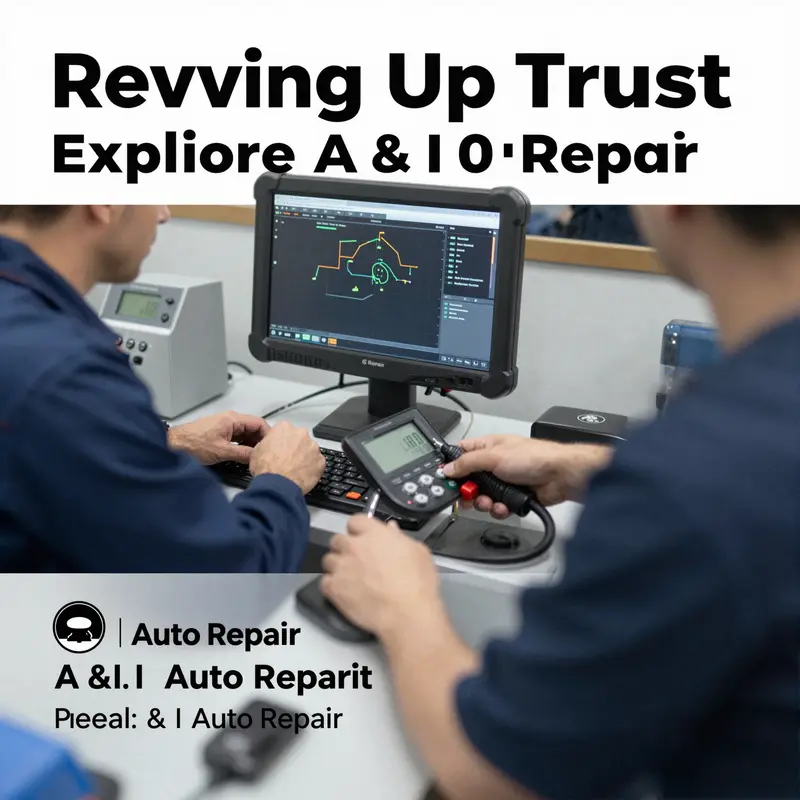
A & I Auto Repair blends skilled hands with modern tools to diagnose, repair, and preserve vehicles efficiently. The workshop at 1417 W Washington Blvd operates like a small, specialized ecosystem where data, sensors, and precise mechanical devices converge. Technicians still rely on years of experience and a practiced eye, but that expertise is amplified by technology designed to reduce guesswork, speed up repair cycles, and ensure safety. The shop’s investment in measurement systems, diagnostic networks, integrated management software, and workshop monitoring turns complex problems into manageable workflows.
At the heart of the operation is an intelligent diagnostics approach that quickly narrows down probable causes. Instead of relying solely on manual tests, technicians connect a vehicle to a diagnostic interface that reads the car’s onboard systems. This reveals fault codes, live sensor data, and subsystem statuses that tell a deeper story than the symptoms alone. The diagnostic process is faster and more accurate because the tools correlate error codes with probable faults, suggest test sequences, and log findings for review. That means less time spent chasing intermittent faults and more time performing the actual repairs that restore the vehicle to proper function.
Precision in measurement is essential after collisions or when working on any chassis-aligned task. A & I’s frame alignment and vehicle measurement systems use optical and digital referencing methods to map a car’s geometry against factory specifications. These systems capture minute deviations in suspension mounting points, subframe alignment, and body dimensions. With that data, technicians plan corrections that restore original geometry rather than guessing how much to pull or push. The benefits are tangible: correct alignment improves handling, reduces premature tire wear, and ensures safety systems like airbags and crumple zones perform as designed.
Operational efficiency is another major gain from modern tools. Integrated shop management software ties customer records, vehicle history, parts inventory, and billing into a single platform. When a customer arrives, staff can quickly pull prior repairs, warranty notes, and maintenance intervals. VIN decoding helps confirm correct parts and recall status. When a repair is authorized, the system generates estimates, tracks parts orders, and updates the job status, so technicians and customers both know exactly what will happen next. This streamlined workflow reduces miscommunication and helps projects move through the shop without friction.
On the shop floor, an interconnected sensor network keeps operations safe and predictable. Sensors monitor lift loads, air pressure, and environmental conditions inside paint booths. Real-time alerts flag abnormal loads or temperature swings so staff can address issues before they become safety hazards or compromise a paint job. These systems also help optimize scheduling: when the environment in a booth reaches ideal conditions for curing, software can automatically sequence jobs to maximize throughput. The result is fewer delays, fewer reworks, and more consistent final quality.
Specialized equipment complements digital systems for mechanical repairs. For engines and transmissions, balanced machining tools, precision pullers, and calibrated torque devices ensure components are reassembled to exact tolerances. For body repairs, welding equipment matched to the vehicle’s materials is essential. Modern cars use a mix of high-strength steel and lightweight alloys; each material demands specific welding and joining techniques. A & I’s toolbox includes the right gear and trained technicians to apply the correct method for the material, preserving structural integrity and safety.
Tire and brake servicing also benefits from contemporary tools. Automatic tire mounting and balancing machines speed up wheel service while improving balance accuracy. Brake lathes and diagnostic tools help detect rotor warpage and caliper drag that can otherwise go unnoticed. By combining these tools with precise measurement data, the shop minimizes unnecessary part replacements and focuses on effective, lasting solutions.
Data plays a role beyond immediate diagnostics. Vehicle histories, combined with sensor logs and repair outcomes, create patterns that inform better decision-making. If a particular model shows recurring sensor failures or a tendency for a subsystem to degrade, the shop can prepare proactively—stocking likely parts, adjusting inspection checklists, and advising customers on preventive steps. That predictive approach saves customers money and reduces repeat visits.
Customer communication improves when technology is used thoughtfully. Integrated software generates clear estimates and invoices and keeps service records accessible. Technicians can attach photos and short videos to repair records to show customers the condition of parts before and after service. Those visual records build trust and make explanations easier to understand. Customers appreciate transparency and the ability to review what was done, why it was necessary, and how it impacts future maintenance.
Security of data and equipment is also a consideration. Modern tools are powerful because they access vehicle networks and store diagnostic data. Proper access controls, secure Wi-Fi, and reliable backups protect customer information and ensure that diagnostic histories remain available. On the physical side, equipment maintenance schedules and calibration logs ensure that measurement systems and lifts perform within manufacturer tolerances. A routine calibration program prevents drift that could otherwise lead to incorrect measurements or unsafe lift conditions.
Training is what ties technology to results. Investing in advanced tools without investing in people yields little benefit. Technicians at A & I continually update their skills to interpret the outputs of scanners, aligners, and measurement devices. Regular training sessions, combined with hands-on experience, help staff translate data into correct repair decisions. This combination of human judgment and technological assistance is what enables consistent, high-quality outcomes.
Technology also shapes how the shop manages complex repairs. When a vehicle arrives after a collision, technicians combine frame measurements, diagnostic scans, and parts databases to produce a repair plan. That plan lists correction points, parts needed, and a sequence of operations. The shop orders parts and schedules the vehicle into bays with the correct equipment. As work proceeds, step-by-step records are kept, including torque values and alignment measurements, so the final quality check is based on objective metrics rather than a subjective pass/fail.
For routine maintenance, the same integrated approach applies. Service intervals, oil types, and replacement parts are tracked so that each maintenance visit is consistent and efficient. Preventive maintenance becomes an opportunity to catch early signs of wear revealed by diagnostic scans or sensor trends. Customers who follow recommended service intervals benefit from longer component life and fewer expensive repairs down the road.
Sustainability and waste reduction are subtle but important benefits. Accurate diagnostics reduce unnecessary part swaps. Paint booths with environmental controls minimize overspray and reduce volatile emissions. Efficient inventory systems prevent over-ordering and limit part obsolescence. Together, these practices lower the environmental footprint of repair operations while also controlling costs.
Finally, technology enables better coordination with suppliers and manufacturers. VIN-based parts lookup, electronic ordering, and supplier portals accelerate parts procurement. When technical bulletins or recalls are issued, integrated systems ensure vehicles are flagged and customers notified. That responsiveness protects vehicle safety and helps maintain the manufacturer’s intended performance over the lifespan of the car.
The cohesive result of these systems is a shop that operates with clarity, speed, and accuracy. Skilled technicians remain central, but their decisions are informed and validated by reliable data and precise tools. Customers experience quicker diagnostics, clearer communication, and repairs that restore vehicles to their intended performance and safety levels. In a neighborhood-focused business like A & I Auto Repair, these advantages translate into trust: drivers know that the shop’s recommendations are grounded in evidence, not guesswork, and that each repair is executed with attention to both detail and efficiency.
For drivers who want to understand how proactive maintenance saves time and money, reviewing routine maintenance packages can be illuminating; these packages show how scheduled care prevents common failures and reduces long-term expenses. For more detailed guidance on how scheduled services protect your vehicle and save money over time, see the shop’s breakdown on routine maintenance packages.
External reference: for an overview of vehicle diagnostic standards that underpin many modern scanning tools, visit https://en.wikipedia.org/wiki/On-board_diagnostics
Final thoughts
A & I Auto Repair stands as a pillar of excellence in the Los Angeles automotive landscape. With a dedication to quality service, customer satisfaction, and community engagement, it offers comprehensive solutions for both auto and motorcycle needs. Whether you’re a vehicle owner looking for a trustworthy repair shop, or if you’re part of the industry needing reliable partners, A & I Auto Repair is your go-to service hub. Invest in your ride’s health and experience the #1 automotive service center in town today!