
For vehicle owners, the comfort of a functional air conditioning system during warm weather is undeniable. Whether you’re a motorcycle enthusiast, an auto owner, or part of an auto repair shop, understanding A/C auto repair services nearby is essential. As we delve into this guide, we’ll explore the variety of A/C repair services available, common issues that might arise, the benefits of local service providers, and the factors influencing repair costs. Knowing how to address A/C issues locally ensures that you and your customers can stay cool and comfortable year-round.
Finding Cool: A Practical Guide to Understanding A/C Auto Repair Near You
When your car begins to deliver anything less than a cool, dependable breeze, the idea of finding a trustworthy A/C auto repair shop nearby can feel overwhelming. Yet understanding what a qualified technician does, what you should expect in terms of service, and how to evaluate options can turn a stressful situation into a straightforward repair plan. The car air conditioning system is more than a comfort feature; it is a compact, highly integrated system that relies on a precise balance of mechanical components and chemical processes. Its core purpose is simple on the surface: remove heat from the cabin and maintain comfortable humidity levels. But the path to achieving that goal involves a network of parts that must work in harmony, and when one part falters, cooling drops, odors drift through the vents, and the entire system can appear inconsistent or unpredictable. In practical terms, you want not just a fix, but a clear understanding of what is happening, why it happened, and how the shop plans to address it without charging you for guesswork.
The A/C system in a modern vehicle consists of several key components that operate as a loop. The compressor primes the cycle, pushing refrigerant through the system under pressure. The condenser, usually mounted in front of the radiator, sheds heat as the refrigerant transitions from a high-pressure gas to a liquid. The evaporator, tucked inside the passenger compartment, absorbs heat from the cabin air while the blower fan moves the cooled air into the interior. An expansion valve or orifice tube regulates the flow, controlling the amount of refrigerant entering the evaporator. All of this relies on refrigerant, a carefully managed chemical that must be contained and handled according to environmental and safety standards. Over time, the system can lose refrigerant through small leaks, or components can degrade, leading to reduced cooling, buzzing noises, or uneven airflow. At the most dramatic end of the spectrum, a failed compressor or a blocked condenser can render the system ineffective, leaving the cabin hot even on the hottest days. The complexity of the process is why a trained technician is essential, and why recommendations and estimates from a shop should come after a methodical diagnostic rather than a simple recharge.
If you notice your car’s A/C cooling less effectively, if you hear unusual sounds when the compressor engages, or if the airflow through the vents is inconsistent, it is time to seek professional help. The intuitive impulse might be to avert the problem by adding refrigerant, but this is typically a stopgap at best. Refrigerant should not be treated as a consumable to be topped off at the first sign of trouble. A leak in the system is usually the root cause of slow cooling, and simply reinstalling refrigerant does not address the leak. In many cases, continuing to top off refrigerant without repairing the leak can lead to escalating environmental and safety risks, as refrigerants are regulated substances with careful handling requirements. A reputable shop will begin with diagnostic testing, using tools that reveal the exact pressure in the system, identify abnormal readings, and check for leaks through dye tracing or electronic leak detectors. Once the diagnostic results are in hand, the technician can propose a targeted repair plan—whether it involves recharging the system after a leak repair, replacing a failing component such as the compressor, condenser, or evaporator, or fixing electrical faults that intermittently disable the system.
The diagnostic phase is where experience and rigor separate a casual maintenance visit from a reliable repair. A professional will typically perform a thorough visual inspection of belts, hoses, electrical connections, and the service ports. They may use a manifold gauge set to measure the high and low side pressures, checking for consistency with the manufacturer’s specifications. If a leak is detected, the estimate will include dye testing, leak location, and repair costs for the affected component or the necessary seals and gaskets. In some cases, the problem lies not in the refrigerant itself but in the controls that govern the system’s behavior—an electrical fault, a blown fuse, or a sensor that misinterprets cabin temperature. The nuance matters, because a misdiagnosis can lead to unnecessary parts replacements or incomplete repairs. A skilled technician will confirm the exact cause before presenting options, and they will explain the expected outcomes after each proposed repair so you can weigh the trade-offs between cost, duration, and reliability.
In parallel with the diagnostic process, an emphasis on safety and environmental stewardship should guide any A/C repair decision. Refrigerants are tightly regulated, and proper recovery, recycling, and proper disposal practices are not only prudent but legally required in many jurisdictions. A competent shop will verify that the refrigerant is handled by certified technicians and that the necessary equipment is in place to prevent leaks and emissions during service. This attention to environmental responsibility is not an afterthought; it is a core aspect of professional automotive work that protects you, your car, and the broader ecosystem. If you are curious about the cost landscape during the diagnostic and repair phases, you will likely encounter a range of prices depending on the extent of the job. A basic recharge, often contingent on there being no leak or after a successful leak repair, might be the least expensive option. But when a leak is found or a major component fails, repairs can become significantly more involved, requiring parts, labor, evacuation and recharge, and possibly refrigerant recovery and disposal fees. To put a rough frame around expectations, you will want to consider both the upfront diagnostic charge—if one is quoted separately—and the final bill that includes parts and labor, plus any freight or shop supplies used in the repair. Reading customer reviews that discuss pricing transparency and the presence of warranties on parts and labor can provide valuable context as you compare shops.
For a sense of what typical pricing can look like, consider exploring a resource that discusses auto A/C repair costs and what they cover. This can help you set a reasonable budget and understand which repairs are most likely to return the system to its intended performance. The aim is to partner with a shop that explains the correlation between price, reliability, and long-term results. A professional should be able to present you with a few clear options, each with its own estimated cost, expected downtime, and the rationale behind the recommended course of action. The insistence on clarity here is not merely about avoiding sticker shock; it is about ensuring you understand the trade-offs and feel confident about the repair path chosen for your vehicle. For a straightforward, market-proven reference point, you can consult an external resource that outlines what to expect in terms of auto A/C repair costs. Auto AC Repair Cost.
As you evaluate nearby A/C specialists, the quality of service often correlates with recognition by established professional organizations. ASE certification, for example, signals that technicians have demonstrated a baseline of expertise through standardized testing and ongoing training. While no single certification guarantees perfection, shops that emphasize ASE-certified technicians tend to offer a higher level of diagnostic accuracy and repair quality. The ASE certification locator is a useful tool if you want to verify the credentials of a technician you’re considering. In addition to credentials, many shops offer free estimates and warranties on both parts and labor, which can be a meaningful commitment to durability and customer satisfaction. A warranty gives you a safety net should the repair fail or if a related issue surfaces soon after the service. It is also worth confirming that the shop uses environmentally safe practices when handling refrigerants, and that they comply with EPA guidelines for refrigerant recovery and disposal. The combination of a transparent diagnostic process, certified technicians, upfront estimates, and a solid warranty often indicates a shop that treats your A/C system with the seriousness it deserves.
When you embark on the search for a nearby A/C specialist, consider starting with local search tools that reveal real-time information about service descriptions, customer ratings, and pricing options. Platforms that aggregate customer feedback can provide intangible signals about how a shop treats customers, communicates around problems, and stands behind its repairs. You may also find that some shops have long-standing relationships with the community and a reputation for honest assessments rather than quick, high-margin fixes. A careful, thoughtful approach to selecting a shop helps ensure that your vehicle’s cooling system receives the attention it needs without turning the process into an endless cycle of second guesses.
To make the process more concrete, you can prepare a short checklist for your visit: bring your vehicle’s maintenance history and any notes about recent A/C behavior, request a diagnostic inspection that includes a pressure test and leak detection, and ask for an itemized estimate that separates parts, labor, refrigerant, and any environmental or disposal fees. If a diagnostic fee is quoted, ask whether it will be waived should you proceed with the repair. Ask for an estimated timeline, especially if you depend on the car for work or family responsibilities. If the shop proposes an expensive replacement, request a second opinion or a recommendation for a staged approach that prioritizes essential repairs first. A good shop will welcome your questions and provide clear, nontechnical explanations that make sense to someone who is not an expert. The goal is to empower you to make a confident, informed decision rather than to rush into the first option that appears convenient.
For the cost-sensitive driver, transparency around pricing is not the same as compromising on quality. It is a disciplined approach to ensure you are purchasing the right fix for the right reason. You should be able to understand the difference between recharging the system and replacing a failed component and to see how each option impacts reliability, energy efficiency, and cabin comfort. The best outcomes arise when the diagnostic phase is thorough and the subsequent repair targets the root cause rather than merely masking the symptoms. And as you navigate options, keep in mind that the system’s performance is not only about how cold the air is, but also about how consistently that cooling is delivered across different operating conditions, such as highway speeds, stop-and-go traffic, and the humid days that put extra strain on the condenser and evaporator.
In addition to all practical considerations, a reliable A/C shop should invite you into the conversation, explaining the trade-offs and ensuring that you are comfortable with the plan before any work begins. A transparent, respectful process reduces the anxiety that often accompanies vehicle repairs and reinforces trust in the technician’s expertise. If you are curious about the credentials you should look for and how to verify them, consider visiting professional resources that explain how to locate qualified technicians and understand their certifications. ASE certification, technician locators, and related resources offer a helpful framework for evaluating your options. For readers who prefer a more practical, experience-based reference, many shops publish educational content that demystifies common A/C issues and illustrates the repair process in accessible terms. These resources can complement the diagnostic conversations you have with your chosen shop and help you feel more confident about the decisions you make for your vehicle’s comfort and safety.
Ultimately, the process of finding A/C auto repair near you should feel collaborative, not transactional. A well-chosen shop will treat your car as a long-term investment, not a quick turnaround project. They will provide a transparent plan, fair pricing, and a clear explanation of what went wrong and why the recommended fixes are necessary. They will also respect your time and keep you updated if the repair requires additional parts or more extensive work than initially anticipated. The result is not only a cooler cabin but a more informed relationship with the people who keep your vehicle running smoothly. As you prepare to search for nearby A/C specialists, remember that a confident choice rests on a combination of diagnostic thoroughness, credible credentials, transparent pricing, and a demonstrated commitment to safety and environmental stewardship. To reinforce your decision, you can consult a reputable external source on locating ASE-certified technicians, which provides practical steps for identifying qualified professionals. For a trusted resource, visit https://www.asecertified.org/finding-a-technician/.
If you want a deeper dive into the range of costs you might encounter and the most common scenarios behind an underperforming A/C system, you can also reference industry-aware guides that discuss the typical repairs and their implications for reliability and comfort. And when you are ready to compare options, the internal guide linked here can help you understand the practical implications of different repair strategies and the way pricing is structured across shops. Auto AC Repair Cost.
In sum, finding A/C auto repair near you is less about chasing the lowest price and more about locating a partner who can diagnose accurately, explain clearly, and execute reliably. A well-executed A/C repair plan yields not just a cooler cabin, but also a vehicle that remains dependable in heat, humidity, and long highway stretches. If you approach the process with a clear sense of the system’s fundamentals, a focus on safety and environmental responsibility, and a readiness to engage with certified professionals, you will navigate the landscape of nearby A/C specialists with confidence and ease. The right shop will treat your car as a collaborative project—one that respects your time, your budget, and your comfort, delivering consistent, durable cooling that makes every drive a pleasant experience. For anyone seeking to take a more informed first step in locating qualified technicians, the ASE-certified technician locator remains a trusted starting point for verification and peace of mind.
The Pressure, The Freeze, The Fix: Navigating Common A/C Auto Repair Issues When You Search for ‘A/C Auto Repair Near Me’

When the heat climbs and the car’s interior becomes a miniature sauna, the instinct to search for “A/C auto repair near me” isn’t just a convenience—it’s a practical pivot from discomfort to dependable travel. The moment you type in those words, you’re stepping into a world where science, service experience, and a touch of automotive anthropology meet. You’re not merely chasing cold air; you’re seeking the right diagnostic approach, the honest assessment, and a fix that sticks. The reality is that most A/C trouble signals a problem that isn’t dramatic in its dial-raising theatrics but real in its impact on comfort, fuel efficiency, and even wear on the climate control system. The chapter that unfolds from this search is less about quick fixes and more about understanding the common culprits mechanics see again and again, and how a well-qualified shop approaches them with a plan that respects the complexity behind a seemingly simple request for “cool air.”
The most familiar villain in the car A/C story is a refrigerant leak. It’s astonishing how often a leak quietly erodes cooling power until the air that reaches the cabin carries only a whisper of cold and the compressor has to work harder to achieve the same result. Technicians approach leaks with method and patience, because these aren’t always obvious at first glance. They rely on dye tests that stain the system where leaks occur and on electronic leak detectors that reveal even tiny breaches. The same issue can masquerade as low refrigerant levels, because a small leak, if left unchecked, gradually diminishes the charge. In practical terms, a low level means the system can’t absorb enough heat; the evaporator can’t reach its intended temperature, and the result is lukewarm or tepid air that won’t satisfy a stubborn August afternoon. Recharging is not a cure in itself but a diagnostic signal that something else—one of the other issues tucked into the A/C system—needs attention. A shop that truly partners with you will identify whether the low level is simply a small, slow seepage or a larger problem that demands a repair to the leak source.
Beyond leaks, a perennial theme is the heart of the system—the compressor. If the compressor fails or refuses to engage, the entire system falls silent on its cooling potential. Symptoms range from a complete absence of cold air to unusual noises that echo through the dash and, in worse cases, a burning or metallic smell that hints at internal damage. When a compressor acts up, the diagnostic focus shifts to the electrical controls that engage it and to the belt and pulley drive that spins it. A shop worth its salt won’t simply replace a compressor on a whim; they’ll verify whether the clutch, the wiring harness, or a faulty pressure switch is preventing proper engagement. In some cases, the compressor is doing its job but the rest of the system can’t keep up because heat isn’t being rejected efficiently elsewhere, which brings attention back to the condenser and its cooling job.
The condenser itself is a frontline defender against heat buildup. Located at the front of the vehicle, it is exposed to the same dust, debris, and road grime that greet a car’s radiator. When dirt, leaves, or insect debris clog the fins, heat transfer suffers and the system’s ability to shed heat diminishes. The result is a cycle that can render the evaporator less effective, even if the refrigerant charge is correct. Cleaning condenser coils is a standard maintenance task in A/C work, but it’s also a reminder that the car’s climate control network is a holistic system. What happens at the condenser affects the evaporator, the compressor, and every duct that channels air into the cabin. The technician who treats A/C symptoms as a system rather than a collection of disconnected parts will often find the root cause by tracing the path of heat from cabin air to ambient air and back again.
Another frequent stop on the diagnostic journey is the airflow path inside the car. A faulty blower motor or fan can undermine cooling even when the system itself is producing cold refrigerant. If the blower doesn’t push air through the evaporator, the car can feel like an ice box in theory but a furnace in practice, because the air in the cabin circulates slowly or not at all. Electrical issues compound this challenge. Fuses, relays, wiring, and sensors can disrupt the A/C’s ability to turn on, cycle, or maintain a steady temperature. A modern A/C system relies on a mesh of electrical signals to manage compressor engagement, fan speed, temperature targets, and idle control. A snag here doesn’t just mean warm air; it can also trigger odd cycling, where the system runs continuously or fails to engage when you expect it to.
There is also a quieter, invisible factor that can degrade performance: the cabin air filter. When it becomes dirty or clogged, the cabin’s air handling is constrained, reducing perceived cooling even if the rest of the system is sound. Replacing this filter is simple, inexpensive, and often overlooked by drivers who focus on “the big stuff.” Yet it’s a reminder that the experience of cooling isn’t solely a function of refrigerants and motors; it’s also about clean air passing through the system and into the cabin. A well-educated technician will consider this and the thermostat or temperature sensor’s role. If the thermostat misreads or a sensor drifts, the system could either run too long or fail to activate at all. This can create the illusion of a system that’s cold enough when it isn’t or an overheating cycle that can stress other components.
Ductwork is another piece of the puzzle that deserves attention, albeit less often in the limelight. Damaged or blocked ducting can lead to uneven cooling or poor airflow despite a functioning compressor and condenser. The ducts are the arteries of the climate-control system; if they leak or become obstructed, cooling efficiency drops, and the cabin comfort feels inconsistent from seat to seat. A good diagnostic approach treats duct integrity as part of the system’s overall health, checking for tears, loose connections, or collapsed pathways that would let unconditioned air leak away before it reaches the cabin.
Lastly, the story circles back to refrigerant quality. Over time, refrigerant can become contaminated with moisture or debris, especially if the system has been opened for service in the past. Contaminated refrigerant can damage internal components and diminish cooling capacity. When technicians sense suspected contamination, the remedy often involves flushing parts of the circuit and recharging with a clean charge. This is not a one-step fix but a broader service that highlights the technician’s ability to assess the full lifecycle of the refrigerant within the system rather than simply restoring a charge and hoping for the best.
In practice, effective A/C repair near you begins with a careful diagnostic philosophy. A competent shop will begin with a conversation about your symptoms: when the problem occurs, how long it lasts, and whether the issue changes with engine speed, outside temperature, or humidity. They’ll perform a visual inspection and use diagnostic tools that include pressure gauges to monitor refrigerant pressures, leak detectors to identify breaches, and an electrical test plan to trace wiring and sensor performance. They’ll check the condenser fins for cleanliness, inspect the blower motor operation, and verify cabin air flow from the vents. They’ll also review the air path from the evaporator to the cabin to ensure there are no blockages or leaks along the ducting. The goal isn’t merely to fix the symptom of warm air but to restore the system’s balance across temperature regulation, airflow, and reliability.
Beyond the technical steps lies the human dimension of the repair experience. You want a shop that speaks plainly about what they find, explains the trade-offs of different repair options, and provides transparent pricing up front. The right shop will not press you into an unnecessary replacement or upsell on parts that aren’t essential to restore function. They’ll discuss the risks of waiting on a repair and offer a plan that aligns with your budget and your vehicle’s overall health. This is where the value of local expertise becomes clear: technicians who routinely work on nearby models, climates, and regulatory requirements understand common failure patterns and how climate levels up or down from season to season.
As you consider the repair path, it’s also worth recognizing the broader context of maintenance and prevention. A recurring cooling problem often reflects a system that has endured a long service life, and while a fix can restore immediate comfort, a preventive approach can extend the life of the entire climate-control network. Regular inspections, timely replacement of the cabin air filter, keeping the condenser clear of debris, and addressing minor leaks before they become major ones all contribute to fewer heat waves when you need your car the most. In short, the best results come not from a single heroic repair but from a thoughtful, ongoing maintenance mindset that treats the A/C system as a living part of the vehicle—one that deserves attention just like the engine, transmission, and brakes.
The decision about where to seek A/C repair near you is, in essence, a decision about trust and accountability. A consumer-friendly shop will invite questions, share diagnostic findings in clear language, and provide a transparent estimate that itemizes parts, labor, and any warranties. They’ll also be mindful of the realities of price sensitivity in local markets, offering options that reflect different priorities—efficient repairs that protect comfort and reliability without unnecessary expenditures, and a readiness to revisit a diagnosis if the initial fix doesn’t fully resolve the issue. When you pair this approach with technicians who bring a systems-level perspective to the A/C, the odds of returning to a comfortable cabin become significantly higher. In a world where climate control is both a convenience and a safety feature, investing in a thoughtful diagnosis and a reliable repair path pays dividends in everyday driving.
To help you gauge what kind of information you’ll want before committing to a repair, consider a practical touchstone commonly found in automotive service conversations: price awareness anchored in actual service paths. A reputable post or guide on cost expectations—discussing diagnostic rates, typical refrigerant charges, and the value of preventive maintenance—can serve as a helpful benchmark when you’re facing a repair decision. For readers who want to explore cost-conscious perspectives within how repairs are framed, check a relevant reference that dives into the economics of auto A/C work. You can learn more through a detailed post focused on A/C repair cost that breaks down common billable items and scenarios. This resource offers a grounded sense of what to expect in the local market and how to talk with a technician about the best path forward without overpaying for unnecessary parts.
As you weave this knowledge into your search, you’ll also encounter a spectrum of repair philosophies. Some shops emphasize complete component replacement, arguing that newer pieces deliver long-term reliability. Others advocate for a more conservative approach, emphasizing repair and refurbishing of existing parts when feasible. The wisest path, however, is a balance: a diagnostic that identifies the root cause, a repair plan that prioritizes reliability and safety, and a transparent discussion about how future maintenance will sustain the system’s performance. When you align with a shop that treats A/C diagnostics as a system-level puzzle rather than a one-off fix, your decision to seek A/C auto repair near you becomes an informed choice rather than a leap of faith.
Internal linking here supports readers who want a grounded sense of the cost landscape without derailing the narrative with a separate topic. A practical anchor point for cost considerations is a dedicated article on A/C repair pricing, which can be accessed through this internal resource: Auto AC Repair Cost. It offers a real-world framework for understanding the financial footprint of diagnostic work, refrigerant rebalance, and the replacement of components that may be necessary over the life of the vehicle. This kind of contextual link helps readers connect the diagnostic journey described above with the realities of budgeting for maintenance and repair, reinforcing the idea that good climate control is as much about informed decision-making as it is about mechanical fixes.
In closing, the path from the initial signal of trouble to a resolved A/C problem is rarely a single leap. It is a careful sequence of observations, tests, and thoughtful choices, guided by the skill and integrity of the technicians you trust. When you search for A/C auto repair near me, you’re not just looking for cold air—you’re seeking the right combination of diagnostic rigor, transparent communication, and a repair that stands up to the demands of your daily driving. The best outcomes come from shops that view the climate-control system as a coherent, responsive part of the vehicle’s health, one that deserves attention and protection through every mile driven.
External resource for broader context: https://www.baidu.com/s?wd=北京亚腾汽车维修服务有限责任公司
Close-By Cooling: How Local A/C Auto Repair Keeps Your Car Comfortable and Safe
When the heat climbs, the value of a local auto A/C repair shop becomes obvious long before you realize it. It is not merely about a cooler steering wheel and a more pleasant cabin; it is about a reliable, timely, and transparent service ecosystem that keeps you safe on the road. Neighborhood repair shops are more than quick fixes for a sudden warm breeze from the vents. They are partners in understanding the climate you drive through, the habits of your vehicle, and the way your car’s cooling system interacts with daily life. In places where temperatures swing dramatically, a nearby technician can read the signs your car gives off and translate them into a plan that gets you back behind the wheel with confidence. The value of proximity can be felt in the speed of diagnosis, the clarity of the diagnostic steps, and the honesty of the recommendations offered after a careful inspection. This is where local A/C auto repair near you becomes more than a convenience; it becomes a practical necessity for comfort and safety on every drive.
A quick, accurate diagnosis is the core benefit of choosing a nearby shop. When a compressor starts to fail, a refrigerant leak appears, or a condenser fan loses strength, the issue often reveals itself in patterns that a local technician has seen repeatedly. They know how heat exposure, repeated cooling cycles, and environmental stress can strain specific components in your vehicle. For instance, a shop close to your home or workplace will be familiar with how your climate — be it arid desert heat, humid coastal air, or high-altitude warmth during certain seasons — adds stress to the A/C system. This familiarity translates into faster fault isolation. It also means fewer trips to the shop, less downtime for your vehicle, and less frustration for you when schedules are tight. The modern A/C system is a delicate balance of refrigerant pressure, electrical control, and mechanical integrity. A local professional who understands how those variables interact in your region can quickly distinguish a simple recharge from a more complicated refrigerant management issue or an electrical fault that requires careful tracing with a multimeter and a pressure gauge. The result is a service that feels less like an encounter with a device and more like a conversation with a trusted advisor.
From a practical standpoint, speed matters most during the hottest weeks. When your car’s interior rises into the danger zone, the risk is not simply discomfort. Heat stress can impair judgment or cause fatigue, especially for drivers who spend long hours in traffic or on the road for work. Rather than relying on a distant chain with rigid scheduling, you benefit from a shop that can offer same-day or next-day service, depending on the shop’s capacity and the season’s demand. Local repairs often stock the parts that your vehicle’s cooling system needs most during a given period, from common refrigerants to the high-capacity fans and seals that see more wear in certain climates. A stocked local shop reduces downtime and ensures you are not left waiting while the temperatures outside continue to rise. In many regions, the ability to source the right parts quickly is a differentiator between a smooth repair and a prolonged inconvenience. A nearby technician is more likely to know which parts are most compatible with your vehicle’s design and which substitutes deliver reliable performance without compromising the system’s integrity.
But the advantages of local A/C repair extend beyond speed. Transparency and cost-effectiveness frequently accompany the neighborhood shop’s approach. Independent local shops often provide clearer pricing than larger chains, with fewer hidden fees and a straightforward explanation of what each line item entails. The trust that builds in these relationships matters because A/C work often involves delicate handling of refrigerants and longer-term care plans for your system. The environmental aspect cannot be overlooked. Modern A/C systems rely on refrigerants that require precise quantities and careful disposal. A competent local shop follows environmental standards and uses calibrated tools to ensure the right refrigerant charge, correct pressure, and proper evacuation of any old refrigerant before recharge. When done properly, these steps protect the system’s efficiency and reduce the risk of leaks that could cause costs to escalate later on. A well-run local operation is mindful of the long arc of maintenance, not just the moment of repair. They will often discuss preventive steps, such as seasonal checks, cabin air filter attention, and the role of proper lubrication in the engine bay, all of which influence the performance and longevity of the A/C system.
The regional expertise of a local shop is not limited to parts availability. It extends to a nuanced understanding of the ways weather, driving patterns, and road conditions impact the cooling system. In hot urban centers, for example, the demand on the cooling system rises when stop-and-go traffic becomes the rule rather than the exception. In desert climates, the constant exposure to blistering heat creates thermal stress that can accelerate wear on the condenser and related components. A local technician who has seen many vehicles in these conditions can anticipate issues before they fully manifest. They can advise on preventive measures, such as airflow optimization, radiator cleanliness, and cooling fan health, to keep the system robust. This practical knowledge is often built on experience rather than a one-size-fits-all diagnostic toolset. The result is a repair that not only fixes the immediate problem but also supports sustained performance under local driving realities.
Cost transparency is further enhanced by the culture of service in local shops. While the economics of repair vary with vehicle make, age, and the severity of the fault, neighborhood shops tend to communicate in a way that helps customers make informed choices. They explain which repairs are critical now and which could be postponed without compromising safety. They also help customers understand the long-term value of investing in a quality repair versus a cheaper, temporary fix. This is especially important with A/C work, where an imperfectly charged system may feel fine for a few weeks but fail during the peak of summer when reliability is non-negotiable. The careful balancing act between immediate costs and future reliability is where a local shop often earns enduring loyalty. In a broader sense, the preference for local providers also reflects a trust in the integrity of the process. A nearby technician who has earned a steady reputation through consistent results and respectful communication fosters confidence. The relationship becomes more than a single transaction; it becomes a recurring partnership that supports ongoing maintenance and fewer surprises on the road.
When thinking about environmental and safety considerations, a local A/C repair shop holds particular significance. Handling refrigerants properly is not merely a matter of following a manual; it is a professional standard that protects the air you breathe and reduces the environmental footprint of vehicle maintenance. Certified technicians bring a disciplined approach to leak testing, recovery, and recycling, ensuring that the refrigerant is not vented or wasted. They also use diagnostic tools to verify that the system holds the correct charge after service, preventing undercharging or overcharging, both of which can reduce cooling efficiency and damage the compressor. In practice, this means you are more likely to leave a local shop with a system that performs at peak efficiency and with a record that supports future service cycles. The environmental stewardship embedded in local shop culture aligns with broader regulatory expectations and the community’s commitment to responsible automotive care.
A practical path to selecting the right local shop involves a blend of questions, observations, and a sense of how the service experience should feel. First, consider how the shop communicates. Do they take the time to describe the problem, the proposed fix, and the expected outcomes in plain terms? Do they offer a written estimate with a clear breakdown of parts and labor? These signals often reveal a shop that respects the customer and values transparency over quick, opaque answers. Second, look for a focus on preventive care. A neighborhood shop that suggests seasonal inspections, cabin air filter checks, and simple maintenance steps demonstrates an interest in long-term reliability rather than a single-service mindset. Third, assess the technician’s credentials and the shop’s accreditation. While you do not need the shiny labels of a nationwide brand, you do want technicians who can articulate what they are doing and why. Finally, consider the convenience factor. An accessible location, flexible scheduling, and options for shuttle service or a comfortable waiting area can transform a potentially stressful repair into a manageable, even stress-free, experience.
In this context, the local A/C auto repair near you becomes an essential partner for daily life. It is where climate, driving patterns, and vehicle design converge to create a practical, sustainable solution. The decision to rely on a nearby shop is not simply about saving time; it is a choice to invest in community-based expertise that understands your road, your weather, and your car as an integrated system. It is about choosing a service relationship grounded in trust, transparency, and accountability. If you are curious about the broader economics behind A/C repairs in general, you can explore cost considerations in automotive maintenance literature such as auto ac repair cost, which offers a perspective on typical price ranges and what influences them. This kind of information arms you with a realistic expectation for what a fair price might look like in your area and helps you approach quotes with a clear baseline in mind.
Beyond the financial and logistical aspects, there is a human element to the local repair experience. A technician who greets you by name, explains the issue with patience, and follows up after the service fosters a sense of continuity. In a climate where comfort hinges on reliable cooling, that continuity matters. You want to know that if a lingering scent, odd sound, or fluctuating fan speed recurs in the weeks ahead, the same team is available to address it. This is where the local shop becomes more than a service provider; it becomes a partner in maintaining your car’s health, your comfort, and your peace of mind as you navigate the road ahead. In short, local A/C auto repair near you offers a combination of speed, regional insight, transparency, and environmental stewardship that aligns with practical realities and everyday expectations. It is a model built on proximity, experience, and a commitment to doing things right the first time. As temperatures rise and driving demands intensify, that model proves its worth again and again.
For readers seeking a broader view of how air conditioning systems function and should be maintained, a helpful external overview can provide additional context on the fundamentals of A/C operation, including the thermodynamics at play and the importance of refrigerant handling. See an external resource for a deeper understanding of A/C system operation and maintenance: https://www.pcauto.com.cn/.
In the end, choosing a local A/C auto repair service near you is about aligning practical needs with trusted expertise. It is about reducing downtime, maintaining safety, and protecting your investment in your vehicle. It is about the confidence that comes from knowing the people who service your car uphold high standards for technical skill, environmental responsibility, and honest communication. As the road ahead continues to demand reliability and comfort, the value of nearby, skilled, and transparent A/C repair remains clear. The next time your A/C shows signs of weakness, consider not just a fix, but a relationship that keeps you cool, safely and efficiently, mile after mile.
What Determines the Cost of A/C Auto Repairs Near Me: A Practical Guide to Budget-Smart Cooling
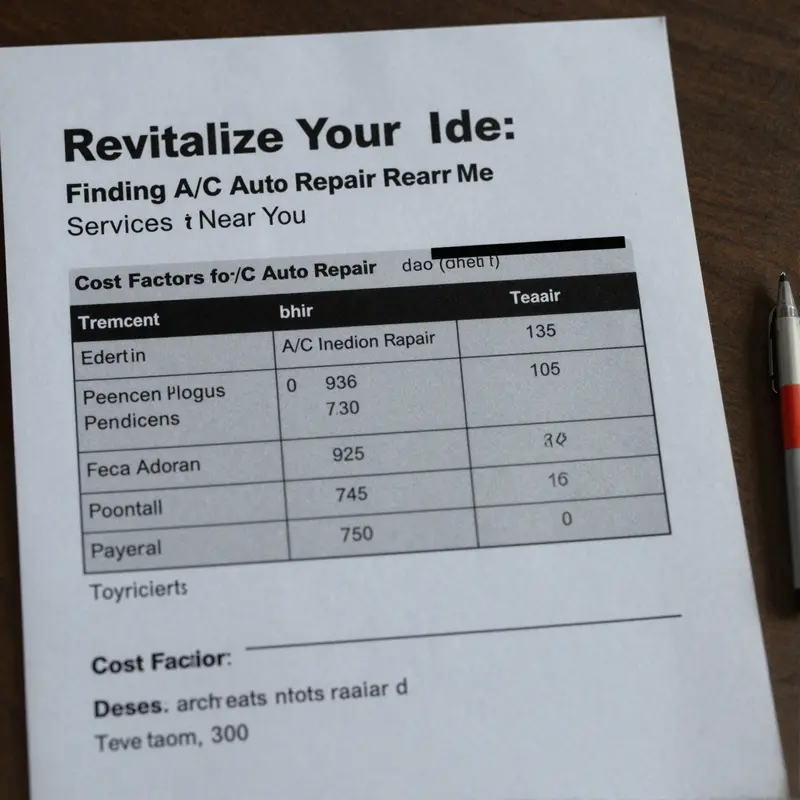
When you type “a/c auto repair near me” into a search box, the results you see are not just advertisements. They reflect a maze of variables that determine what you will finally pay for a car air conditioning fix. The most helpful way to approach the price question is to think of repair costs as the sum of several interlocking parts rather than a single number you must swallow. By understanding the core cost drivers, you can compare offers more fairly, avoid surprise charges, and make smarter decisions about when to repair, recharge, or replace components. This chapter walks you through those drivers in a way that keeps the focus on practical, local choices, so you can map a path through the options without getting overwhelmed by the fine print.
First, the nature of the problem itself sets a baseline for what you’re likely to pay. Refrigerant leaks are among the most common and most costly culprits in a/c systems. A leak can be traced to a cracked hose, a deteriorated seal, a faulty connector, or a corroded component. The repair may involve replacing the compromised part and recharging the system, a two-step process that adds both parts and labor to the bill. In contrast, simpler fixes such as a routine refrigerant recharge after a leak repair, or replacing a blown electrical fuse that controls the system, tend to cost far less because they require less time and fewer specialized parts. In practice, you will see cost variation even within the same shop for seemingly similar symptoms, because the underlying cause can be different, and diagnostic paths can branch accordingly.
Part of what shapes the price is the type and quality of replacement parts used. When a shop talks about OEM versus aftermarket parts, that is not just marketing language. OEM parts, made to the original specifications for your vehicle, usually carry a higher price tag. They are often chosen when longevity and a precise fit matter for the system’s reliability. Aftermarket parts can provide excellent value and adequate performance for many repairs, but their fit, durability, and compatibility with your car’s unique climate control logic may vary. The decision between OEM and aftermarket is rarely universal; it’s a cost-versus-risk trade-off that a knowledgeable technician will explain and tailor to your vehicle, its age, and how you use it. The quality of the seal, the the compressor, the condenser, and even the expansion device can tilt the total cost in meaningful ways. In a practical sense, this means two nearby shops might quote markedly different sums for the same repair because one has chosen OEM parts while the other uses aftermarket equivalents, or because they assess wear on different ancillary components as part of the same service.
Labor rates are another big equity driver. Labor is where much of the cost variance comes from. Dealerships tend to charge higher hourly rates, a reflection of their facilities, overhead, and the specialized technicians they employ. Independent shops, by contrast, often offer more competitive labor pricing while still delivering solid workmanship. The exact rate you pay hinges on your location and the shop’s business model, but a clear pattern emerges: metro areas and shops located in high-rent zones typically push the hourly rate upward. The time required for the job is the other half of the equation. A routine recharge with a simple leak repair will take a fraction of the time needed to locate a chronic leak and replace multiple components that may have aged together. When a system has multiple issues cascading from a single fault—common in older cars—the bill climbs not just because more parts are swapped, but because the diagnostic and reassembly tasks expand accordingly.
Vehicle complexity adds another layer of nuance. The A/C system in a modern or luxury vehicle is often more integrated with other electronic and climate-control features. Some systems monitor cabin temperature with multiple sensors, regulate airflow through variable vents, and coordinate with the engine management system to optimize performance. For vehicles with more intricate climate control logic, technicians may need specialized tools, diagnostic codes, and procedural steps that add to both the diagnostic time and the labor hours billed. A straightforward compressor replacement on a basic model can be a different universe from a full dash teardown to repair an evaporator in a high-end car. The more complex the system, the more likely the repair will demand premium parts, specialized procedures, and labor from technicians with particular training. All of these factors converge in the final number you see quoted.
Another practical factor is how diagnostics and estimates are handled. A broad spectrum exists in the industry for diagnostic charges. Some shops offer complimentary diagnostics when you proceed with repairs, while others apply a diagnostic fee that is later credited toward the repair if you authorize the work. Regardless of how it’s framed, what matters is transparency: a clear, itemized quote that shows parts costs, labor hours, diagnostic fees, refrigerant quantities, disposal charges, and any taxes. An itemized estimate helps you understand whether the shop’s recommended course of action is driven by root cause rather than quick fixes, and it makes it easier to compare competing bids without having to decipher a single lump sum.
Transparency extends beyond the shop’s own documentation. It’s wise to ask about warranties on both parts and workmanship. A good repair should come with a reasonable guarantee that covers the repaired component for a meaningful period. This protection is not just a safety net for the customer; it signals that the shop stands behind its work. Warranties can vary in scope—from the parts themselves to the entire system—so it’s essential to read the terms and understand what is and isn’t covered should a fault reappear. In some cases, the difference in warranty considerations can influence your decision when choosing between lower upfront costs and higher long-term reliability.
The way a shop prices its services can also reflect broader industry trends and the tools that are needed to service contemporary vehicles. For example, climate-control diagnostics increasingly rely on electronic communication with the car’s onboard computer. Pressure readings, temperature data, and sensor states are interpreted by software. To perform these tasks accurately, technicians often rely on certified training and up-to-date test equipment. Shops that invest in ongoing training and calibration of their tools may charge more because they are ensuring the work meets contemporary standards. This investment, while pushing up the price in the short term, can reduce the likelihood of repeat visits for the same issue and improve overall vehicle reliability over time.
If you’re actively searching for a local A/C repair option, there’s a practical step you can take that helps you cut through the noise: seek out fixed-price service packages designed for common A/C issues. These packages can provide cost predictability and prevent the sticker shock that sometimes accompanies diagnostics-heavy repairs. Fixed-price options often bundle the diagnosis, standard parts, and a specified amount of labor into one transparent offering. While not every shop will have such packages for every model, they are becoming more common as repair ecosystems embrace online platforms that connect customers with vetted local garages. When you see a fixed-price package, it can be a helpful baseline for comparison, especially if you suspect a straightforward leak repair or a routine recharge.
One practical way to orient your conversation with a shop is to frame your questions around the long-term value rather than just the immediate cost. Ask about the estimated lifespan of the chosen parts, what additional issues might arise if the root cause is not fully addressed, and whether the shop offers cooling-system maintenance plans that can reduce the likelihood of future failures. These questions do not just inform your wallet; they align expectations about performance and reliability, which are just as crucial as the price tag.
In addition to these general considerations, you can engage with a few concrete steps to keep costs under control while still prioritizing safety and reliability. Start by obtaining quotes from multiple local shops. A diverse set of estimates helps you identify outliers and understand the market range for a given fix. When you compare quotes, scrutinize the scope of work. Some shops may quote a lower price but omit important steps, such as leak testing after repairs or refrigerant reclamation when required. Others may include diagnostic time that is not necessary if you already know the fault from prior testing. Request an itemized breakdown and a written description of exactly what is included in the service. If a shop refuses to provide a detailed quote, that can be a warning sign that you should look elsewhere.
Another efficiency tactic is to inquire about the shop’s policy on refrigerant handling and disposal. Because refrigerant is regulated and must be recovered and recycled properly, disposal fees and recovery charges can appear as separate line items on a bill. Understanding how these charges are assessed helps you gauge whether a quote is fair and compliant with local environmental requirements. This is also a reminder that some repairs involve environmental considerations that go beyond the mechanical components themselves. Responsible handling of refrigerant protects both the car and the community, and it is an area where professional shops often distinguish themselves through training and compliance.
Beyond the mechanics of the repair itself, the choice of where to repair matters. In many markets, the local ecosystem includes a mix of dealerships, independent shops, and mobile technicians. Each has its own price structure and convenience profile. If you value speed and flexibility, a mobile service might offer a convenient option, but you’ll want to verify that the technician carries appropriate equipment and follows proper disposal and safety protocols. If you prize breadth of service and access to diagnostics for newer or high-end vehicles, a dealership network might be warranted, even if it costs more. The key is to align your choice with your vehicle’s needs, your budget, and your tolerance for wait times.
Throughout this discussion, a note about the practical realities of searching for help near you is in order. The phrase “near me” is not simply about proximity; it is about the quality and reliability of the local network. In many cases, the best repair outcome comes from a shop that has established relationships with parts suppliers, understands common failure patterns for your vehicle class, and maintains a track record of transparent pricing and solid workmanship. When you find such a shop, you gain a partner who can help you navigate not only the current repair but also future preventive maintenance. You can think of this as an investment in smoother summers and more predictable costs over time. If you want to explore a specific cost context for reference, you can consult a focused guide on Auto AC Repair Cost for a baseline understanding of the pricing structure across common scenarios. Auto AC Repair Cost
Finally, stepping back to consider the broader landscape, it’s useful to recognize how cost discussions fit into the customer experience. An A/C repair near you that emphasizes clarity, safeguarding, and accountability tends to produce results that endure beyond the initial fix. The best shops approach repairs with a diagnostic discipline that seeks to identify the root cause rather than merely addressing symptoms. They communicate openly about options, including the trade-offs between fixing now and postponing a more comprehensive intervention. They also recognize that the weather cycle itself affects your decisions. In a climate with hot summers and varying humidity, a dependable climate control system is not a luxury but a practical requirement for safety and comfort. As with any mechanical system, the goal should be dependable performance, reasonable cost, and a plan that keeps you informed at every step.
For readers who want a broader reference point beyond the automotive context, consider this external resource on how high-tech car systems can shape maintenance choices and cost expectations in the modern era. It offers a wider angle on how vehicle complexity drives service needs and pricing dynamics, which complements the practical guidance provided here. External resource: Autocar Mercedes-Benz E-Class review
Final thoughts
Understanding A/C auto repair services and their importance in ensuring your vehicle remains comfortable is invaluable for any vehicle owner. From diagnosing common issues to recognizing the benefits of local services, the insights shared in this guide empower you to take informed actions. Whether you are tackling repairs on your own or collaborating with local professionals, prioritizing A/C maintenance can greatly enhance your driving experience.