
Auto repair is more than just fixing vehicles; it involves a comprehensive understanding of how to maintain and enhance performance through timely services. This industry has evolved significantly, paralleling advancements in automobile technology and shifts in consumer behaviors. This article delves deep into four essential chapters: starting with the basics of auto repair, progressing through the technical tools and technologies that empower mechanics, examining the economic implications and growth challenges within the industry, and finally exploring societal trends shaping consumer behaviors in auto repair. By the end, readers will gain a holistic understanding of auto repair, enriching their knowledge whether they are motorcycle enthusiasts, car owners, parts distributors, or repair shop operators.
Understanding Auto Repair: From Basics to Beyond
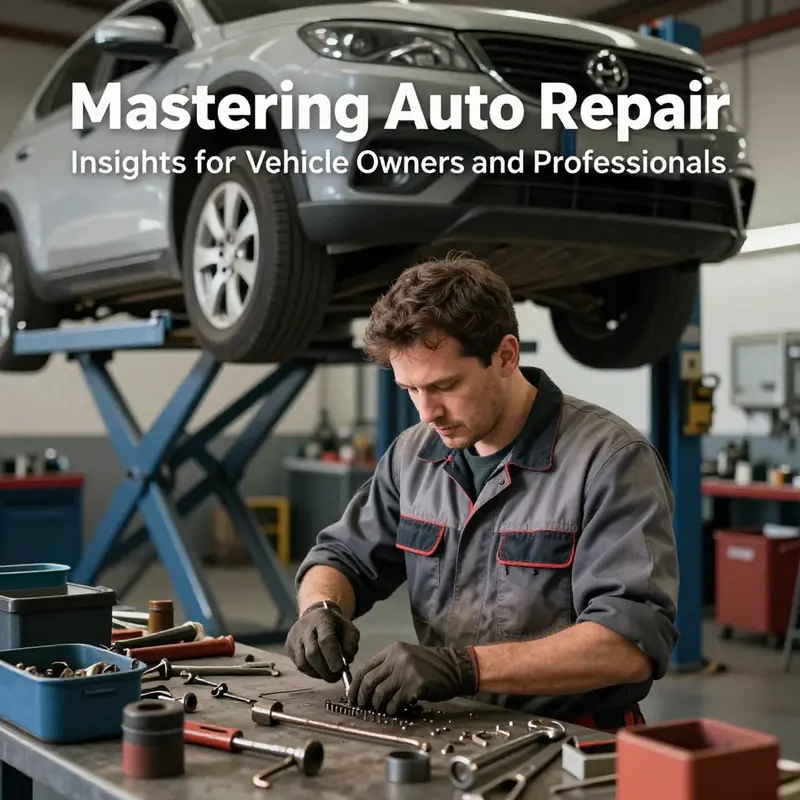
Auto repair sits at the intersection of practical know-how, careful craftsmanship, and ongoing learning. It is not merely about turning a wrench; it is a disciplined blend of problem solving, attention to detail, and an informed respect for safety. When a driver talks about the car needing a fix, the conversation naturally shifts from a simple sensation—grinding, rattling, a warning light—to a broader understanding of how a vehicle stays reliable across thousands of miles. The essence of auto repair, at its core, is maintaining not just the machine but the trust between the person who drives and the machine that enables mobility. In this sense, the field has evolved from a series of ad hoc remedies to a profession defined by standards, training, and measurable outcomes. The modern auto repair shop is as much a center of prevention as it is a workshop for repair. It balances routine maintenance with diagnostic expertise, drawing on a shared language of tools, procedures, and safety practices. This balance is what keeps drivers safe, wallets intact, and communities moving smoothly through daily life and long road trips alike.
At the heart of any repair, large or small, lies a practical toolkit and a mindset that treats maintenance as a form of ongoing care rather than a one-off fix. The foundational tools are surprisingly compact in number, yet they form the backbone of most repair tasks. A socket wrench set, a floor jack, C-clamps, pliers, screwdrivers, and an adjustable wrench constitute a portable constellation that can address many issues—from swapping a fried turn signal to substituting worn brake components. These hand tools are joined by power tools for certain jobs where speed and leverage matter. An impact driver or a drill can speed up stubborn bolt removal or bodywork, but these devices demand respect and proper technique to avoid damage to components or injury to the technician. The right tool at the right moment is less about shopping for the flashiest gear than aligning capability with task and safety. The tools enable the craft; the craft, in turn, earns a vehicle’s continued reliability and a driver’s confidence behind the wheel.
The competence to identify and use fasteners correctly is another pillar of sound auto repair. Understanding fastener heads—Phillips, hex, Torx, and beyond—helps prevent stripped screws and ensures a secure fit. A misstep here can cascade into stripped threads, misaligned panels, or coolant leaks that worsen over time. This is why meticulous fastener identification is taught early in professional training and reinforced through practice every day on the shop floor. A few minutes of careful inspection before loosening a bolt can prevent hours of remediation later. The same mindset underpins more complex procedures, where small decisions about torque values, thread locker, or the order of operations determine whether a repair lasts as long as the vehicle remains in service.
Beyond the nuts and bolts lies material science—the choices made about fillers, coatings, and surface preparation. The materials and techniques chapter of auto repair reads like a small encyclopedia, but it yields practical rewards on the road. Consider body putty, a go-to filler used to restore smooth, continuous lines after minor collision damage or paint imperfections. High-quality filler work depends on precise application and a feather-edged spreader that creates a seamless transition between old and new material. A wax-free mixing board helps maintain the integrity of the filler components by avoiding cross-contamination that could compromise adhesion. Proper sanding and priming are not afterthoughts; they are essential steps that determine the final finish’s durability and appearance. The reliability of a repair is as much about the surface finish as it is about the inner workings of the engine or the suspension.
These details would be incomplete without an appreciation for the larger ecosystem of knowledge that underpins professional standards. The auto repair industry has grown in tandem with the vehicles it serves. Cars today are more software-driven and sensor-rich than ever before, and that shift has elevated the technician’s role from merely mechanical to hybrid mechanical-electronic diagnostician. Certification programs, continuing education, and access to reputable reference materials have become standard expectations in professional shops. Organizations that set industry standards emphasize not only the ability to perform repairs but the obligation to diagnose correctly and to communicate with customers clearly about what is needed and why. In many places, technicians pursue certification through recognized programs that measure competence across a range of disciplines—from engine performance and electrical systems to climate control and brakes. This formal training complements the hands-on practice that happens in shop bays and on lifts, ensuring that knowledge keeps pace with evolving vehicle technology.
A telling example of accessible expertise is the growing availability of do-it-yourself (DIY) guidance that empowers everyday drivers to undertake straightforward tasks. The decision to DIY or to seek professional help hinges on several factors: the complexity of the issue, the potential safety implications, the tools at hand, and the driver’s willingness to invest time in learning and safety practices. A compelling real-world scenario illustrates how capable a motivated individual can become. A schoolteacher from Ohio recently faced a grinding sensation when pressing the brake pedal. Rather than accepting a costly repair quote, she consulted a step-by-step online guide and sourced a brake pad kit for a fraction of the shop price. Over a weekend, using a floor jack, socket wrench, and a C-clamp, she replaced the front brake pads herself. The result was not only a savings of hundreds of dollars but a growing sense of autonomy and readiness for future maintenance. Her story highlights the appeal of DIY pathways when supported by reliable, stepwise instruction. It also underscores a broader point: high-quality auto repair is not restricted to professional shops; it is a spectrum that welcomes informed owners who invest in learning and safety.
Yet the chapter of DIY success also illuminates a boundary. Some repairs demand specialized equipment, diagnostic software, or intimate knowledge of manufacturing tolerances that only trained technicians possess. For modern vehicles, the stakes can be high. A radiator replacement, for instance, is not a routine swap; it requires an understanding of coolant compatibility, pressure testing, and the differences between material classes such as aluminum and brass. Contemporary radiators are designed to work with specific cooling systems, and their installation must respect OEM and aftermarket standards to ensure consistent cooling performance. The process may involve flushing the cooling circuit, inspecting hoses for wear, and verifying that the replacement core maintains appropriate flow characteristics. These tasks, while technically straightforward in principle, benefit from a professional approach when a high-performance or specialized vehicle is in play. The key is recognizing where to escalate and where to pursue guided learning.
To anchor this more technical perspective in practical terms, many shops adopt standardized workflows that balance efficiency with quality. A typical diagnostic sequence begins with a thorough visual inspection and a review of vehicle history, followed by a structured set of tests that isolate the fault to mechanical, electrical, or software domains. Data loggers, service literature, and diagnostic trouble codes guide the investigation, but the technician’s own experience remains invaluable for interpreting subtle cues. The aim is a precise diagnosis before any parts are replaced. This approach minimizes unnecessary replacements, reduces cost for the customer, and preserves the vehicle’s reliability. It also forms the bridge between routine maintenance—like oil changes and tire rotations—and more complex interventions such as engine diagnostics or transmission work, which require deeper expertise and a broader toolkit.
A seasoned practitioner understands that repair is as much about safety as it is about performance. Brakes, steering, suspension, and airbags are critical systems where a misstep can have serious consequences. The practice of repair, therefore, is underpinned by a culture of safety: lockout-tagout procedures for dangerous tasks, proper lifting routines to prevent injuries, and a disciplined approach to disposing of hazardous waste such as used oil and coolant. The safety mindset extends to communication with customers. Clear explanations about what is needed, what can wait, and what a repair will entail in terms of time and cost build trust and help customers make informed decisions. The best shops cultivate this trust by combining technical accuracy with transparent service recommendations. They also invest in ongoing education for their teams, staying current with evolving vehicle architectures, new diagnostic tools, and the latest safety protocols. This continuous learning curve is a defining feature of professional auto repair and a key reason why the industry has sustained growth alongside the vehicles it services.
For readers who are curious about bridging theory and practice, one concise primer available online offers a practical introduction to the essentials: DIY Auto Repair Basics. This resource outlines core competencies, tool familiarity, and foundational techniques in a digestible format that complements the more formal pathways of professional certification. It serves not as a replacement for professional training but as a catalyst for responsible learning and safer at-home maintenance. DIY Auto Repair Basics provides a starting point for drivers who want to understand the logic behind common tasks, the sequencing of steps, and the importance of accuracy and cleanliness in every repair job.
Looking outward, the landscape of auto repair continues to evolve with the broader automotive industry. Vehicles are equipped with more sensors, more software logic, and more advanced materials that demand precise engineering judgments. The shift toward electrification and advanced driver-assistance systems adds new layers of complexity to the repair landscape. Technicians increasingly need to interpret diagnostic codes that straddle mechanical hardware and software intelligence. They must also understand battery management, high-voltage safety, and the unique failure modes associated with electric powertrains. In this context, the value of a well-trained technician—someone who can combine mechanical intuition with data-driven analysis—becomes even more pronounced. The professional community recognizes this by maintaining standards and certifications through recognized bodies, which helps ensure consistency in repair quality across different shops and regions. The overarching message is not that DIY is obsolete, but that it sits within a continuum of learning and capability. Individuals who pursue competence with diligence, humility, and respect for safety can contribute meaningfully to vehicle reliability, whether they work in a shop or on their own driveway.
To tie these ideas back to the broader arc of the article, the world of auto repair is less about a fixed set of tasks and more about a philosophy of care. It is about how a person translates symptoms into a plan, how tools become extensions of judgment, and how knowledge—kept current through training and practice—turns a potential problem into a safe, dependable journey. The narrative of auto repair, then, is a narrative of ongoing partnership: between driver and technician, between equipment and intention, and between tradition and innovation. It is a field that rewards curiosity and discipline in equal measure, and it invites readers to explore not only how to fix a vehicle but how to think about the vehicle as a complex system that benefits from thoughtful attention.
In the end, understanding auto repair means embracing both the basics and the beyond. It means stocking a practical toolkit, recognizing when to apply precise techniques, and knowing where to seek guidance when the task grows beyond comfort. It means valuing safety, valuing accuracy, and recognizing that every successful repair contributes to a driver’s confidence and a family’s peace of mind. As vehicles continue to evolve, so too will the craft of auto repair. What remains enduring is a shared commitment to quality workmanship, responsible practice, and the view that a well-maintained car is not merely a machine but a trusted companion on countless journeys. For readers who want to deepen their hands-on knowledge, the path is clear: start with fundamentals, grow through practice, and engage with the broader community of technicians, educators, and fellow drivers who keep the road ahead safe and reliable. And as that path continues, the next chapters will build on these foundations, expanding into diagnostic artistry, advanced materials, and the ethical dimensions of automotive service, all while keeping the central aim in sight: to help every vehicle perform its best, for as long as it travels.
Tools, Tech, and Trust: The Technical Backbone of Auto Repair
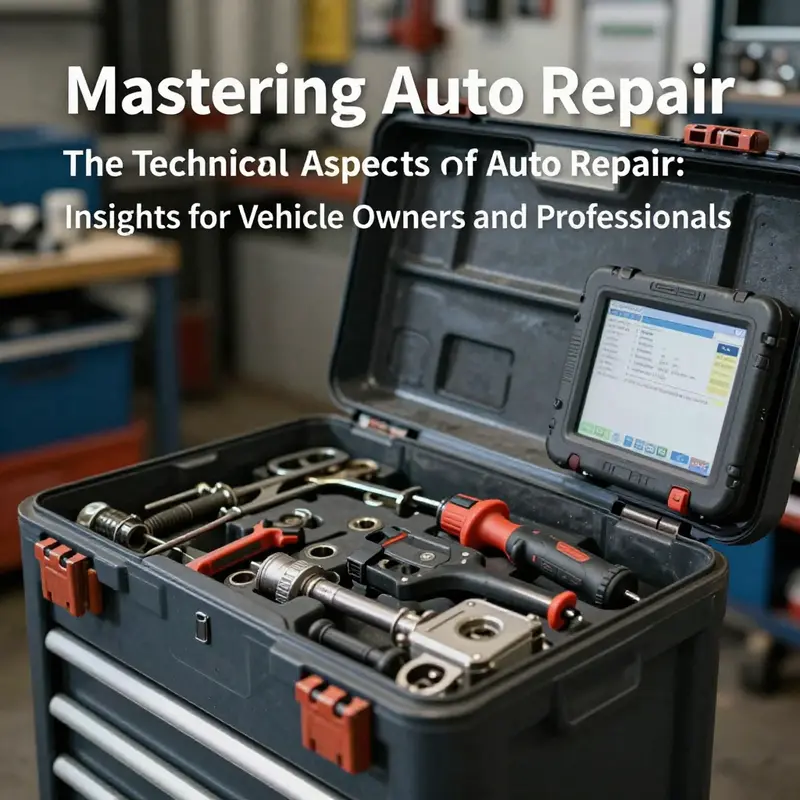
Auto repair sits at the intersection of skilled hands and disciplined science. In the modern shop, the image of a mechanic with a wrench blends with the precision of diagnostic software and data-driven workflows. This is the technical backbone of today’s auto repair. The work remains rooted in diagnosing and mending mechanical systems, but it now unfolds amid a landscape shaped by high-tech tooling, advanced diagnostics, and a network of standards that ensure every repair meets safety and performance expectations. To understand how a vehicle becomes roadworthy again, one must follow the thread from tools on the shop floor to the digital signals flowing through the vehicle’s brain. It is a story of evolution, reliability, and the continuous expansion of what it means to service an automobile in a world where technology marches ahead at a relentless pace.
The practical reality of today’s auto repair begins with the tools that enable work to happen. Modern tire service, wheel alignment, and drivetrain maintenance rely on equipment that blends familiarity with advanced capabilities. Tire service uses professional-grade changers and balancing machines designed to handle a wide range of rims and tire sizes without inviting damage. The emphasis in design is reliability under stress. Machines are engineered to clamp securely, operate smoothly, and minimize the risk of misalignment or slippage during critical operations. Such reliability matters not only for the technician, but for the vehicle’s safety and the customer’s peace of mind.
Beyond the big-ticket machines there is a quieter but essential class of components the precision parts whose quality directly affects long-term performance and safety. Brass, steel, and alloy components used in sealing systems, fasteners, and fluid pathways must meet exacting tolerances and withstand conditions ranging from high heat to constant vibration. The materials matter because a small valve, a seal ring, or a mounting bushing can influence everything from tire pressure stability to fuel system efficiency. The best components come with certifications and traceable manufacture records that confirm conformance to global safety and environmental standards. This is not a detail to overlook; it is a cornerstone of the repair’s legitimacy. In a world where even the smallest part can ripple into performance concerns, technicians rely on parts that are designed, manufactured, and inspected with the same rigor they apply to the rest of the vehicle’s systems.
Diagnostics form the second pillar of contemporary auto repair. The vehicle’s electronic control unit, or ECU, is the central hub that coordinates engine timing, ignition, fuel delivery, transmission operation, and increasingly, countless subsystems that monitor emissions, safety, and comfort. Modern diagnostic tools translate the ECU’s complex language into human readable data. They allow technicians to interpret sensor readings, track fault codes, and examine live data streams to understand how a system behaves under different conditions. Rather than chasing a hunch with a multimeter alone, a technician can observe voltage fluctuations, injector pulse widths, and sensor ramp rates in real time. The result is a more precise process: a targeted plan to repair or replace, followed by a validation routine that confirms the fix has restored normal operation. This diagnostic capability is not a luxury; it is a requirement for diagnosing issues that can present as intermittent performance problems, hidden failures, or emissions-related concerns that only reveal themselves under specific driving conditions.
The shift toward electronics and connectivity reshapes the shop’s daily rhythm. Digital links extend beyond the vehicle to the service bay itself. Wireless adapters, cloud-based service portals, and data-enabled workflows streamline tasks from scheduling to parts ordering to warranty submission. Technicians must be fluent in reading electrical schematics and comfortable navigating software interfaces that guide diagnostics, calibration, and reprogramming procedures. The convergence of mechanics and information technology has given rise to a new reality where software updates, calibration routines, and even immobilizer reconfigurations become routine service steps. In shops that keep pace with these changes, technicians approach each job with a blended toolkit: analog hands-on skills for mechanical interfacing, plus digital literacy for interrogating control systems and managing data trails. The aim is not to replace traditional know-how but to augment it with the confidence that comes from precise data and repeatable processes.
Standards and certification add a systemic layer that underpins trust across the repair ecosystem. As tools and diagnostics become more capable, the checks and balances around them grow more sophisticated. Manufacturers, suppliers, and independent repair facilities all contribute to a shared framework of expectations. In the United States and abroad, recognized certification programs emphasize safe practices, proper calibration, and continuing education so technicians stay current with evolving technologies. ISO and RoHS certifications, among others, help ensure that tools and parts align with global safety, environmental, and performance benchmarks. A shop that demonstrates adherence to these standards signals to customers that repairs benefit from consistent quality, independent verification, and traceable sourcing. The National Institute for Automotive Service Excellence (ASE) serves as a reference point in many jurisdictions, offering guidance on technician training, skill development, and best practices. This ecosystem of standards is not ornamental; it safeguards the integrity of repairs as vehicles grow more complex and as consumer expectations for safety and reliability rise.
Looking toward the horizon, the auto repair field is building a future in which intelligent systems and predictive insight become routine allies of the technician. Predictive maintenance, powered by data analytics, allows a shop to anticipate wear and potential failures before they disrupt operation. Vehicle health data can reveal patterns that indicate impending failures in braking systems, suspension components, or drivetrain elements. AI-driven diagnostics promise to extend the technician’s reach, helping to identify root causes more quickly and with greater accuracy, especially when presented with multilayered fault codes or non-linear symptom sets. Smart tools—whose interfaces communicate with vehicle data, compare readings against baselines, and prompt corrective actions—extend the technician’s capability without sacrificing safety. The integration of these technologies also changes the training landscape. Modern technicians must cultivate a hybrid skill set: a strong mechanical foundation complemented by data literacy, software comprehension, and an aptitude for ongoing learning as new systems emerge. The training trenches now include programming interfaces, calibration procedures, and an understanding of how different vehicle architectures communicate with diagnostic hardware.
The supply chain that feeds the repair shop is the invisible architecture supporting all this complexity. A reliable supply network ensures that the right tools, calibration standards, and spare parts are available when needed. Product specifications increasingly emphasize traceability, with clear information on minimum order quantities, packaging configurations, and the terms of delivery. In a global aftermarket, parts travel across borders with efficiency and accountability, often under trade terms such as FOB or CIF. This environment pushes suppliers to maintain transparent documentation, consistent quality, and predictable lead times. For a repair operation, that translates into shorter downtime, fewer backorders, and more confidence in delivering a safe repair within an agreed timetable. In short, the effectiveness of modern auto repair hinges as much on logistics as on the skill and knowledge of the technician.
The practical implications for customers are meaningful. A shop that masterfully combines high-quality tools, rigorous diagnostics, and a culture of continuous learning can diagnose with clarity, repair with confidence, and validate outcomes with repeatable testing. The result is a smoother experience: fewer callbacks, clearer explanations of what was found and fixed, and a measurable sense that the vehicle’s performance, safety, and efficiency have been preserved. The technician’s craft becomes a trusted interface between human judgment and mechanical reliability, a partnership that reassures drivers as they depend on their cars for daily life, long trips, and the unpredictable rhythms of road travel. The question for customers is not simply whether a repair was performed; it is whether the repair was informed by the best available tools, whether the procedure respected the vehicle’s digital ecosystem, and whether the shop has the competence to manage the modern vehicle’s evolving needs. This is the essence of trust in auto repair.
For readers seeking a concise primer on auto repair concepts with a practical orientation, a brief introductory post offers a useful starting point. It captures the connection between traditional mechanical skill and the digital tools that now define the profession, serving as a bridge for newcomers to the field. See Hello World for a foundational overview that helps readers appreciate how far the industry has progressed and why modern repair demands both hands-on mastery and data-driven thinking. Hello World.
As this chapter traces the technical backbone of auto repair, it becomes clear that the industry’s success rests on more than clever machines or clever software. It rests on a coherent system that harmonizes tools, materials, diagnostics, standards, people, and processes. The tools enable the work; the diagnostics reveal the truth behind symptoms; the standards ensure safety and consistency; the people apply judgment and skill; and the processes ensure that every repair is traceable, repeatable, and reliable. When these elements align, the repair shop does not simply fix a car; it preserves a vehicle’s value, safety, and performance for the road ahead. This integrated view emphasizes that auto repair is not a single trade but a disciplined practice that draws on diverse expertise to keep the modern car operating smoothly for as long as it is driven.
External resource: https://www.alibaba.com/showroom/auto-repair-tools.html
The Economic Engine Under the Hood: Growth, Innovation, and Resilience in Auto Repair
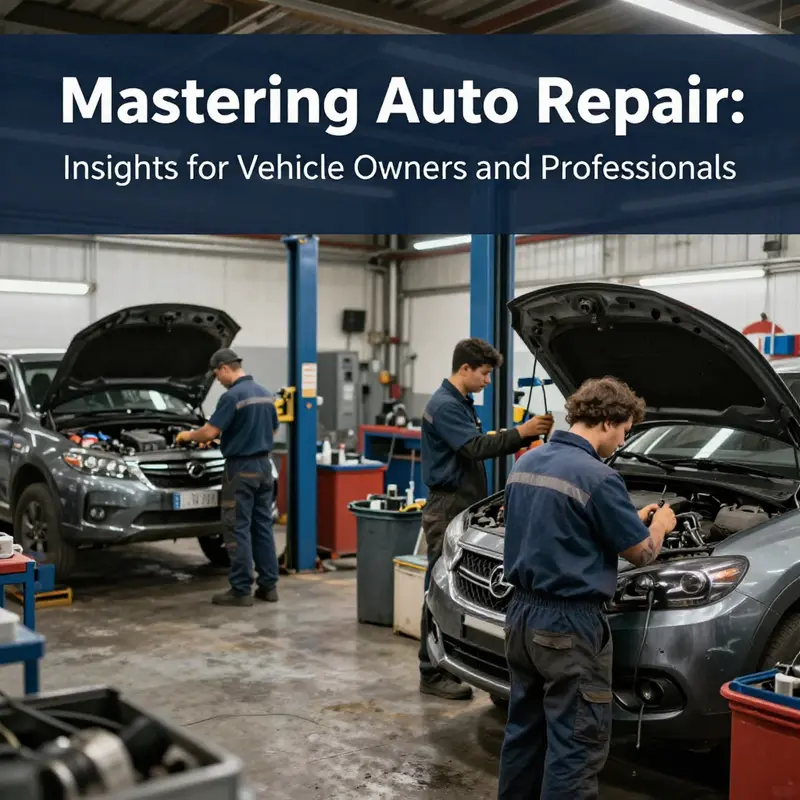
The automotive repair landscape operates as a subtle but powerful engine within modern mobility. It is where routine maintenance, diagnostic precision, and meticulous part replacement converge to keep vehicles safe, efficient, and dependable. Behind the doors of repair bays and service corridors, a broader economic story unfolds—one shaped by rising vehicle ownership, aging fleets, and rapid technological change. As the number of vehicles on the road swells and fleets accumulate miles, the demand for after sales services grows in both scale and complexity. This chapter traces the arc of that growth, considers the distinct pressures the industry faces, and explains how technology and strategic diversification are reshaping the economics of auto repair without losing sight of the human labor and craft that anchor the trade. For readers seeking a compact primer that captures the breadth of auto repair from the most basic maintenance to the most complex diagnostics, consider the practical overview found at A-to-Z Auto Repair, which offers a digestible path through the essential duties of the shop floor. A-to-Z Auto Repair.
Across continents, the repair sector has emerged as a critical hinge between vehicle ownership and the broader economy. In 2025, China’s passenger vehicle retail sales reached a record high of 3,010.3 million units, a milestone that underscores how deeply automotive ownership has penetrated even as the market matures. This scale translates into a parallel rise in after sales activity: routine maintenance, tire service, brake replacements, and increasingly sophisticated diagnostics are no longer optional add ons but essential services that sustain vehicle performance and safety. While the base demand for maintenance remains evergreen, the profile of what technicians must do is evolving. Vehicles are becoming smarter and more connected, and as the fleet ages, the need for precise measurement, data interpretation, and timely intervention grows. The impact of age is particularly pronounced as new energy vehicle NEV technology becomes more common. NEVs bring specialized systems that require advanced diagnostic tools and targeted knowledge, making ongoing training a non negotiable investment for repair shops that want to stay relevant.
In this context, industry players—whether independent shops, regional chains, or manufacturers of workshop equipment—are racing to redefine efficiency and capability. A leading domestic equipment manufacturer, for example, has capitalized on the shift by developing intelligent and automated solutions that address both traditional maintenance tasks and the unique needs of NEV servicing. The emphasis on intelligent equipment, predictive diagnostics, and streamlined workflows signals a broader trend: the auto repair sector is increasingly a tech-enabled service ecosystem. Beyond the shop floor, some players have pursued diversification that expands a company’s footprint into adjacent sectors in ways that reinforce resilience. Investments that extend into railway maintenance, smart warehousing, and even aerospace components reflect a strategic pivot toward assets and capabilities that leverage core technical know how while mitigating sector specific risks. This kind of diversification demonstrates how a single company can evolve into a broader technology and services provider, using automotive know how as a springboard for adjacent opportunities. The trend illustrates a practical response to the volatility that can accompany a fast changing market while keeping the core mission intact: keep vehicles moving safely and reliably.
Another layer of complexity for the industry arises from the practical challenges that new repair shops encounter as they scale. At the outset, attracting customers can be difficult in competitive markets where price sensitivity, trust, and turnaround times weigh heavily in consumer decisions. Cash flow management becomes a balancing act between upfront equipment and training costs and the irregular cadence of revenue that can accompany the learning curve. Finding and retaining skilled technicians is perhaps the most persistent obstacle. The blend of traditional hands on skills with the new demands of higher technology requires ongoing training, certification, and a work culture that can attract and retain talent in a tight labor market. Navigating a patchwork of local and national regulations adds another layer of complexity, one that can influence everything from hours of operation to retired vehicle disposal, emissions considerations, and consumer protection standards. Taken together, these hurdles can slow growth and erode margins if not managed with a deliberate strategy that treats people, process, and technology as an integrated system.
Technological progress offers a direct path to addressing many of these challenges. The industry is increasingly leaning on digital tools to improve scheduling, parts inventory, and diagnostic accuracy. As more vehicles connect to digital networks, technicians gain access to real time data streams that illuminate the underlying causes of failures and inform more precise repair plans. Predictive maintenance, once a luxury afforded by large fleets, is becoming more accessible to independent shops through scalable software and more capable portable equipment. In the best outcomes, technology acts as a force multiplier: it enables smaller shops to deliver higher value services, reduce downtime for customers, and operate with leaner, more transparent financials. The same impulse toward digital modernization feeds into workforce development as well. Online training platforms, remote guidance from specialists, and certification pathways help technicians advance rapidly and stay current with evolving vehicle architectures.
The economics of the auto repair industry are closely tied to the health of the broader automotive ecosystem. The sector depends on a robust supply chain for maintenance parts, tires, fluids, filters, and diagnostic components, all of which must be available at predictable costs and with reliable delivery. When the supply chain experiences disruption, repair bays bear the brunt in the form of longer wait times and higher prices, which can hamper customer satisfaction and reduce repeat business. Conversely, when supply chains function smoothly and training pipelines keep pace with technology, repair shops can efficiently convert demand into revenue and reinvest in growth. The positive economic impact extends beyond individual businesses. A thriving repair sector supports millions of jobs through technicians, shop managers, service writers, parts personnel, and the broader vendor network that supplies equipment, software, and training. It also drives innovation in equipment manufacturing as shops demand more capable tools to diagnose and service increasingly sophisticated vehicles. In this sense, the auto repair industry acts as a conduit for technology transfer and skill development across the automotive ecosystem, strengthening productivity and supporting downstream industries that rely on well maintained vehicles.
This ecosystem is also shaped by policy and market signals that steer investment. As governments push for safer, more sustainable transport, the emphasis on vehicle reliability and EV readiness influences how shops allocate capital. Training initiatives, certification standards, and access to financing for shop improvements can all tilt the odds toward successful, sustained growth. In particular, the shift toward EVs raises the bar for service capability. Specialized servicing, battery diagnostics, high voltage safety protocols, and thermal management considerations require new equipment and trained personnel. Shops that anticipate these shifts and prepare accordingly are better positioned to capture the incremental demand that comes with a rising NEV fleet. The enduring lesson is straightforward: technology, training, and capital must evolve together to unlock the long term growth potential of auto repair while preserving the craft and customer trust that define the trade.
The economic narrative would be incomplete without acknowledging the potential for cross sector collaboration and strategic partnerships. When equipment manufacturers expand into adjacent industries such as railway maintenance, smart warehousing, or aerospace, they reveal a broader value chain that can support highly efficient maintenance ecosystems across multiple domains. Such diversification helps distribute risk and create new revenue streams that can offset local market volatility. It also places the auto repair sector at the center of broader industrial modernization efforts, linking vehicle care to digitalization, logistics efficiency, and advanced manufacturing. These dynamics reinforce the argument that auto repair is not a static service but a living component of a modern, tech enabled economy. The result is a sector that can sustain jobs, foster innovation in calibration and testing, and contribute meaningfully to the broader automotive ecosystem as vehicles continue to evolve in powertrain design, connectivity, and usage patterns.
As this landscape unfolds, the future of auto repair hinges on a few core pillars. First, a sustained commitment to workforce development will be essential. Technicians who understand both mechanical fundamentals and software driven diagnostics will be in high demand. Second, continued investment in equipment and diagnostic infrastructure will determine how quickly shops can adapt to new vehicle technologies and regulatory requirements. Third, customer experience—transparent pricing, timely service, and predictable quality—will continue to shape the market’s growth trajectory. Shaping these outcomes will require mindful leadership, sector wide collaboration, and a willingness to experiment with new business models that align the incentives of technicians, shop owners, suppliers, and customers. When these elements align, auto repair emerges not merely as a necessary service but as a dynamic engine of economic activity that fuels jobs, growth, and innovation across the automotive ecosystem.
In closing, the economic impact of auto repair rests on three interlocking currents: scale and aging fleets that sustain demand, technology and training that elevate capability, and strategic diversification that broadens resilience. Taken together, they illuminate a sector that, even in the face of regulatory complexity and workforce challenges, continues to grow, adapt, and contribute to the vitality of modern mobility. The data from major market players and the macro trends indicate a future in which auto repair remains a critical, evolving profession with substantial positive spillovers for employment, manufacturing, and technology development. For those seeking a broader external view of industry data and projections, consult official data sources such as the CAAM data portal. CAAM Official Data.
Trust, Transparency, and Tech: How Societal Shifts Are Redefining Auto Repair

The road to a modern auto repair ecosystem is no longer paved solely with wrenches and diagnostic codes. It winds through the broader currents of society, economy, and technology that shape how people think about maintenance, value, and trust. Vehicles have become more than a means of getting from point A to point B; they are connected, data-rich assets that carry personal histories, financial implications, and expectations about safety. In this landscape, the auto repair experience must respond to a changing mix of consumer behavior and rising standards. Doyle-like shifts in value, privacy, and convenience do not merely influence what customers want; they redefine what they require from a repair professional. The 2026 Deloitte Global Automotive Consumer Study pulls these threads into a single loom, showing how fairness, transparency, and long-term value sit side by side with the lure of innovation and digital ease. For shops, this is not a niche concern but a blueprint for building durable relationships with customers who demand clarity, control, and confidence in every service interaction.
Consumers today operate with a heightened sense of fairness and trust across every domain, and auto repair is no exception. The study identifies a clear preference for service experiences that align with core values—transparency about costs, openness about sourcing, and honesty about what a vehicle needs and why. That means customers expect a quote to reflect not only the immediate labor and parts but also the rationale behind each choice. They want a clear explanation of why a repair is necessary, what alternative options exist, and what the long-term value of each choice might be. In practice, this translates into quotes that itemize each line item, predict potential future issues, and spell out the risk of delaying service. It is a shift from paternalistic messaging to collaborative problem-solving, where the shop acts as a partner in decisions rather than a gatekeeper of information. In a world of rising vehicle prices and higher financing costs, affordability becomes a central lens through which customers evaluate the worth of maintenance. Owners increasingly prioritize long-term value, seeking preventive care that lowers the total cost of ownership over time. This naturally elevates the importance of preventive maintenance plans, transparent pricing, and predictable budgeting for car care, rather than episodic, surprise repairs.
The study also highlights a healthy skepticism around data sharing, even as connected features enhance safety and efficiency. Consumers are selective about what information they are comfortable sharing and with whom. For repair shops, this means implementing robust data privacy practices and communicating them clearly. A customer who trusts that a diagnostic history remains secure is more likely to consent to remote diagnostics, upload of health reports, and proactive maintenance reminders. The privacy calculus becomes as important as the diagnostic logic itself. Interestingly, the same data that raises privacy concerns can empower customers if handled well. When a shop presents a vehicle’s health data in a transparent, comprehensible format, owners gain visibility into the condition and the urgency of needed work. The upshot is a more informed customer who participates in the repair plan rather than receiving a unilateral mandate. That kind of collaboration requires a careful balance of openness and restraint, complemented by staff training and standardized processes that protect sensitive information while enabling constructive dialogue.
Transparency, then, emerges as a multi-faceted demand. Customers want pricing clarity, but they also want clarity about parts sourcing and service processes. OEM parts versus aftermarket components is not merely a technical debate; it signals value, quality, and compatibility with the vehicle’s long-term reliability. Some owners perceive OEM parts as a higher-cost but more durable option, while others are focused on cost-per-mile and warranty coverage. The repair shop can serve as a trusted interpreter, providing objective comparisons that help owners weigh trade-offs. Providing information about sourcing is not an exercise in posturing; it can demonstrate accountability, quality assurance, and adherence to industry standards. It also invites discussion about warranties and the implications of using alternative parts. The same applies to service processes. Customers want to know what steps a repair will entail, how long each step will take, and what happens if a diagnosis proves more complex than expected. A narrative that follows the diagnostic journey—from initial symptom to root cause to recommended remedy—turns a potentially opaque experience into an educational, empowering one. When customers understand the sequence, they feel more in control and more confident that the shop is guiding them with integrity.
Digital tools sit at the center of this transparency revolution. The Deloitte study reveals a strong preference for digital scheduling, real-time updates, and access to vehicle health reports. The practical implication is simple: a repair operation that leverages digital touchpoints can dramatically improve the customer experience. Online appointment booking reduces friction, letting owners choose times that fit their schedules and enabling the shop to optimize workflow. Real-time status updates—from intake to diagnosis, parts order, and progress notes—keep owners informed without requiring them to call. A vehicle health report, assembled from diagnostic data and sensor readings, provides a concrete, understandable briefing on what the car needs now and what may be flagged for future attention. When done well, these digital tools do not threaten the personal, hands-on expertise of technicians; they complement it, making human judgment more accessible and verifiable for customers. The goal is not to replace trust with automation but to augment trust with clarity.
Brand loyalty is also shifting in surprising ways. In markets with many first-time owners, customers tend to anchor their loyalty to service experiences that consistently meet expectations. The study suggests repair providers must invest in reliability, consistency, and customer-centric service to earn repeat business. This means more than a single great repair; it means a series of dependable interactions: a simple check-in that anticipates questions, precise estimates that align with final invoices, clean and comfortable waiting spaces or timely pickup options, and follow-up notes that explain how to prevent recurrence. In practice, this translates to standardized operating procedures, transparent communication protocols, and a culture that treats every client as a potential long-term partner rather than a one-off ticket. Loyalty, in this sense, is built on daily acts of reliability that reinforce a shared expectation: when the car acts up, the shop is the one place the owner can count on for trustworthy, competent care.
This convergence of values, privacy considerations, and digital convenience is not incidental to the mechanics of repair. It reframes how shops should approach pricing, parts sourcing, diagnostic work, and customer interaction. The pricing conversation, for instance, moves from “how much will this cost?” to “how is this cost justified, and what value will it deliver over the life of the vehicle?” A shop that can walk a customer through a transparent, itemized quote—with explanations of labor time estimates, parts quality, and potential optional safeguards—builds trust before any bolt is turned. And given the rising costs of vehicles and maintenance, customers are eager for bundled or preventive maintenance plans that offer predictable budgeting. Rather than presenting clients with a list of separate services, a shop can offer integrated maintenance packages that emphasize proactive care, savings over time, and a clear outline of what is included and excluded. Such packages help owners plan ahead and reduce the anxiety that comes with unexpected bills.
The practical challenge for shops then becomes twofold: to integrate standardized, privacy-conscious processes into daily operations, and to tell a transparent service story that is accessible to customers with diverse levels of automotive knowledge. This calls for a combination of training, technology, and a customer-centric mindset that prioritizes clarity over jargon. Technicians must be fluent in communicating findings in plain language, using visual aids or simple analogies to illustrate problems and solutions. Service advisors play a crucial role in translating technical insight into decision-ready information, aligning recommendations with the owner’s budget and long-term goals. In turn, shop leadership must champion these practices through consistent policies: upfront quotes that reflect potential contingencies, documentation that records every diagnostic step, and clear protocols for obtaining consent before proceeding with work. Certification and ongoing education—whether through formal programs or in-house training—remain essential to keeping the workforce current as vehicles grow more complex and as new diagnostic tools emerge.
The interplay between consumer expectations and shop capabilities also highlights differences between dealership networks and independent repair shops. Dealerships often benefit from integrated ecosystems, standardized processes, and ready access to OEM parts. Independent shops, by contrast, can win loyalty by emphasizing flexibility, personalized service, and transparent pricing that helps owners manage costs more predictably. In either setting, the core tenets hold: fairness, clarity, and a service narrative that customers can trust. The rise of digital scheduling and real-time updates levels the playing field by reducing the asymmetry of information that historically favored the shop with more resources. A well-implemented digital flow—one that respects privacy and delivers consistent, accurate information—can become the decisive differentiator in a crowded market.
To realize these shifts, shops may adopt several practical steps that align with the Deloitte findings without abandoning the human expertise that defines good auto repair. First, implement a transparent, structured quoting framework that breaks down labor hours, parts quality, and optional add-ons, with clear explanations of why each element exists. Second, develop a standardized parts sourcing policy that outlines when OEM versus aftermarket options are recommended, the rationale behind those recommendations, and any warranty implications. Third, invest in customer-facing diagnostics and reporting tools that translate complex data into accessible language, along with a vehicle health history that customers can reference over time. Fourth, introduce optional digital services that improve convenience without compromising security: online bookings, appointment reminders, secure customer portals for health reports, and encrypted data sharing where appropriate. Fifth, train staff to deliver the kind of empathetic, informative conversations that build trust. This includes listening actively to owner concerns, acknowledging financial constraints, and offering maintenance plans that demonstrate measurable long-term value.
The role of data privacy and cybersecurity deserves explicit attention. As cars become more connected, the diagnostic data generated during service can become a resource for proactive maintenance and safety improvements. Yet customers must feel confident that their information is protected and used responsibly. Repair shops should adopt best-practice measures: minimize data collection to what is necessary, secure data storage, and transparent disclosures about how information will be used. Beyond policy, shops can demonstrate commitment by providing customers with control over their data, including clear options to opt in or out of data-sharing programs, and by offering granular visibility into what data is collected during a service episode. When privacy is treated as a trust-building feature rather than a compliance checkbox, it reinforces the sense that the shop respects the owner’s autonomy and belongs to a broader ecosystem that values responsible data stewardship.
In wrapping these ideas into a practical vision, it helps to keep the customer journey at the center. The journey begins with a first contact—an easy way to request service, a respectful, informative intake process, and a transparent initial assessment. It continues with a well-structured estimate, followed by ongoing updates that keep the owner engaged and informed. It ends with a clear summary of what was done, what to monitor, and what the next service milestone should be. Across this journey, the potential for friction is reduced when the shop speaks in terms the customer understands, when it provides choices that accommodate different budgets, and when it demonstrates a consistent track record of quality and reliability. The Deloitte findings underscore that customers are not simply choosing a repair option; they are choosing a relationship built on trust, value, and clear communication. In that sense, auto repair is less about completing a repair and more about delivering a trusted experience that helps owners protect their mobility and their finances over the long haul.
For readers who want a concrete touchstone within this evolving landscape, consider how a typical maintenance cycle could unfold in a way that embodies these principles. A customer notices a dashboard warning and schedules a visit online. The intake form captures essential information, while the technician reviews the car’s health report and provides an itemized estimate that explains every line item. The customer receives a real-time progress update as diagnostic tests are run, parts are ordered if needed, and a clear timeline is established. When the service is complete, the final report includes a brief summary of findings, the work performed, and clear guidance on what to watch for in the coming weeks. If future issues are anticipated, the shop offers a preventive maintenance plan with transparent pricing and an explicit value proposition, reinforcing the long-term savings from proactive care. In this envisioned flow, the customer feels informed, respected, and in control—precisely the outcome Deloitte identifies as essential to thriving in the new auto repair economy.
As with any industry recalibration, the path forward is iterative. Shops will learn as they go, refining their communications, adjusting pricing strategies, and enhancing digital tools in response to customer feedback and evolving regulations. The arc is not about chasing trends but about anchoring service excellence to enduring human needs: safety, fairness, and a sense of partnership. When a shop demonstrates that it understands the broader pressures customers face—rising car prices, financing costs, online expectations, and privacy concerns—it can earn not just a single visit but a sequence of visits over years. This is how trust is earned, how loyalty is built, and how the auto repair profession can thrive in a society that increasingly values transparency, accountability, and accessible, data-informed care.
For readers seeking a broader view of these shifts, the Deloitte interactive dashboard offers a deeper dive into the patterns shaping consumer expectations across the auto sector. It complements the pragmatic guidance in this chapter by situating everyday repair decisions within a larger framework of behavioral economics, technology adoption, and evolving purchasing power. By aligning shop practices with these insights, the industry can move toward a model that is not only efficient but also equitable, ensuring that high-quality auto care remains accessible to a broad spectrum of drivers. As the road ahead unfolds, the essential message is clear: when repair experiences honor fairness, clarity, and convenience, they foster trust that endures beyond a single service event.
Internal link reference: For a practical look at how pricing considerations play out in everyday repair scenarios, see Auto AC repair cost.
External resource: Deloitte’s 2026 Global Automotive Consumer Study interactive dashboard provides a comprehensive look at these trends and their implications for the auto repair ecosystem. https://www2.deloitte.com/global/en/pages/consumer-industries/articles/automotive-consumer-study.html
Final thoughts
As we’ve explored, auto repair is a dynamic field that touches upon the fundamental aspects of vehicle maintenance, the intricate tools and technologies used, the economic trends that directly affect the industry, and the evolving consumer behaviors that shape future expectations. By remaining informed and engaged with these dimensions of auto repair, vehicle owners, mechanics, and industry professionals can navigate this terrain more effectively, ensuring safety on the roads and promoting sustainable growth within the sector.