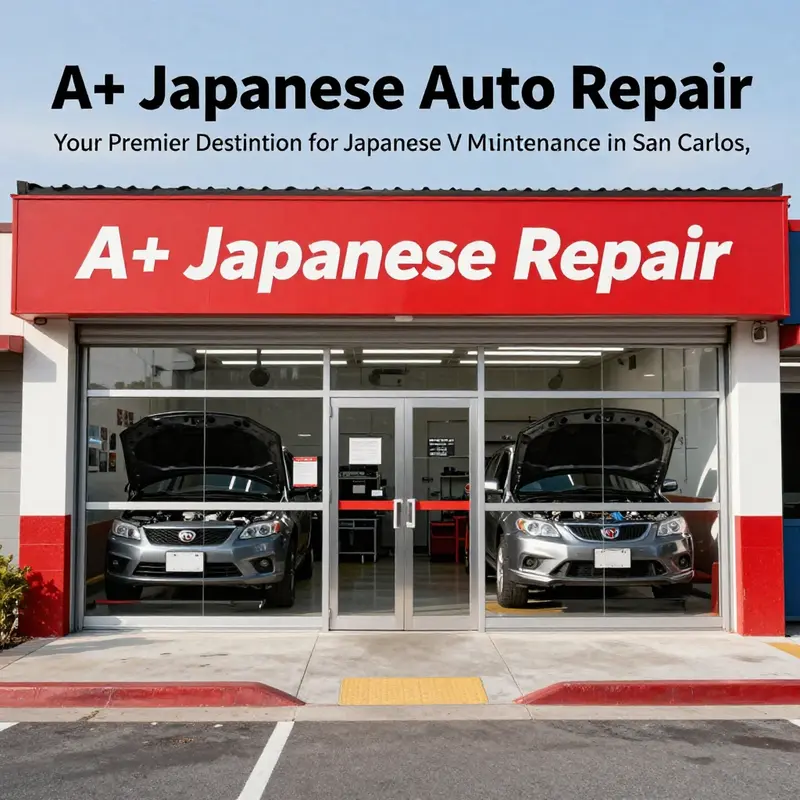
In an ever-evolving automotive landscape, finding a reliable service center for your Japanese vehicle can be a challenge. A+ Japanese Auto Repair in San Carlos, CA, stands tall as a beacon of trust and expertise. This family-owned establishment has cultivated a loyal customer base through exceptional service, technical proficiency, and a welcoming atmosphere. As we explore this premier auto repair facility, we’ll delve into its history, the credentials of its expert technicians, the unparalleled customer experience, the range of services provided, and the profound impact it has on the local community. Join us as we journey through these interconnected aspects, all of which highlight why A+ Japanese Auto Repair is the go-to choice for motorcycle owners, auto owners, parts distributors, and fellow garages alike.
Reliability at the Core: A+ Japanese Auto Repair in San Carlos
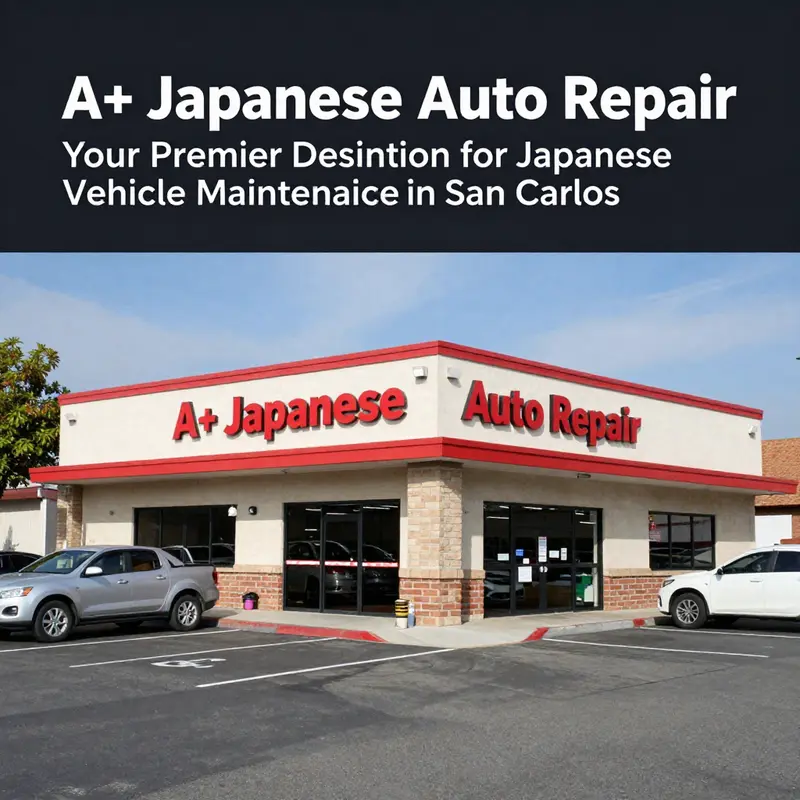
The streets of San Carlos reveal a community that values trust, durability, and the quiet confidence that comes from getting it right the first time. A+ Japanese Auto Repair stands out not just for the cars it services, but for the experience it creates for Bay Area drivers who count on Japanese vehicles for daily life. The shop at 780 Industrial Rd signals practicality from the moment you arrive: a straightforward space where vehicles are treated with respect and people feel seen. The story spans more than two decades, rooted in a family tradition that prizes continuity, accountability, and pride in the craft. A steady line of service and refinement builds a formidable expertise that earns referrals and repeat visits through clear results that customers can feel. Reliability has become a currency in the local automotive scene, a benchmark that reassures drivers that their car will respond predictably in rain, traffic, or busy schedules.
At the heart of A+ Japanese Auto Repair is its people. Eric, an ASE Master Certified technician since 1997, provides technical leadership that supports the team. His decades of hands-on experience in diagnostics, alignment, and repair of modern Japanese vehicles give the shop a solid backbone. The environment mirrors that standard: calm, focused, and precise, with technicians who translate symptoms into root causes and test solutions carefully. This leadership and atmosphere translate into outcomes customers can rely on, from routine maintenance to complex repairs.
The shop’s reputation rests on consistent quality. Recognition as a top auto repair facility—Best Auto Repair in 2013, 2014, 2015, with additional mentions in 2017 and 2018 according to SFGate—reflects a trust earned over time. The Bay Area climate and varied driving demands drive a service ethos focused on reliability, prevention, and thoroughness. The emphasis on Japanese vehicles comes from deep understanding of how these systems interconnect and how to balance cutting-edge diagnostics with long-term health.
Customer experience is framed as a partnership. The staff listens, plans a diagnostic path that respects budget and time, and communicates clearly about needed work and timelines. Hours—Monday through Friday, 7:30 a.m. to 5:00 p.m.—prioritize accessibility for working clients. The goal is proactive maintenance that extends vehicle life, not reactive fixes that strain budgets.
Online presence and transparency complete the picture. Photos and reviews on the official listing reinforce openness and accountability. A welcoming space, experienced leadership, and a proven track record create a narrative: A+ Japanese Auto Repair is a dependable partner in ongoing vehicle care. Readers can explore the shop’s approach through concise online overviews that reflect its values and methods.
In the San Carlos area, the shop anchors a broader conversation about quality, reliability, and customer care. A family-owned, long-standing staff with deep technical insight and a customer-focused approach explains why the shop remains a fixture. Reliability here is a quiet standard that guides how the shop is seen in the local community and how drivers feel when they leave with confidence that their road ahead is watched over.
Precision Craft and Trusted Certification: Expertise at A+ Japanese Auto Repair in San Carlos
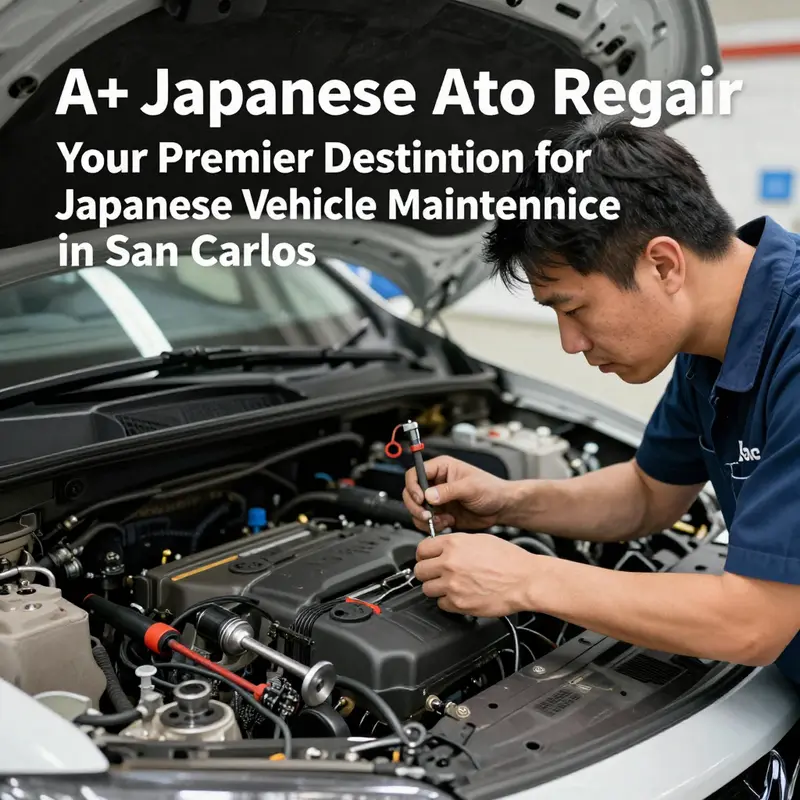
In the heart of San Carlos, where small-town warmth meets the precision demanded by modern Japanese automobiles, A+ Japanese Auto Repair stands as more than a service shop. It is a family-owned workshop that has built its reputation on quiet consistency, technical depth, and a steadfast commitment to keeping every car on the road safer, longer, and more reliable. The shop resides at 780 Industrial Rd, a location that has become a familiar landmark for local drivers who rely on the shop not just for repairs, but for honest guidance about preventive maintenance and the overall health of their vehicles. The premise is simple in its core philosophy: treat every vehicle as if it were a member of the family, and treat the owner with the respect they deserve. That philosophy, over time, has translated into a service culture that many customers come to rely upon, year after year.
A+ Japanese Auto Repair has earned recognition not only from customers but also from the broader automotive community. Long before the shop was widely cited in regional lists of top auto repair facilities, it had already begun cultivating a reputation for technical prowess and dependable workmanship. The accolades that have followed—Best Auto Repair in the San Francisco Bay Area in the years 2013, 2014, and 2015, followed by continued recognition in later years—mirror a sustained track record of quality. Those awards reflect more than a momentary win; they signal a reliability that customers can feel when they pull into the lot and meet the staff, walk past the welcoming reception, and see the careful organization of bays and diagnostic spaces tailored to Japanese vehicles. In a market where expertise can seem fragmented, the consistency implied by multiple awards across several years provides a quiet assurance that the shop is not resting on its laurels but continually refining its craft.
Central to the shop’s identity is its leadership and technical talent. Eric, the manager and a cornerstone of the team, is described as an ASE Master Certified technician who has been part of the crew since 1997. That kind of tenure is rare in a field defined by rapid technological change. It signals a depth of experience that spans generations of vehicle design, electronics, engine management strategies, and the evolving complexity of Japanese automobiles. The designation of ASE Master Certified, while not always disclosed in every listing, is widely associated with a rigorous benchmark of knowledge and a demonstrated ability to diagnose and repair a broad spectrum of systems. For customers, that translates into confidence: a belief that the person who signs off on the repair has not only the hands-on skill but the judgment cultivated by decades of practice. When you couple that with the fact that the shop has specialized in Japanese vehicles for more than two decades, the implication is clear. The team understands how these cars are engineered to work, what tends to wear sooner, and how to approach maintenance in a way that preserves performance and longevity.
The specialization matters. In a landscape where vehicles from multiple manufacturers share common components, a shop that concentrates on Japanese makes can develop a depth of diagnostic intuition that broader shops may not cultivate as deeply. Toyota, Honda, Nissan, and Subaru, among others, represent a family of design philosophies that emphasize durability, efficiency, and precise engineering. For these brands, small misalignments in timing, fuel management, or electronic control units can cascade into bigger problems later if not addressed early. A+ Japanese Auto Repair approaches such challenges with a blend of methodical inspection, data-driven diagnostics, and a respect for the unique service needs of Japanese vehicles. The result is not a parade of one-size-fits-all fixes but a tailored approach that considers the car’s history, its typical driving conditions, and the customer’s goals for performance and reliability.
What makes their offering more compelling is the alignment of expertise with a customer-centered operating model. The shop promises and delivers a welcoming environment, a factor that often gets lost in discussions about shop skills and equipment. When customers walk in, they encounter a space that feels approachable and organized, with technicians who take the time to explain what they find, what it means, and what the options are for repair or maintenance. This clarity is essential. It builds trust and helps car owners make informed decisions, rather than feeling rushed into costly repairs. The shop’s operating hours—Monday through Friday from 7:30 am to 5:00 pm—reflect a balance between convenience and the practical needs of a diverse clientele that includes commuting professionals, families, and small business owners who depend on reliable transportation.
From a technical standpoint, servicing Japanese vehicles demands a combination of specialized tools, up-to-date training, and a systematic approach to preventative care. The shop’s long-standing focus means they invest in diagnosing equipment and diagnostic methodologies that are particularly effective for the kinds of systems common in Japanese makes. This includes engine management, transmission behavior, steering and suspension nuances, and increasingly complex electronic networks that influence everything from fuel economy to safety features. Eric and his team bring a culture of continuous learning to the table, a trait that becomes evident whenever a technician discusses a difficult diagnostic file or explains the steps involved in a preventive maintenance plan designed to avert the most common failure points seen in these brands.
A crucial dimension of this expertise is the shop’s experience with the lifecycle of Japanese vehicles. For drivers, this translates into practical guidance about timing belts or chains, fluid service intervals, and the careful selection of replacement parts. It also means recognizing when a noise, vibration, or performance change signals an issue that may be better addressed sooner rather than later. In a market where some repairs can be tempted by quick, inexpensive fixes, a shop that has earned regional accolades over many years often demonstrates a disciplined, methodical approach to repairs that prioritizes reliability and safety. The aim is not merely to fix a problem but to understand its root cause and address it in a way that reduces the likelihood of recurrence. This philosophy resonates with customers who want to maximize the value of every mile they put on a vehicle and who value the reassurance of a service that is thorough and transparent.
The business storytelling of A+ Japanese Auto Repair is also reinforced by the accessible channels through which customers can connect. For those seeking additional context about the shop’s philosophy and approach, a dedicated post in their blog ecosystem provides a narrative thread that complements the hands-on work performed in the shop. The internal link a-plus-japanese-auto-repair offers readers a concise window into the shop’s identity, its offerings, and its longstanding commitment to the community. This resource, while lightweight in form, underscores the wider conversation about how specialized shops can maintain relevance in a rapidly evolving automotive landscape. It is a reminder that expertise is not solely about what happens under the hood but also about how the shop communicates with its customers and shares value beyond a single service visit.
The human element remains central to the success story of A+ Japanese Auto Repair. Eric’s leadership embodies a blend of hands-on dexterity and mentorship, guiding newer technicians while ensuring that every job benefits from the depth of experience that comes with a long tenure. The team’s ability to translate complex diagnostic findings into understandable explanations helps demystify the repair process for customers. In turn, customers become more engaged in decisions about maintenance plans, parts selection, and future service needs. This collaborative dynamic is a hallmark of a shop that understands service as an ongoing relationship rather than a one-off transaction. As a result, the waiting area, the service bays, and the counter become spaces where trust is built through consistent performance, clear communication, and a shared commitment to vehicle longevity.
The narrative of A+ Japanese Auto Repair would be incomplete without acknowledging the community feedback that has sustained its growth. The Bay Area’s automotive landscape is competitive and densely populated with service options, yet this shop has managed to sustain momentum by delivering dependable outcomes and by maintaining a reputation for integrity. When customers speak of the experience of bringing their car in for an inspection, a repair, or a routine service, they often reference the feeling of being treated as a partner in the process. That sense of partnership is not incidental; it is the product of a deliberate emphasis on listening to concerns, answering questions with patience, and offering options that align with the owner’s expectations and budget. The result is a service experience that feels less like a checkout and more like a planning conversation about the vehicle that accompanies daily life.
In the broader arc of the San Carlos auto repair scene, A+ Japanese Auto Repair stands as a specialist whose depth of knowledge about Japanese vehicles differentiates it from generalist shops. This specialization does not isolate the business from the wider automotive ecosystem; rather, it strengthens its role within the community by providing an assurance of quality and a clear decision pathway for owners of vehicles from Japanese manufacturers. The combination of a family-owned culture, a leadership team with deep technical credentials, and a proven record of recognition creates a compelling case for why this shop remains a trusted resource for drivers who demand accuracy, reliability, and ongoing value from their auto care. It is a narrative that speaks to craftsmanship, to the quiet discipline of skilled technicians, and to the enduring trust built over more than two decades of consistent performance. For readers who are navigating the decision about where to bring a vehicle for specialized care in the San Carlos area, the story of A+ Japanese Auto Repair offers a blueprint: prioritize expertise, embrace transparent communication, and value the relational trust that grows from years of dependable service. In this light, the shop is not merely a place to fix a car; it is a partner in keeping movements seamless, a guardian of safety, and a steward of the driving experience that defines life in a bustling suburban corridor.
External reference: https://maps.google.com/?cid=13495672715818721589
Trust on the Timelines: Delivering Precision and Care at A+ Japanese Auto Repair in San Carlos
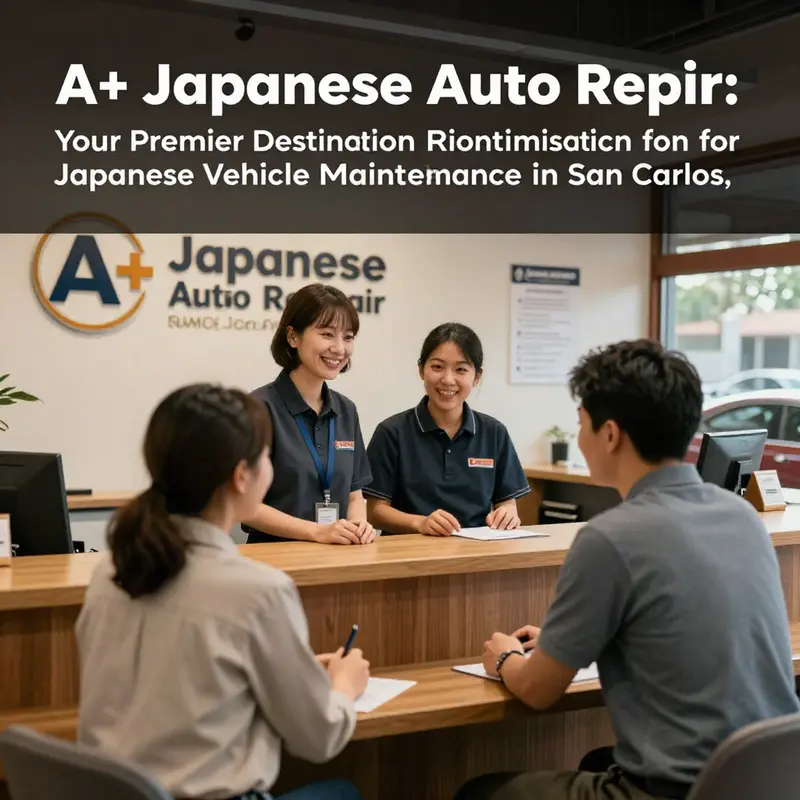
When customers arrive at A+ Japanese Auto Repair in San Carlos, they step into more than a shop; they enter a space where time, skill, and care align to create reliable mobility. The facility stands at 780 Industrial Rd, a location that has become a beacon for people who own Japanese vehicles and who value a certain quiet confidence in the work performed on their wheels. This confidence doesn’t grow overnight. It is cultivated through a deliberate blend of family ownership, long-term stability, and a track record that has earned awards such as Best Auto Repair in three consecutive years. At the heart of that reputation is a team led by Eric, an ASE Master Certified technician who has been part of the family for more than two decades. His presence signals to customers that the work will be measured, methodical, and rooted in a deep understanding of modern Japanese automobiles. The combination of seasoned mastery and a welcoming environment creates a customer experience that feels both professional and personal, a balance that is rare in the broader automotive repair landscape.
What makes this shop distinctive in practice is not only the certifications and accolades but the texture of everyday interactions. A key thread in the narrative of their customer experience is the way staff listen. People come in with diverse needs—from routine maintenance to complex repairs—yet they leave with a sense that their concerns have been heard, understood, and addressed. Elaine, in particular, is remembered by many for her exceptional assistance with arranging rides and coordinating the day’s schedule so that the client’s time is respected. When a customer says she was “the best,” it isn’t merely a compliment about courtesy; it is an acknowledgment that the front desk is not a mere watering hole between the customer and the technician. It is the nerve center that translates a problem into a plan, a plan into a timeline, and a timeline into a smooth, won’t-break-the-bank experience. This is the edible core of the shop’s promise: the feeling that every minute spent in the waiting room or on the parts bench has been allocated with purpose and care.
Behind the scenes, the mechanics’ approach to diagnosis and repair substantiates that promise with substance. The shop has gained a reputation for handling repairs that others might deem daunting or time-consuming. Consider the example of a long-overdue maintenance task tied to the vehicle’s transmission system. A nine-year gap in maintenance is not a detail most shops would tackle without hesitation; it signals risk, potential cascading issues, and a stewardship mindset aimed at extending the vehicle’s life. A+ Japanese Auto Repair meets that challenge by methodically reviewing the entire system, outlining the implications of the overdue maintenance, and offering a candid, practical plan. The process respects the vehicle’s history and the owner’s budget, presenting options with clarity rather than pressure. Even when the work is meticulous and thorough, the tone remains collaborative, with the aim of restoring performance while safeguarding safety and reliability. Such cases are emblematic of a broader philosophy: maintenance and repair are less about charging for every service under the sun and more about preserving the vehicle’s integrity over time.
The experience rests on several pillars that reinforce trust. First is the technical backbone. Eric’s team brings a depth of knowledge about Japanese engineering—from the subtleties of engine management to the resilience of transmissions, suspensions, and electrical systems that modern vehicles depend on. The staff’s capability is paired with the right tools and diagnostic methods, allowing the shop to identify root causes rather than merely addressing symptoms. This approach matters when a customer has a road-ready deadline or a tight budget; precision in diagnosis is often the most responsible form of time management because it prevents backtracking and repeated visits.
Second is transparency. The shop makes space for open communication about the scope of work, the sequence of tasks, and the expected timelines. The clock becomes a partner in the process, not an obstacle. When a repair requires parts on order or a specific diagnostic test, customers are informed promptly about delays, alternatives, and the rationale behind each option. This transparency extends to pricing. Rather than a vague estimate, the team provides a structured forecast that reflects labor hours, parts, and contingencies. The result is a relationship where customers feel they are making informed decisions rather than accepting a black-box service.
Third is respect for the customer’s life. The Uber scheduling and ride coordination praised by clients illustrate a broader pattern of minimizing disruption. The shop understands that an owner’s time is valuable, and they respond with solutions that relieve the burden of logistics. This is not just convenience; it is a core value of customer care. When a client can be dropped off or picked up at a moment that suits them, the relationship moves from transactional to collaborative. And when the shop helps coordinate transportation for a repair that might take the better part of a day, it sends a signal that the business treats the customer as a whole person with several responsibilities, not merely as a source of revenue.
What emerges is a narrative of loyalty built on consistency. The community around A+ Japanese Auto Repair is not a swarm of one-off customers but a stable network of regulars who return for routine service, careful maintenance, and repair experiences that avoid catastrophes. The longevity of their patronage is a byproduct of reliability: vehicles leave with a sense of renewed safety, performance, and efficiency. It is not solely because the technicians can fix a problem; it is because they communicate well, deliver on promises, and take responsibility for the long arc of the vehicle’s health. This kind of loyalty does not rely on flashy marketing or sudden discounts. It grows from repeated, dependable experiences where the customer feels seen, understood, and protected from the unexpected costs and headaches that can accompany car trouble.
The environment in which this care happens also matters. The shop’s physical space and its operation schedule reinforce the message of reliability. The ambience is professional but welcoming, the equipment is current, and the workflow is organized to minimize downtime for the client. The operating hours—Monday through Friday from early morning to late afternoon—offer predictable windows that many working professionals rely on to schedule maintenance without sacrificing productivity. The combination of predictable availability and attentive service helps to reduce the anxiety many drivers feel about their cars. When a car is a lifeline—commuting, school runs, business travel—having a repair shop that communicates clearly and delivers on time becomes not just a preference but a practical necessity.
Another dimension of the customer experience is the shop’s stance toward feedback. The staff appears to treat feedback as a resource rather than a grievance. Customer input is welcomed, discussed, and translated into tangible improvements. A shop that asks questions like, “Was this experience helpful?” or “Where could we do better next time?” signals a learning mindset that resonates with riders who value continuous improvement. The takeaway for clients is that the business is not resting on its laurels. It is actively listening to its community, testing new ideas, and refining operations so that the next visit feels even smoother. In this sense, the customer experience becomes a living service, evolving with every conversation, every repair, and every ride arranged to fit the owner’s schedule.
A significant element of this experience lies in the specialization of the shop. Focusing on Japanese vehicles means the team is not merely generalists performing routine maintenance. They are specialists who understand the specific engineering paradigms, materials, and common failure modes associated with these cars. For owners, that distinction translates into increased confidence: when the technicians speak about the car with the language of model-specific concerns, clients sense that their vehicle’s unique design is being treated with respect rather than a one-size-fits-all approach. The result is a smoother, faster, and more precise service cycle, where diagnostic steps align with the expectations of Japanese automotive engineering. The trust built in this space is not ephemeral. It endures through repeat visits, person-to-person relationships, and the consistent demonstration that the shop can handle both routine service and more nuanced repairs with equal care.
In the broader arc of this article, the chapter on customer experience becomes a bridge between the shop’s technical excellence and its community role. It is easy to measure a shop by its ability to fix a problem, but harder to quantify the long-term impact of a trustworthy, people-centered approach. The San Carlos community benefits when a family-owned business sustains an atmosphere of respect and responsibility across years and generations. The shop’s ongoing commitment to improvement—driven by customer feedback, professional development, and the steady leadership of experienced technicians—offers a blueprint for how automotive service can blend craftsmanship with a humane, client-focused mindset. For readers who own Japanese vehicles and prefer a repair experience that honors both their time and their car, A+ Japanese Auto Repair presents a model where expertise and empathy coexist in every service bay.
To those exploring options in the San Carlos area, the story of this shop invites two questions. First, does the repair experience honor the vehicle’s complexity while making the owner feel supported? The answer here is yes, through a combination of technical mastery, candid communications, and a culture that treats primary mobility as a shared responsibility. Second, does the business invite continued engagement beyond the current repair, encouraging maintenance and planning that prevent future breakdowns? The answer is equally affirmative, through proactive maintenance scheduling, reliable timelines, and a framework that values prevention as much as intervention. The result is not just a one-time fix but a sustainable partnership between driver and technician.
For readers curious to delve deeper into the shop’s approach or to explore similar perspectives on automotive care, one may visit related resources that chronicle the broader landscape of Japanese auto maintenance and specialized repair cultures. A deeper look into the shop’s philosophy and practices can also be found in the internal repository that outlines their approach to Japanese auto care, accessible here: a-plus-japanese-auto-repair.
External resource: https://www.google.com/maps/place/A%2B+Japanese+Auto+Repair/@37.419585,-122.254965,17z/data=!3m1!4b1!4m6!3m5!1s0x808f8a4c8d6c9e3f:0x5b17c7c17d7d6e3f!2sA%2B+Japanese+Auto+Repair!3d37.419585!4m2!1d-122.254965!2d37.419585?entry=ttu&gws_rd=ssl
Precision, Trust, and Japanese Driving: Inside A+ Japanese Auto Repair in San Carlos
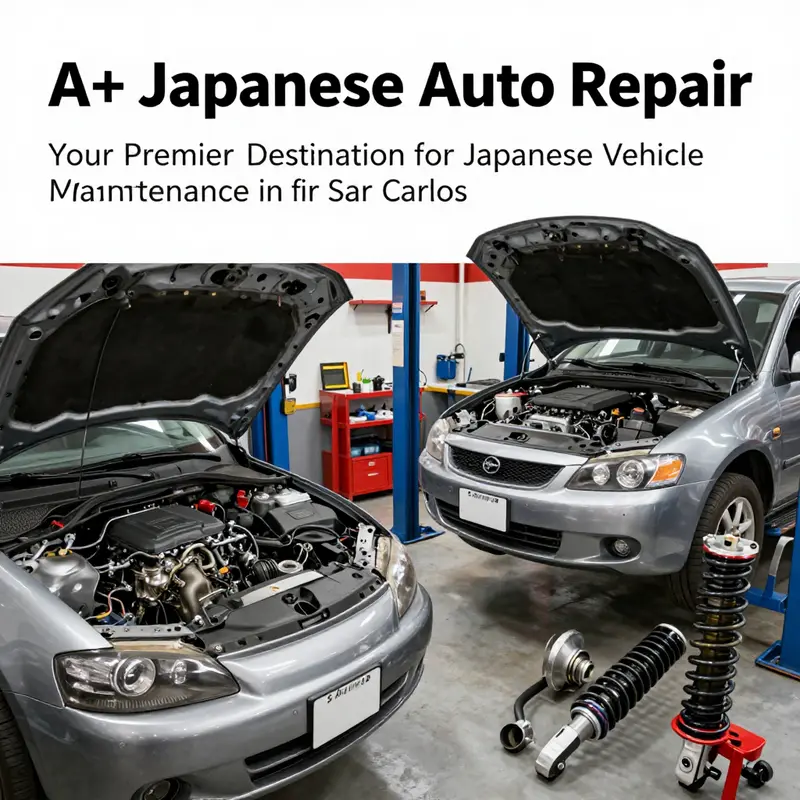
In the quiet industrial spine of San Carlos, where small businesses thread together a resilient local economy, A+ Japanese Auto Repair stands as a patient craftsman of modern mobility. Tucked away at 780 Industrial Rd, this family-owned facility has earned its reputation not just through a string of accolades, but through a steady, dependable practice built on respect for the engineering that powers Japanese automobiles. To customers who depend on these vehicles for daily commutes, school drop-offs, and weekend getaways, the shop offers more than a service bay—it offers a commitment to reliability, traceable through every repair and every preventive measure. The story of this shop is not about flash or volume; it is about a steadfast standard that has earned it repeat loyalty and a place in the heart of San Carlos’s automotive landscape. The lineage of the business—steered by people who have grown up around cars and around the craft of repair—translates into a service culture that prioritizes precision, transparency, and a deep understanding of how Japanese engineering behaves on California roads. In such a setting, the commitment to excellence becomes visible in the way work is approached, explained, and ultimately proven by engine performance after a visit. The receipts of trust are not only in the maintenance logs but in the quiet confidence of customers who know they will not be asked to approve repairs they cannot understand. This is the essence of why A+ Japanese Auto Repair has sustained a reputation strong enough to earn Best Auto Repair recognitions in multiple years and to be regarded as a reliable local partner rather than a transactional shop front.
Behind the scenes, the shop is notable for a leadership core that blends long-term know-how with a relentless curiosity about evolving automotive technology. Eric, an ASE Master Certified technician, has been a pillar of the team since 1997. His credentials are more than decorative badges—they signal a credibility earned through decades of diagnosing and solving the kind of complex issues that modern Japanese vehicles can present after years of California wear. An ASE Master certification speaks to both breadth and depth: the ability to read an engine’s pulse, interpret the sensor chatter of a modern fuel and ignition system, and guide a vehicle back to a balanced state. But the value Eric brings goes beyond his technical prowess. It is his approach to mentoring junior technicians, his insistence on meticulous diagnostics, and his patient explanations to customers that make the difference. The service team that surrounds him shares that same ethos, having grown up in a culture that treats each car as a distinct machine with its own history and its own maintenance needs. In this environment, customers are not handed a page of jargon and a list of recommended repairs; they receive a clear narrative—what is happening, why it matters, and how it will be addressed in a way that aligns with their vehicle’s use, warranty status, and budget.
The range of services at A+ Japanese Auto Repair is expansive yet tightly focused on the realities of Japanese engineering and the needs of drivers in the San Carlos area. Routine maintenance is the backbone, with oil changes performed on schedule to preserve engine longevity and reduce friction that can wear down seals and gaskets over time. Fluid checks are integrated into every visit, ensuring that cooling systems, transmission hydraulics, brake reservoirs, and steering mechanisms retain their proper levels and viscosity. Filter replacements, particularly for air and fuel, are emphasized as essential for maintaining air quality in the combustion chamber and for preserving fuel efficiency. These routine tasks might seem ordinary, but in the hands of technicians who understand the tolerances and performance envelopes of Japanese powertrains, they become critical interventions for preventing more expensive issues down the line. The rationale behind this approach is simple: preventive care keeps vehicles performing as designed, extends their life, and minimizes the downtime that busy drivers rely on.
When something more demanding arises, the shop’s diagnostic and repair capabilities come into clear focus. Check engine light inspections are handled with care and precision, not as a last resort but as a doorway to understanding the vehicle’s hidden concerns. The team deploys diagnostic protocols that map out sensor data, correlate it with known factory patterns, and isolate faults with a discipline that saves time and money for the customer. Brake system evaluations and replacements receive equal attention, because brake performance is a direct line to driver safety. Suspension work is approached with an eye for ride quality and tire wear, recognizing that a well-balanced suspension not only improves handling but also reduces subsequent component stress. Engine repairs are handled with a level of thoroughness that reflects years of encounter with a wide spectrum of engine generations, ensuring that even intricate problems can be resolved in a way that maintains performance and reliability. For owners who approach aging vehicles with concerns about reliability, the shop’s readiness to perform major dealer mileage services offers a compelling alternative to dealership visits. These services mimic the dealer’s professional attention to mileage-based maintenance tasks but at a cost that is often friendlier to local budgets and schedules. The overarching benefit here is warranty-conscious service that aligns with manufacturer expectations while preserving the shop’s own diagnostic rigor and value-based pricing.
The customer experience at this San Carlos facility is designed to level the playing field between complexity and comprehension. Transparency sits at the core of every interaction. The shop has built a practice of sharing photos of trouble areas directly with customers, a powerful tool for demystifying the repair process. A few crisp images can bridge the gap between technical jargon and a layperson’s understanding, allowing car owners to see exactly what is happening and why it matters. In a world where many repairs are shrouded in mystery, this approach creates trust and reduces the anxiety that can accompany car trouble. The customer journey is further eased by a free shuttle service, a thoughtful courtesy that acknowledges how a repair can disrupt daily life. For families and working professionals alike, the option to drop off a vehicle and have someone picked up again later at a convenient location translates into genuine convenience. Scheduling is straightforward, with appointments available during standard business hours from Monday through Friday, 7:30 am to 5:00 pm, and easy access to staff who can translate technical needs into practical, actionable plans. The team’s responsiveness extends beyond the garage; it is reflected in the way they listen, confirm, and follow through. The result is a reputation for top-rated customer service—an outcome that is especially meaningful in a market saturated with options where trust and reliability are prized as highly as price.
Beyond the immediate services, the shop’s approach to work reflects a deeper philosophy about driving in California—where traffic patterns, climate, road conditions, and the diverse landscapes your vehicle navigates combine with the engineering sophistication of Japanese automobiles. The technicians stay abreast of evolving diagnostics, preventive maintenance strategies, and repair techniques tailored to the vehicles they specialize in. This ongoing education—paired with hands-on experience and a supportive, family-run culture—ensures that the team can handle the journey of ownership from the first maintenance interval through high-mileage milestones. It also helps explain why many customers stay with the shop across multiple vehicles and generations of drivers, relying on the same team to steward their cars through time. In such an ecosystem, the shop is not a place where a repair is performed and a bill is paid; it is a partner in a driver’s mobility, an ally that helps preserve value, safety, and driving enjoyment.
For readers exploring their options or searching for a trusted local specialist, this San Carlos shop offers a compelling blueprint for how high-quality service can be delivered with both heart and precision. The combination of a clear focus on Japanese vehicles, a seasoned leadership core, and a comprehensive service menu makes it possible to achieve dealership-grade maintenance without the typical friction of navigating unfamiliar processes or inflated costs. The business’s recognition as a Best Auto Repair recipient in multiple years signals a broader community vote of confidence, while the hands-on leadership of Eric and the collaborative teamwork behind him translate that recognition into daily practice. In a world where auto repair can feel opaque or hurried, the emphasis on transparency, customer comfort, and dependable performance provides a model that is both practical and enduring. To those who read these lines and wonder what sets a shop apart, the answer is found in the everyday decisions that turn frustration into clarity, and uncertainty into assurance. A+ Japanese Auto Repair in San Carlos makes those decisions with care, and the city becomes not merely a place to service a vehicle, but a partner in keeping mobility reliable and stress-free. For a closer look into their approach and the stories behind their work, readers can explore the shop’s blog profile, which offers insights into their philosophy and practices: A+ Japanese Auto Repair blog profile.
In the larger arc of owning a Japanese-made vehicle in California, the value of a specialized local shop becomes evident when performance, longevity, and peace of mind converge. The drivers who walk through the door know they are not stepping into a generic auto repair experience but entering a space where technicians speak the language of their car and honor its engineering heritage. The workbench is not just a place to fix a thing; it is a place to nurture a relationship between car, driver, and community. And as the testimonies of satisfied customers accumulate, as the diagnostics produce consistent results, and as the shuttle runs back and forth to the lot, the story of A+ Japanese Auto Repair becomes less about a single service encounter and more about a lasting commitment to keeping Japanese automobiles performing at their best on San Carlos streets. The chapter closes not with a final plug, but with an invitation: when a vehicle needs care, consider the value of care that respects the machine’s design, the driver’s time, and the neighborhood that surrounds it. In this way, the shop’s work extends beyond the bay doors, becoming a quiet, dependable rhythm that helps the city keep moving.
External resource: https://motorworksautorepair.com/blog/10-common-engine-maintenance-mistakes/
Steady Hands, Local Heart: The Community Impact of A+ Japanese Auto Repair in San Carlos
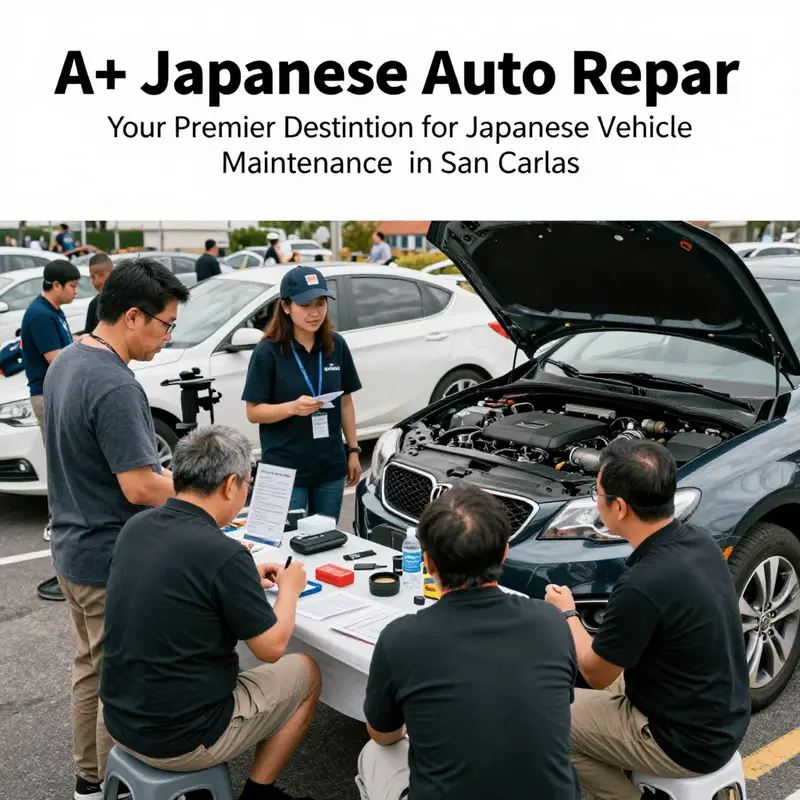
When you drive into the quiet bustle of San Carlos, the first thing that often anchors your sense of place is not the storefronts or the sidewalks, but the dependability of the vehicles you rely on. And behind that dependability sits a shop tucked away on Industrial Road, a family-owned operation that has woven itself into the fabric of the neighborhood with patient hands and a steady, patient gaze. A+ Japanese Auto Repair, located at 780 Industrial Rd, is more than a stopgap for a noisy car alarm or a sputtering engine. It is a community touchstone, a place where trust is earned through years of consistent practice and a deep understanding that the roads we share belong to more than just drivers. The address is a map point for commuters, shop owners, and families who need to reach reliable service before the next school drop-off, a quick errand, or a late-night return from the city. The real story, though, unfolds in the way the shop operates within the neighborhood’s rhythms, turning a simple automotive service into an act of community stewardship.
To understand the significance of A+ Japanese Auto Repair in San Carlos is to appreciate its heritage. The business is described as family-owned and operated, a phrase that carries more weight than a listing of hours and services. It signals a culture shaped by daily rituals rather than occasional meals of praise. The shop’s history is punctuated by recognitions that resonate beyond the garage walls. It earned the designation of Best Auto Repair in the area for several consecutive years—2013, 2014, and 2015—signaling a sustained track record of customer satisfaction and community trust. Those awards did more than celebrate technical skill; they validated a relationship with customers who return not just for a fix but for the confidence that a familiar, dependable team will stand by them through the inevitable strains of vehicle ownership. The result is a feedback loop: strong service generates regular patrons, and those patrons translate into a more resilient local economy and a more connected community.
At the heart of this story is the leadership of Eric, an ASE Master Certified technician who has been part of the shop since 1997. The phrase ASE Master Certified is more than an acronym; it is a signal of ongoing commitment to technical excellence and professional accountability. Eric’s long tenure is not a mere footnote; it is a living thread that ties generations of customers to a standard of care. When a technician remains at a single family business for decades, the store becomes a repository of subtle knowledge—the kind of tacit understanding that comes from diagnosing unusual noises, tracking the evolution of vehicle systems, and translating complex mechanical language into reassuring explanations for customers. That continuity matters in a community where people often juggle work, family, and school schedules. It means a driver can call for an appointment knowing that the same trusted technician who explained a maintenance plan a year ago will be there to review the next steps, with no need to repeat the entire backstory. In this way, expertise becomes a form of social benefit, reducing anxiety and friction for local residents.
The shop’s approach to service is not about quick turnover alone; it is about enduring reliability in an environment where modern Japanese automobiles demand a high level of technical acumen. These vehicles, with their integrated systems and nuanced electronic controls, require skilled hands and disciplined processes. The team’s ability to work with the intricacies of such vehicles speaks to a broader ethic: that quality care is a community asset, not a luxury. This ethic translates into the everyday experience of customers who schedule routine maintenance and come in for more involved repairs without fearing a cascade of unexpected costs or delays. The result is a neighborhood where households can plan around vehicle availability rather than navigate the stress of unpredictable breakdowns. It is a practical contribution to daily life: people can rely on the shop not only to fix what is broken but to help them avoid breakdowns in the first place through thoughtful maintenance guidance and transparent communication.
Accessibility is another pillar of A+ Japanese Auto Repair’s community role. The operating hours from Monday to Friday, 7:30 am to 5:00 pm, are framed not as a business constraint but as a social contract with local life. Those hours mirror the schedules of many families and small business owners who keep early starts and full days. By aligning with the tempo of the community, the shop reduces downtime and keeps residents on the move. When a parent needs a quick service so a child’s commute remains on schedule, or when a small business relies on dependable fleet maintenance, the shop’s predictable hours become a stabilizing factor in the day-to-day economy. It is easy to overlook the quiet mathematics of such scheduling, but in a community where one missed maintenance window can cascade into larger disruptions, every hour of availability represents a tangible improvement to quality of life.
Beyond the doors of the shop, the impact of A+ Japanese Auto Repair extends into job creation and the reinforcement of a local service network. As a local employer, it provides meaningful work opportunities for community members. This is not merely about numbers on a payroll; it is about the social fabric that forms when families find steady employment close to home. Jobs create a multiplier effect that circulates through the neighborhood—service providers, suppliers, and neighboring businesses benefit from the traffic and referrals generated by a trusted local shop. Strong local employment helps stabilize households, which in turn supports local schools, small businesses, and community initiatives. In a region like San Carlos, where small, independent businesses anchor the economic ecosystem, the presence of a robust auto repair facility matters more than it might appear at first glance. It reduces turnover in the local labor market, supports wage growth, and invites a culture of mentorship as more experienced technicians guide younger workers along the path to mastery.
The social value of a trusted repair shop is not limited to its direct customers. A+ Japanese Auto Repair contributes to a larger sense of safety and resilience on the roads that serve San Carlos. When vehicles are well maintained, the risks associated with driving decrease. Brakes engage reliably; steering remains precise; engines stay within safe operating temperatures. These outcomes translate into safer commutes for families and clearer pathways for emergency services that depend on reliable vehicles. The local reputation of the shop—carried by word of mouth, online profiles, and the simple, often overlooked practice of keeping promises—acts as a social good. Residents feel they are investing in something that pays dividends in the form of safe neighborhoods, predictable schedules, and a shared assurance that their community is well cared for by people who understand the responsibilities they shoulder each day.
The digital presence of A+ Japanese Auto Repair reinforces these tangible benefits with a outward-facing invitation to the wider community. The shop maintains a profile on Google Maps, which makes it easier for residents and visiting customers to find, trust, and connect with the business. Such digital visibility complements the intimate, in-person experience at the shop by providing a reliable touchpoint for directions, hours, and contact details. It becomes a microcosm of the shop’s ethos: clear information, consistent quality, and a welcome that extends beyond the doors. For those who want to engage with the shop further, the team also curates content that delves into the philosophy of quality maintenance and the specifics of maintaining complex, modern automobiles. This blend of hands-on service and thoughtful digital storytelling helps the shop extend its impact beyond San Carlos proper, turning satisfied customers into ambassadors who carry the word to neighboring communities and online networks alike. The emphasis on quality is not merely about keeping cars running; it is about sustaining the trust people place in a local business that treats every visit as a chance to reinforce community ties. Interesting conversations with customers often begin with a simple question about the best way to plan preventive care, and end with a shared commitment to making every drive safer and more dependable. There is something profoundly communal in the way that maintenance becomes a conversation rather than a transaction, a dialogue that respects the time, concerns, and aspirations of residents who live and work near the shop.
In this light, the narrative of A+ Japanese Auto Repair is less about a single storefront and more about the everyday rituals that sustain a neighborhood. It is the careful listening to a customer describe a rattle that has persisted for weeks, followed by a diagnosis delivered with patience and clarity. It is the assurance that a fleet manager can call in the morning with a schedule and know that the team will coordinate a plan that minimizes downtime. It is the quiet pride of a family business that trains the next generation of technicians while staying true to the core values that earned those early best-in-town accolades. All these threads weave together into a living tapestry: a shop that does the work well, speaks plainly about what it does, and remains a trusted partner for anyone who depends on a car to navigate the rhythms of daily life in San Carlos.
For readers seeking a glimpse into the shop’s approach and philosophy, a concise reflection can be found in one of the site’s own posts. It captures the spirit of a business that values long-term relationships over quick fixes and treats every maintenance decision as part of a broader plan to keep communities moving forward. The post embodies the principle that reliability, transparency, and skill are not merely technical traits but social commitments that translate into lived well-being for neighbors and families. As this chapter traces the community footprint of A+ Japanese Auto Repair, it is worth noting how deeply such commitments resonate with the people who rely on them day after day. When the story of a local business is told through the lens of people’s lives—their schedules, their safety, their sense of security—it becomes evident that the impact is as much about character as it is about capability. This is the true measure of a shop that remains not only technically proficient but also emotionally available to the community it serves.
For further reading and to engage with the shop’s broader narrative, consider visiting the linked blog entry that explores the shop’s approach to quality and community involvement. A+ Japanese Auto Repair blog post.
External resources that illuminate the broader landscape of local auto repair and community networks can provide additional context for this story. A convenient overview of a local business listing and its role in connecting residents with trusted service providers can be found here: Google Maps listing.
Final thoughts
A+ Japanese Auto Repair has established itself as a trusted leader in the San Carlos automotive scene. Its commitment to quality service, expert knowledge, and a positive customer experience has not only earned accolades but also secured the loyalty of the community. From the skilled hands of ASE-certified technicians to the welcoming environment that fosters customer satisfaction, every aspect of A+ Japanese Auto Repair reveals a dedication to excellence. It serves as an inspiring example for motorcycle owners, auto enthusiasts, parts distributors, and fellow garages looking to enhance their service offerings. Investing in your vehicle’s care at A+ Japanese Auto Repair is not just about repairs; it’s about being part of a community dedicated to enhanced vehicle performance and longevity.