
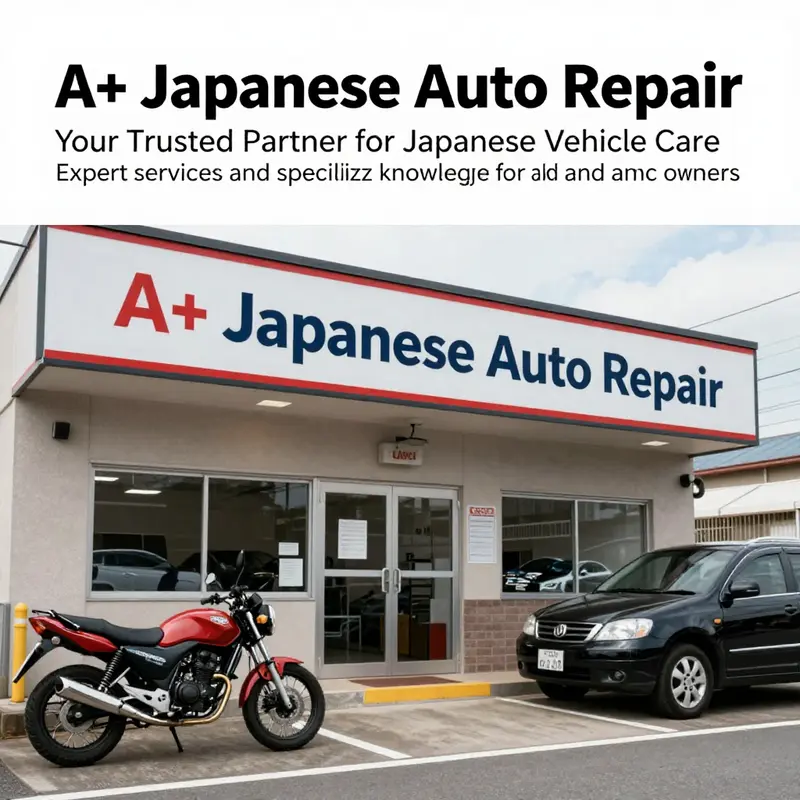
For motorcycle and auto enthusiasts, finding a reliable repair service that understands the nuances of Japanese vehicles can be challenging. At A+ Japanese Auto Repair in San Carlos, CA, we offer specialized services tailored specifically for these vehicles, ensuring top-notch care and maintenance. Our comprehensive offerings, knowledge of Japanese automotive mechanics, and commitment to customer satisfaction set us apart. In this article, we will explore the range of services we provide, highlight the importance of specialized knowledge in the repair process, and delve into the exceptional customer experiences that define our repair shop.
Orchestrating Longevity: A Holistic, Tech-Savvy Care Model for Japanese Cars at A+ Japanese Auto Repair
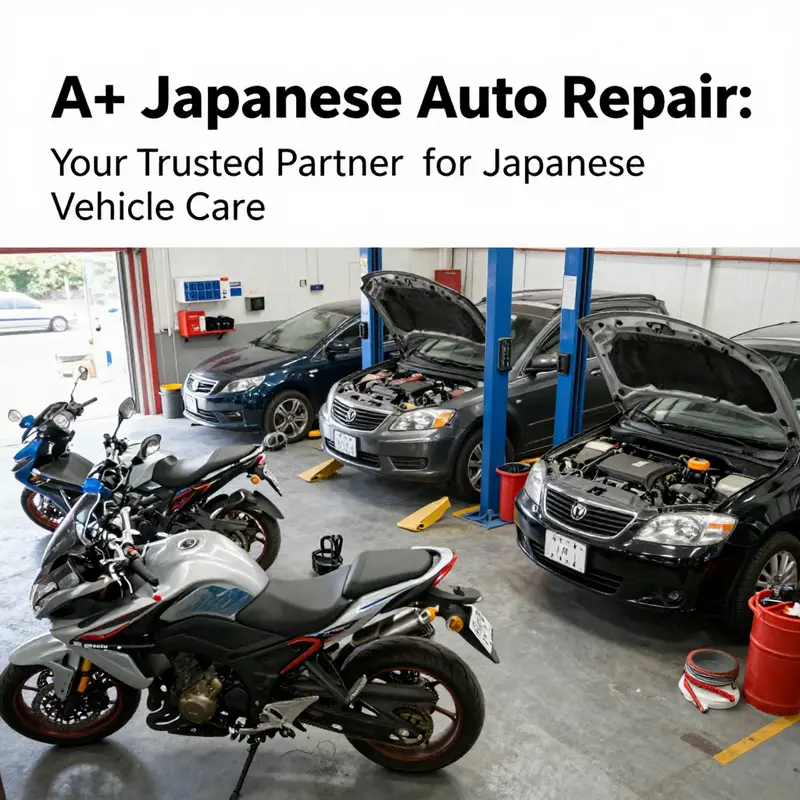
On the industrial corridor of San Carlos, a quiet shop at 780 Industrial Rd houses a philosophy as steady as the city’s morning breeze: treat every Japanese automobile as a finely engineered system that deserves thoughtful, precise care. A+ Japanese Auto Repair is built around a deep respect for the design language of Japanese automakers, where efficiency, reliability, and meticulous control systems converge. The technicians there bring a steady balance of patience and technique to work that ranges from the simplest routine touch-ups to complex repairs. The goal is not merely to fix what fails but to understand how a vehicle performs as a whole, how each subsystem influences another, and how to keep that interplay harmonious over the long arc of miles ahead. This approach creates a service experience that feels less like a single repair event and more like a careful partnership with a car that has earned a driver’s loyalty and trust over the years. A client noticing the difference begins with the basics: a well-timed, thorough assessment that respects the car’s heritage while acknowledging the realities of modern driving, where electronics, efficiency, and safety depend on approaching maintenance with a unified mindset rather than isolated fixes.
The shop’s identity rests on a practical yet ambitious promise: comprehensive care for Japanese vehicles that covers the full spectrum of performance and safety needs. In practice, that means a diagnostic philosophy that begins the moment a warning light glows, followed by work that respects factory specifications without leaning on guesswork. The technicians listen for the barely perceptible clues a vehicle might offer—the subtle shifts in pedal feel, the pattern of an idle, or the cadence of a steering input—before confirming issues through careful testing and measurement. Once a problem is identified, the team frames a plan that considers how a repair will influence other areas of the car, how long the repair is likely to last, and how to minimize disruption to the driver’s schedule. This is where the concept of comprehensive care takes shape: a service offering that threads preventive maintenance, diagnostic rigor, and precise repairs into a single, coherent practice rather than a mosaic of disjointed tasks. It is a mindset that mirrors the engineering rigor of the vehicles themselves and translates into consistently reliable performance on the road.
The core of A+ Japanese Auto Repair’s service philosophy centers on care that spans the lifecycle of the vehicle. The diagnostic process is treated as an entry point rather than a one-off event, a method that respects factory guidelines while applying the shop’s hands-on expertise. When a car presents with a warning lamp, the team conducts targeted checks that balance speed with thoroughness, identifying root causes rather than chasing symptoms. This careful approach leads into full engine work that can range from precision tune-ups to more substantial overhauls, always executed with an eye toward long-term reliability. In tandem with engine work, brake system care remains a safety priority, with meticulous inspection and component service designed to restore reliable stopping power while compensating for wear and fatigue that accompany miles and weather. Suspension and chassis care follow suit, addressing ride comfort, handling, and even tire wear, ensuring the car remains planted on the road regardless of street conditions. And because cooling is fundamental to engine longevity, cooling system attention—such as servicing radiators and related components—supports consistent performance under varying climates and driving demands. The ordering of tasks reflects a philosophy: address what is essential now, while safeguarding the car’s future health through thoughtful maintenance and timely intervention.
Beyond these core efforts lies a broader, preventative framework designed to keep drivers ahead of trouble rather than chasing repairs after a breakdown. Preventative maintenance at this shop means acknowledging how a vehicle ages and how wear accumulates in small, cumulative ways that can otherwise escalate into more expensive problems. It means planning service intervals that align with the vehicle’s design and the owner’s driving patterns, using that information to tailor maintenance that protects value and reliability. The outcome is a car that feels predictable and reassuring to drive, with fewer surprises along the way. The technicians’ hands-on experience with Japanese designs is complemented by a methodical, data-informed approach. They track wear patterns, monitor fluid conditions, and assess component integrity to determine the best time to intervene. This is not just about reacting to faults; it is about shaping a trajectory of care that keeps a vehicle performing closer to factory-new standards for as long as possible. The result is a relationship built on steady, transparent care rather than reactive repairs that accumulate unchecked wear and escalating costs.
Transparency forms a cornerstone of the customer relationship at A+ Japanese Auto Repair. The shop’s practice of sharing photos of trouble areas with customers stands as a visible representation of how diagnostics and repairs unfold. Rather than presenting a black box of technical jargon, the team presents a clear narrative: what was found, why it matters, and how the solution aligns with the car’s overall health. This approach helps drivers grasp the logic behind each decision, understand the tradeoffs involved in different repair paths, and feel confident about the value of the service they receive. In a domain where trust is essential, such open communication is not a nicety but a practical requirement. It equips owners with the knowledge to participate in the repair process, guiding conversations about priority, timing, and budget in a way that respects both the car and the owner’s daily life. The result is not just a fixed vehicle but a renewed sense of confidence, a driver who can anticipate maintenance needs rather than react to a sudden failure.
The customer experience is further enhanced by thoughtful conveniences that acknowledge the realities of busy lives. A+ Japanese Auto Repair offers a complimentary shuttle service, a small but meaningful gesture that keeps customers productive and unburdened while their vehicles are in the shop. This service reflects a broader commitment to minimizing disruption and maintaining momentum in a driver’s day. Coupled with this is the shop’s warranty policy, which underscores a confidence in workmanship. Most repairs carry a substantial guarantee that extends well beyond the initial service, signaling a partnership that remains in place long after the bill is paid. When owners ask questions about a repair, they receive not only answers but the assurance that the car will continue to perform as intended, with the work standing the test of time. The warranty is not merely a promise of the present but a pledge to ongoing reliability, reinforcing the trust that the shop has earned through consistent performance and clear communication.
Technology remains a driving force behind the service. The shop’s capabilities extend to contemporary propulsion systems, including electric-powered configurations. This expansion signals a forward-looking approach that recognizes how even traditional repair expertise must adapt to evolving drivetrain technologies. The technicians combine time-tested diagnostic instincts with modern data-driven methods to ensure precise, durable solutions. In practice, this means a careful blend of hands-on mechanical skill and computer-assisted analysis, enabling accurate fault isolation and efficient repair planning. The result is a service environment where a car from a classic generation and a modern electric model can both receive the same level of attention, with methods calibrated to each vehicle’s unique design and operating envelope. For owners, this translates into consistent quality and the reassurance that the shop can handle the changing landscape of automotive technology without compromising the personal, human dimension of service.
The physical footprint of the operation—its location, hours, and accessibility—further reinforces its role as a dependable neighborhood resource. The shop operates during weekday business hours to align with typical work schedules, offering a predictable routine for customers who juggle family and professional responsibilities. The proximity to the broader San Carlos community means drivers can access high standards of care without long detours, ensuring that a vehicle’s maintenance routine remains a manageable obligation rather than a logistical hurdle. In addition to the expert work performed inside the shop, the team’s approach to scheduling and communication helps ensure that the service journey remains smooth from first contact through vehicle pickup. The emphasis on efficiency does not come at the expense of thoroughness; rather, it is achieved by blending meticulous technical work with thoughtful process management that respects the customer’s time and plans.
For readers seeking practical context on how to integrate disciplined maintenance into their driving life, one resource that emphasizes common pitfalls is a focused guide on engine maintenance. This reference can help drivers understand issues they might encounter between visits and the kinds of measures that help prevent avoidable problems. See here for a concise, practical overview: 10-common-engine-maintenance-mistakes. By aligning maintenance choices with proven best practices, owners can complement the shop’s comprehensive care with informed at-home decisions, reinforcing a cycle of reliability that begins long before a warning light appears.
In sum, the service ecosystem at A+ Japanese Auto Repair is designed to be more than a set of tasks performed in sequence. It is a holistic approach to vehicle health that respects the engineering philosophy of Japanese automakers, embraces the realities of modern driving, and centers on transparency, convenience, and long-term reliability. The care is anchored in diagnostics that illuminate what truly needs attention, followed by precise work that restores and then preserves performance. Preventive maintenance remains a guiding principle, ensuring drivers can anticipate and plan for service rather than react to unexpected failures. The experience is marked by clear communication, evidenced through the sharing of visual findings and progress photos, which demystify repairs and build trust. The shop’s commitments—free shuttle service, a robust warranty, and a readiness to serve both established models and newer electric configurations—signal a durable, ever-evolving capability that honors the past, stands firmly in the present, and looks ahead to the vehicles of tomorrow. For any driver seeking reliable, expert care rooted in Japanese automotive engineering, this approach offers a compelling, cohesive model that respects both machine and motorist on every mile of the road ahead. External resource: https://www.google.com/maps/place/A%2B+Japanese+Auto+Repair/@37.4189657,-122.2163427,17z/data=!3m1!4b1!4m6!3m5!1s0x808f8d4c3a0e1b35:0x7e8e8e1f7b1d9e4d!2sA%2B+Japanese+Auto+Repair!3m2!1d37.4189657!2d-122.2163427?entry=ttu
Chapter 2: Precision at the Core—Specialized Knowledge as the Cornerstone of A+ Japanese Auto Repair
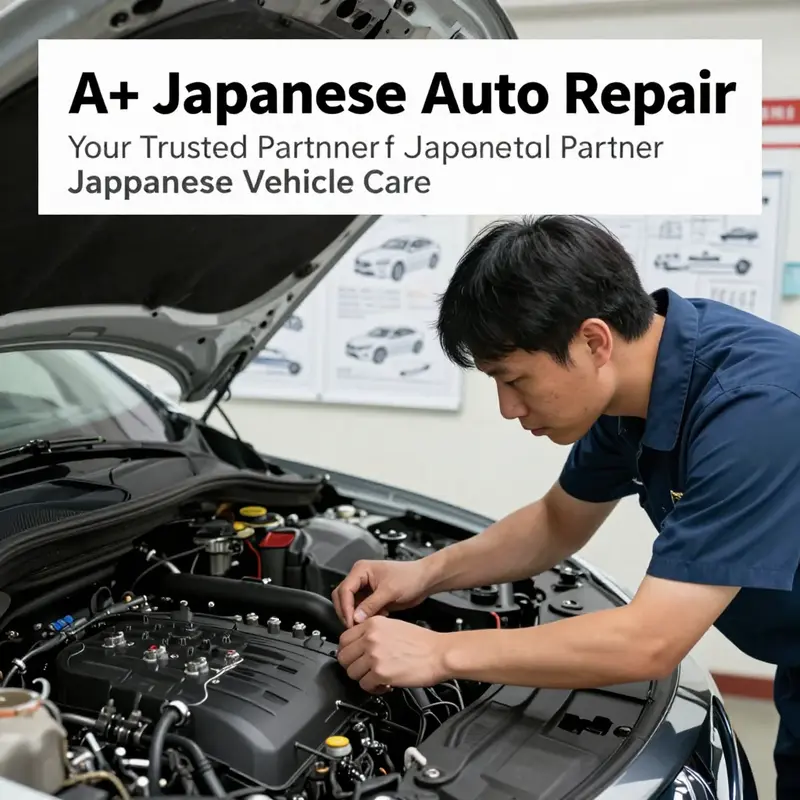
In the world of automotive care, the value of specialized knowledge is often the quiet engine that keeps a shop’s reputation running smoothly. For Japanese vehicles, that specialization is not a luxury but a necessity. The engineering that goes into Toyota, Honda, Nissan, and Subaru models blends precise tolerances, advanced electronics, and proprietary maintenance protocols into a cohesive system. When one component drifts out of spec in a modern hybrid, turbocharged engine, or variable valve timing setup, the ripple effects can cascade through the entire vehicle. This is where the depth of understanding becomes a practical difference that texture and trust alone cannot deliver. A+ Japanese Auto Repair embodies this philosophy by centering its practice on deep, brand-specific knowledge rather than generic repair approaches. The result is not only a fix but a course of action that protects performance, efficiency, and long-term value for drivers who rely on these sophisticated machines every day.
A Japanese car is often a choreography of tightly integrated subsystems. The powertrain may hinge on a hybrid architecture or a turbocharged engine paired with an electronic control unit (ECU) that coordinates fuel, ignition, and motor assist with surgical precision. Proprietary software governs how sensors read data, how actuators respond, and how safety features intervene in real time. In this context, diagnosing a concern is not simply spotting a warning light and swapping parts. It requires a technician who speaks the language of the model’s architecture, who understands the diagnostic protocols that manufacturers prescribe, and who possesses hands-on experience with the exact systems that tie a vehicle’s performance to its reliability. The specialized knowledge at A+ Japanese Auto Repair extends beyond theoretical familiarity; it is demonstrated in how technicians approach problems, how they interpret data, and how they validate that a repair has truly restored the intended function. Relative to generic repair shops, the edge is measured in accuracy, speed, and the confidence that a fix will endure.
The importance of this specialization is visible across the range of services a shop like this offers. Routine maintenance—oil changes, inspections, and diagnostics for check engine lights—appears straightforward at first glance, but the underlying requirements are precise. Japanese engines expect OEM-grade fluids and filters, torque specifications calibrated to exacting standards, and service intervals that reflect the carmaker’s guidance. When a maintenance item is performed by technicians trained specifically for Japanese platforms, the likelihood of creating downstream issues drops dramatically. The same principle applies to more complex tasks such as brake service, suspension adjustments, and major dealer mileage services. Each of these disciplines benefits from technicians who understand how a given model’s braking system interacts with wheel alignment, how traction control and stability programs respond to changes in suspension geometry, and how manufacturer recommendations are shaped by the vehicle’s software and hardware architecture. In practice, this means fewer misdiagnoses, more precise part selection, and a repair plan that aligns with the car’s design intent.
The decision to invest in specialized training and certification reflects a broader commitment to reliability. In a market where many shops advertise broad capabilities, the emphasis on depth—on mastering the unique demands of Japanese automotive technology—becomes a tangible differentiator. A+ Japanese Auto Repair’s approach is anchored in technician certification and ongoing education, a practice that ensures the team stays current with evolving platforms and evolving diagnostic tools. This is not a transient advantage but a sustained investment in quality. The January 2026 update underscores this point, noting the shop’s evolution into a trusted dealer alternative with a focus on friendly service and comprehensive diagnostics. When a customer experiences this kind of consistency, insurance against unexpected breakdowns, and a partner who can translate warning signs into a practical repair plan, the value of specialized knowledge becomes clear. The result is a service experience that prioritizes clarity and confidence alongside technical proficiency.
At the heart of specialized care lies the principle of a full vehicle inspection. A+ Japanese Auto Repair’s full inspection service exemplifies how expertise translates into actionable insights. Rather than addressing a symptom in isolation, a full inspection examines the vehicle as a system, interpreting wear patterns, sensor readings, and software statuses in relation to the car’s design and service history. This holistic approach is especially important for Japanese vehicles, where subtle shifts in performance can signal the early onset of an issue that, if left unchecked, could escalate into more significant and costly faults. From a practical standpoint, a thorough inspection helps technicians determine whether a problem stems from an ordinary wear item, such as a brake pad or a belt, or from more intricate issues like ECU calibration or transmission control logic. Customers benefit from knowing not only what is wrong, but why it matters, how it will be corrected, and what steps can be taken to prevent recurrence. The clarity produced by these insights reinforces trust and helps owners make informed decisions about maintenance and repairs.
The value of OEM parts and manufacturer-recommended procedures cannot be overstated in this context. Japanese automakers design components to work in concert, with tolerances that are calibrated to the performance envelope of the entire system. OEM parts ensure that replacements fit as intended, wear at compatible rates, and interact with the vehicle’s sensors and controllers exactly as the original design requires. When a shop emphasizes OEM compatibility, it reduces the risk of part mismatches that can create new fault codes or degrade performance. This is a particular concern for hybrid systems and advanced driver-assistance features, where even a small deviation in a component’s electrical or mechanical characteristics can ripple into driveability concerns. By adhering to manufacturer-recommended procedures, trained technicians honor the engineering logic that underpins Japanese vehicles. The procedures specify not only how to perform a task, but also the sequence and verification steps that validate the repair. Such discipline is the backbone of durable repairs that preserve performance and, ultimately, value.
Maintaining this standard demands more than a checklist; it requires a culture of precision, verification, and accountability. In practice, the technicians at A+ Japanese Auto Repair bring a disciplined approach to diagnostics: they interpret codes within the context of the vehicle’s entire history, re-create fault conditions to confirm root cause, and document findings with attention to detail. This approach is essential when dealing with modern ECUs, whose logic can shift under different operating conditions or after a system change. By focusing on the broader system interactions, rather than chasing a single symptom, the team minimizes unnecessary replacements and ensures each intervention has a meaningful impact on performance. As the January 2026 update notes, such an approach translates into reliable alternatives to dealership service, where the same rigorous standards apply but with a more personalized, accessible service experience. The practical outcome for customers is straightforward: peace of mind that the repair is appropriate, durable, and aligned with the vehicle’s original engineering intent.
This emphasis on specialization also informs how the shop communicates with customers. Complex automotive topics can easily drift into jargon, which can obscure rather than illuminate. An organization that has earned credibility through deep knowledge learns to translate diagnostic language into plain, actionable explanations. Customers gain visibility into each step of the repair process, from the initial inspection findings to the final test drive that confirms corrected performance. The result is not only a repaired car but a relationship built on mutual understanding and shared goals for reliability and longevity. In this sense, specialized knowledge becomes more than a technical asset; it becomes a promise that a vehicle will be treated with the same care the owner would bring to a cherished asset.
To readers who are weighing their options for Japanese-car care, the argument for specialized knowledge is not abstract. It is practical, measurable, and aligned with the realities of modern automotive engineering. The combination of brand-specific training, disciplined diagnostic practices, OEM-part guarantees, and transparent communication creates a service model that consistently protects performance and value. In the broader arc of automotive care, it is precisely this kind of expertise that distinguishes a shop that merely fixes cars from one that truly preserves their mechanical soul. The January 2026 update further reinforces this positioning, underscoring why discerning owners increasingly view a well‑qualified, Japan-focused shop as a trusted dealer alternative—a partner who can navigate the complexities of today’s Japanese vehicles with skill, honesty, and a commitment to long-term reliability. For those who own or lease Japanese cars, that commitment translates into measurable benefits in uptime, resale value, and driving enjoyment.
For readers seeking practical guidance grounded in this specialization, consider how a targeted approach to maintenance can prevent small problems from becoming expensive ones. An informed owner who knows that routine inspections should be paired with OEM-grade parts and manufacturer-recommended service intervals will fare better over the life of the vehicle. The concept is simple, yet powerful: expertise that understands the machine as a whole yields outcomes that are both better today and more durable tomorrow. In a market saturated with generalist options, the clarity of a specialized shop’s value proposition becomes a critical differentiator. And in that distinction lies the real merit of A+ Japanese Auto Repair—a commitment to precision, a respect for engineering intent, and a practice that treats Japanese automobiles not as ordinary machines but as well-calibrated systems deserving dedicated care.
External note for further reading: https://www.google.com/maps/place/A+%2B+Japanese+Auto+Repair/@37.7749,-122.4194,15z/data=!4m2!3m1!1s0x0:0x0?sa=X&ved=2ahUKEwiXv8iIqYf5AhWbKjQIHdCkOy0Q8AEwAHoECAcQAg
Chapter 3: Crafting Trust and Precision: The Customer Experience Blueprint at A+ Japanese Auto Repair

In the world of automotive care, expertise is essential, but the true measure of a shop lies in how it treats the people who entrust it with their daily mobility. At A+ Japanese Auto Repair in San Carlos, trust does not appear as a slogan on the wall. It emerges from a deliberate, consistently applied approach to the customer experience that begins the moment a vehicle is parked in the lot and continues long after the final key is handed back. Three principles anchor this approach, and every interaction is shaped by them: transparency, professionalism with meticulous attention to detail, and genuinely personalized service. Together they form a cohesive philosophy that has earned steady praise from clients and observers alike, turning routine maintenance into an experience that people feel good about and want to repeat.
Transparency is the first pillar, and it shows up in practical, defendable ways. When a check engine light or a diagnostic code triggers a conversation about repair, the team at A+ Japanese Auto Repair treats the conversation as a partnership. They begin with a clear, written diagnosis that explains not just what is wrong, but why it matters, what could happen if left unresolved, and how the proposed solutions align with safety, reliability, and value. The pricing is laid out upfront, with line-item estimates that spell out parts, labor, and any ancillary charges. This is not about hard selling anyone on the most expensive fix; it is about giving the customer the information they need to make an informed choice. In practice, transparency translates into updates that arrive at predictable times. If a vehicle is in the shop for a diagnostic or a maintenance service, the customer receives regular progress notes—often with photos and plain-language explanations that help lay readers understand what the technicians are seeing and why certain steps are necessary. The goal is to remove the guesswork and the anxiety that can accompany car repairs, replacing it with a shared, actionable plan that the customer can follow with confidence.
Professionalism and attention to detail are the second pillar, and they are visible in the rhythms of the shop floor. The phrase genuine Japanese automotive standards is not a marketing flourish here; it is a real commitment backed by process. Technicians approach each vehicle as a carefully choreographed task, guided by rigorous checklists, standardized inspection procedures, and verification steps that ensure safety and performance. It is not enough to fix a problem; one must understand its origin, its potential to recur, and its impact on the vehicle’s overall reliability. The crew brings the same discipline to routine tasks as they do to major repairs, applying precise torque specs, clean workspaces, and thorough test drives. Even routine maintenance—oil changes, brake inspections, and fluid checks—is treated with the weight of a high-stakes procedure. When a step is performed, it is documented, and any anomalies discovered during service are flagged with recommendations that are as practical as they are technically sound. This methodical approach reduces the chance of missed issues and helps clients feel certain that the car they rely on every day is in capable hands.
But the third pillar—personalized service—transforms professional competence into a human connection. The staff take time to understand each client’s circumstances, preferences, and driving patterns. Some customers prioritize quick turnarounds because their vehicle is essential to a commute or family routines. Others value thorough reporting and longer conversations about maintenance strategies that prevent unexpected breakdowns. A+ Japanese Auto Repair accommodates these differences by inviting customers into the planning process. The service experience is not a one-size-fits-all script but a flexible dialogue. Technicians listen first, then tailor explanations and recommendations to match the customer’s level of technical literacy and their risk tolerance. This can mean adjusting how information is presented—ranging from concise, executive summaries for busy clients to detailed technical notes for those who want to understand every facet of a repair. It can also mean scheduling around a client’s calendar, following up with reminders for upcoming maintenance at intervals aligned with the vehicle’s usage, or offering a clear pathway for re-evaluation if the customer wants a second opinion. In this way, the service becomes a collaborative process, not a transaction.
The combination of transparency, professionalism, and personalized care is reinforced by a broader culture that treats each car as a chapter in a longer relationship with the customer. Sheryl Driggers of Auto Body Repair Network has highlighted the shop for delivering top-notch service consistently, a testimonial that speaks to the reliability of the experience across multiple visits and different mechanical concerns. The implications for customer satisfaction extend beyond the repair itself. When clients experience clear communication, they feel respected; when they see meticulous attention to detail, they sense pride in the craft; when they encounter personalized attention, they sense a partner who values their time and trust. In a service industry where dissatisfaction often stems from ambiguity or misaligned expectations, A+ Japanese Auto Repair has built a framework where expectations are set, met, and often exceeded.
An important nuance of this approach is the way it integrates a deeply human undertone with the precision of technical care. At first glance, the shop’s devotion to transparency and accuracy could seem merely procedural. Yet it is precisely this fusion of human-centered communication with disciplined technical practice that creates a lasting sense of assurance. Customers do not leave with a bill and a repaired car alone; they depart with clarity about what was done, why it mattered, and what the next steps should be. This is the essence of satisfaction: the alignment between what the customer expects and what they actually experience. And because expectations are managed with honesty from the outset, customers return not only when problems arise but when they want a second pair of professional eyes on a routine maintenance plan that keeps their vehicle at peak reliability.
The shop’s culture also invites customers to feel a part of a larger story about craftsmanship and care. The team embraces a philosophy inspired by Japan’s celebrated attention to detail and the constructive philosophy of repairing rather than discarding. This ethos does not require customers to subscribe to any particular worldview; it simply communicates a shared belief that every repair is an opportunity to restore safety, performance, and peace of mind. It is a practical manifestation of a deeper philosophy: imperfections in a vehicle, much like imperfections in a relationship, can be understood, acknowledged, and improved with skill, patience, and a clear plan. The analogy resonates with the way customers experience the service. When a repair is completed, they do not feel the weight of a problem that has merely been hidden; they feel the weight of a solution that has been earned through careful work and thoughtful communication.
The internal culture of A+ Japanese Auto Repair extends into the shop’s external presence as well. The business keeps its doors open to feedback, treating every piece of customer sentiment as input for improvement. Honest feedback, whether praise or critique, is seen as a resource for evolving the service model rather than a signal to defend the status quo. This openness is part of what reinforces the trust customers place in the shop: it signals that the relationship is not static, but dynamic, capable of growing with the customer’s needs and expectations. In practical terms, that means follow-up conversations after a service, invitations to share experiences publicly, and a continuous, iterative approach to refining every step of the customer journey—from first contact to post-repair follow-up.
For those who want to explore the broader culture behind the customer experience at A+ Japanese Auto Repair, the shop’s footprint offers a window into how philosophy translates into practice. The footprint page describes a company that values consistent, high-quality service and a commitment to the community it serves. It is a compact blueprint of what clients experience when they walk through the door: a clear promise, delivered through skilled hands, attentive listening, and a relationship built on trust. This link offers readers a chance to understand how the shop’s everyday actions reflect a larger organizational purpose. See more at A+ Japanese Auto Repair footprint.
Beyond the shop floor and the written estimates, the human dimension of the customer experience at A+ Japanese Auto Repair is perhaps most evident in how staff respond to uncertainty. Vehicles sometimes present problems that are unusual or unexpected. In those moments, the team leans on transparent communication and collaborative problem-solving rather than quick, solitary decisions. They will often explain that a diagnostic is the first step, followed by a few practical repair options, each with its own risk profile and cost implications. The customer is invited to weigh these options, ask questions, and decide how to proceed. This collaborative approach is not a one-off gesture but a cultural habit, a way of working that signals to clients that they are partners rather than patrons. It is this sense of shared ownership over the repair journey that contributes most to satisfaction; when people feel included, they are more likely to view the process as fair and the outcome as reasonable, even when the repair requires substantial investment of time or money.
Culturally, the shop’s emphasis on craftsmanship and restoration aligns with a broader curiosity about mindful work and beauty in imperfection. This is not to glamourize repair work as art; it is to acknowledge how a customer’s experience of repair becomes meaningful when the process reflects care, respect, and a measured pace. The philosophy resonates with the idea that restoration, like good customer service, is not a one-time event but an ongoing practice. A+ Japanese Auto Repair embodies this through consistent training, reflective feedback, and a willingness to adapt to changing needs without compromising the core standards that define the brand. In practice, this translates into a steady stream of small improvements—a better wait area for families, clearer communication about the interval between maintenance visits, more transparent explanations about how a vehicle’s systems interact, and an ongoing effort to shorten cycle times without sacrificing quality. Each improvement, simple or complex, reinforces the perception that the shop is a reliable partner in the customer’s life rather than a temporary fix for an inconvenient problem.
The customer experience is also reinforced by a quiet, respectful atmosphere that makes visits predictable and comfortable. Clients describe the process as straightforward and respectful of their time, with staff who listen first and explain second. The experience is not about spectacle but about competency, reliability, and care. Customers leave with more than a repaired car; they leave with a sense that they were treated with dignity and that their needs genuinely mattered. It is this durable perception of value that underpins long-term satisfaction and repeat business. When a customer returns for routine maintenance, the expectations set during the prior visit are carried forward, making every subsequent encounter more seamless. Over time, the customer becomes part of a living ecosystem—one in which the repair shop is a trusted advisor, rather than a commodity, and the vehicle is a partner in daily life rather than a stressful obligation.
In closing, the customer experience at A+ Japanese Auto Repair is not an accidental byproduct of skilled technicians. It is a carefully designed and continually refined system that integrates transparency, professionalism, and personalized service into a single, coherent practice. The philosophy is simple in its core intention: treat people with respect, explain the work honestly, and tailor the service to fit their lives. When customers encounter this combination, they do not simply accept the outcome of a repair; they become advocates who appreciate the craftsmanship behind the service and the care that shaped the process. To readers who want a broader sense of the shop’s cultural orientation, the internal footprint provides a useful snapshot of how values translate into everyday actions. For further exploration of the deeper cultural influences that shape the repair philosophy, the external reference to kintsugi offers a complementary perspective on restoration as a form of mindful repair. See the Kintsugi Workshop page for a broader cultural context: Kintsugi Workshop at KAI Kaga Ryokan – Official Website.
Final thoughts
Ultimately, A+ Japanese Auto Repair stands as a beacon of excellence for motorcycle and auto owners seeking specialized care for their Japanese vehicles. Through our comprehensive services, unmatched expertise, and unwavering dedication to customer satisfaction, we ensure that each vehicle receives the highest quality of care. Trusting your vehicle to A+ means investing in its longevity and performance. We invite you to experience the difference that specialized knowledge and quality service can make.